
Judith Leyster was a Dutch painter, baptized in 1609 in Haarlem, a city in Holland just west of Amsterdam, and buried in 1660. She lived in the Dutch Golden Age, the 1600s, when the Dutch Republic was one of the richest countries in Europe and its merchants bought paintings for their homes.
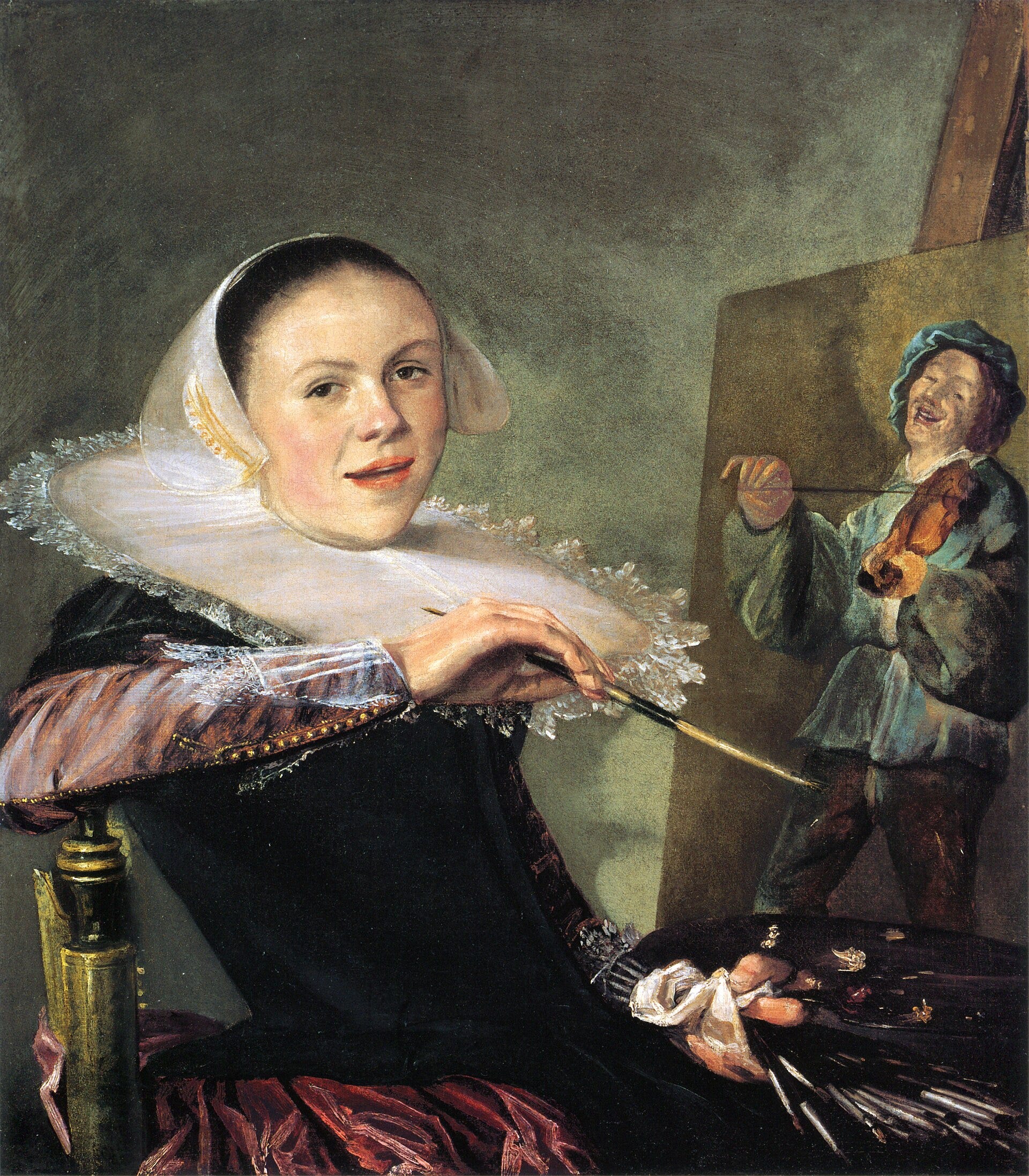
Leyster painted musicians, laughing drinkers, children at play and small scenes lit by a lamp. Her most famous painting is her Self-Portrait, now at the National Gallery of Art in Washington. In 1633, she became one of the first women admitted as a master painter in Haarlem.
She signed her pictures with two letters, J and L, and a small star taken from the name of her father's brewery. In her lifetime, a Haarlem writer could make a pun on the star in print. For more than two centuries after her death, nobody knew what the star meant, and her paintings were sold under another painter's name.
Cool Stories About Art is a newsletter to learn art the fun way.
Join 200,000+ readers and get:
10 new art stories / month
The entire archive of content (140+ articles)
Comment, ask questions, and chat with other readers
Judith Leyster, baptized on July 28, 1609, was the eighth child of Jan Willemsz, a weaver in Haarlem.
In 1618, when Judith was nine, her father changed trades and bought a brewery. The brewery was called De Leyster, a Dutch word for the lodestar, the star that sailors steer by. The family took the brewery's name as its own, and the brewer's daughter became Judith Leyster.
The brewery went bankrupt in the mid-1620s. Nobody knows who taught Judith to paint, but in 1628, Samuel Ampzing, a minister and poet, praised the brewer's daughter as a painter in a book of verse about Haarlem. She was not yet twenty.
In 1629, Judith Leyster dated her first two known paintings. In place of her name, she painted her initials and, beside them, a small star. The star stood for her name: Leyster, the lodestar.
After Judith Leyster's death, the star stayed in the corner of her paintings, yet for two centuries they were sold as the work of a more famous painter. Whose name did they carry, and who finally read the star again?
In the rest of the story
What Leyster first painted on the easel in her self-portrait, and what replaced it.
The apprentice who left her workshop after a few days, and where he went.
The three Latin words engraved in 1803 under a print of her painting.
The London court case over a painting that was not by the painter named on it.