Kara Walker: The Complete Story
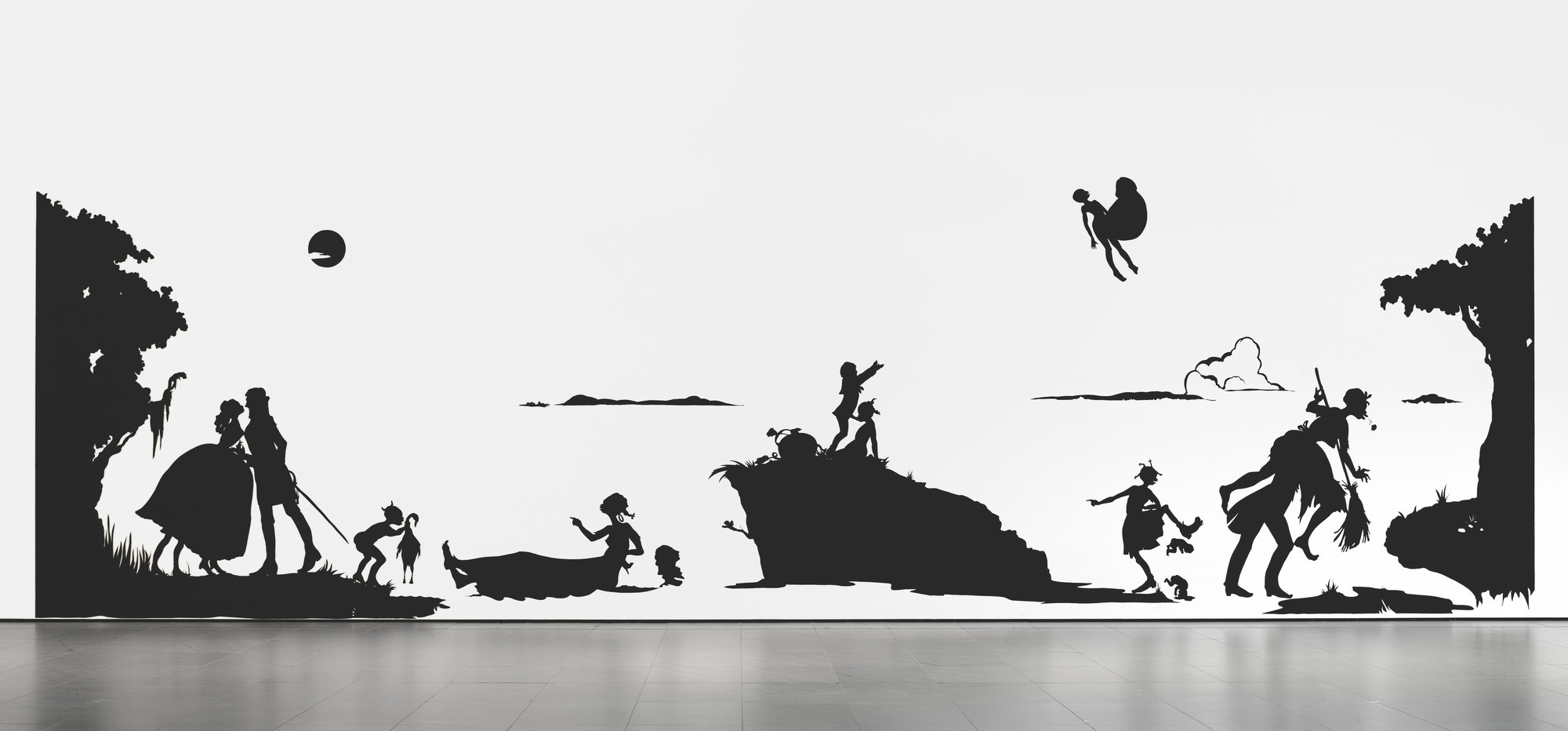
From a distance it looks like a pretty band of black paper silhouettes, the kind a Victorian parlour might have framed. Step closer and the elegant cutouts show scenes of slavery, violence and abuse.
This shock is exactly what Kara Walker wants, and it has made her one of the most talked about American artists alive.
She is an American artist known for room sized installations of black cut paper silhouettes that confront the brutal history of slavery in the American South.
If this was your kind of thing
These go past the caption and into what actually happened:
The darker truth about Gauguin, the part of the Tahiti story that never makes the wall label
Vermeer, Woman Holding a Balance, what is actually on those scales
Inside Monet house at Giverny, room by room, including his own bedroom
The silhouette turned weapon
Walker uses the silhouette, a genteel craft from the age before photography, to stage harrowing scenes across gallery walls.
The clean black profiles, a kind of stripped down portrait painting, lure you in with charm, then deliver images you cannot look away from.
The antebellum nightmare
Her scenes are set in the plantation South before the Civil War, full of masters, the enslaved, children and grotesque acts.
She refuses to soften the past, staging it as a dark history painting in shadow, forcing viewers to confront the cruelty behind the genteel myth of the old South.
The sugar sphinx
In 2014 Walker filled a derelict sugar factory in Brooklyn with a vast sphinx, a sleek figure of a Black woman coated in white sugar.
Titled with deliberate irony, the work linked the sweetness of sugar to the slave labour that produced it, and drew enormous crowds before the building was demolished.
Praise and argument
Walker work has always provoked debate, including from other Black artists who questioned her unflinching, sometimes grotesque imagery.
She has welcomed the argument, insisting that the history she shows is more disturbing than any picture of it, and that comfort would be a lie.
Questions about Kara Walker
What is she known for?
Black cut paper silhouette installations about slavery.
Why silhouettes?
The genteel craft contrasts sharply with the brutal scenes.
What was the sugar sphinx?
A giant sugar coated sphinx shown in a Brooklyn factory in 2014.
Where is she from?
Born in California in 1969, raised partly in the South.
Why the shadows refuse comfort
Walker took the most polite craft she could find and used it to tell the most impolite truths, so that no viewer can stay comfortable for long.
Her giant sugar sphinx drew crowds who came for a photograph and left thinking about who grew the sugar, which is exactly the trap her art is built to spring.
She won a major genius grant in her twenties, an unusually early honour that thrust her into fame and controversy at once. Her recent work has expanded into huge drawings, films and even a satirical fountain shown at the Tate in London, proof that the silhouette was only ever one of her tools.
She studied painting and printmaking before turning to the silhouette, and that grounding shows in the precision of her cutouts and the scale of her ambition.
Her work now anchors major museum collections and retrospectives, and younger artists routinely cite her as the figure who proved that the hardest history could be made unforgettable with the simplest of means.
Her giant sugar sphinx in Brooklyn drew tens of thousands of visitors in a single summer before the old factory was torn down, turning a temporary work into one of the most discussed art events of its decade.
She has since expanded into film, drawing and large public fountains, including a satirical work shown at the Tate in London, proof that her sharp eye for history can be turned on any medium she chooses.