
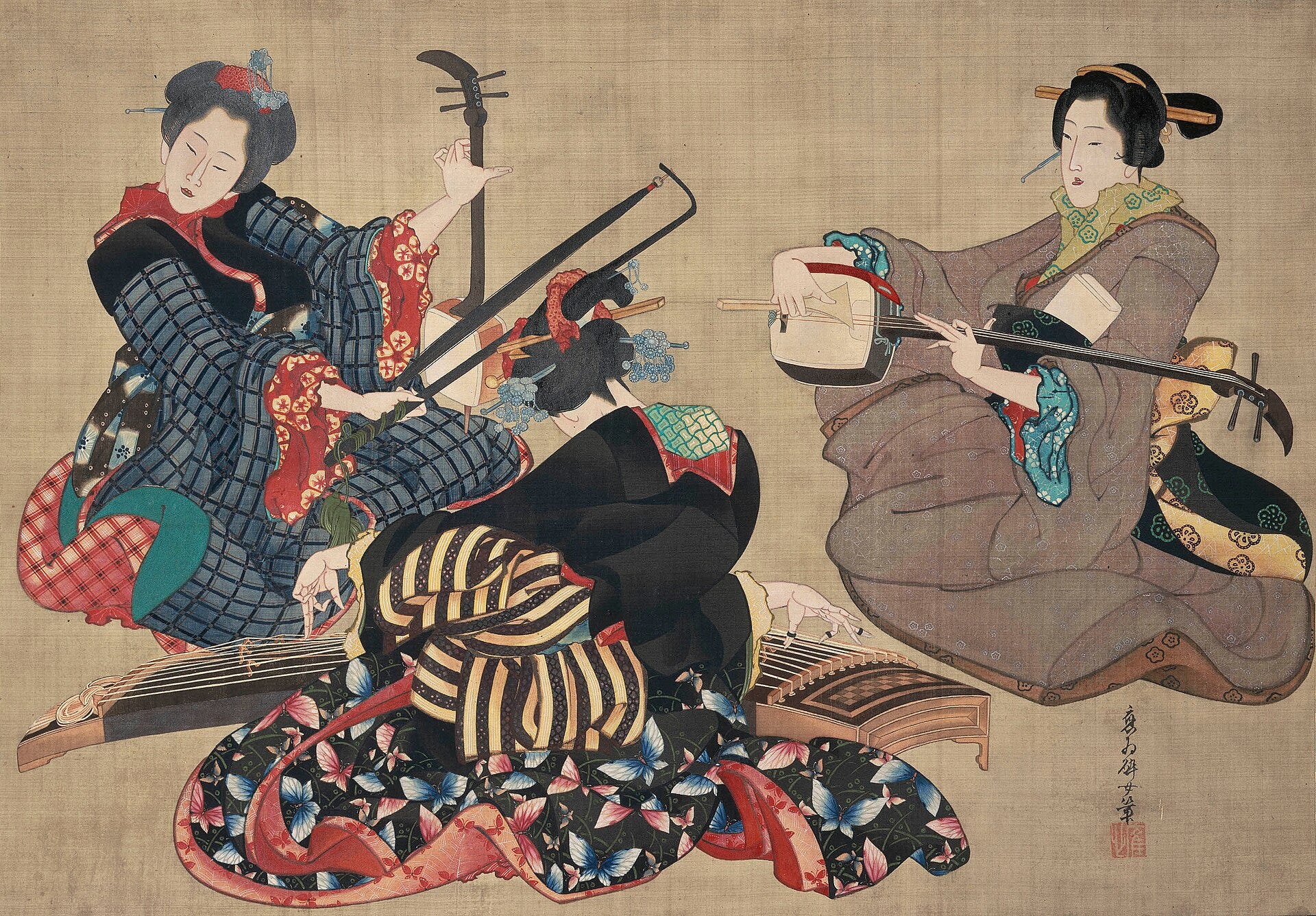
Katsushika Ōi (about 1800 to after 1857) was a Japanese painter, the daughter of Hokusai, the artist of the Great Wave. She painted women by lamplight, like Night Scene in the Yoshiwara, the walled district of old Tokyo where prostitution was licensed.
Cool Stories About Art is a newsletter to learn art the fun way.
Join 200,000+ readers and get:
10 new art stories / month
The entire archive of content (140+ articles)
Comment, ask questions, and chat with other readers
In his lifetime, Hokusai became one of the most famous artists in Japan. Hokusai is reported to have said that for pictures of beautiful women, he could not compete with his daughter.
Yet the daughter's name almost disappeared, while the father's spread far beyond Japan.
Katsushika Ōi was born around 1800 in Edo, the city that is now Tokyo. Her parents named her Ei. Ōi is the name she chose later, to sign her work. The line over the O means that the sound is held a little longer.
In Japan, painters signed with an art name, a name they picked for themselves and could change as their lives went on. Ōi's father used more than thirty art names. He is remembered by one of them: Hokusai.
Katsushika is a place. It is the name of the district, just east of Edo, where Hokusai was born. He added it to his art name: Katsushika Hokusai.
His daughter used the name of that district too, and today she is called Katsushika Ōi.
When Ōi was born, Hokusai was about forty and already known for his woodblock prints, pictures carved into blocks of wood and printed on paper by the hundreds. He also made paintings, by hand, one at a time.
Ōi learned to paint from her father. Around 1810, his studio illustrated a book of kyōka, comic poems that poked fun at the old, serious poetry of Japan. Hokusai drew the opening picture, and fifteen of his pupils drew the rest.
One double page shows sailboats in the mist. It is signed "from the brush of the woman Ei." The painter was about ten years old.
Even that age is a guess. No document gives the year Katsushika Ōi was born, or the year she died.
Ōi went on painting for almost fifty years after that first page. Why are only about ten of her works known today?
In the rest of the story
What she did in front of her husband's paintings that ended her marriage.
The story behind her strange art name, and why it sounds a little rude.
Where she hid her name in her most famous painting.
What she took with her the day she walked out and never came back.