
Laughter in painting is rarer than you think. For centuries an open mouth meant madness, drunkenness or bad breeding, so almost nobody smiles in old master portraits. Twelve exceptions, including the woman who broke the rule and the painter who laughed at himself.
Why so few teeth
Showing teeth in a portrait marked you as a peasant, a drunk or a lunatic until about 1780.
Bad dentistry is only part of the answer. Holding a grin for hours of sitting is the other.
One painter made a career of pulling faces at his own mirror, 40 times over.
One 1787 self portrait with visible teeth scandalized Paris.
The loudest laugh in art history belongs to a woman the town called mad.
Learn art the fun way
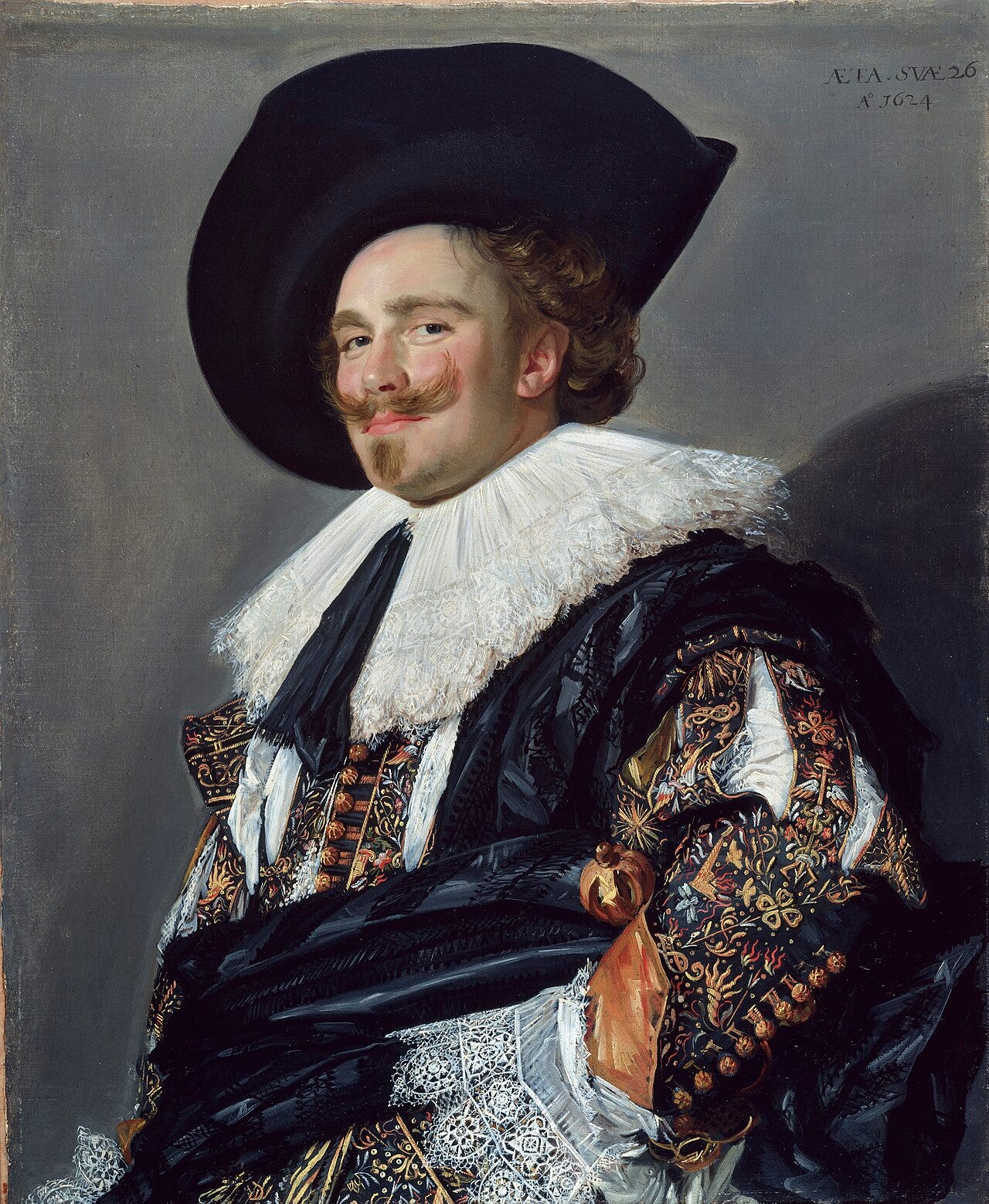
1 | The Laughing Cavalier, Frans Hals (1624)
He is not laughing and he is not a cavalier. The Victorian title stuck to a young man with an upturned moustache and the faintest smirk in art.
Hals painted the smile that most painters could not: quick, wet, alive. The fastest brush of the Dutch age More of it in Frans Hals.
2 | Malle Babbe, Frans Hals (about 1633)
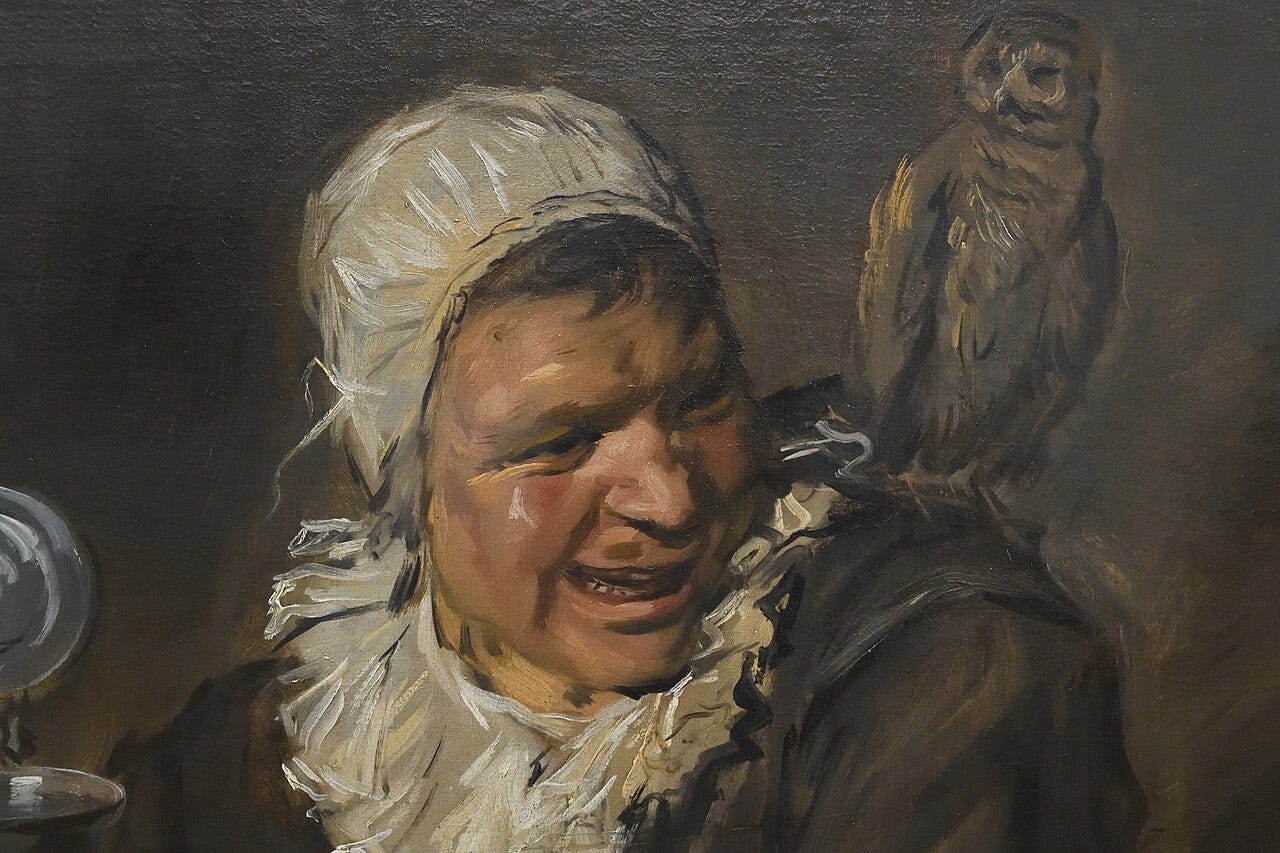
A woman roars with laughter over her tankard, owl on her shoulder, mouth wide open. Hals painted her in the Haarlem workhouse where she was confined.
It is the loudest sound in 17th century painting, and it comes from someone society had locked away.
The sitter was a real woman recorded in the Haarlem workhouse where Hals’ own son was also confined. The owl on her shoulder is a Dutch pun: drunk as an owl, and owls were also a sign of foolishness.
3 | Self Portrait with Her Daughter, Vigee Le Brun (1787)
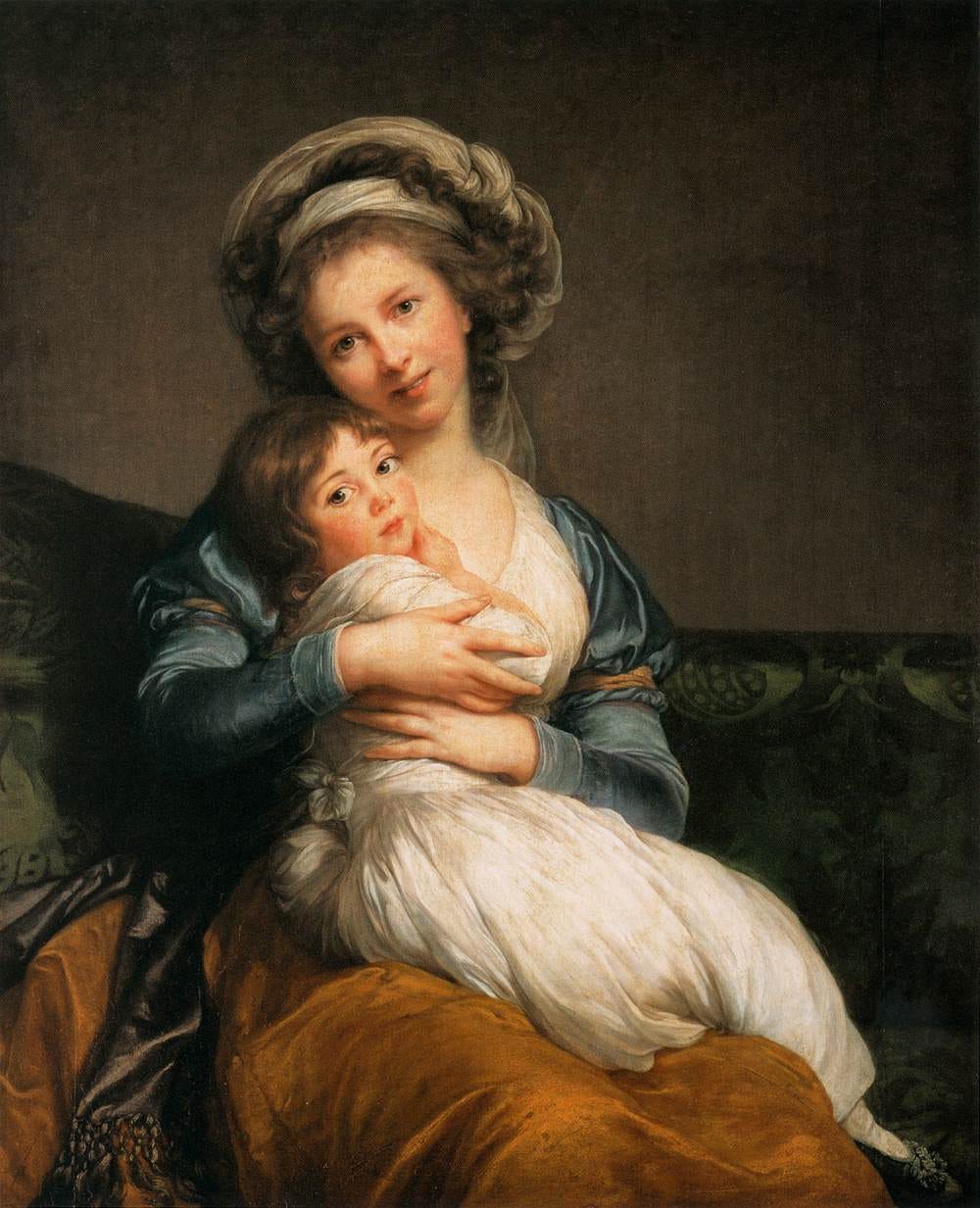
The painter smiles with her lips parted, teeth showing, arms around her child. Paris was appalled: a court critic called it an affectation no ancient painter would allow.
The rule she broke had held for two centuries. Her escape from the Revolution The full account is in Vigee Le Brun.
4 | Character Heads, Franz Xaver Messerschmidt (1770s)
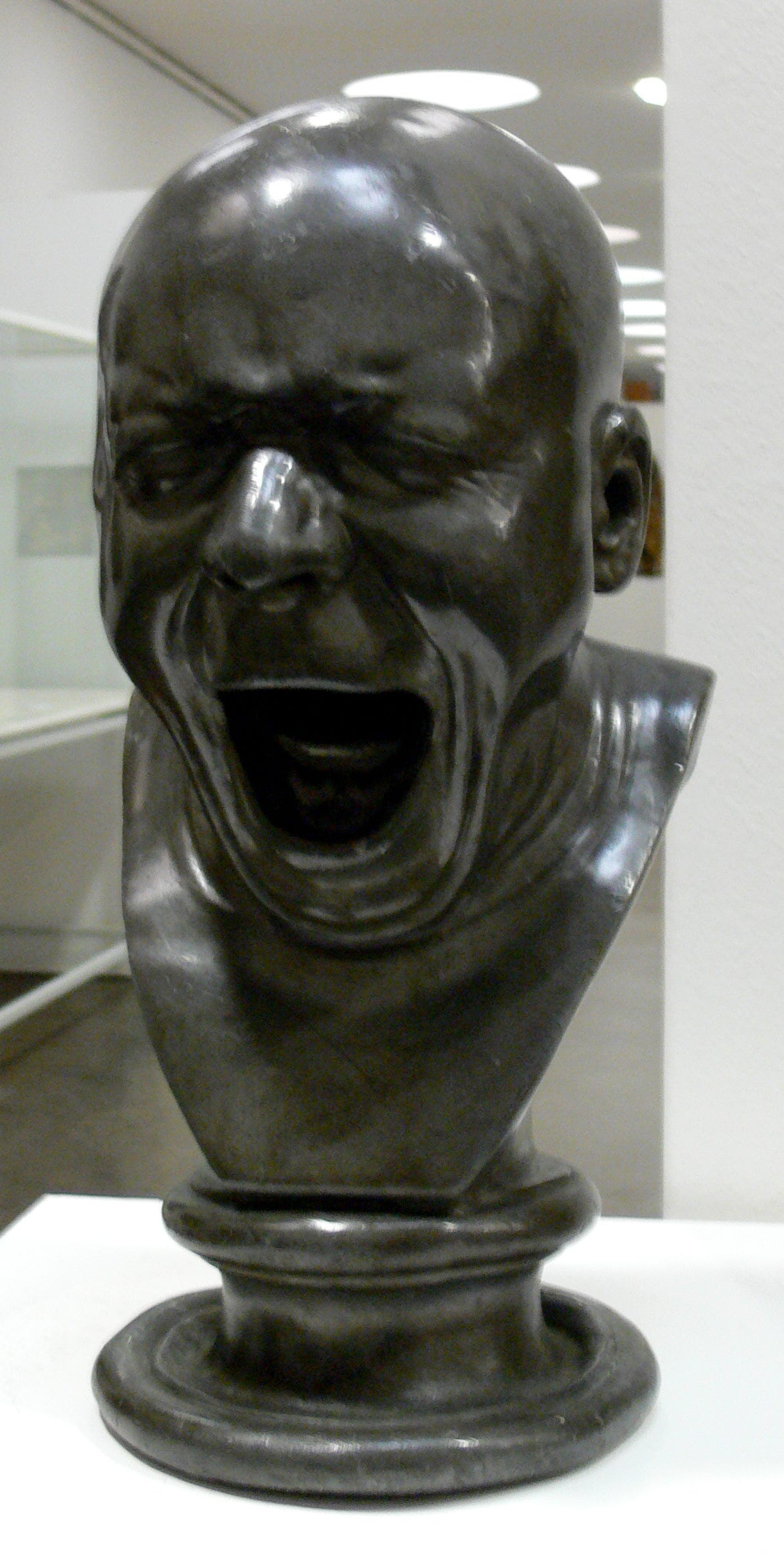
A sculptor spent his last years pinching his own face in a mirror and casting the results in lead and alabaster: yawns, grimaces, one wide open cackle.
He made about 49 of them, believing the faces warded off spirits. Museums now display them as the first serious study of expression.
5 | The Jolly Toper, Judith Leyster (1629)
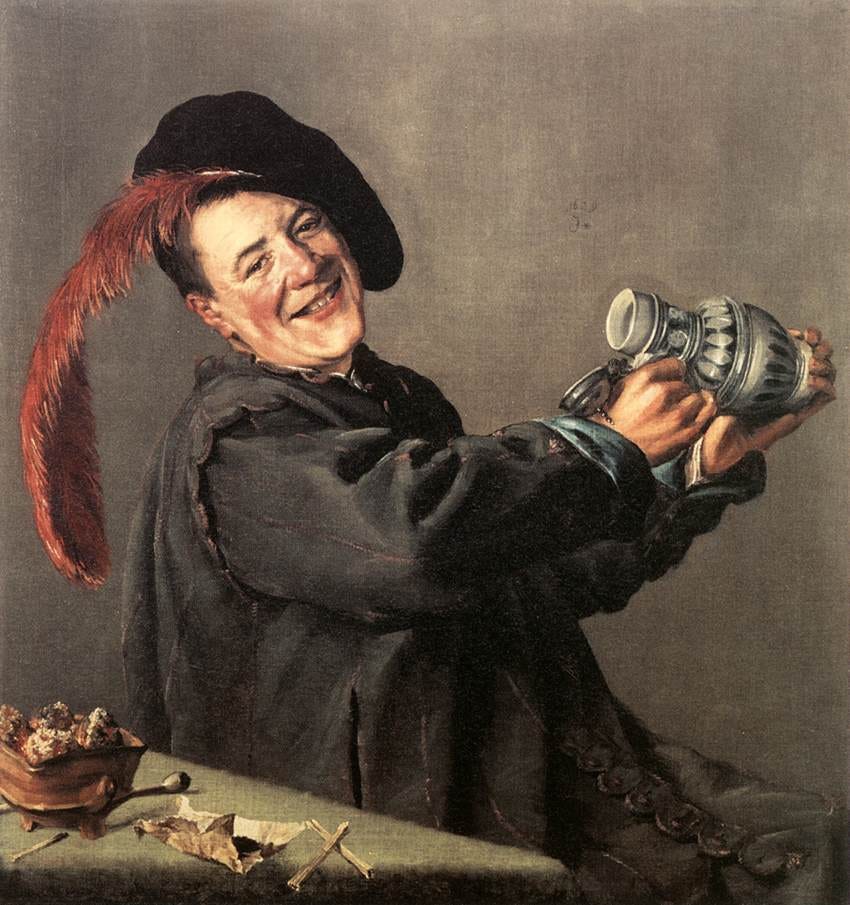
A man raises his glass and grins straight at us, cheeks flushed. Leyster ran her own workshop in Haarlem and signed with a monogram of a star.
For centuries her works were credited to Hals. A lawsuit she filed in 1636 over a poached apprentice is one of the few records of a woman running a studio.
6 | Self Portrait as a Laughing Painter, Joseph Ducreux (about 1793)
A man in a hat leans out of the frame, pointing at us and laughing with his mouth wide open. Two centuries later the internet turned him into a meme.
Ducreux was Marie Antoinette’s portraitist and spent his late career cataloguing expressions. The most memed old master I go into it in Joseph Ducreux.
7 | The Merry Family, Jan Steen (1668)
A household roars, sings and drinks while the children copy the adults. A note pinned above reads: as the old sing, so the young pipe.
Steen painted joy and warning in the same breath. The comedian of Dutch art I cover that in Jan Steen.
8 | Boy Bitten by a Lizard, Caravaggio (about 1595)
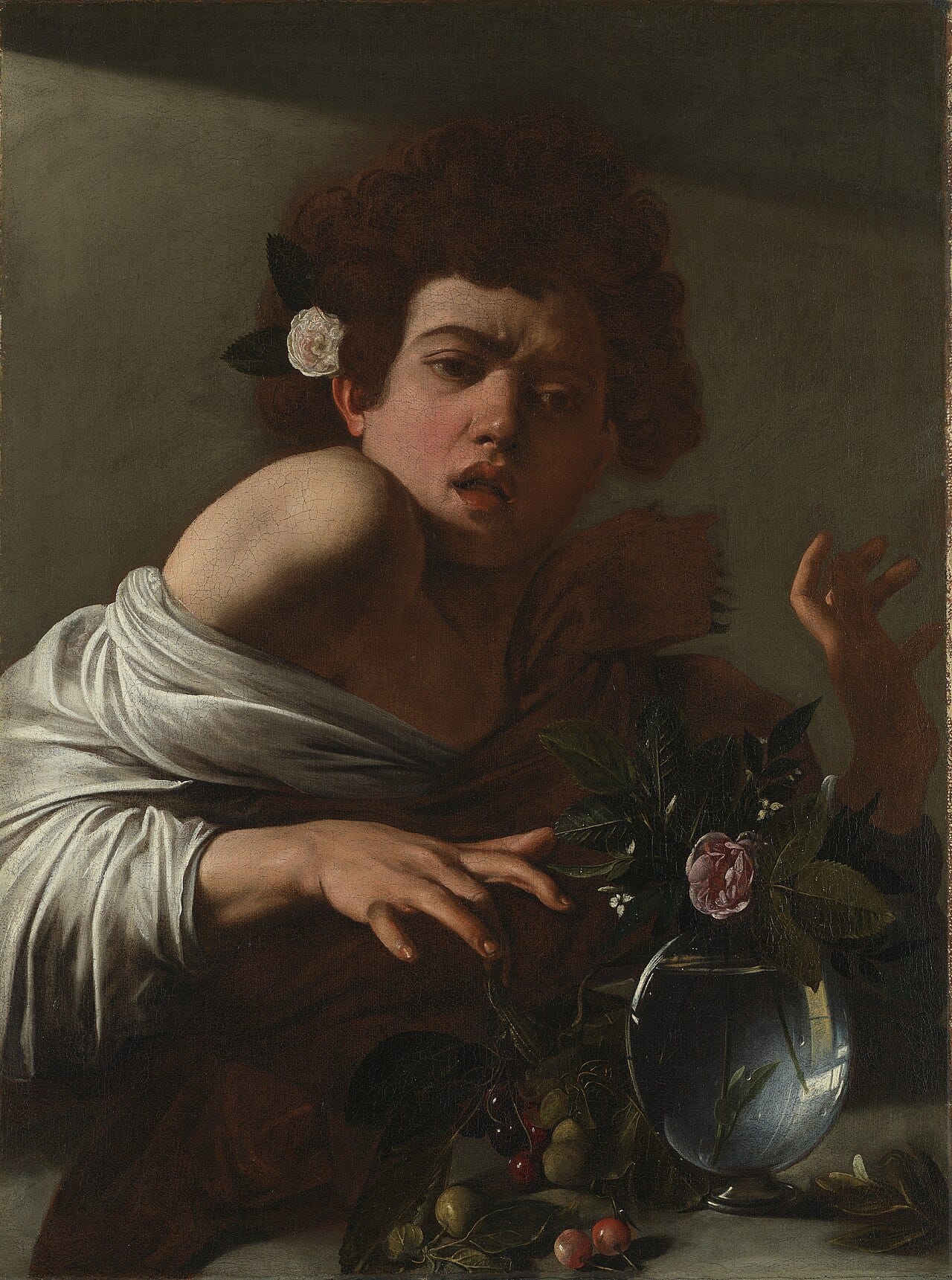
Not laughter, its opposite twin: a boy yelps as a lizard nips his finger among the flowers. The mouth is open, the sound is real.
Caravaggio was studying how a face comes apart in a single second, decades before anyone called it psychology. I go into his whole story in Caravaggio.
9 | Democritus, the laughing philosopher, Diego Velazquez (about 1630)
The ancient philosopher who laughed at human folly, painted grinning beside a globe. Tradition paired him with Heraclitus, who wept.
Velazquez gave him the face of a court jester rather than a sage. The painter of the Spanish court More of it in Diego Velazquez.
10 | The Smiling Angel of Reims (about 1240)
A stone angel on Reims cathedral wears a full, easy smile, carved when almost no medieval face smiled at all.
German shelling in 1914 knocked the head off and fire blackened the stone. The reassembled angel became a symbol of French survival.
It was carved around 1240 and became a French national symbol after German shelling knocked its head off in September 1914. The head was recovered from the rubble and put back in 1926.
11 | Self Portrait, Rembrandt as a young man (about 1628)
Rembrandt used his own face as a laboratory: laughing, scowling, mouth open, eyes wide, decades before selfies existed.
He produced around 80 self portraits in every mood. The full sequence The full account is in Rembrandt.
He etched himself pulling faces in the late 1620s: laughing, scowling, open mouthed. These were exercises in expression, sold as prints, and they are the closest thing we have to him practising.
12 | The Mona Lisa, Leonardo da Vinci (about 1503)
The most analyzed non laugh in history. The smile appears and disappears depending on where you look, an effect of Leonardo’s smoky edges.
That technique has a name: sfumato. And the reason the whole world knows her face is in why the Mona Lisa is so famous.
Compare the faces yourself: the Rijksmuseum and the Rijksmuseum both hold Hals portraits you can zoom into.
Why the mouths stay closed, and other questions
Why does nobody smile in old paintings? An open mouth signaled drunkenness, madness or low birth. Sitting still for hours also made a held grin impossible.
Was it because of bad teeth? Partly, but the taboo was social. Even sitters with good teeth kept their lips closed.
Who painted the first modern smile? Frans Hals made it his specialty, and Vigee Le Brun broke the teeth taboo in 1787.
Is the Laughing Cavalier actually laughing? No. He smirks. The title was invented in the 1870s and never left.
Where is The Laughing Cavalier today? The Wallace Collection for the Cavalier, Berlin for Malle Babbe, the Louvre for Vigee Le Brun and the Mona Lisa.
The epilogue nobody tells you: when Vigee Le Brun exhibited her smiling self portrait in 1787, the Mercure de France complained that no ancient artist had ever shown teeth. She kept painting smiles for another 50 years.
For the opposite of a posed smile, the quiet unguarded interiors of Edouard Vuillard are worth an afternoon.