
Before washing machines, clean linen cost a woman days of labor. She boiled it, soaked it, beat it with wooden beaters at the water's edge, hung it out to dry, then pressed it with an iron heated on the fire. From the 1650s to the early 1900s, painters watched her at it, at a Lombard fountain, in a steaming Moscow washhouse and in the hot laundries of Paris.
Cool Stories About Art is a newsletter to learn art the fun way.
Join 200,000+ readers and get:
10 new art stories / month
The entire archive of content (140+ articles)
Comment, ask questions, and chat with other readers
Water, Fire and Weight
A laundress's working day came down to three things. There was water, at a fountain, a river or a tub, and she spent hours with her arms in it. There was fire, which boiled the wash and heated the irons, since an iron had no cord and went back onto a stove or into the hearth to heat again. And there was weight, the weight of wet bundles carried home and the weight of a body bearing down on the iron.
Households that could afford it sent their linen out to a laundress. In Paris, from the 1850s on, large laundries multiplied as the city was rebuilt, and the women employed in them worked long hours in wet heat.
Then Émile Zola gave the trade a heroine. His novel L'Assommoir, which began to appear in 1876, follows Gervaise, a laundress who opens her own shop to escape poverty and ends in ruin. The book made the Paris laundress a figure many readers knew.
In many landscapes a washerwoman is only a small white shape on a riverbank. The paintings that tell the most about the trade put the woman at the center, and in most of them the work itself can be seen: the tub, the beater, the iron, the steam, the bundle on a shoulder.
12. Giacomo Ceruti, The Washerwoman (about 1720 to 1725)
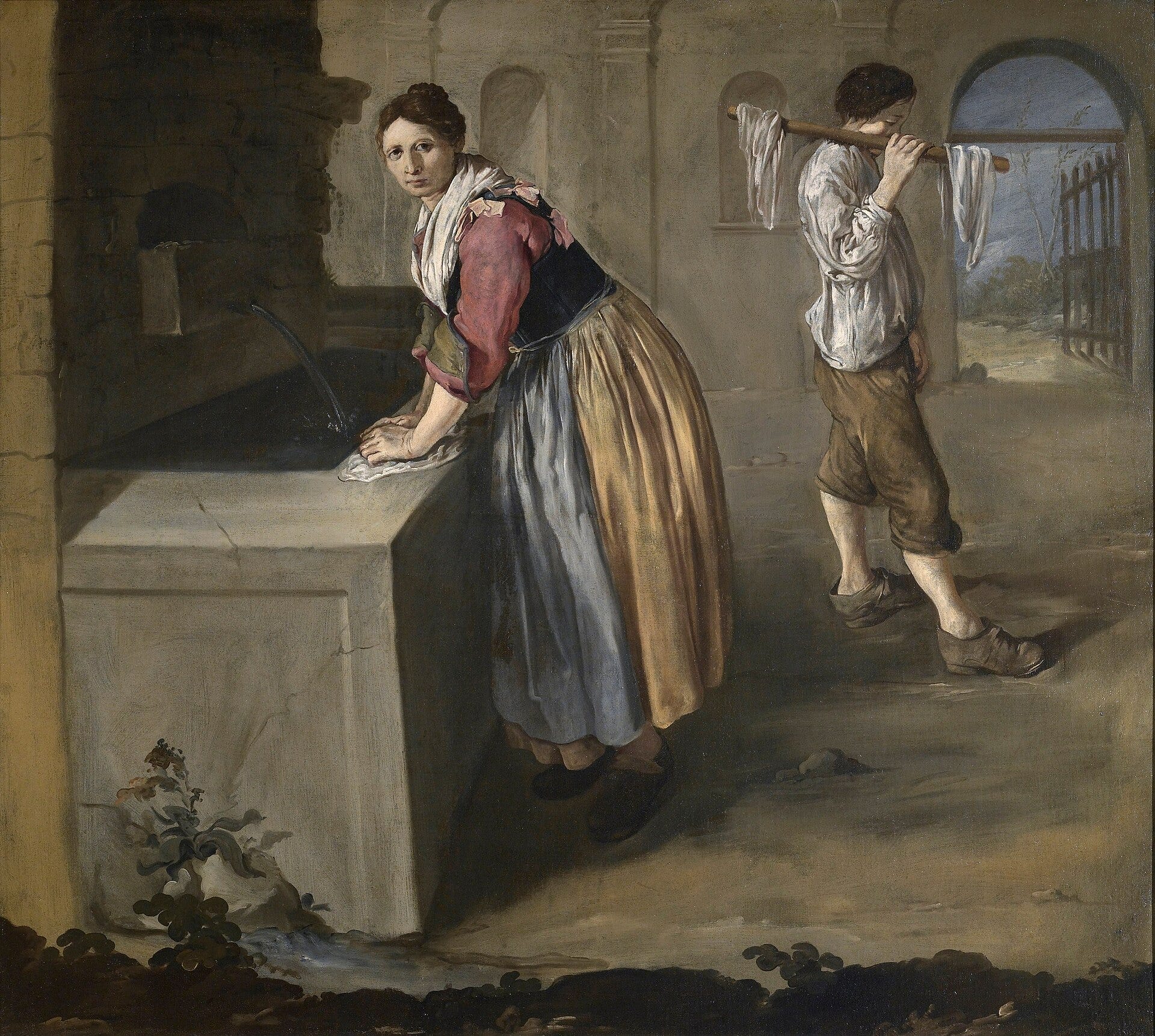
A washerwoman stands at a stone fountain in the middle of a courtyard, interrupted in her washing, and turns her eyes outward, toward the viewer. The courtyard is all cold gray and dull ochre. Only her dress, light blue with bright red and yellow, carries any color in the whole picture.
Behind her, a boy crosses the courtyard with a load of washing hung from a stick over his right shoulder. Linen often traveled that way, on a pole across the shoulder, and the washing itself was done in the open, at the public fountain.
The canvas, nearly five feet tall, is the work of Giacomo Ceruti, who painted it in the 1720s. He was nicknamed Pitocchetto, the little beggar, because he painted beggars, pilgrims, old men and craftsmen on large canvases like this one.
It was this washerwoman, shown in Florence in 1922, that led the art historian Roberto Longhi back to a painter forgotten since his death in 1767.
The boy is still on his way with his load when the picture catches her, so the work of the courtyard goes on behind her while she alone stands still.
At a Glance
Artist: Giacomo Ceruti (1698 to 1767), called Pitocchetto
Painted: About 1720 to 1725
Medium: Oil on canvas
Size: About 145 × 130 cm (57 × 51 in)
Where to see it: Pinacoteca Tosio Martinengo, Brescia
11. Camille Pissarro, Washerwoman, Study (1880)
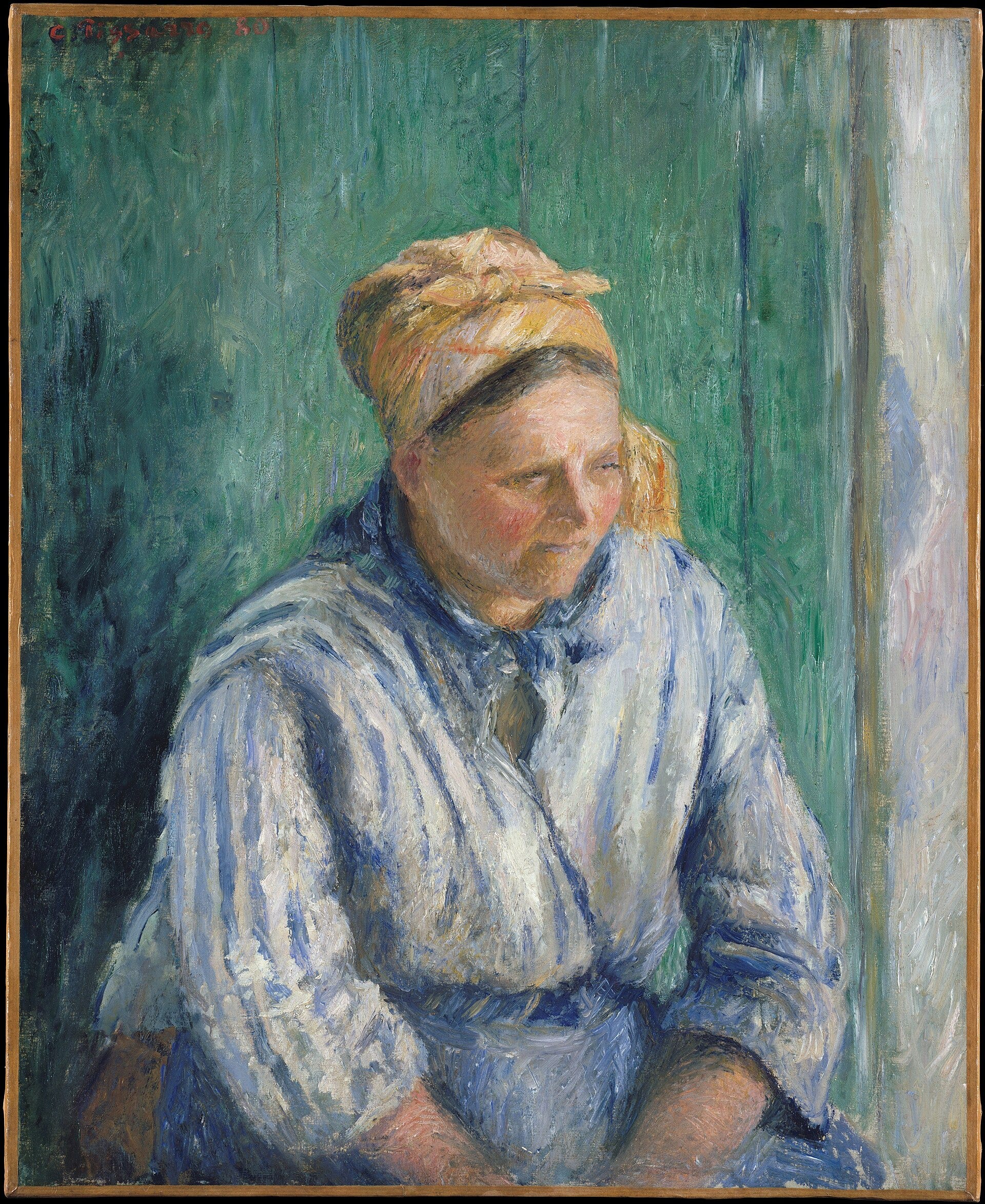
Camille Pissarro painted this woman close up, no longer young, in her work clothes. When he showed the canvas in 1882 at the seventh Impressionist exhibition, the catalogue named her by her trade alone.