
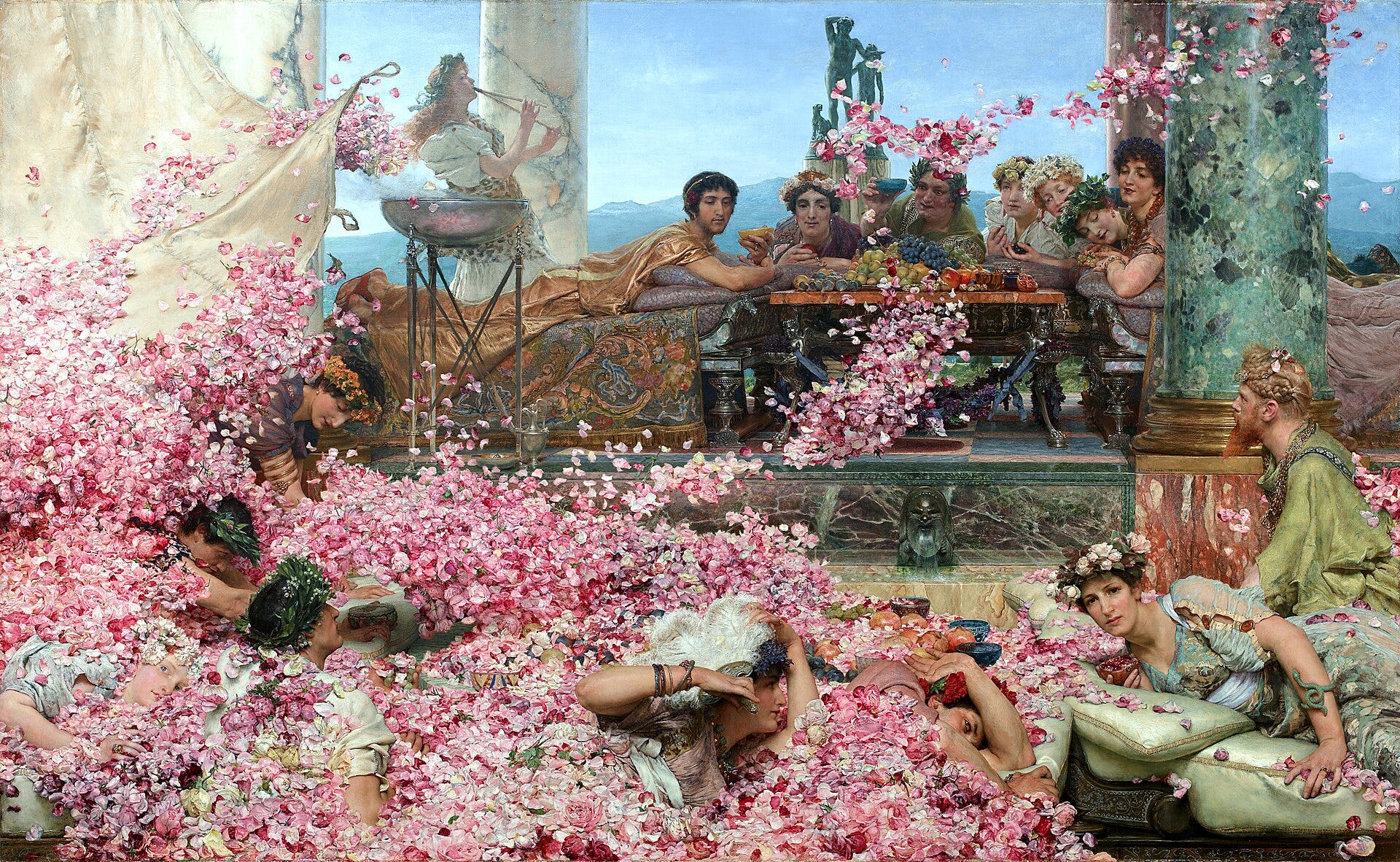
Lawrence Alma-Tadema (1836 to 1912) was a Dutch-born painter who became one of the best-paid artists in London under Queen Victoria. He painted ancient Rome, Greece and Egypt, in pictures like The Roses of Heliogabalus, where a Roman emperor buries his guests under rose petals.
Cool Stories About Art is a newsletter to learn art the fun way.
Join 200,000+ readers and get:
10 new art stories / month
The entire archive of content (140+ articles)
Comment, ask questions, and chat with other readers
Alma-Tadema painted a Rome that had lain in ruins for centuries before he was born. He rebuilt it from measurements taken on the spot and from thousands of photographs, so exactly that buyers paid fortunes for each new picture. Soon after his death, that same exactness made his work look old-fashioned.
The painter was born Lourens Alma Tadema on January 8, 1836, in Dronrijp, a village in Friesland, the northern province of the Netherlands. His father, the village notary, was a lawyer who drew up contracts and wills.
The family soon moved to Leeuwarden, the main town of Friesland, and the notary died when Lourens was four. His widow paid for drawing lessons for the children, but the boy was meant to study law, like his father.
At fifteen, Lourens's health collapsed. Doctors said he had consumption, as tuberculosis was then called, and did not expect him to live long. They advised the family to let him draw and paint for the time he had left.
The boy recovered, and he chose to become a painter. At sixteen, he entered the Academy of Fine Arts in Antwerp, in Belgium, and later he worked in the studio of Hendrik Leys, a Belgian painter of scenes from history.
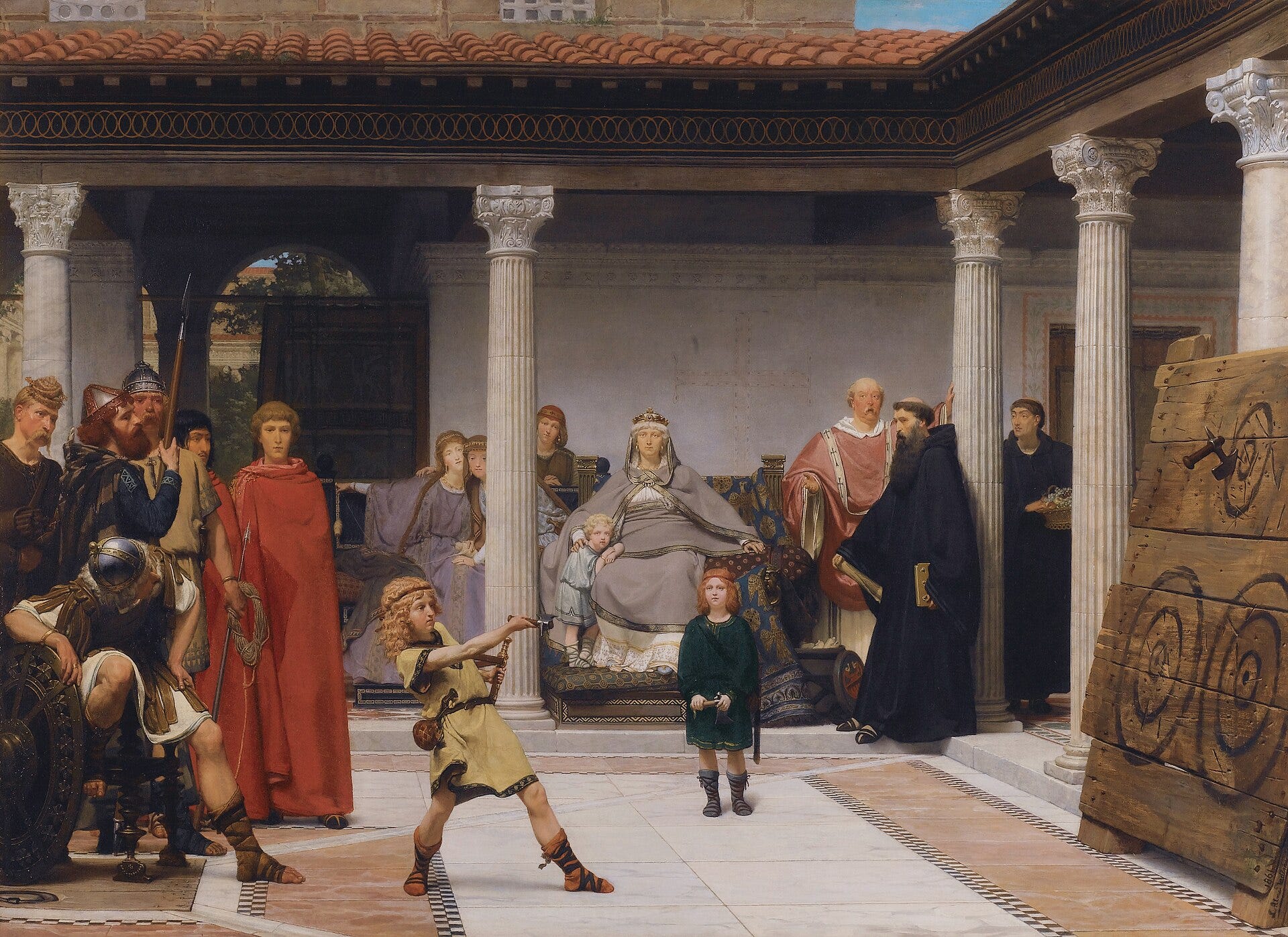
Lourens had his first success in 1861, with The Education of the Children of Clovis. Clovis was the first king of the Franks, the people who gave their name to France, around the year 500. In the picture, Queen Clotilde, his wife, watches their young sons practice throwing axes.
An art society in Antwerp bought the canvas, which later passed into the collection of the king of the Belgians. The picture made the young painter's name.
Two years later, Lourens married Pauline Gressin-Dumoulin, a young Frenchwoman, and took her to Italy for their honeymoon. The couple traveled through Florence and Rome to Naples, and from Naples to Pompeii.
In AD 79, an eruption of Mount Vesuvius had buried Pompeii under ash. For more than a century, diggers had been uncovering its streets, houses and wall paintings. What Lourens saw there would one day make his fortune.
Why did the exactness that buyers paid for fall out of fashion so soon after his death, and who would need it again?
In the rest of the story
How many pictures a London art dealer ordered from him in one visit.
What he added under his signature to stop forgers.
What happened on the canal behind his London house before dawn in 1874.
Which industry went back to his paintings when the art world forgot him.