

180 000+ readers learn art the fun way.
This is a preview. Paid subscribers get the full story.
You’ll also get:
10 new stories / month
The full archive (130+ Art stories)
Your personal art guide. Comment, ask questions, DM me anytime
Apple user? Subscribe at coolstoriesabout.art, not via the app. Apple adds 30% to the price.
A Bench by the Door
Florence, an afternoon in 1475. A young man walks up Via dei Benci, near Santa Croce, a book under his arm, and pushes open the door of the palazzo without breaking stride. The porter knows him well enough not to announce him.
He paints in Verrocchio’s workshop, one of the best in the city, where he is considered one of the most promising. The book belongs to his friend Giovanni Benci, 19, the son of the house.
On his way to the great hall, he passes the Benci library, one of the richest in Florence. Reading desks, manuscripts in Latin and Greek. He keeps walking.
At the threshold of the hall, he stops short. Six or seven men sit around a table set near the windows, and at the far end, facing the door, is Giovanni, who sees him come in. A small wave of the hand: wait.
A bench runs along the wall beside the entrance. The young man sits down, the book on his knees, and from there he has the whole table in view.
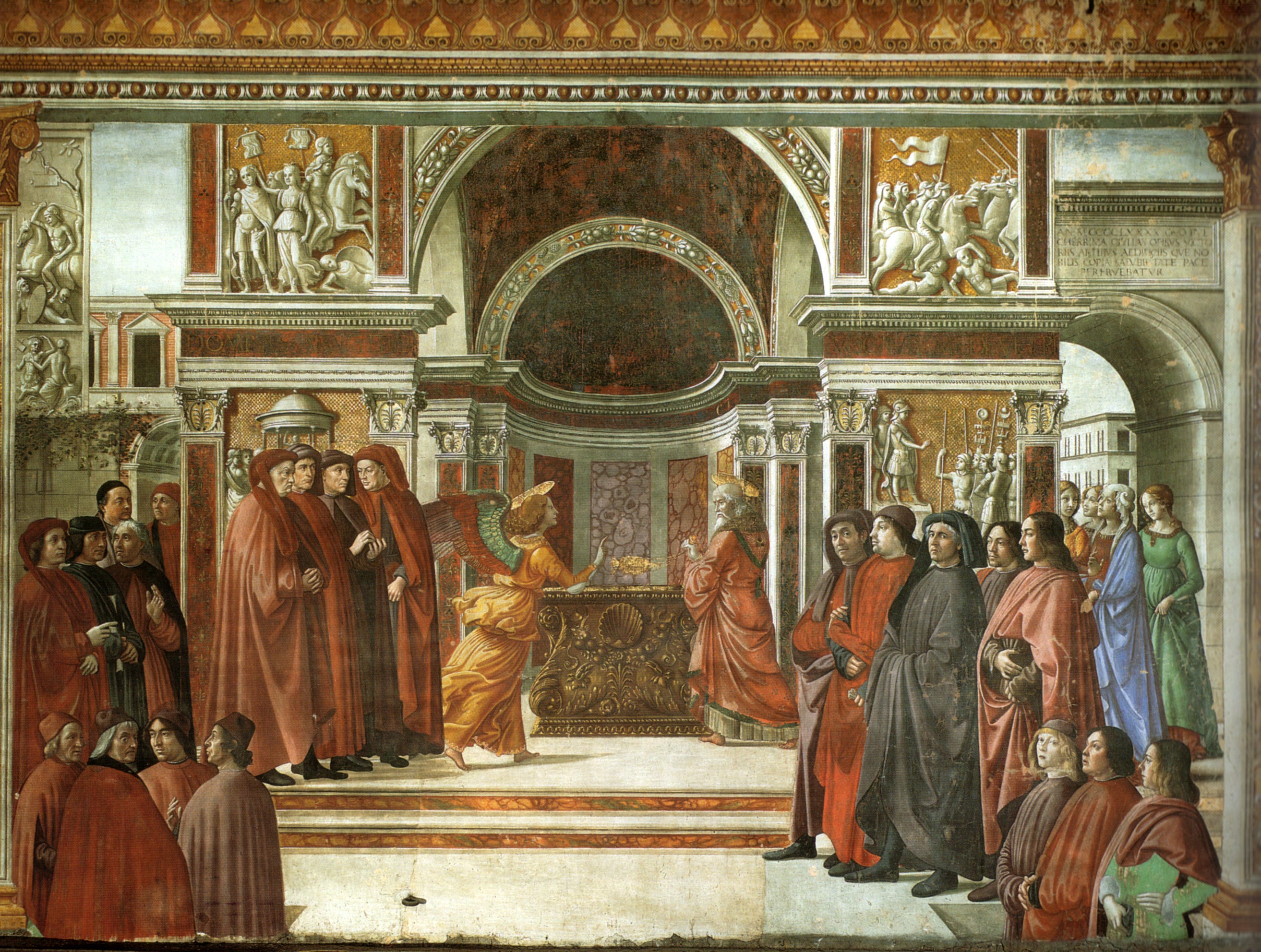
To Giovanni’s right, a man of about fifty holds a sheaf of pages: Cristoforo Landino, who teaches poetry at the university and writes in Latin. The others, friends of the family, have their backs to the young man. Landino, though, he sees head-on, and he hears every word.
Landino reads. Verses he has just written, in Latin, and around the table, heads nod in approval.
On his bench, the young man listens. The sounds reach him; the meaning does not. He hunts for a foothold in the sounds, and the words slip past. One word alone stands out, because it keeps coming back: Bencia. That is the poem’s name for Ginevra, Giovanni’s sister.
Someone answers Landino with a line from an ancient poet, and the whole table laughs. He smiles a beat after the others, with no idea why. His eyes drop back to the book. He does not open it.
The reading ends. Giovanni gets up, crosses to the bench, says two or three words in Italian, and the book changes hands. Then the young man is back in the street.
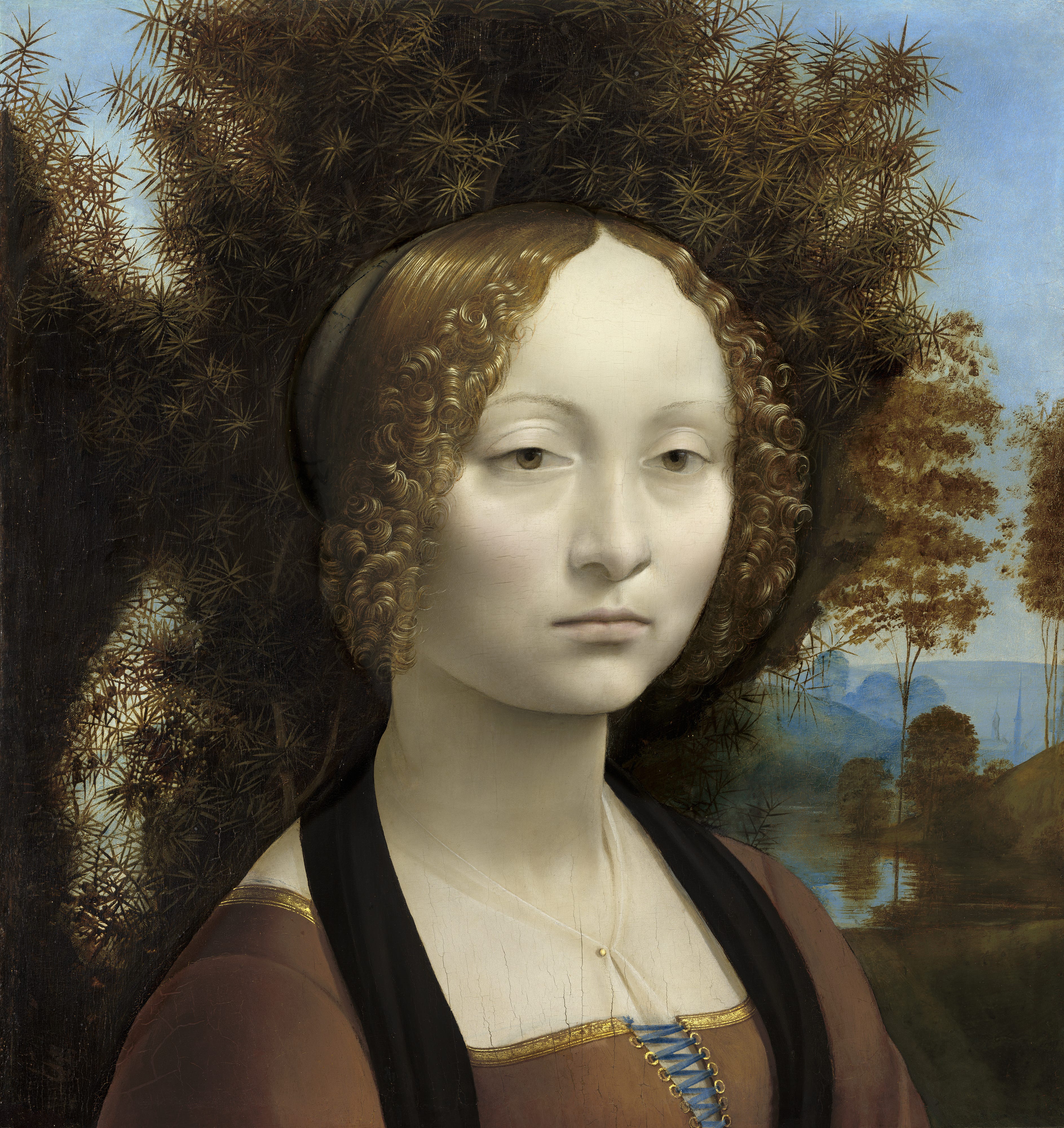
His name is Leonardo. He is 23, from Vinci, a small town a day’s walk from Florence. No man at that table has looked at Ginevra as closely as he has: he painted her. Of the poem read in her honor, he caught a single word, her name.
A Letter Without Flattery
Three years later, the painter of Ginevra has left Verrocchio’s workshop and set up on his own. The Signoria, the government of Florence, commissions him to paint the altarpiece for the chapel of its palace. Recognition comes. Money is slower: in the summer of 1481, monks whose clock he has repainted pay him with a load of firewood.
That autumn, a far bigger commission comes down from Rome. Pope Sixtus IV wants frescoes across the chapel he has just built in the Vatican, the Sistine, and he recruits his painters in Florence. Ghirlandaio and Cosimo Rosselli set off, and with them Botticelli, Leonardo’s friend; Perugino joins them in Rome.
Leonardo is nearly 30. He has been passed over.
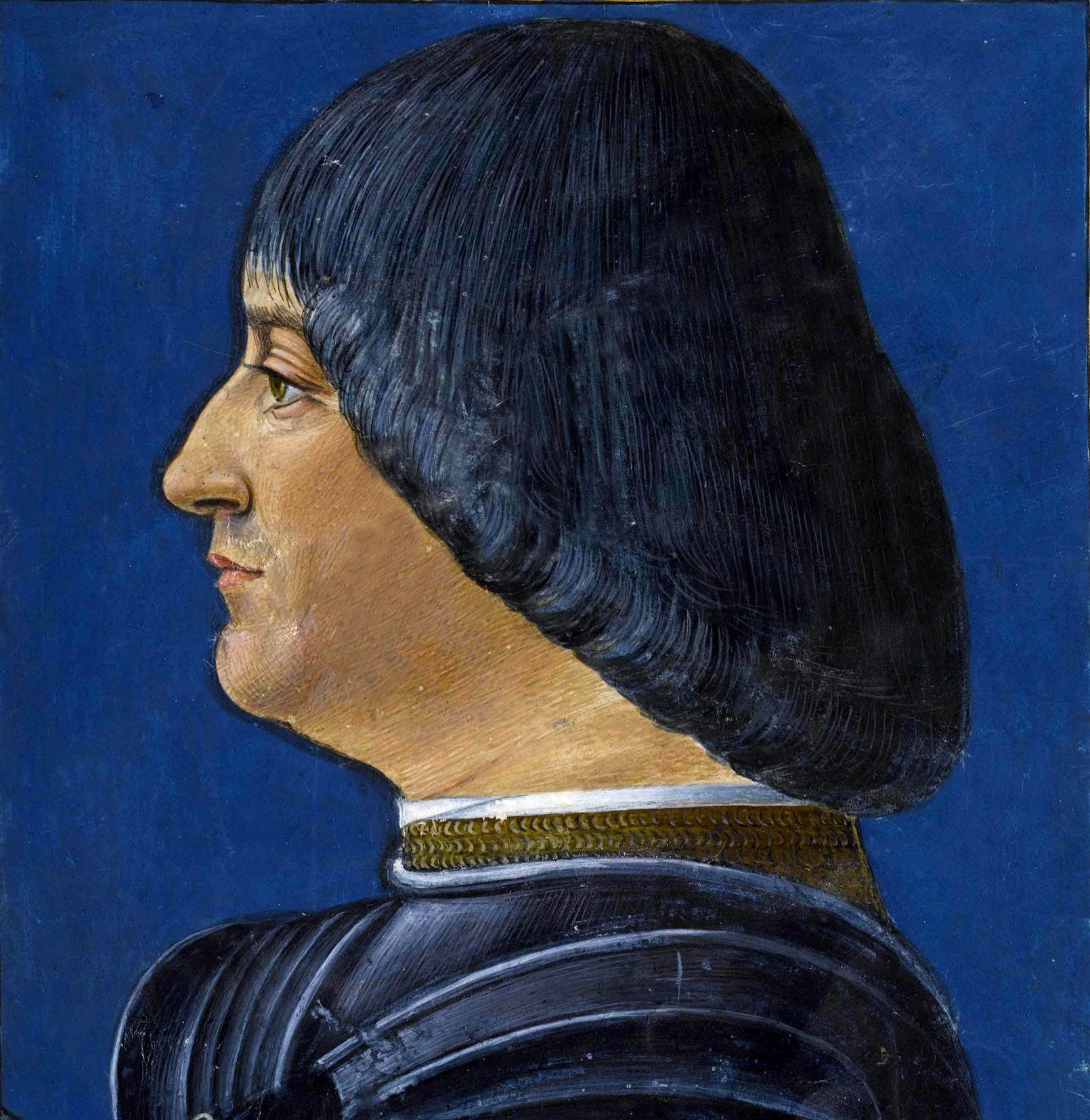
So he looks north, to Milan, one of the richest courts in Italy. Ludovico Sforza rules there, a prince who raises armies and builds. Leonardo needs a way in.
There are two routes. The scholars’ way: a long Latin letter, thick with praise of the prince, which is usually enough to win a place at court. Leonardo has nothing of the kind to offer. And the craftsmen’s way: craftsmen do not write to princes. They wait for a commission to trickle down to them.
Leonardo takes neither.
In his workshop, he spreads out a large sheet of paper and writes to Sforza. In Italian, without a single compliment.
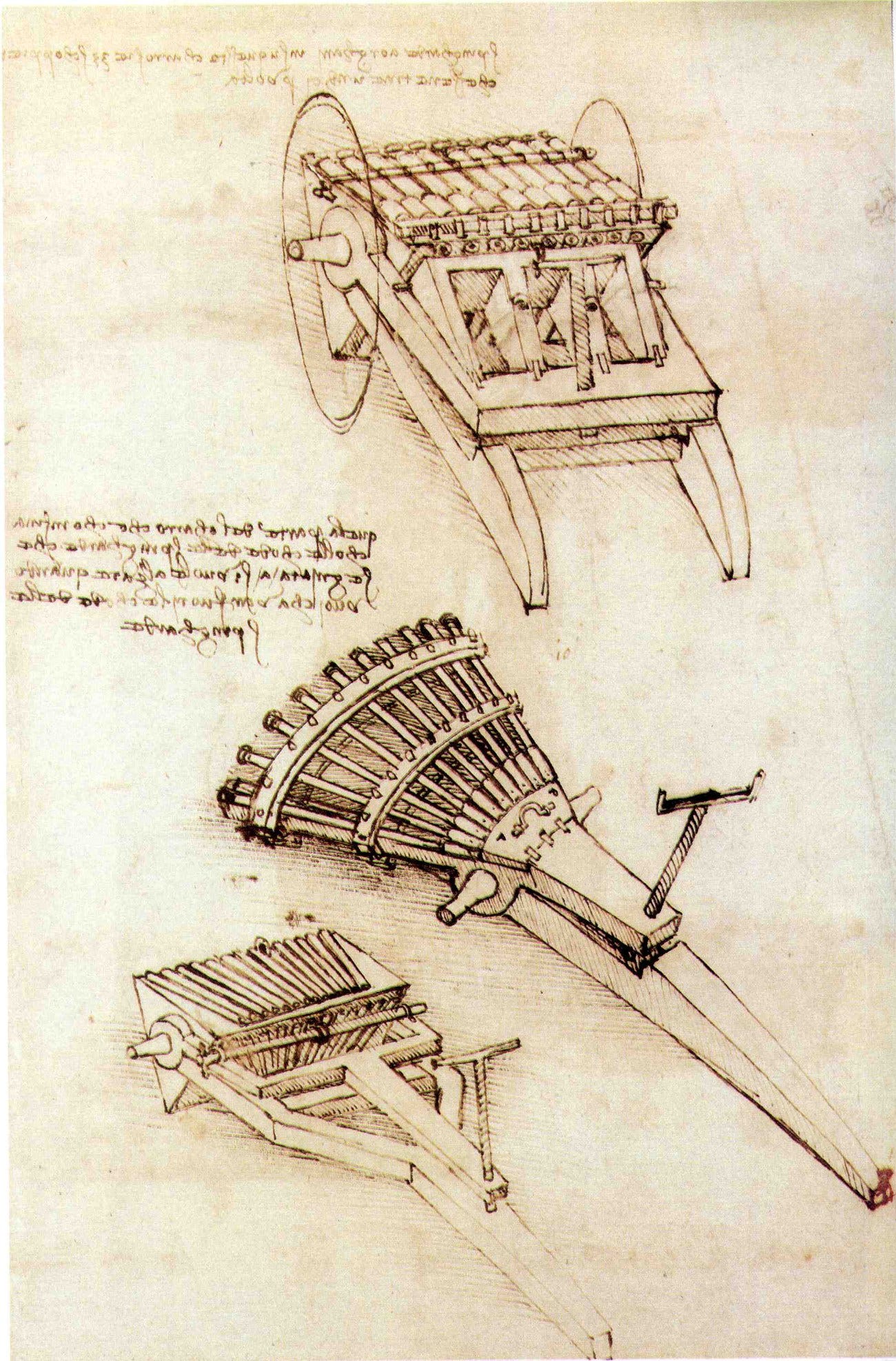
He begins by brushing aside his rivals: their war machines, he writes, are nothing special. Then he sets out, point by point, what he can do: bridges, cannon, tunnels, covered war carts. After that come architecture and sculpture.
Painting gets one line: similiter in pittura, ciò che si possa fare a paragone de omni altro, e sia chi vole. “In painting, too, I can do whatever can be done, as well as any other, whoever he may be.”
He closes by offering proof: me offero paratissimo ad farne experimento in el parco vostro. “I stand ready to prove it in your park.”
Leonardo has just invented the first résumé in history. In 1482 he sets off for Milan.
A Grammar for Children
In Milan, where he arrives at 30, the Sforza court takes a few years to make room for him.
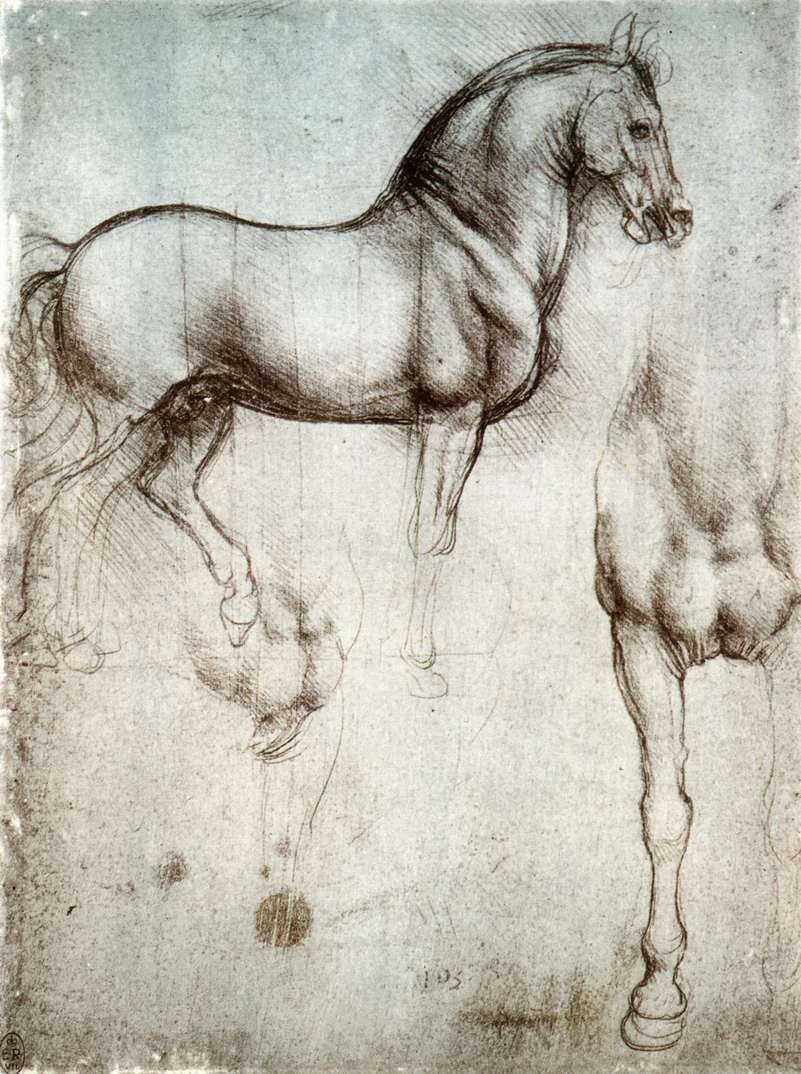
Then everything comes his way. A fortification to rework, a machine to design, the sets for a festival and the machinery that brings them to life, and finally a horse: a monumental bronze that Sforza wants raised in honor of his own father, and for which Leonardo fills whole sheets with studies.
But another language moves through the halls of the castle, and it is not his. The secretaries write it, the poets declaim it, the learned trade quotations from the ancients.
Leonardo walks among them, drawings under his arm, from a consultation about a canal to another about a machine, and never joins their conversations.
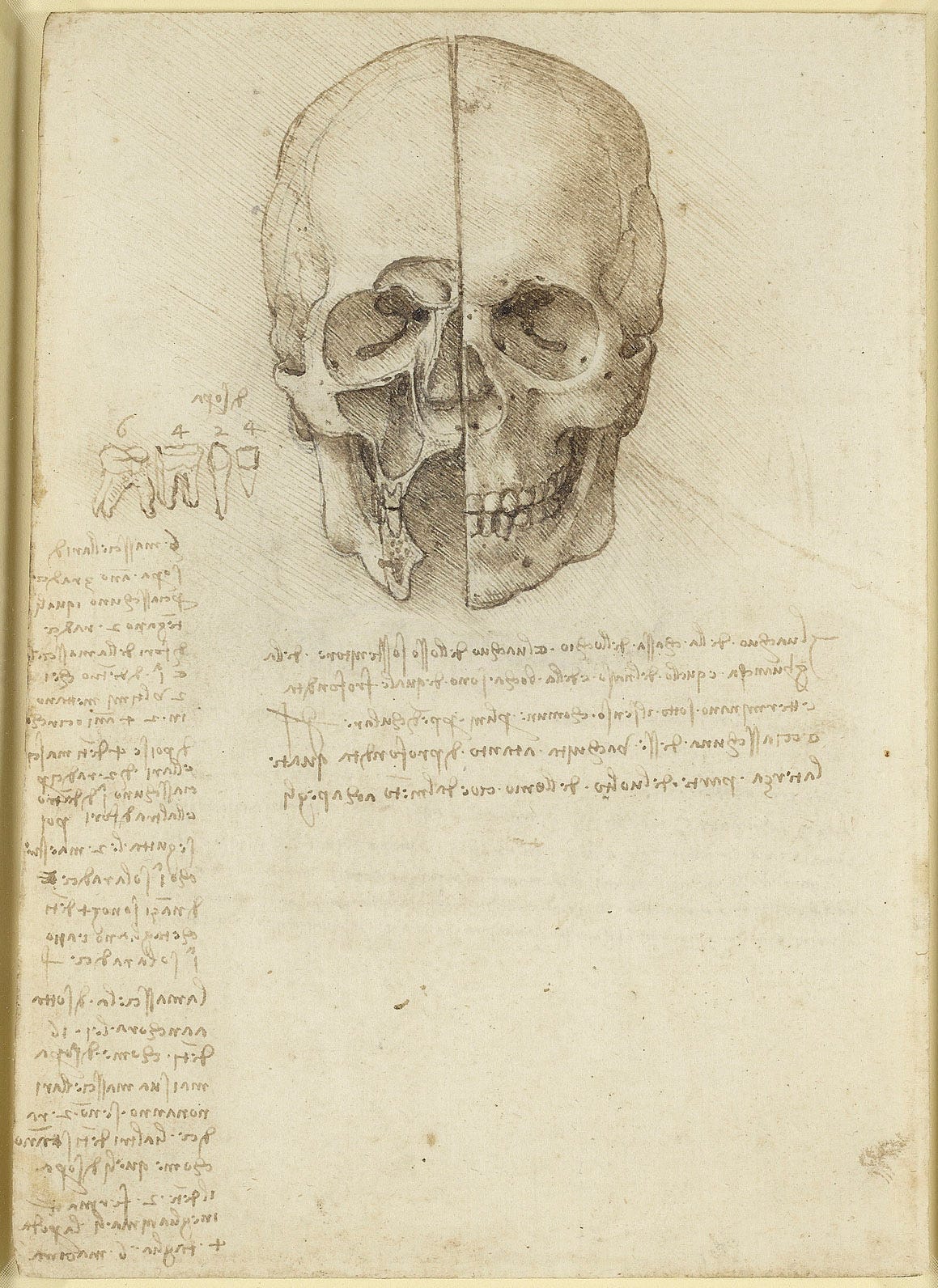
In the evening, at home, he opens a small notebook, about eight inches tall, where the plan of a church sits beside the outline of a fortress. Between the two, columns of words. Learned words, many of them from Latin, each with its Italian meaning set opposite, all in a mirror script that runs from right to left.
The man filling those columns is over 35.
By day, on another sheet, he answers those who look down on him. I know very well that, because I am not a man of letters, some presumptuous person will think he can find fault with me by claiming that I am a man without letters, he writes. An omo sanza lettere.
He calls such critics gente stolta, “foolish people,” and answers with a rule of his own: What I make must be drawn from experience rather than from the words of others.
He goes so far as to compare himself to Marius, the Roman general the patricians despised because he had no illustrious ancestors behind him. The books, though, keep piling up at home. He began with 5 volumes; now he owns close to 40.
After 40, he puts a beginner’s Latin grammar on his table, the kind given to children, and starts again from page one. He writes out the declensions in his notebook line after line, like a schoolboy copying out his lesson, all the way to the textbook’s sample sentences.
Ego doceo te artem gramaticam. “I teach you the art of grammar.”
Discover my new newsletter !

The Vinci Household
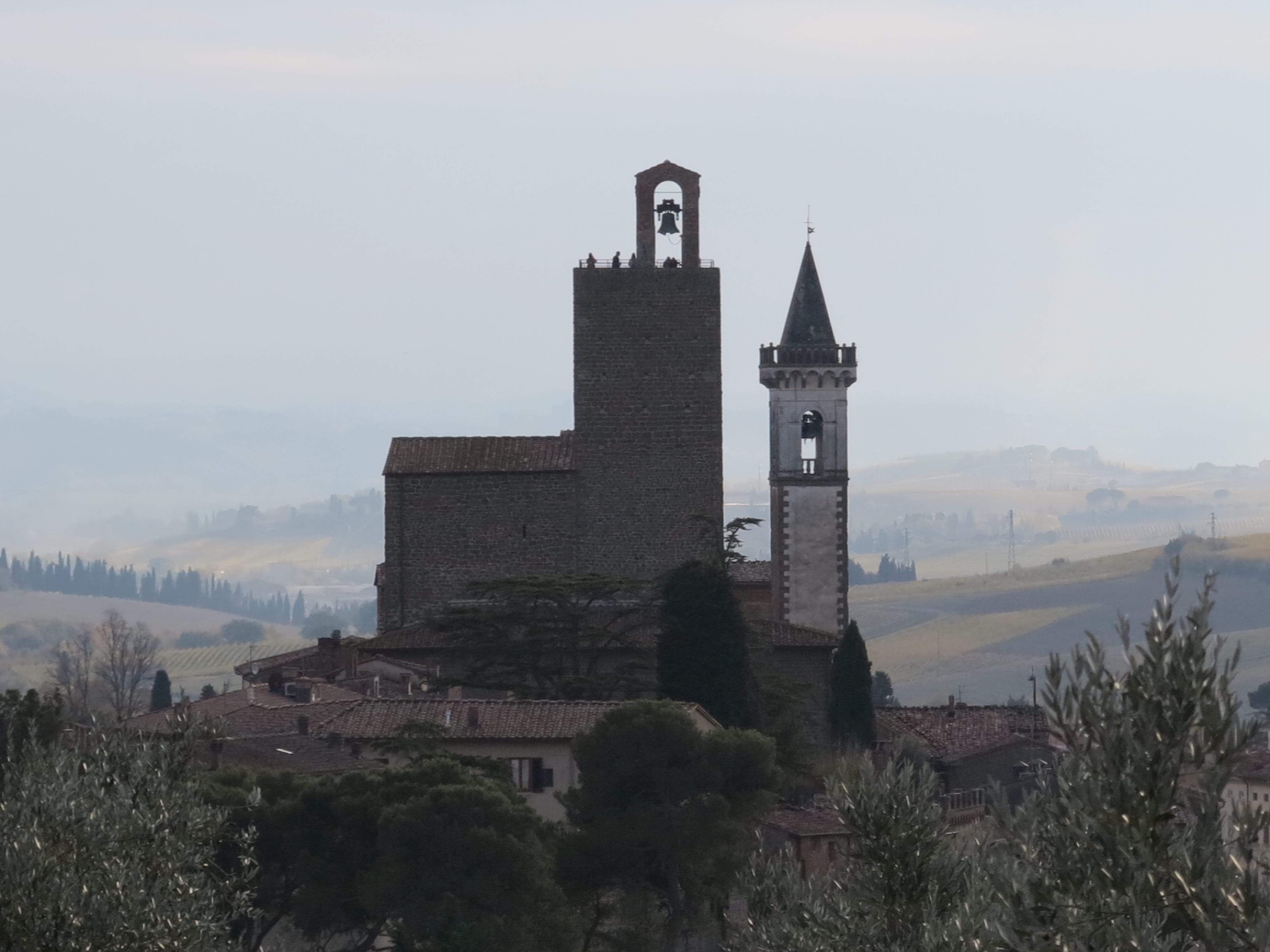
And yet in Vinci, Leonardo’s family is among the wealthiest in town, and his relatives live by the pen as much as by the land. The men of the house draw up deeds and contracts, for the townspeople and for Florentines alike.
The Vincis have written in Latin for more than a century. Their boys learn it from childhood. Only one was ever denied it : Leonardo.