
The lily is the most heavily loaded flower in Western painting. A white lily in the hand of an angel means one thing only, and every Annunciation painted for six hundred years contains one. Elsewhere the same flower means death, and it still does at funerals.
Learn art the fun way
1 | The Annunciation and the lily in the vase
Fra Angelico, Leonardo, Botticelli and hundreds of others put a white Madonna lily between Gabriel and Mary. The flower is doing the theology so the figures do not have to.
More on the system in what is iconography.
The flower is Lilium candidum, the Madonna lily, grown in Europe since antiquity. Painters put it in a vase between the two figures, or in Gabriel’s hand, and its position is a convention you can date: the vase is earlier, the hand is later.
2 | Leonardo’s Annunciation (around 1472)
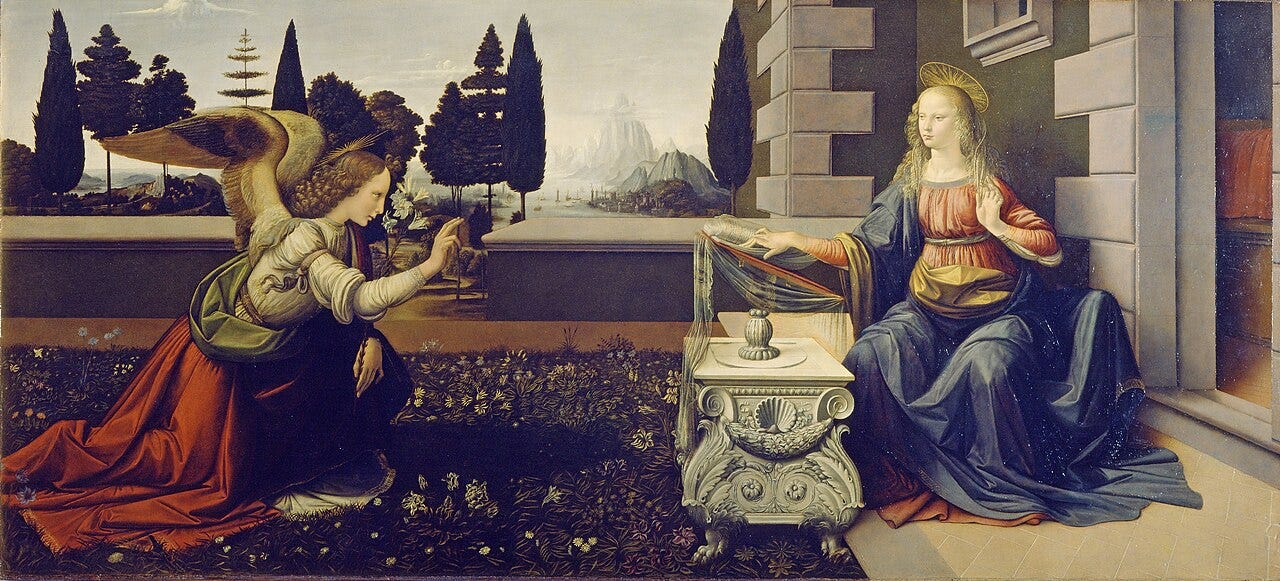
One of his earliest surviving paintings, with Gabriel holding a lily so carefully drawn it looks studied from a real stem. He was still in Verrocchio’s workshop.
More on him in Leonardo da Vinci.
Leonardo hid stranger things than lilies. I go looking for them in the secret of the Last Supper.
The picture was attributed to Ghirlandaio when the Uffizi acquired it in 1867 and only given to Leonardo later. The lily is drawn with the botanical precision of his notebooks, down to the stamens.
3 | The Pre Raphaelite lily
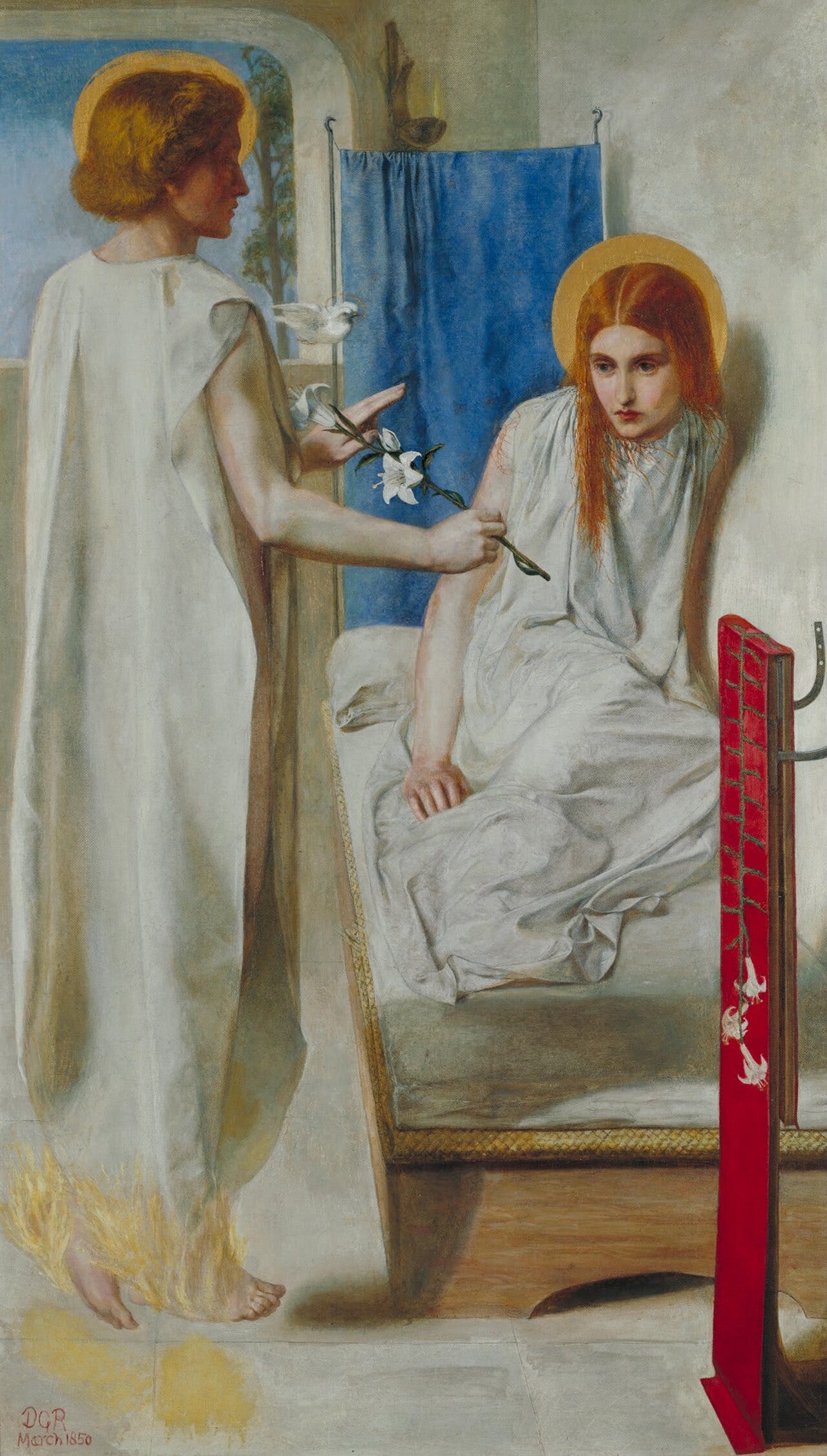
Rossetti made the lily his signature flower, and it turns up in his Annunciation, in his portraits and in the wallpaper of the movement that followed.
More on him in Dante Gabriel Rossetti.
Rossetti painted Ecce Ancilla Domini in 1849 and 1850, using his sister Christina as the model for the Virgin. He restricted the palette to white, blue and red, so the lily carries almost all the drawing.
4 | The fleur de lis
A stylised lily became the badge of the French crown and appears in coronation portraits, altarpieces and tapestry borders as a statement of who is in charge.
More in coronations in painting.
5 | Lilies and death
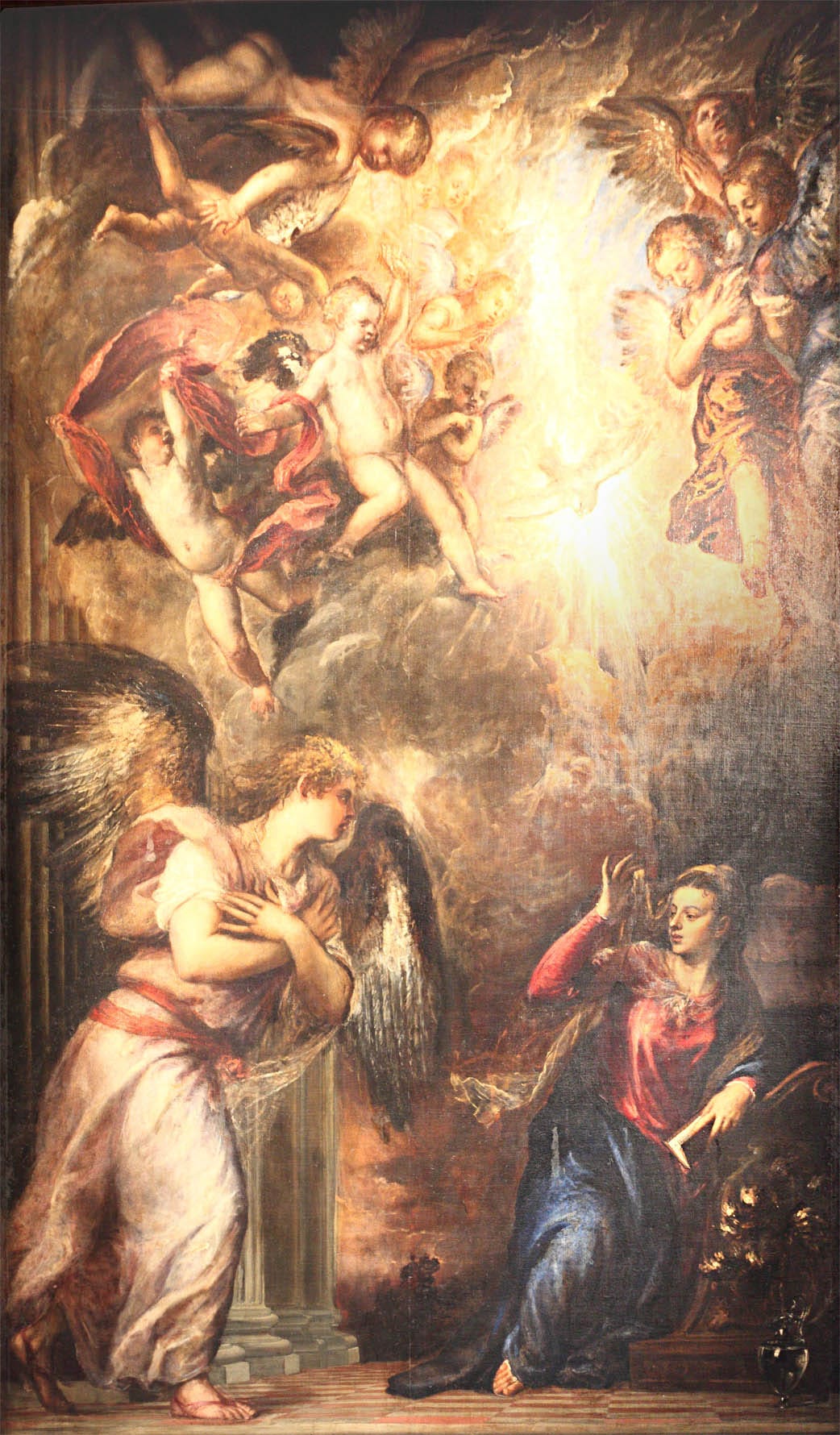
The same white flower stands beside deathbeds and on coffins. Purity and mortality are not opposites here, they are the same idea seen from two ends.
More in the language of flowers in art.
The association runs both ways because the lily was strewn on Roman graves long before it entered Christian imagery. It is still the standard funeral flower in most of Europe.
6 | Water lilies are not lilies
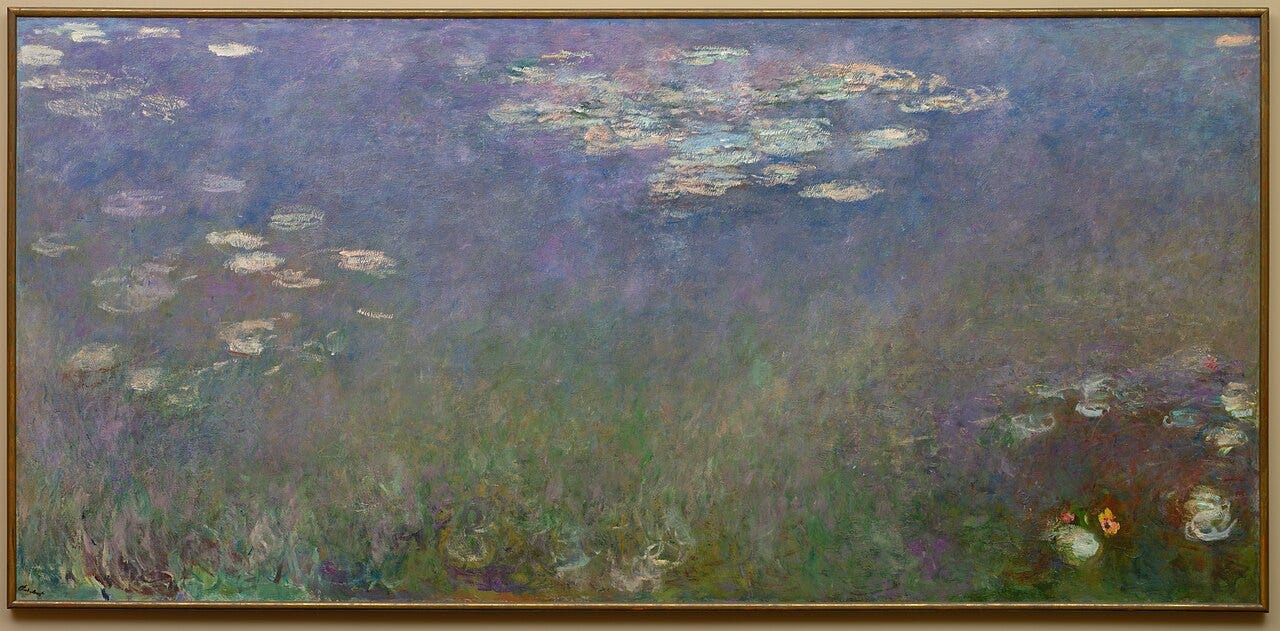
Monet’s nympheas are aquatic plants unrelated to the Madonna lily. He built the pond himself, then spent thirty years painting it.
More in why Monet painted water lilies.
7 | The lily in Art Nouveau
Around 1900 the lily became a design unit: on posters, glass, ironwork and book covers, chosen for its long stem and its curve rather than for what it meant.
More on him in Alphonse Mucha.
8 | The lily of the valley
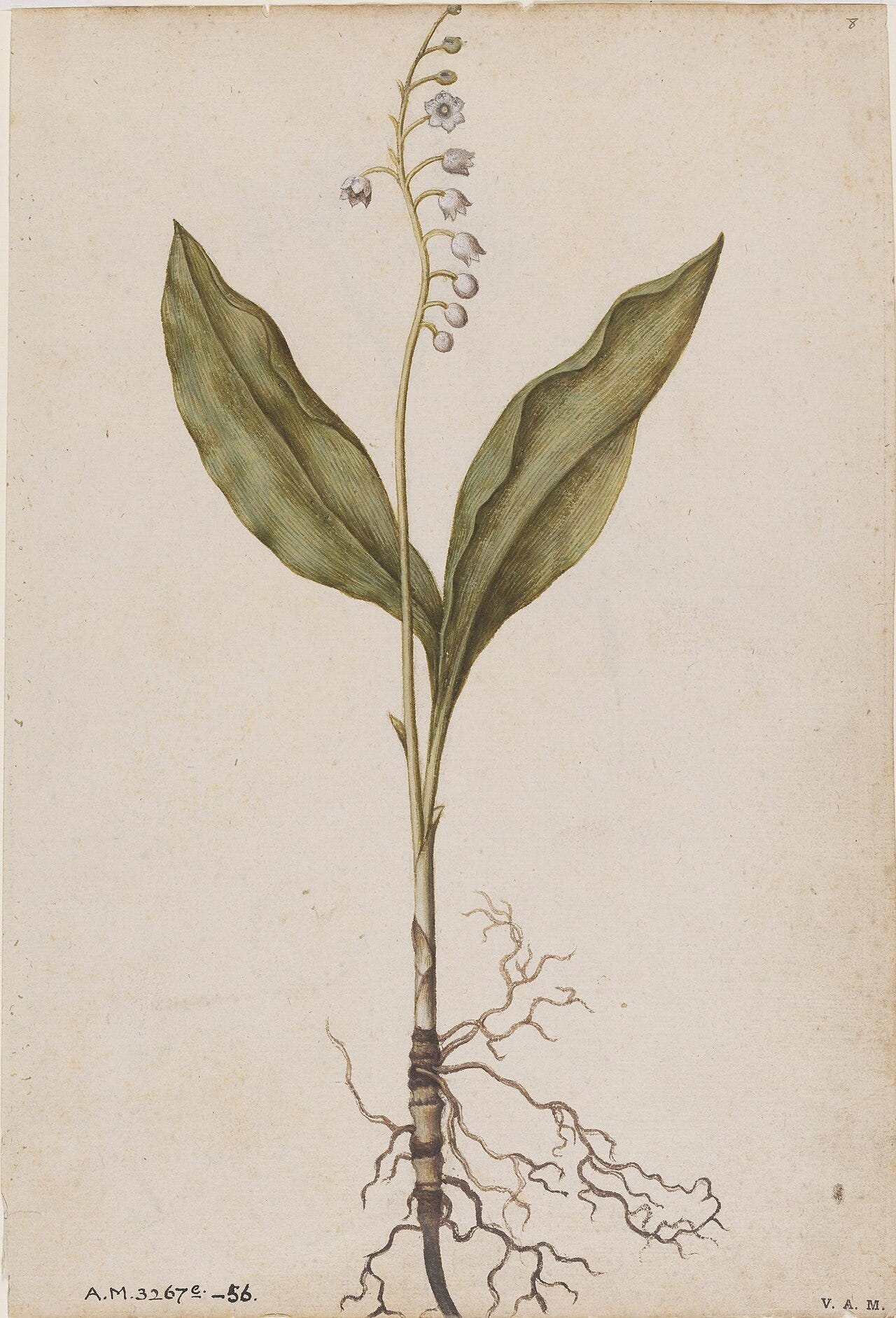
A different plant again, smaller and bell shaped, which carries its own meanings of humility and returning happiness, and appears in Northern Renaissance panels.
Painters distinguished these plants far more carefully than modern viewers do.
Convallaria majalis is not a lily at all in botanical terms. It appears in Northern panels as a sign of humility and of the return of spring, and it is small enough that it is easy to miss.
9 | Botanical accuracy in the Renaissance
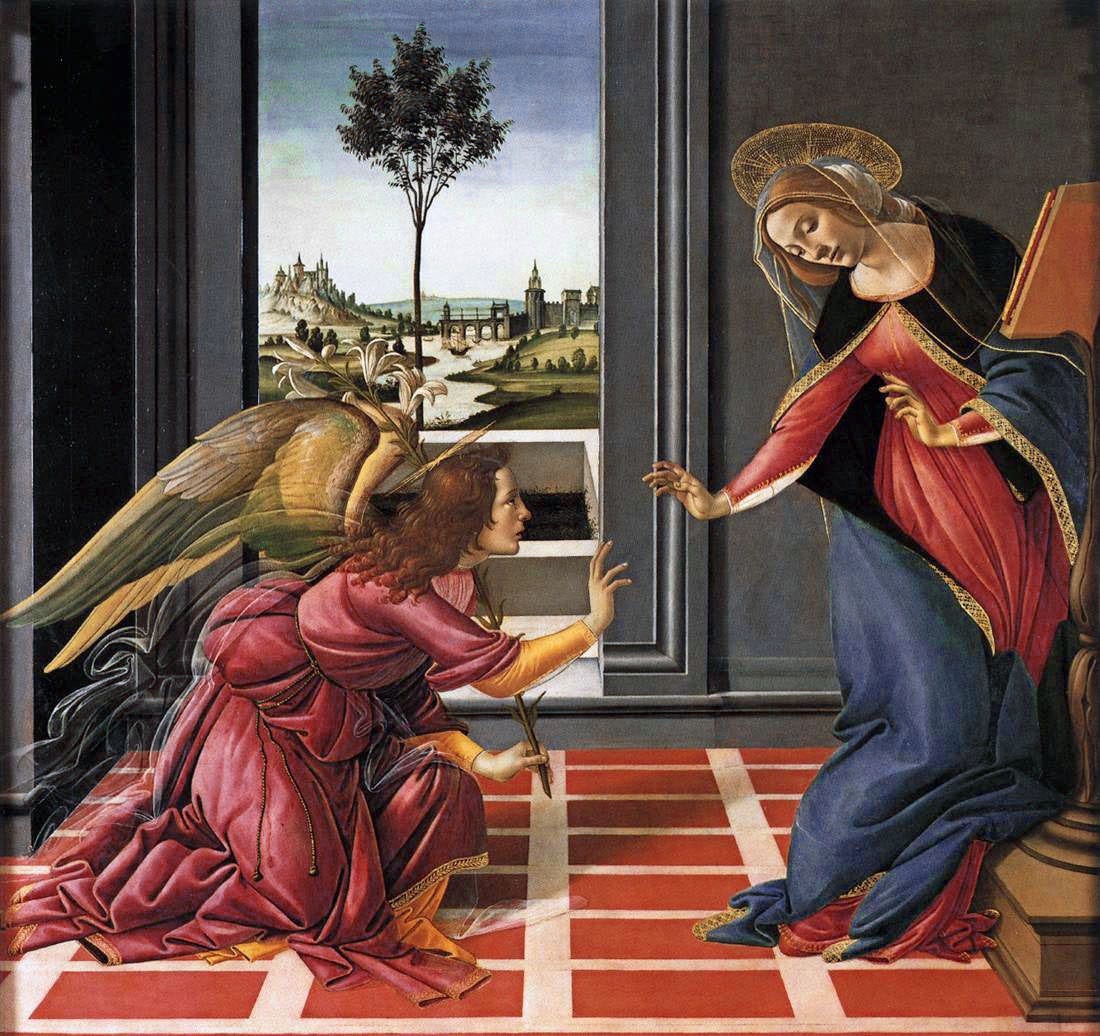
The plants in a good fifteenth century Annunciation can usually be identified to species. Painters worked from real specimens because patrons could tell.
More on the practice in what is still life painting.
10 | The lily in Whistler and Wilde’s London
The Aesthetic movement adopted the lily and the sunflower as badges, worn in the buttonhole and painted into interiors, until Punch was mocking both.
More on him in James McNeill Whistler.
11 | The lily in Japanese and Chinese painting
East Asian painting treats lilies and related flowers as seasonal markers within a fixed calendar of subjects, closer to a date stamp than to a symbol of virtue.
The same plant, an entirely different job.
East Asian flower painting works to a calendar of seasonal subjects, so a plant fixes the time of year rather than a moral. The same discipline produced the bird and flower genre, kacho ga.
12 | Why one flower carries so much
The lily is white, tall, strongly scented and short lived. Every one of those qualities was useful to a painter who needed to say purity, dignity, death or time passing without a caption.
Look at whether it is cut. A cut lily in a vase is a clock.
Lilies on canvas, questions readers ask
What does a lily symbolise in art? Purity and virginity, above all in Annunciation scenes. It also stands for death, which is why it appears at deathbeds and funerals.
Why is there a lily in every Annunciation? It is the attribute of the Virgin. Gabriel holds it or it stands in a vase between the two figures, so the meaning is legible without text.
Are water lilies the same flower? No. Monet’s nympheas are aquatic plants unrelated to the Madonna lily of Christian imagery.
What is the fleur de lis? A stylised lily used as the badge of the French crown, appearing in painting as a claim of royal legitimacy.
Which Annunciation has the most famous lily? The Uffizi for Leonardo’s Annunciation, the National Gallery and Tate for the Pre Raphaelites, the Orangerie for Monet.
In any Annunciation, find the lily first. Count the blooms, see who is holding it, and check whether it has been cut. The painter put more information into that stem than into most of the faces.
Two collections worth an hour of your time: the Met and the Rijksmuseum.
This subject is one thread in a wider theme. See how it fits into Flowers and Plants in Art.