
Line is the first element of art: the mark that comes before shape, value, or color. It can describe a contour, carry a direction, or hold pure emotion in its wobble. Here are twelve artists who made the line itself do the work.
Line in 30 seconds
Contour lines describe edges. Gesture lines describe motion. Hatching lines build tone out of nothing but repetition.
Horizontal lines rest, vertical lines stand, diagonals move, and curves breathe.
The character of a line is an autograph: nervous, calm, fast, fat, starved. You can diagnose a temperament from a single stroke.
A line that closes becomes a shape. Until then, it is pure direction.
Some artists erase the line and paint in masses; others let it rule everything. This page belongs to the second tribe.
Hokusai, the Manga (1814-1878): the calligraphic line
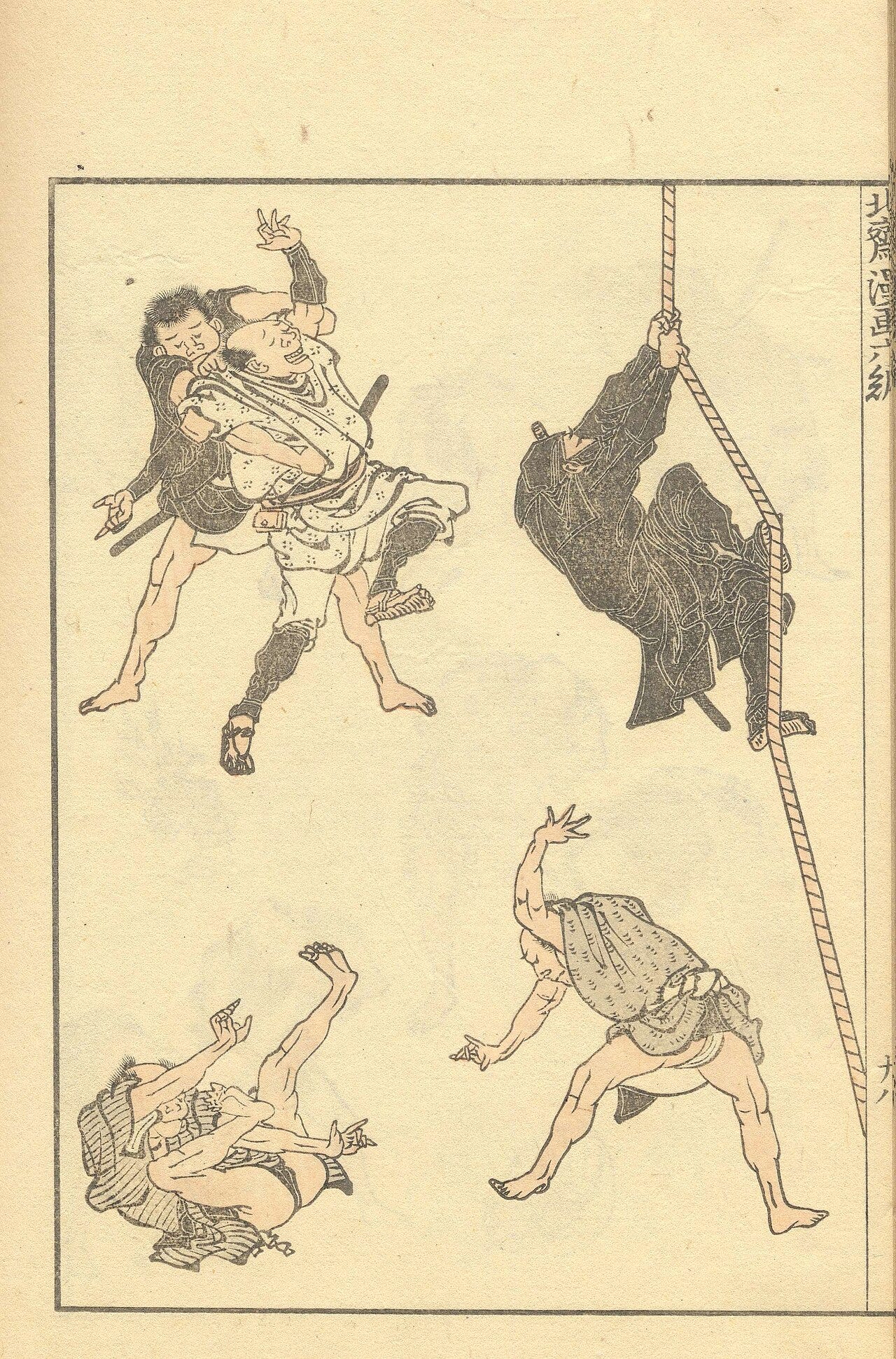
Thousands of tiny figures wrestle, dance, fish, and fall across fifteen volumes, each built from brush lines that thicken and thin like handwriting. Hokusai inherited a calligraphic tradition where drawing and writing share one gesture, the same line Europe would later crave through Japonisme.
He called them manga, whimsical sketches, and they sold like novels: around four thousand drawings, reprinted for decades.
Ingres, Portrait of Niccolò Paganini (1819): the line as law
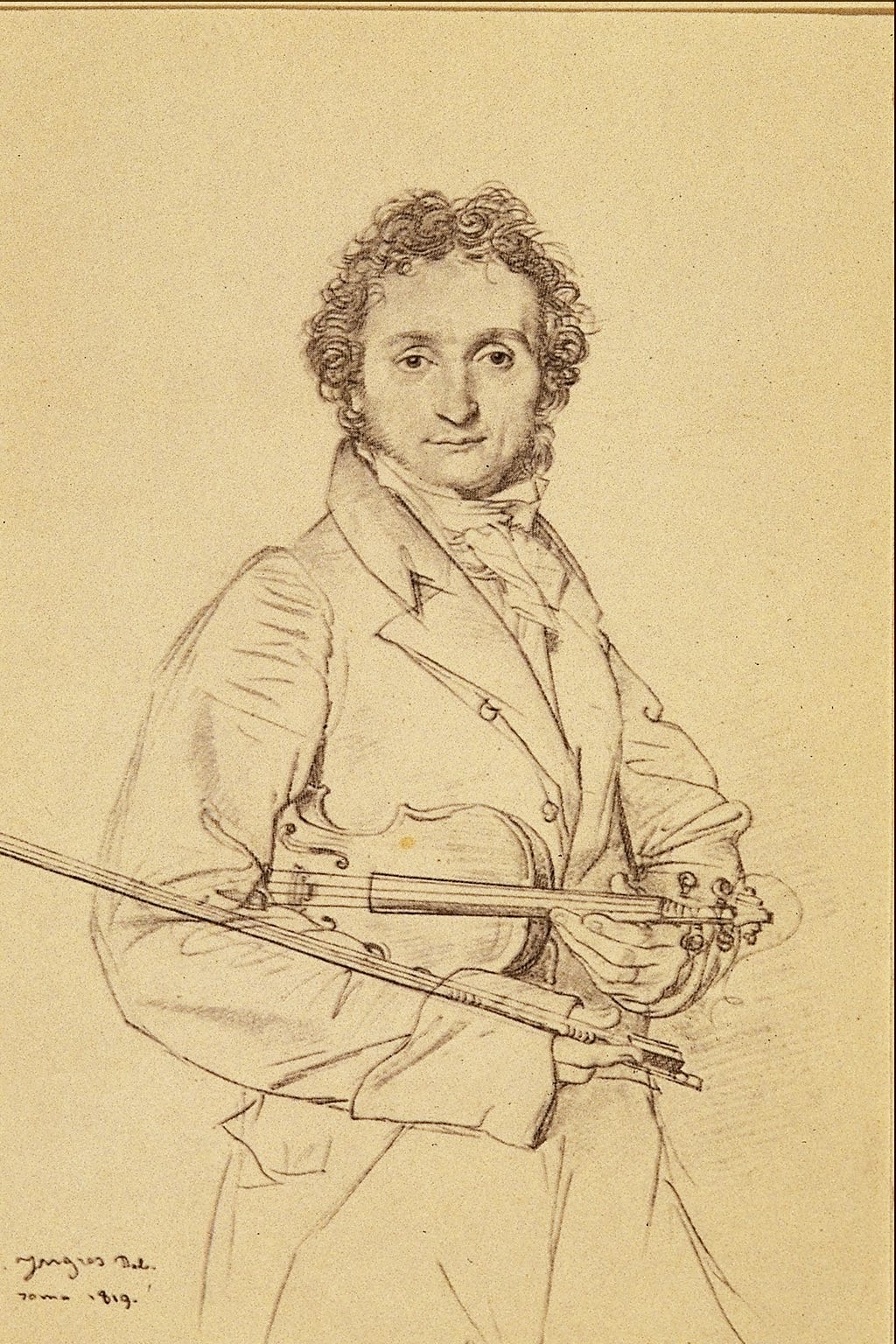
A few pencil contours, hardly any shading, and the violinist stands complete. Ingres preached that drawing is the probity of art, and his portrait drawings are the sermon: the line does everything.
Ingres himself played the violin seriously enough that the French still say violon d’Ingres for a beloved second talent. He drew a fellow musician.
Dürer, Adam and Eve (1504): tone built from pure line
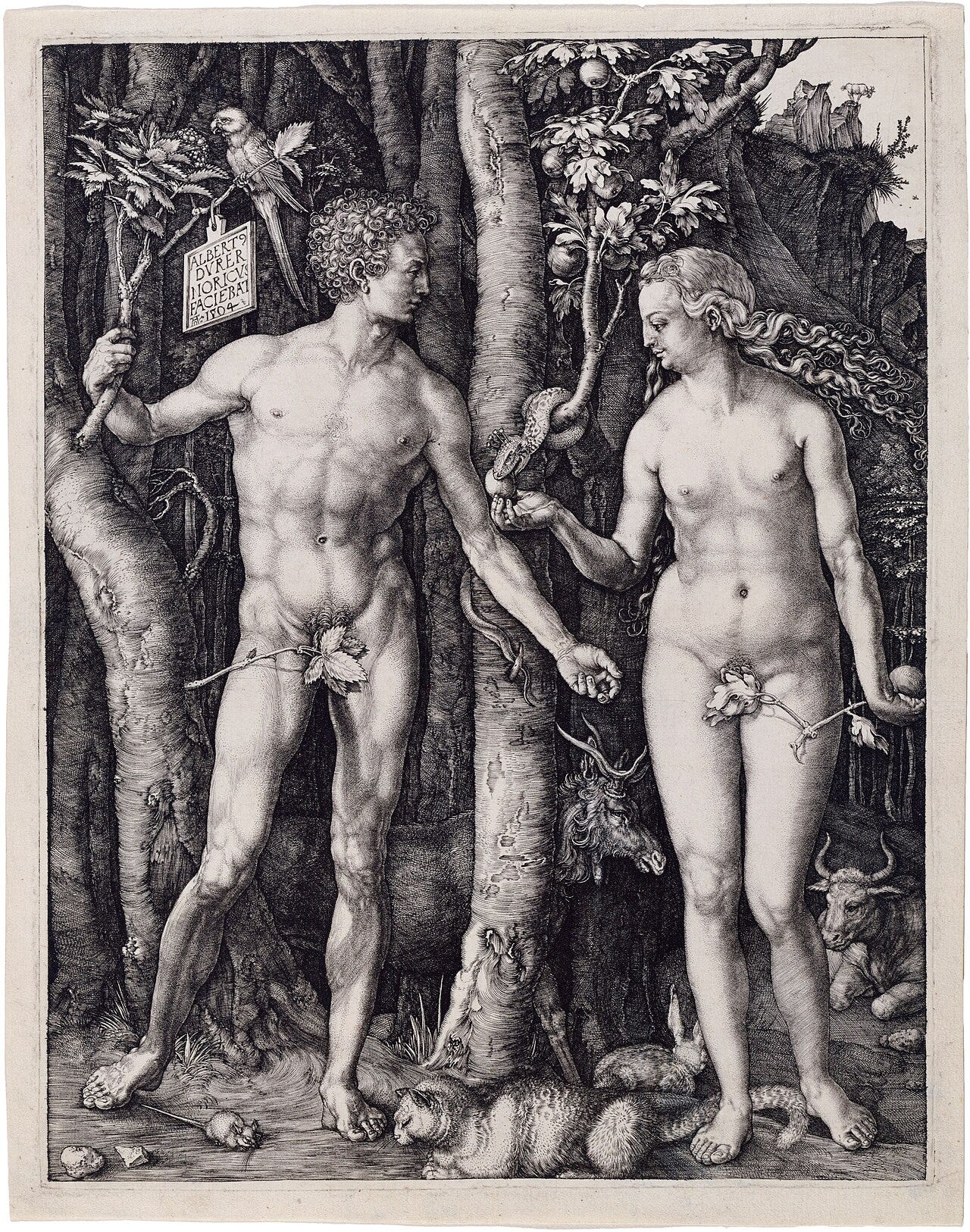
There is no gray ink in an engraving, only black lines on white, yet the bodies turn and the forest darkens. Dürer built every tone from hatching, lines laid over lines until they read as shadow.
Rembrandt, the Hundred Guilder Print (c. 1649): the line that breathes
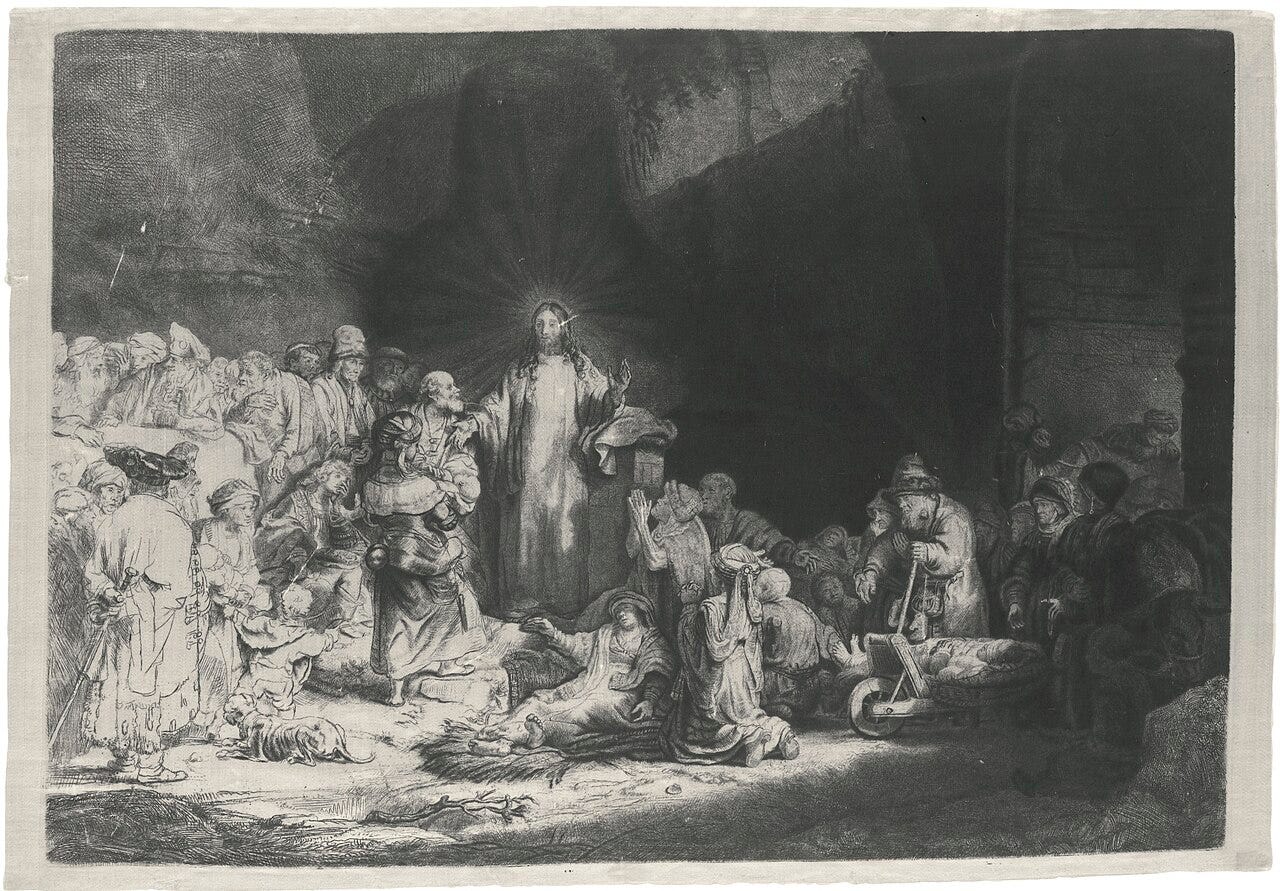
Etched lines swarm from near-blank whites around Christ to velvet blacks in the crowd, loose here, dense there, alive everywhere. Rembrandt made the etching needle as expressive as his brush.
The nickname is commercial: the print became so coveted that a hundred guilders, an outrageous sum, was reportedly paid for one impression in his own lifetime.
Learn art the fun way


Van Gogh, the reed-pen drawings (1888): the line that vibrates
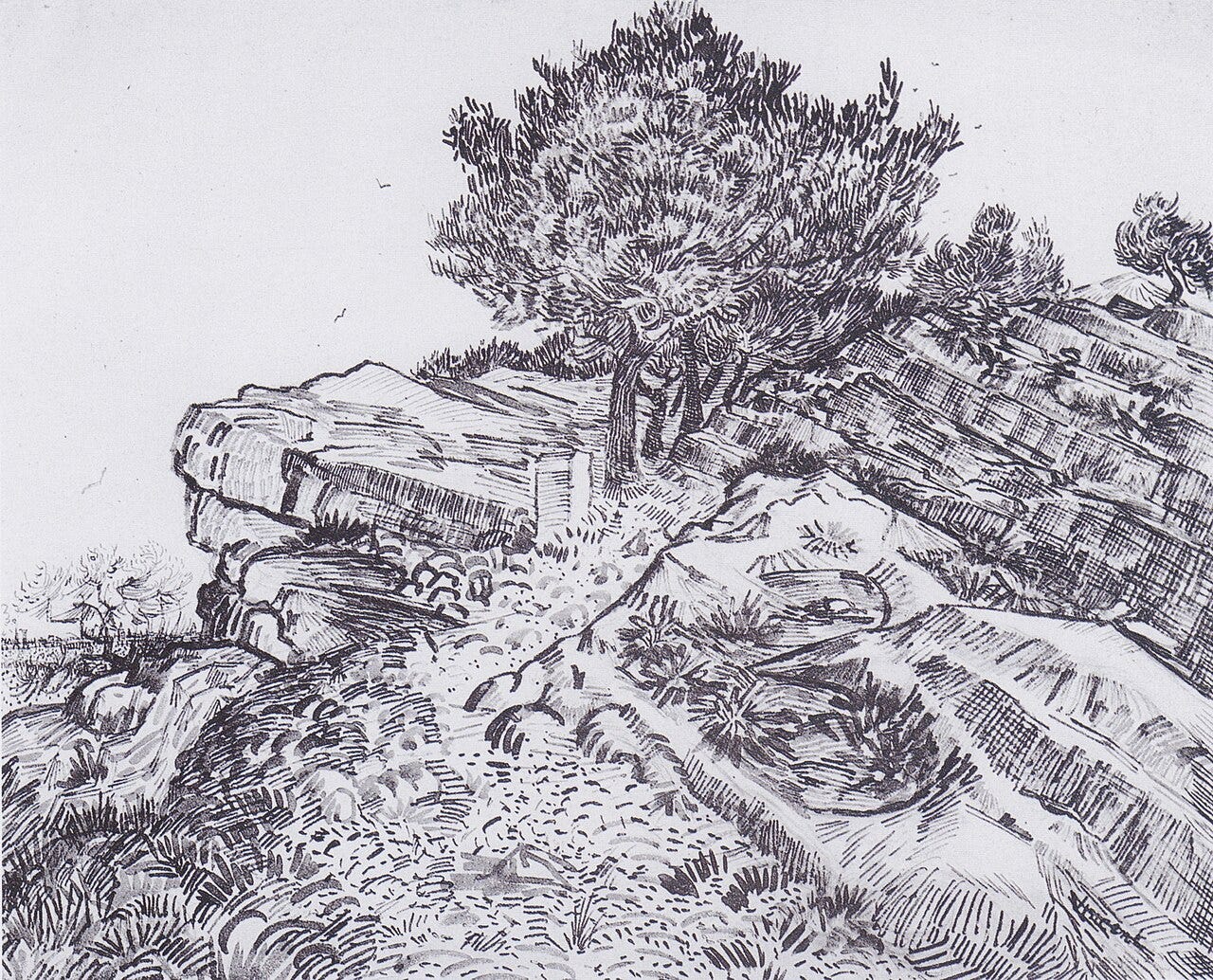
He cut his own reed pens Arles-style and drew fields as swarms of dashes, dots, and curls, every stroke a pulse. Van Gogh drew when paint was too expensive, mailing the results to his brother as proof of work.
The drawings map his paintings stroke for stroke: the vibration was never an accident of oil. It was in his wrist.
Klimt, the studies (1900s): the decorative line
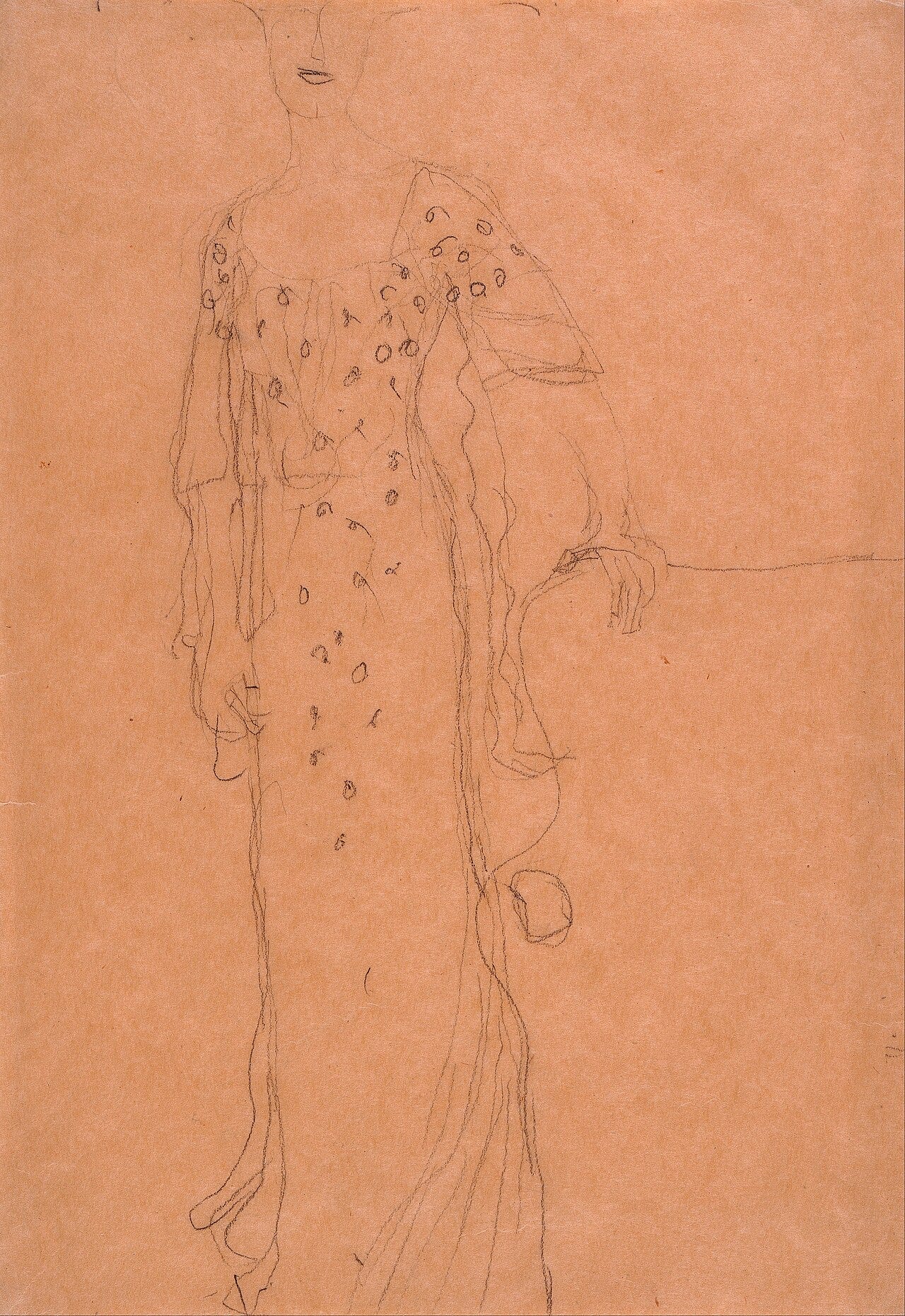
His drawings are almost all one wandering contour, a line that loves fabric, hair, and the long way around. Klimt drew every day, thousands of sheets, models drifting through the studio on standing invitation.
Toulouse-Lautrec, Moulin Rouge: La Goulue (1891): the poster line
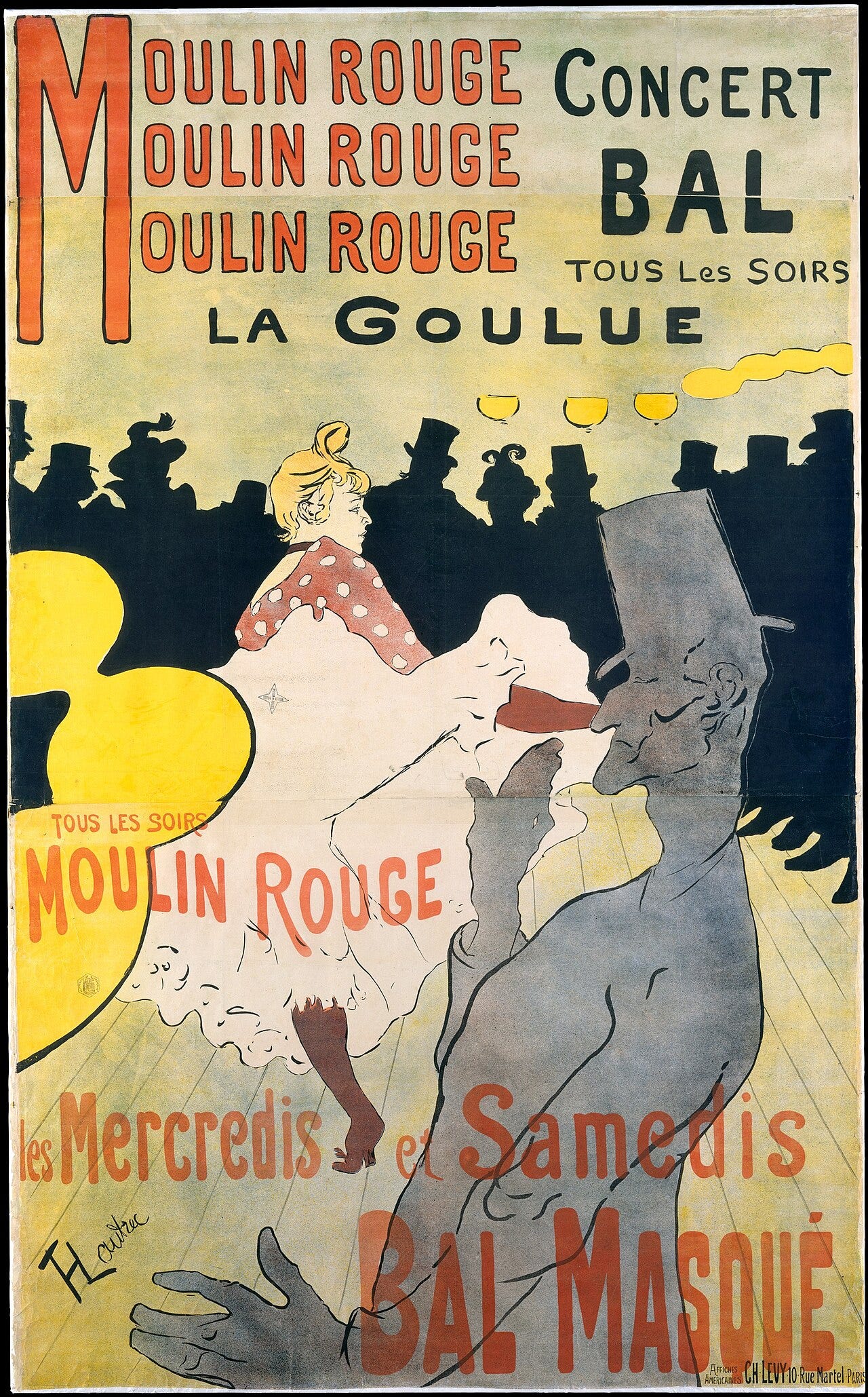
A silhouetted crowd, one kicking dancer, and contours brutal enough to read across a boulevard at night. Toulouse-Lautrec compressed the whole cabaret into a few printable lines, and invented the modern poster doing it.
The poster was so large it had to be printed on multiple sheets and pasted together on the walls. Paris met it overnight, three thousand copies at once.
Schiele, the self-portraits (1910-1918): the nervous line
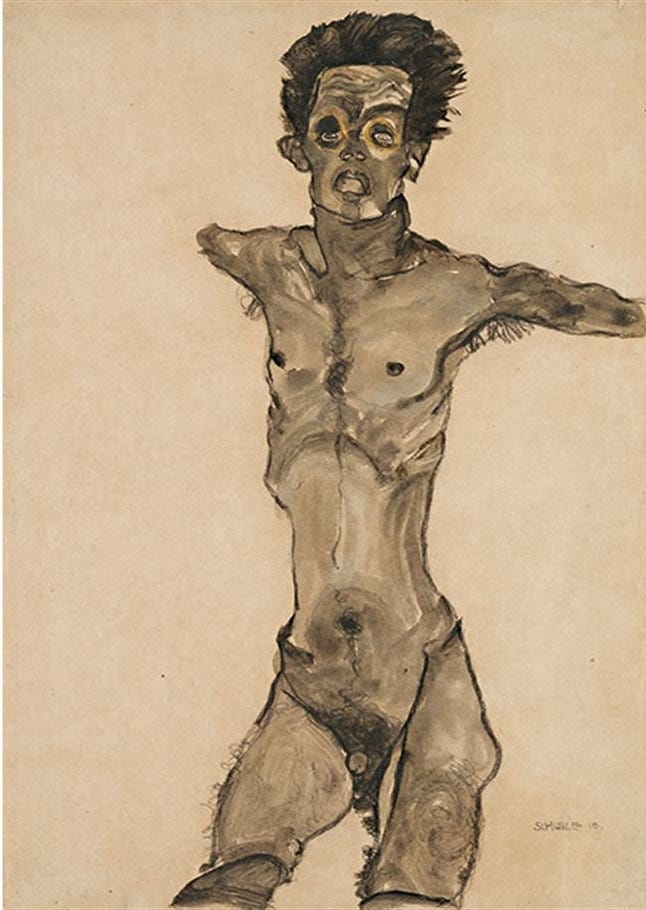
His contour jerks, breaks, and doubles back, angular as barbed wire, and it carries more anxiety than any color could. Schiele made the quality of the line itself the emotional subject.
Klimt, his mentor, reportedly answered Schiele’s request to exchange drawings with: why swap with me, you draw better than I do.
Matisse: one line, no eraser
In his last years Matisse drew faces in a single unbroken brush line, and, bedridden, sketched on his ceiling with charcoal tied to a bamboo pole. Rights are still enforced in some countries, so words only.
Picasso: the continuous line
A dachshund, a dove, a bull, each in one line that never lifts. Picasso also drew with a flashlight in a dark room in 1949, the camera shutter left open: line freed even from paper. Same rights caveat, so no image.
The line becomes sign: Haring and Miró
Keith Haring chalked his radiant babies and barking dogs on empty subway ad panels, fast enough to finish before the police arrived, and was arrested anyway, repeatedly. Miró had already shrunk the line into floating signs, stars and eyes and squiggles, a private alphabet.
By the twentieth century the line no longer described things. It had become the thing.
You Might Also Like


The line that describes, the line that confesses
Ingres’s contour and Schiele’s contour do the same job with opposite instincts. One wants to prove a body is really there. The other wants to prove something is wrong with it.
Ingres never lets the line waver, because a waver would read as a mistake. Schiele forces the line to jerk and double back, because a mistake is closer to what anxiety actually looks like.
For descriptive accuracy, Ingres wins outright, no other line on this page reads a body that cleanly. For emotional charge, Schiele wins by the same margin, because polish would have undercut the nerves.
Schiele died on 31 October 1918, aged 28, three days after his wife Edith, who was six months pregnant. Both were killed by the Spanish flu pandemic. His line stayed nervous until the end.
Line is one of eight elements that shape every painting. See how it connects to the other seven in the elements and principles of art guide. It connects closely to shape in art.
Quick answers
What is line in art? The most basic element: a mark with length and direction. Everything else, shape, form, pattern, begins as line.
What are the types of line in art? Contour (edges), gesture (motion), hatching (tone), implied (a pointing arm, a gaze), plus the emotional families: straight and calm, curved and soft, jagged and anxious.
What is the difference between line and shape? A line has direction; a shape has area. The moment a line closes on itself, it stops being a path and becomes a territory.
How do artists use line to show emotion? Through its character. Schiele’s broken angles read as anxiety, Ingres’s unbroken contours as control, Van Gogh’s stabbed dashes as urgency. The line is handwriting for feeling.
Where to see these works
Hokusai’s Manga volumes turn up in print rooms everywhere, Ingres’s portrait drawings at the Louvre and the Musée Ingres in Montauban, and Dürer and Rembrandt prints in any major graphics cabinet, the Rijksmuseum above all.
Van Gogh’s drawings are at the Van Gogh Museum in Amsterdam, Klimt and Schiele fill the Albertina and the Leopold Museum in Vienna, and Lautrec’s posters have a museum to themselves in Albi.
One last fact
Paul Klee, who taught line theory at the Bauhaus, described drawing as taking a line for a walk. Every artwork on this page is a walk you can retrace: start anywhere, follow the ink, and you are moving at the speed of a dead artist’s hand.