
London gave painting two things nowhere else could: fog thick enough to dissolve a bridge, and a river so busy it doubled as a stage. Monet painted the Thames from a hotel window for three winters, and Whistler was taken to court over one canvas of it.
Twelve views to begin with
Monet made around a hundred canvases of the Thames, and complained when the fog thinned.
One nocturne of the river ended in a libel trial. The painter won and was awarded a farthing.
Turner watched Parliament burn from a boat and made watercolours on the spot.
One painter recorded the exact colour of the smog, which was caused by coal.
Learn art the fun way
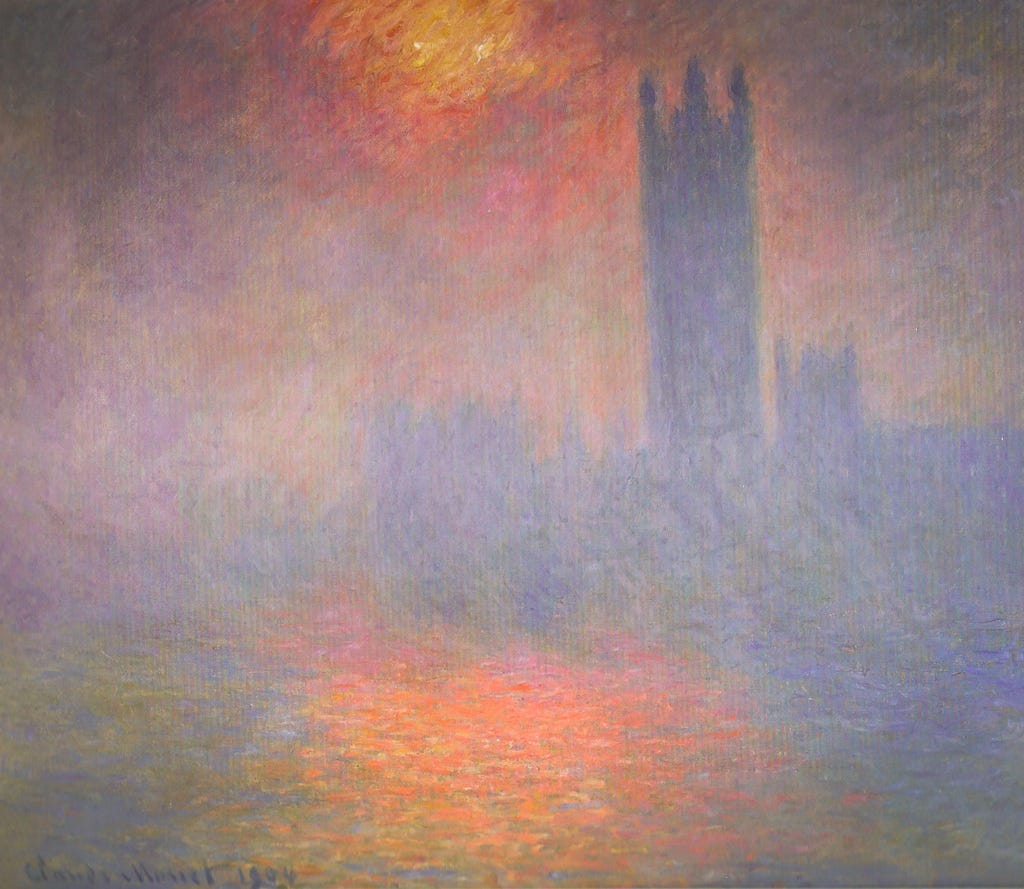
1 | The Houses of Parliament series, Claude Monet (1900 to 1904)
Monet worked from a balcony at the Savoy and from Saint Thomas’ Hospital, chasing the light through the smog, and finished the canvases back in France from memory and notes.
He said the fog was what gave London its wonderful breadth. More on him in Claude Monet.
2 | Nocturne in Black and Gold, James McNeill Whistler (1875)
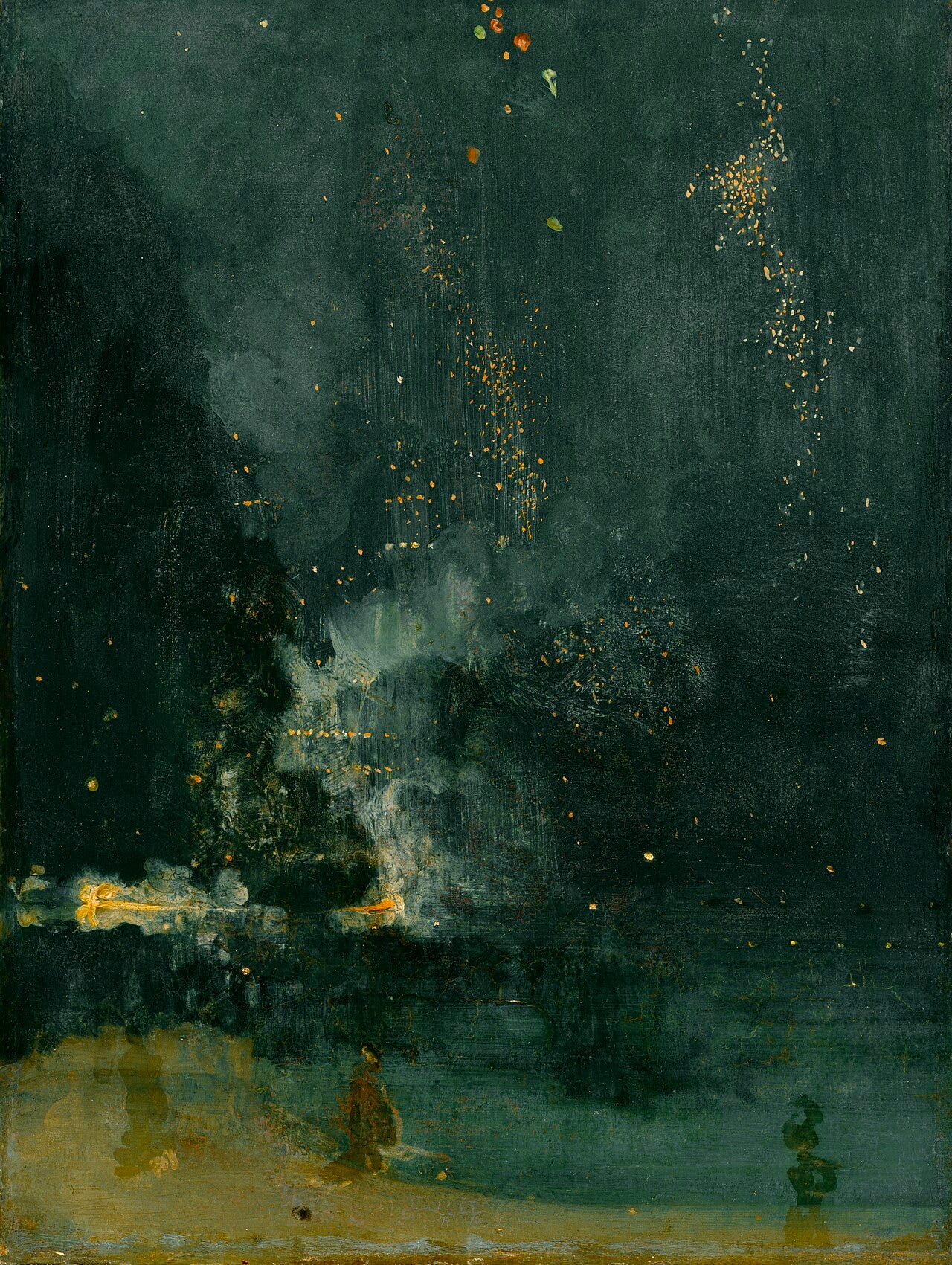
Fireworks over Cremorne Gardens, painted as smears of light on near darkness. The critic John Ruskin said Whistler had flung a pot of paint in the public’s face.
Whistler sued, won, and was awarded one farthing in damages, which bankrupted him in costs. More in James McNeill Whistler.
3 | The Burning of the Houses of Lords and Commons, JMW Turner (1835)
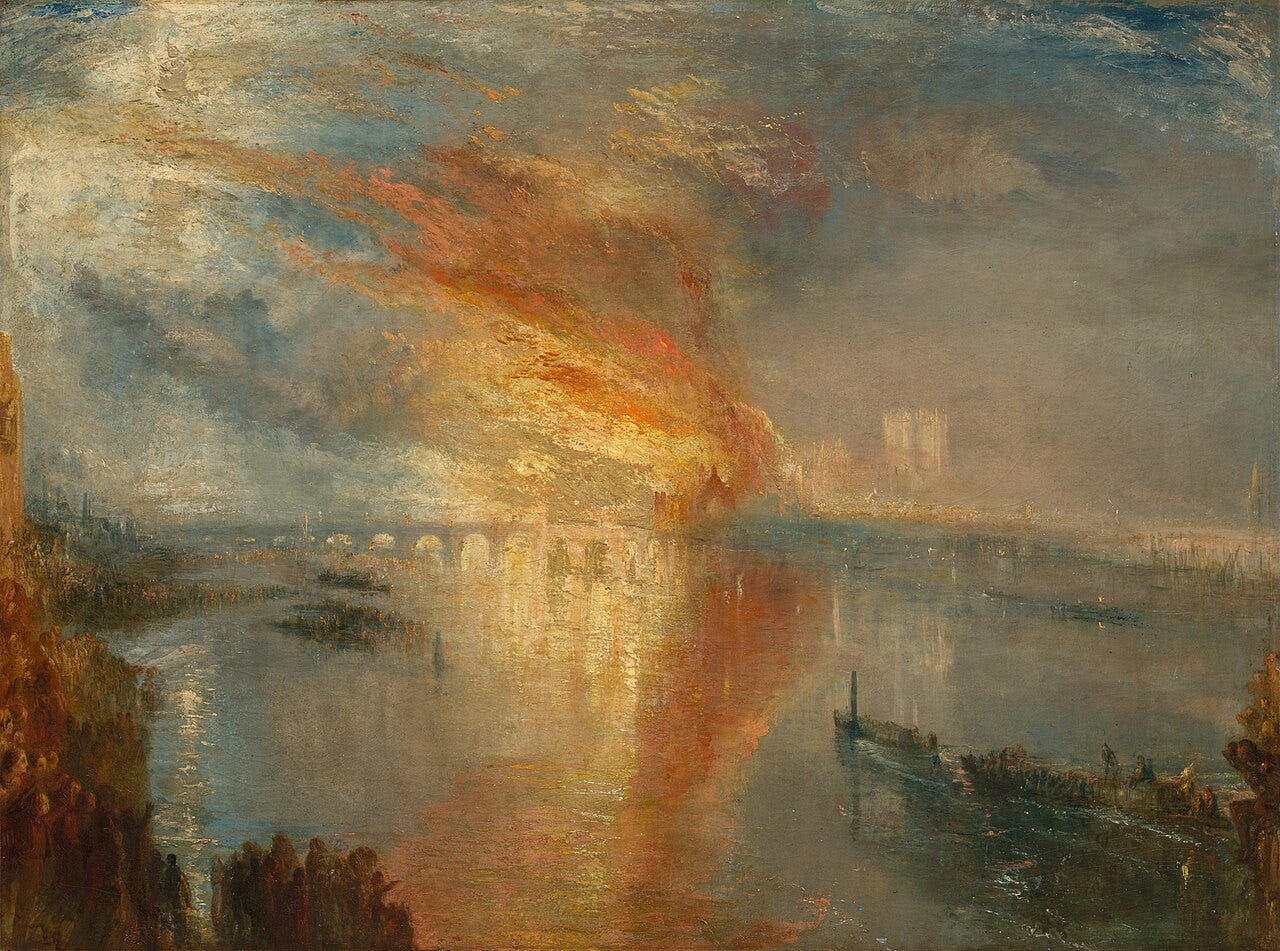
Parliament burned on the night of 16 October 1834. Turner joined the crowds on the river, sketched in watercolour from a boat, and turned it into two oil paintings.
The fire started with an overloaded stove burning old wooden tally sticks. More on him in JMW Turner.
The fire began on the evening of 16 October 1834 and burned through the night. Turner filled two sketchbooks that night and produced two large oils, one now in Philadelphia and one in Cleveland, which is why the same scene exists in two versions.
4 | Canaletto’s London (1746 to 1755)
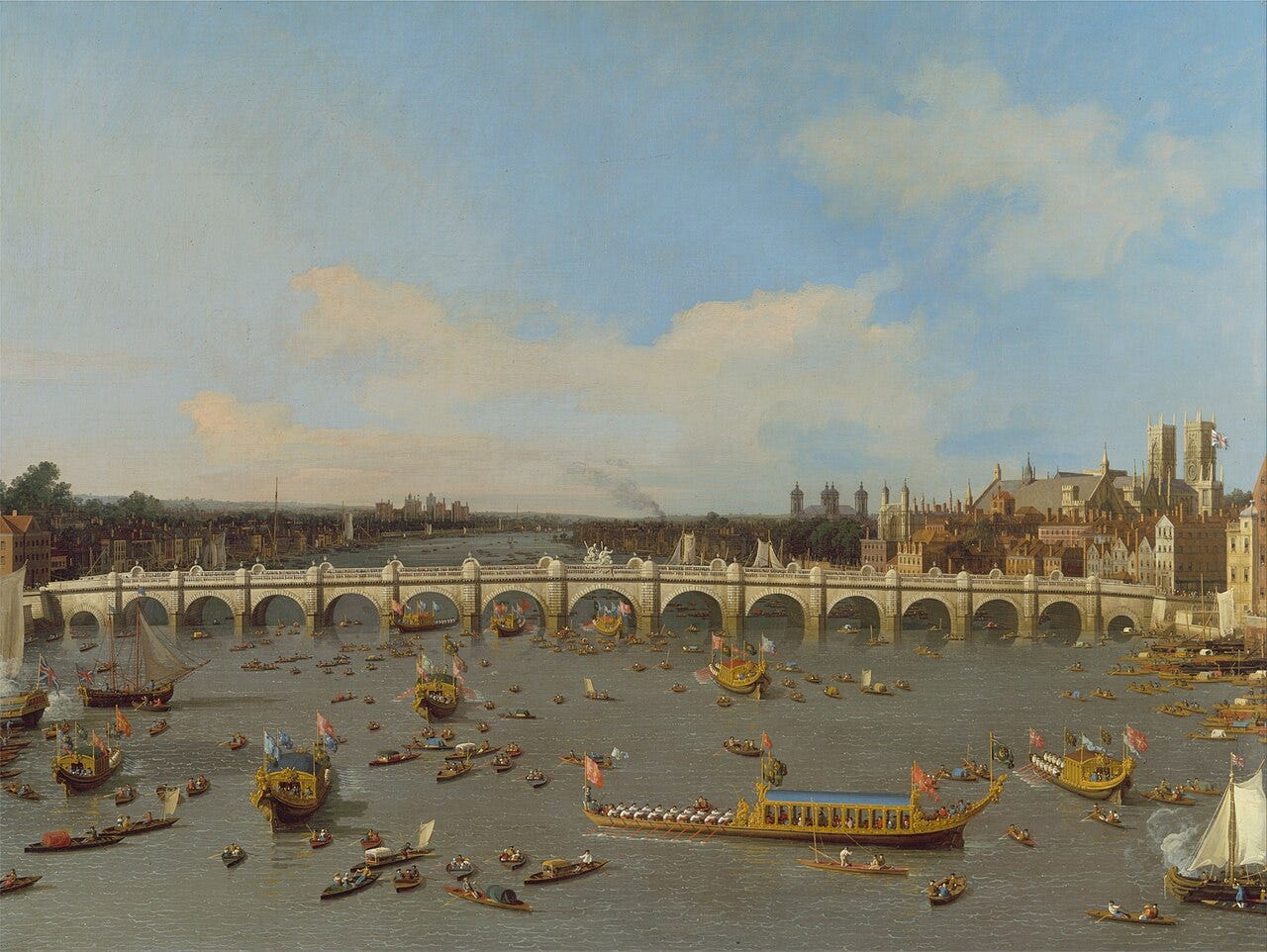
War cut off the Grand Tour, so Canaletto followed his customers to England and painted the Thames the way he had painted the lagoon, with the same clean light.
His London looks Venetian because he brought the formula with him. More in Canaletto.
He stayed roughly nine years, from 1746, and was accused by London dealers of being an impostor because the work looked stiffer than his Venetian pictures. He answered by painting a public view of Whitehall in 1749 and inviting anyone to come and watch.
5 | A Rake’s Progress, William Hogarth (1733)
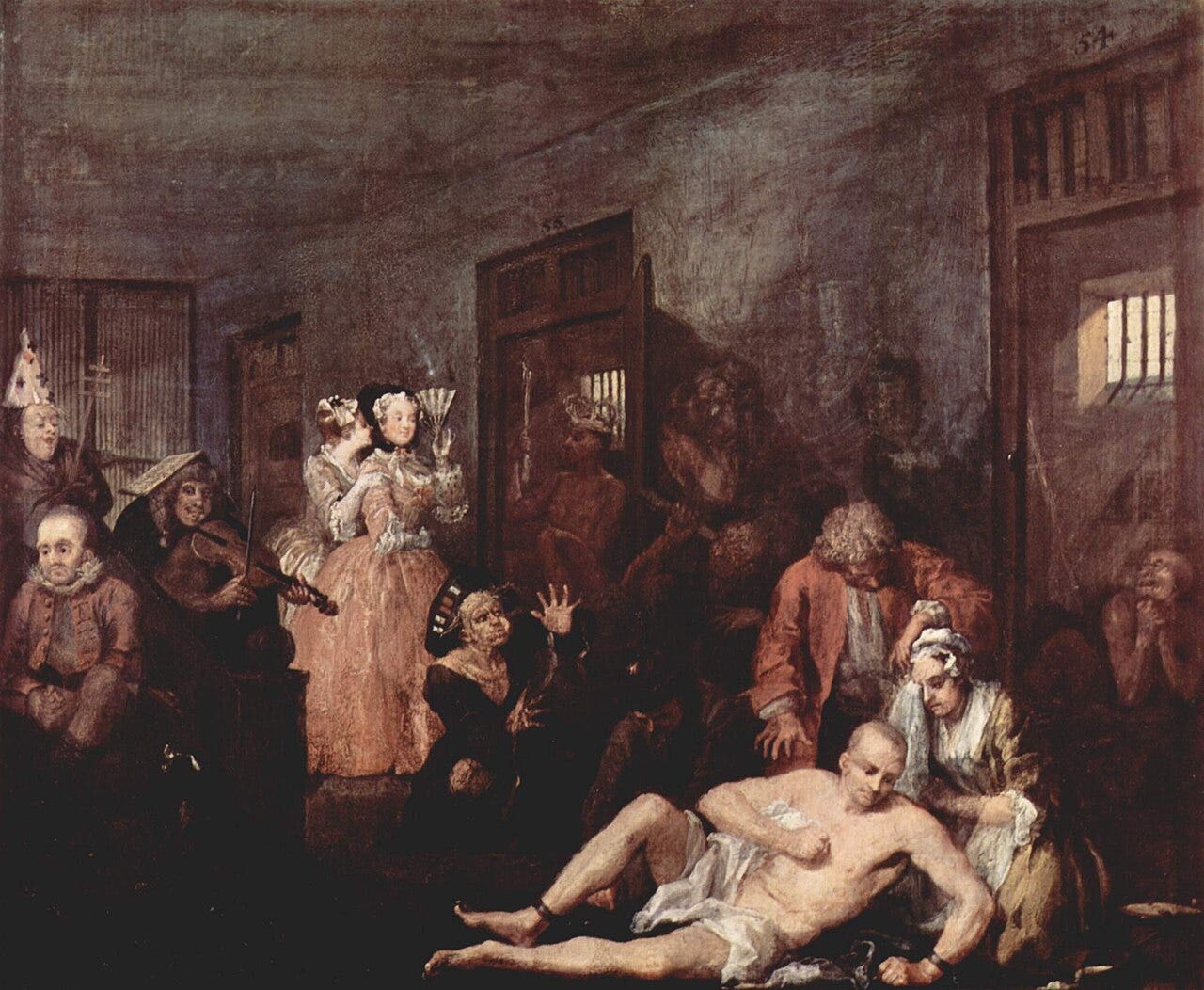
Eight scenes tracking one man from an inheritance to Bethlem hospital, set in real London taverns, gambling rooms and debtors’ prisons.
Hogarth got a copyright act passed in 1735 to stop the pirating of his prints. More in William Hogarth.
The eight paintings were bought by Sir John Soane in 1802 and are still in his house in Lincoln’s Inn Fields, hung in the order Hogarth intended. He sold the story to the public as engravings, which is where the money was.
6 | Work, Ford Madox Brown (1852 to 1865)
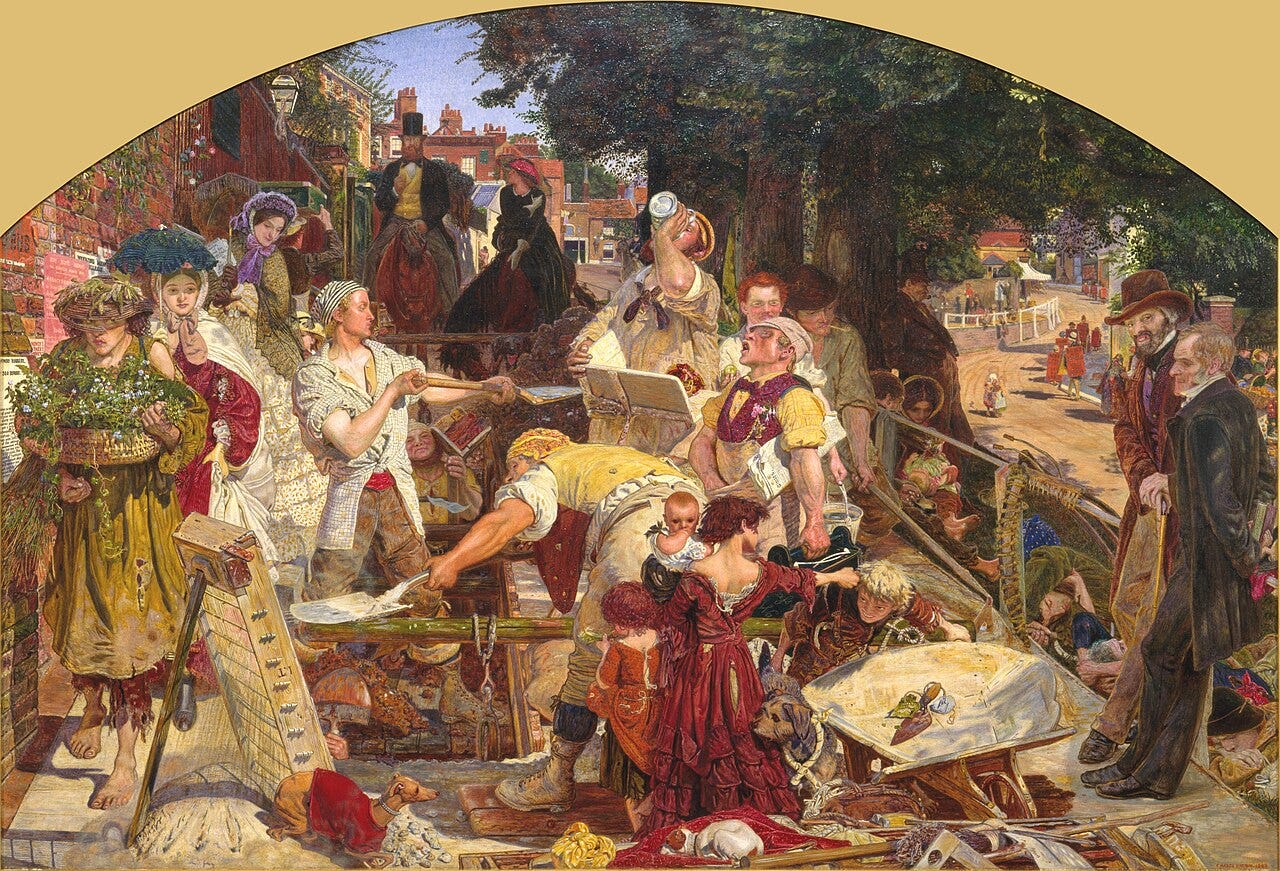
A Hampstead street dug open for a water main, with navvies, a flower seller, a ragged child and two thinkers standing to the right watching everyone else labour.
Brown took thirteen years on it. More of that world in blacksmiths and workers in painting.
Brown began it in 1852 and did not finish until 1865, adding real people he knew: the two men on the right are Thomas Carlyle and F D Maurice. He wrote a catalogue explaining every figure, which is why we can name them.
7 | Derby Day and the London crowd, William Powell Frith (1858)
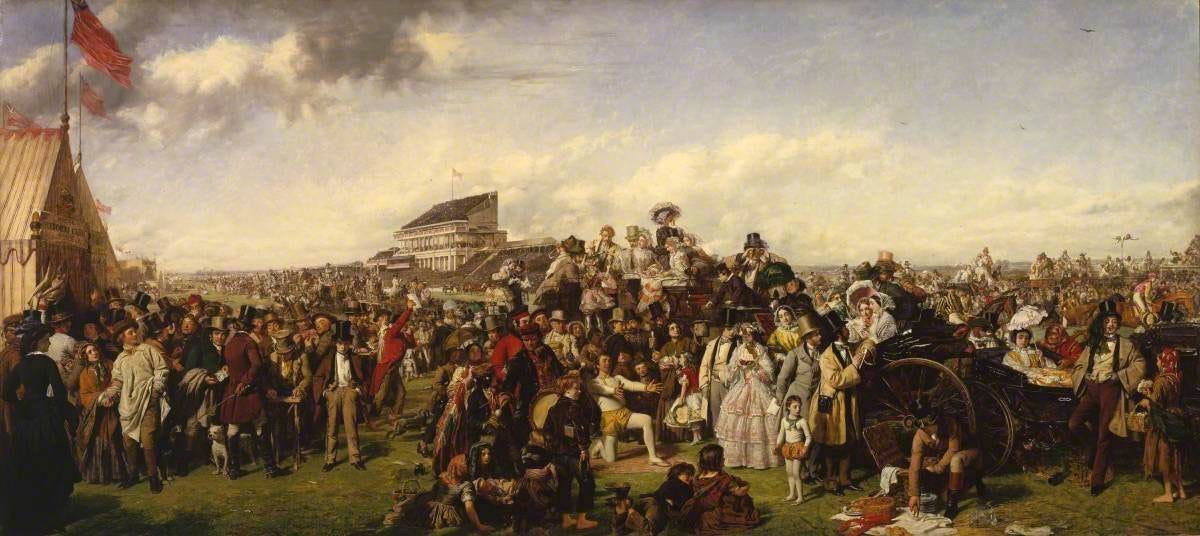
Painted from photographs and hired models, it drew such crowds at the Royal Academy that a rail had to be installed to hold the public back.
Only three paintings had ever needed that rail before.
Frith worked from photographs taken at Epsom and from models posed in his studio, and the picture took fifteen months. The Royal Academy installed a rail in 1858 to hold the crowd back, only the fourth time it had been needed.
8 | The Thames as a working river
Before it was picturesque the Thames was cargo, coal, sewage and cholera. The Great Stink of 1858 forced Parliament to fund the sewers.
The fog painters loved was largely coal smoke trapped by damp air.
9 | Whistler’s Thames etchings (1859 to 1871)
Before the nocturnes, Whistler etched the wharves at Wapping and Rotherhithe in fine dry lines, closer to reporting than to poetry.
The technique is explained in what is etching.
The Thames Set was published in 1871 but the plates were mostly cut in 1859 and 1860, when he lodged in Wapping among the sailors and dockers he drew. Sixteen plates were issued in the set.
10 | Sargent in Chelsea
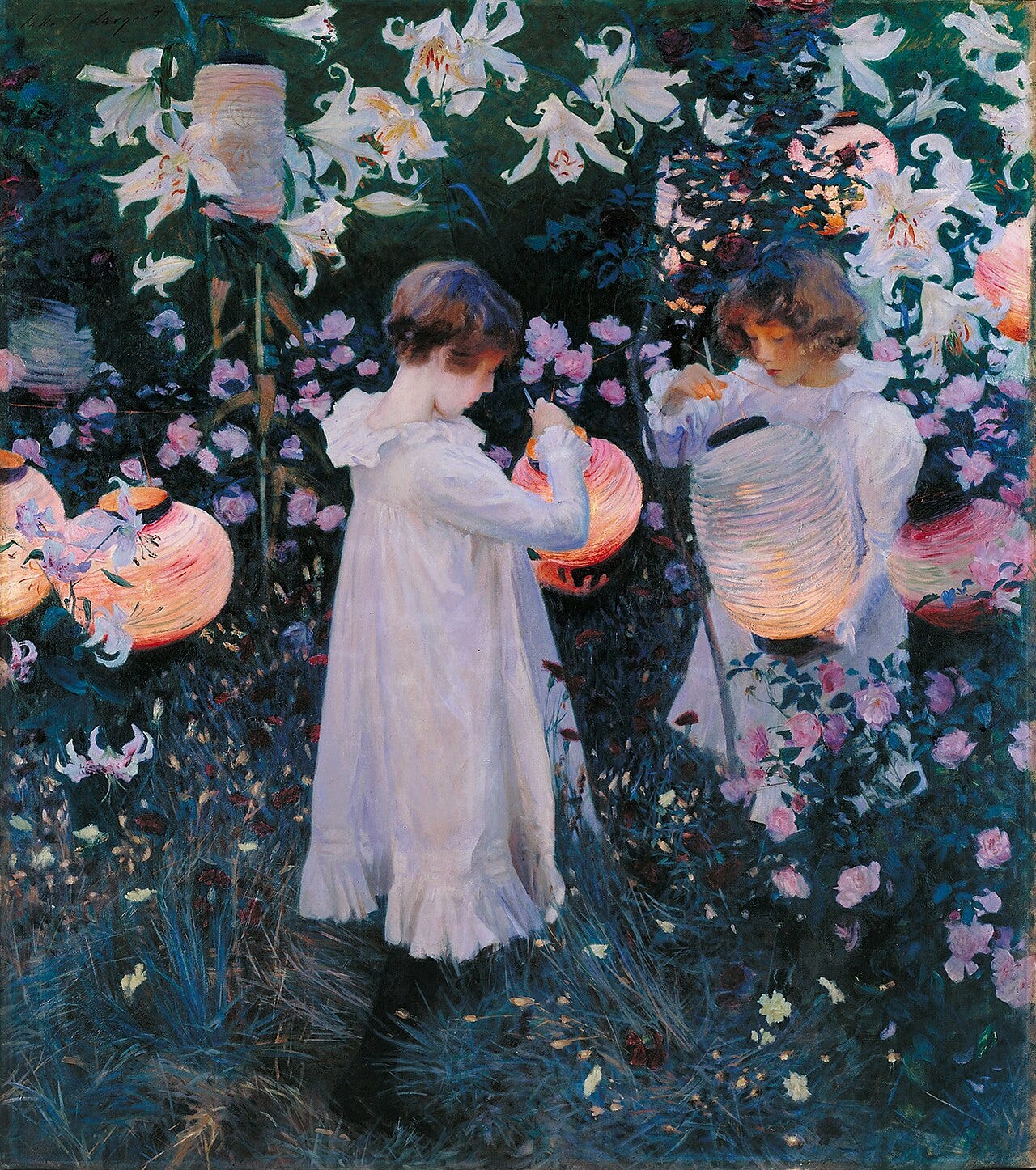
After the Madame X scandal in Paris, John Singer Sargent moved to Tite Street in Chelsea and became the portraitist London society queued for.
He later gave up society portraits almost entirely. More in John Singer Sargent.
11 | The Blitz and the war artists
An official scheme sent painters into shelters, docks and bombed streets between 1939 and 1945, producing thousands of works now split between the Imperial War Museum and the Tate.
It was the largest state commission of painting Britain ever ran.
12 | The fog that stopped
The Great Smog of December 1952 killed thousands and led to the Clean Air Act of 1956. The London that Monet painted stopped existing within a lifetime of him painting it.
You can date a London painting by how thick the air is.
Answers to the London questions
Why did Monet paint London in winter? He wanted the fog, and he complained on clear days that there was nothing to paint.
What was the Whistler trial about? Ruskin called his nocturne a pot of paint flung at the public. Whistler sued for libel in 1878, won, and received a farthing.
Why does Canaletto’s London look Italian? He arrived in 1746 with the same compositional formula he had used in Venice and applied it to the Thames.
Did Turner see the Parliament fire? Yes. He sketched it from the river on the night of 16 October 1834 and painted two oils from those sketches.
Where are Monet’s Houses of Parliament paintings? Tate Britain for Turner and Whistler, the National Gallery for Canaletto, and the Imperial War Museum for the war artists.
Monet’s London canvases were finished in Giverny, hundreds of miles away, from notes. The most famous paintings of English weather were completed in France.
More painted London sits at the Tate and the Rijksmuseum.
This subject is one thread in a wider theme. See how it fits into Cities and Places in Painting.