
Lorenzo Lotto (around 1480 to 1556 or 1557) was an Italian painter of the Renaissance, born in Venice. He painted portraits and altarpieces, the large pictures placed above the altar of a church, in Venice, in Bergamo and in the Marche, a region on Italy's Adriatic coast.
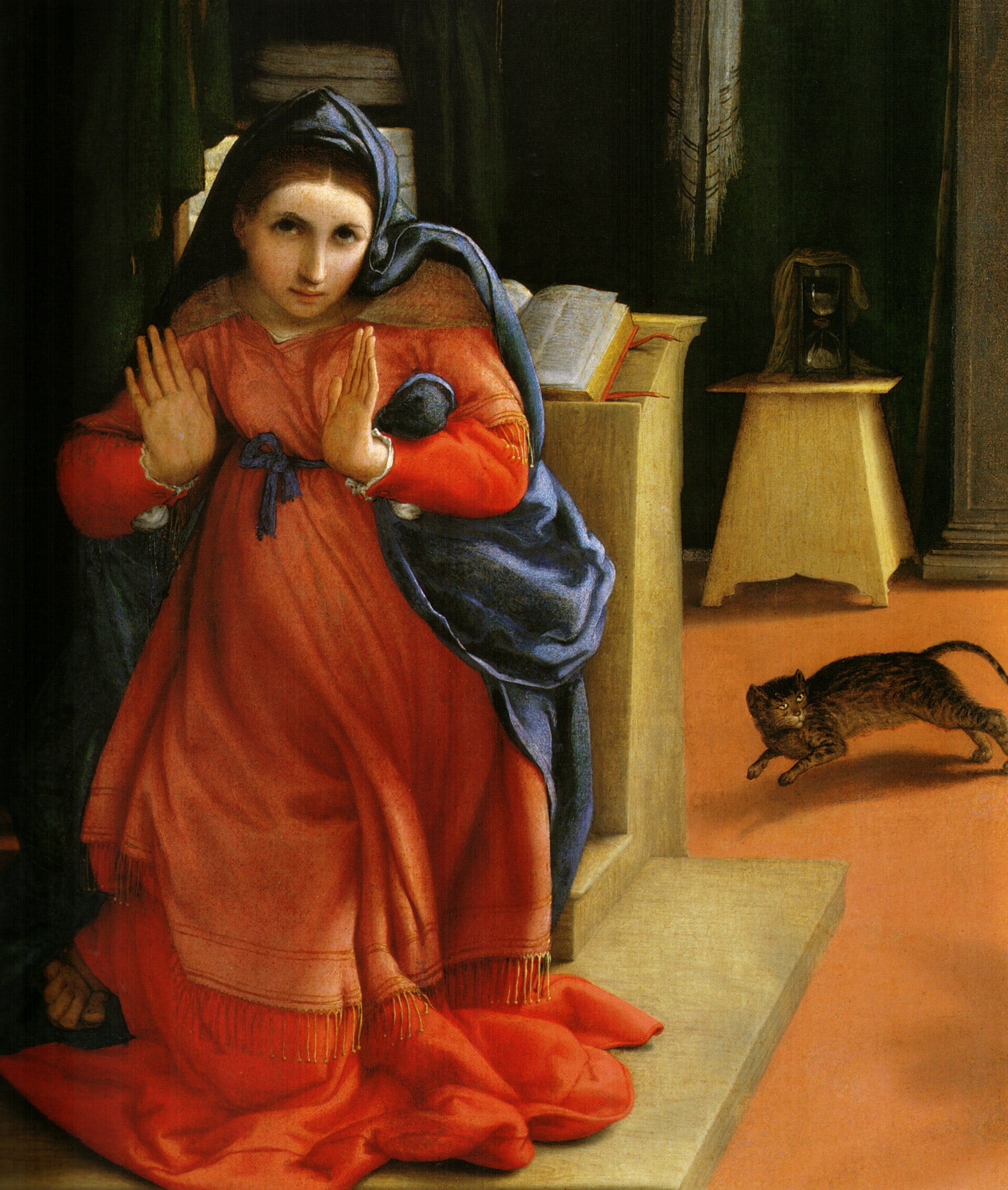
Lotto is best known for his Annunciation, in which a cat runs away from the angel, and for wedding portraits such as Marsilio Cassotti and his Wife Faustina.
At about thirty, Lotto was painting in the pope's own rooms in Rome. He died an old man in Loreto, a town of the Marche where pilgrims came to pray, and no record gives the day.
Cool Stories About Art is a newsletter to learn art the fun way.
Join 200,000+ readers and get:
10 new art stories / month
The entire archive of content (140+ articles)
Comment, ask questions, and chat with other readers
The first traces of Lorenzo Lotto are a few lines written by other men. Nobody knows who taught him to paint, and the earliest records place him in Treviso, a town twenty miles north of Venice.
Venice was then an independent republic, rich from trade by sea, and Treviso was one of the towns it ruled on the mainland. In 1505, a notary of Treviso, the official who wrote up contracts, called Lotto "pictor celeberimus," Latin for a very famous painter. He was about twenty-five.
A year later, Dominican friars, members of a religious order who lived together under vows, ordered a large altarpiece from him for their church in Recanati. Recanati was a hill town of the Marche, in the Papal States, the lands of central Italy that the pope ruled like a king.
By 1509, the young painter had reached Rome. On March 7 of that year, Pope Julius II, head of the Catholic Church, ordered a payment "to Lorenzo, painter, who paints in our room." The room was in the Vatican, the palace where the popes lived.
Soon Lotto left Rome, and for more than forty years he went wherever a church or a rich family ordered a picture. As far as the records show, he never married, and he lodged with friars, friends and landlords until the end.
Yet the last sixteen years of that wandering life can be followed almost day by day: the rent Lotto owed, the loans he paid back, the coins he sent for a servant girl's wedding.
Who was keeping such a close record of Lorenzo Lotto, when nobody even wrote down the day he died?
In the rest of the story, you'll find out:
what became of the pictures Lotto painted in the pope's own rooms
how Lotto, at seventy, tried to sell his pictures by lottery, and what came of it
why Lotto, nearly blind, gave himself and all he owned to a shrine
what a small mattress reveals about the end of Lotto's life