
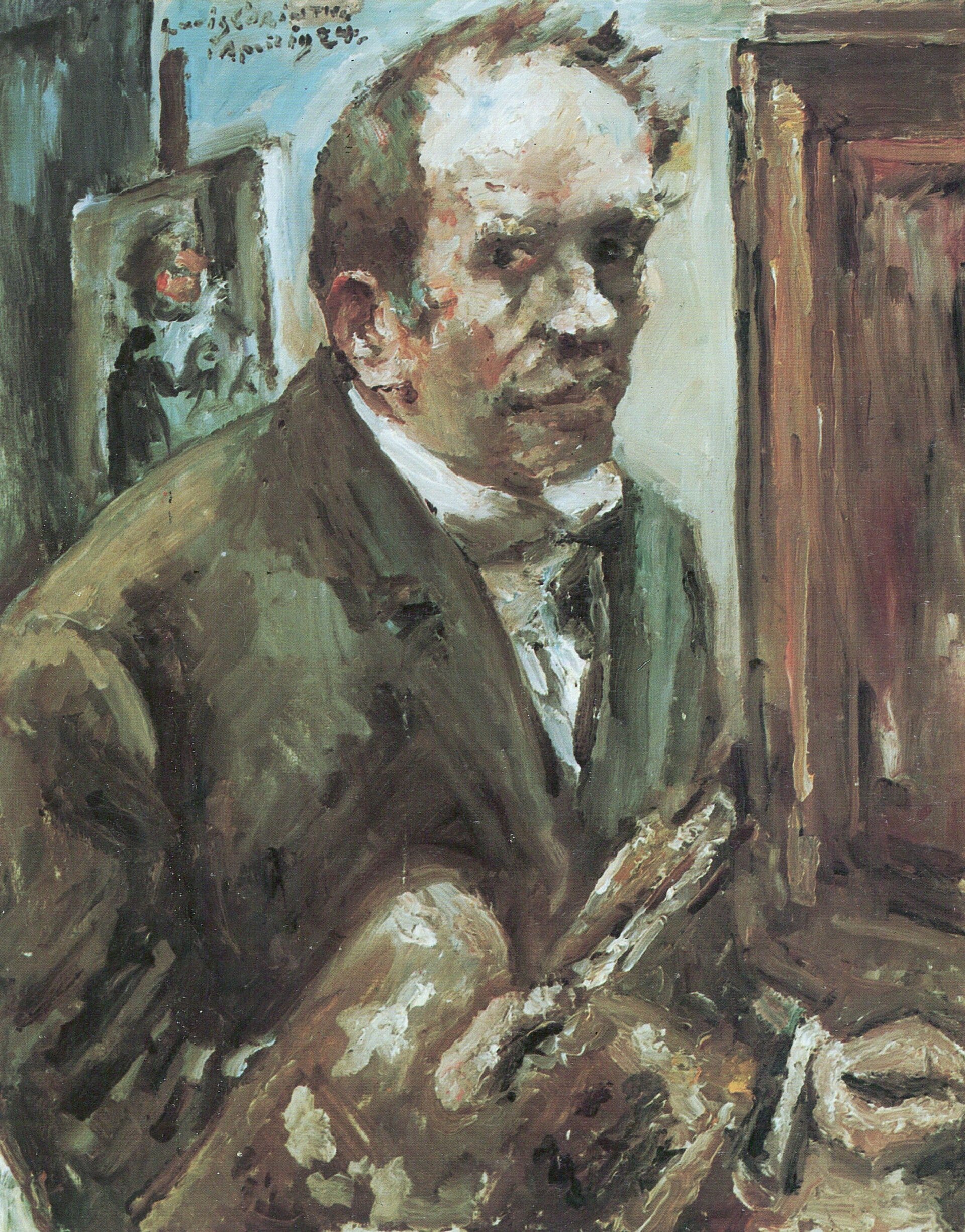
Lovis Corinth (1858 to 1925) was a German painter who led the Berlin Secession, a circle of modern artists. He painted dozens of self-portraits, like Self-Portrait with Palette, now at the Museum of Modern Art in New York.
Cool Stories About Art is a newsletter to learn art the fun way.
Join 200,000+ readers and get:
10 new art stories / month
The entire archive of content (140+ articles)
Comment, ask questions, and chat with other readers
In 1923, the Nationalgalerie, the national art museum in Berlin, celebrated Lovis Corinth's 65th birthday with an exhibition. Fourteen years later, the Nazis, the party of Adolf Hitler that then ruled Germany, took his paintings from the same museum and hung some of them in a show made to mock modern art.
In 1911, Lovis Corinth reached the top of the art world in Berlin, the capital of the German Empire. The Berlin Secession, a group of artists who had broken away from the official artists' association to run their own exhibitions, elected him its president.
The year before, Corinth had painted himself as The Victor, a knight in costly armor, sure of his strength. In 1911, he put on the armor again and painted himself as a standard-bearer, the soldier who carries the flag into battle.
In December 1911, at 53, Corinth had a stroke. A stroke happens when a blood vessel in the brain is blocked or bursts, and part of the brain stops working. The stroke paralyzed the left side of his body.
Corinth's wife, Charlotte Berend-Corinth, was a painter too. She put most of her own work aside to nurse him.
In 1912, Corinth was drawing again. His subject was Job, the man in the Bible whom God tests with every kind of suffering, and who stays patient.
By the summer, Corinth was painting large canvases again, with his right hand, the side the stroke had spared. He now had a tremor, and he walked with a limp for the rest of his life.
He painted for fourteen more years. His brushwork had been growing freer for some time. After the stroke, it became faster and rougher, and in some pictures the shapes seem to break apart into patches of paint.
Twelve years after his death, why did the Nazis bring up Lovis Corinth's stroke?
In the rest of the story
What a single letter of his first name owes to the ancient Romans.
Which late painting the Nazis hung in a show to mock him.
What became of the painting the Nazis mocked, once Berlin lost it.
Which portrait of his wife the Nazis left in the museum.