
Madness in painting runs from Goya's asylum to the ten portraits Gericault made for a pioneering psychiatrist. Twelve works about minds in trouble, painted across five centuries in which medicine slowly learned to look instead of lock away.
Learn art the fun way
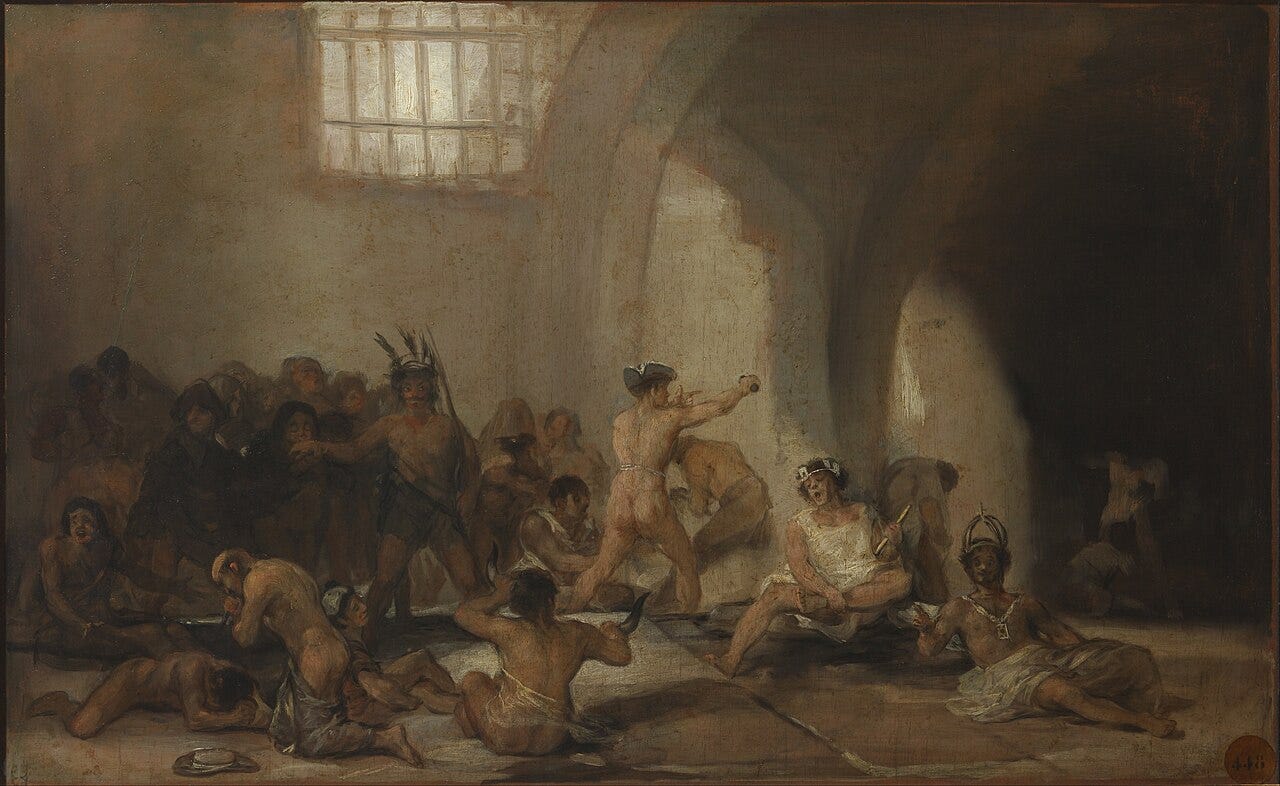
1 | The Madhouse, Francisco Goya (about 1815)
A stone vault full of men abandoned by their families and their century, painted from Goya's memory of the Zaragoza asylum.
Goya painted it after his own devastating illness left him deaf, and the fear of losing his mind runs through his late work. His story I cover that in Francisco Goya.
2 | The Monomaniacs, Theodore Gericault (about 1822)
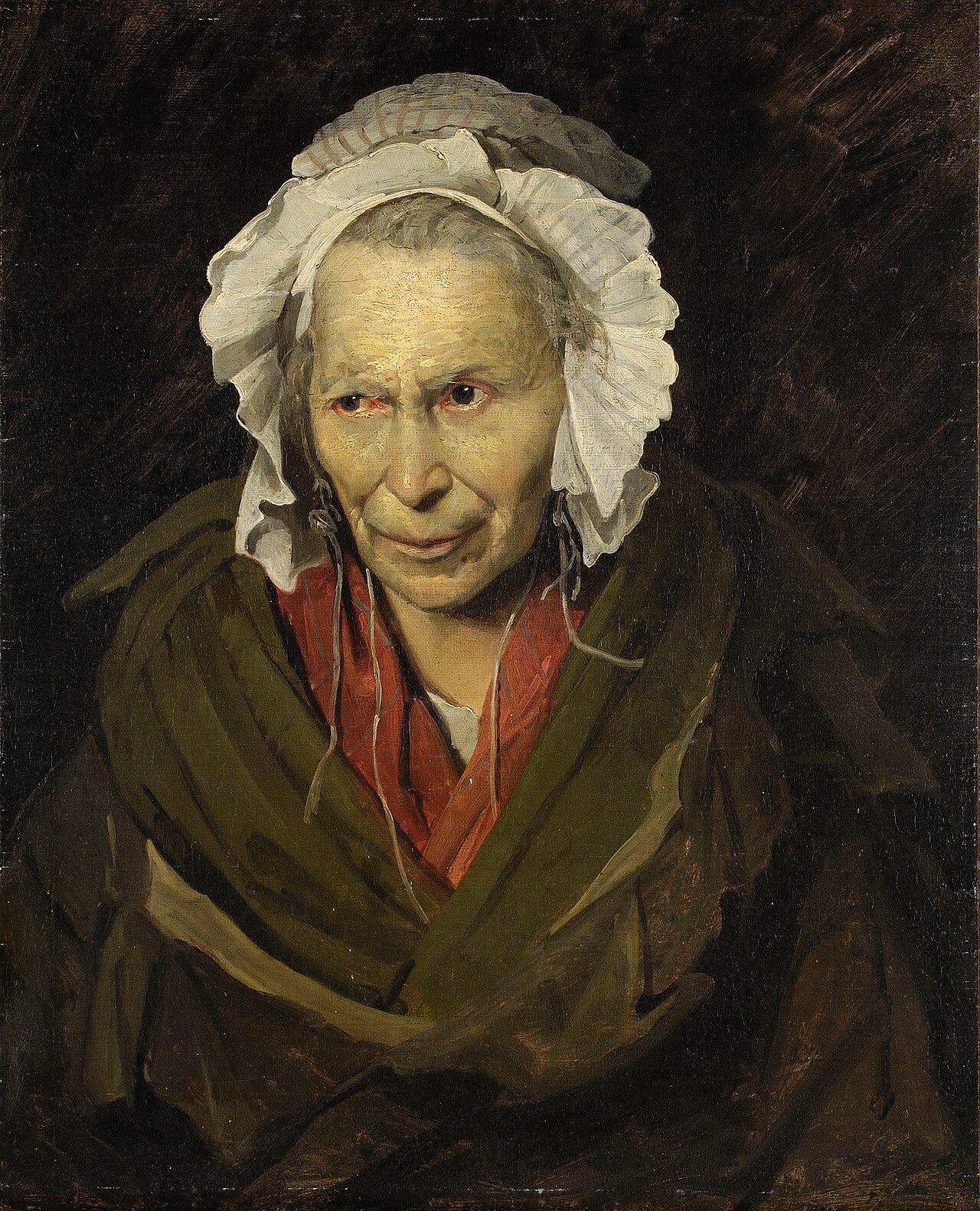
Ten portraits of psychiatric patients, painted for Dr Etienne Georget of the Salpetriere: a woman obsessed with envy, a man convinced of his military rank, a compulsive gambler.
No mockery, no moral, just faces. Five of the ten have been lost since the 1860s. The painter of the Medusa raft made these in his last years: Theodore Gericault. Of everything on this list, these ten portraits are the ones I would put in front of anyone who thinks art history has nothing to say about medicine.
3 | The Scream and its inscription, Edvard Munch (1893)
In the sky of the first Scream, a pencil line reads: could only have been painted by a madman. In 2021 the National Museum of Norway confirmed the writing is Munch's own.
He wrote it after hearing a student question his sanity at an early showing. The full story of the painting is in why Munch painted The Scream.
4 | The asylum year of Vincent van Gogh (1889 to 1890)
Van Gogh committed himself to the Saint Paul asylum at Saint Remy in May 1889 and painted about 150 canvases there, including The Starry Night, between crises.
His diagnosis is still debated: epilepsy, bipolar disorder and other conditions have all been proposed. The night that sent him there is in why Van Gogh cut off his ear, and his final weeks in The Last Day of Vincent van Gogh.
5 | Mad Meg, Pieter Bruegel the Elder (1563)
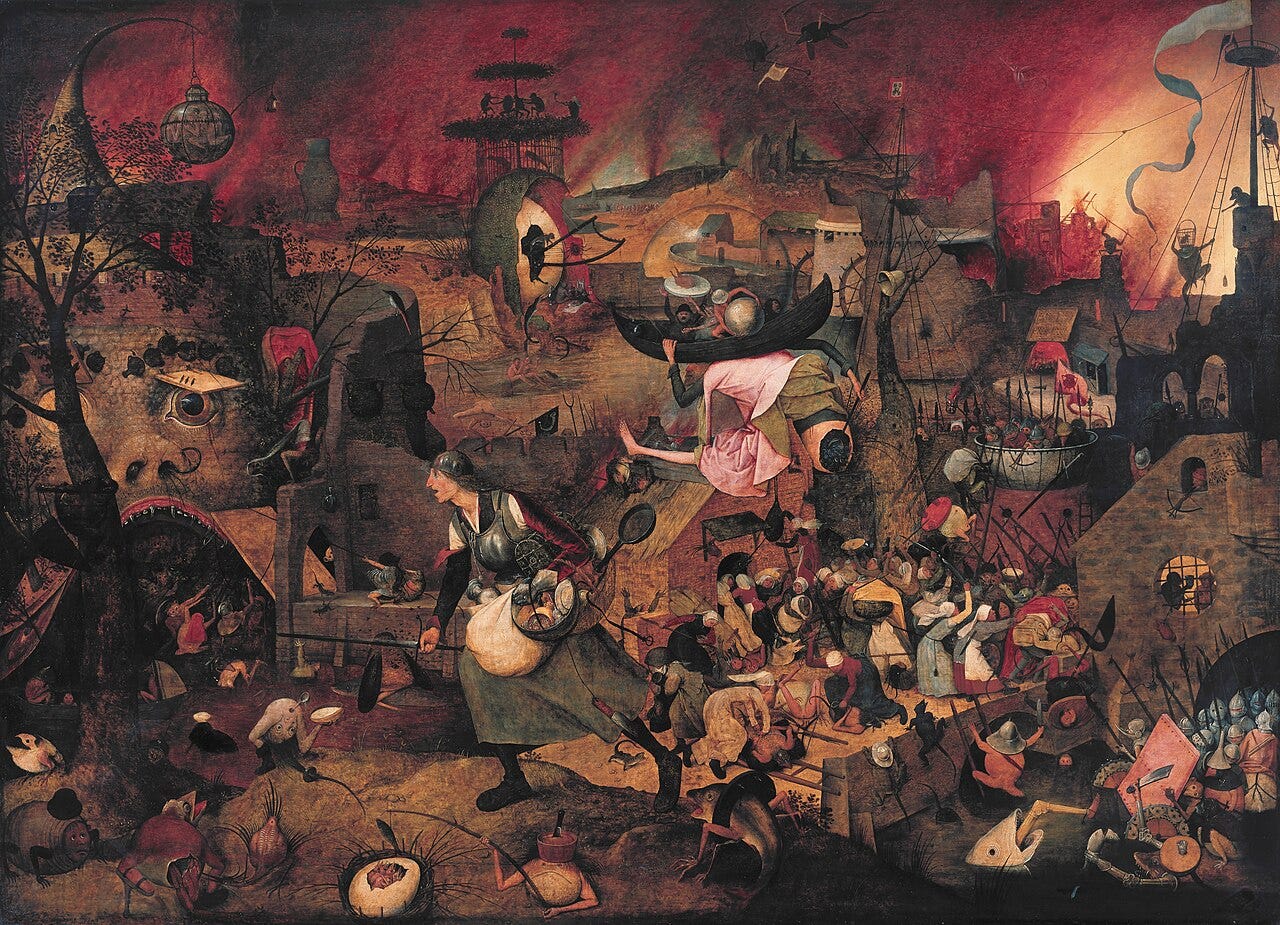
A giantess in armor strides toward the mouth of hell with a sword and a basket of loot, leading an army of looting women. Flemish proverb made apocalypse.
Dulle Griet is folk madness, fury rather than illness. The painter who hid meanings in crowds More of it in Pieter Bruegel the Elder.
6 | The Fairy Feller's Master Stroke, Richard Dadd (1855 to 1864)
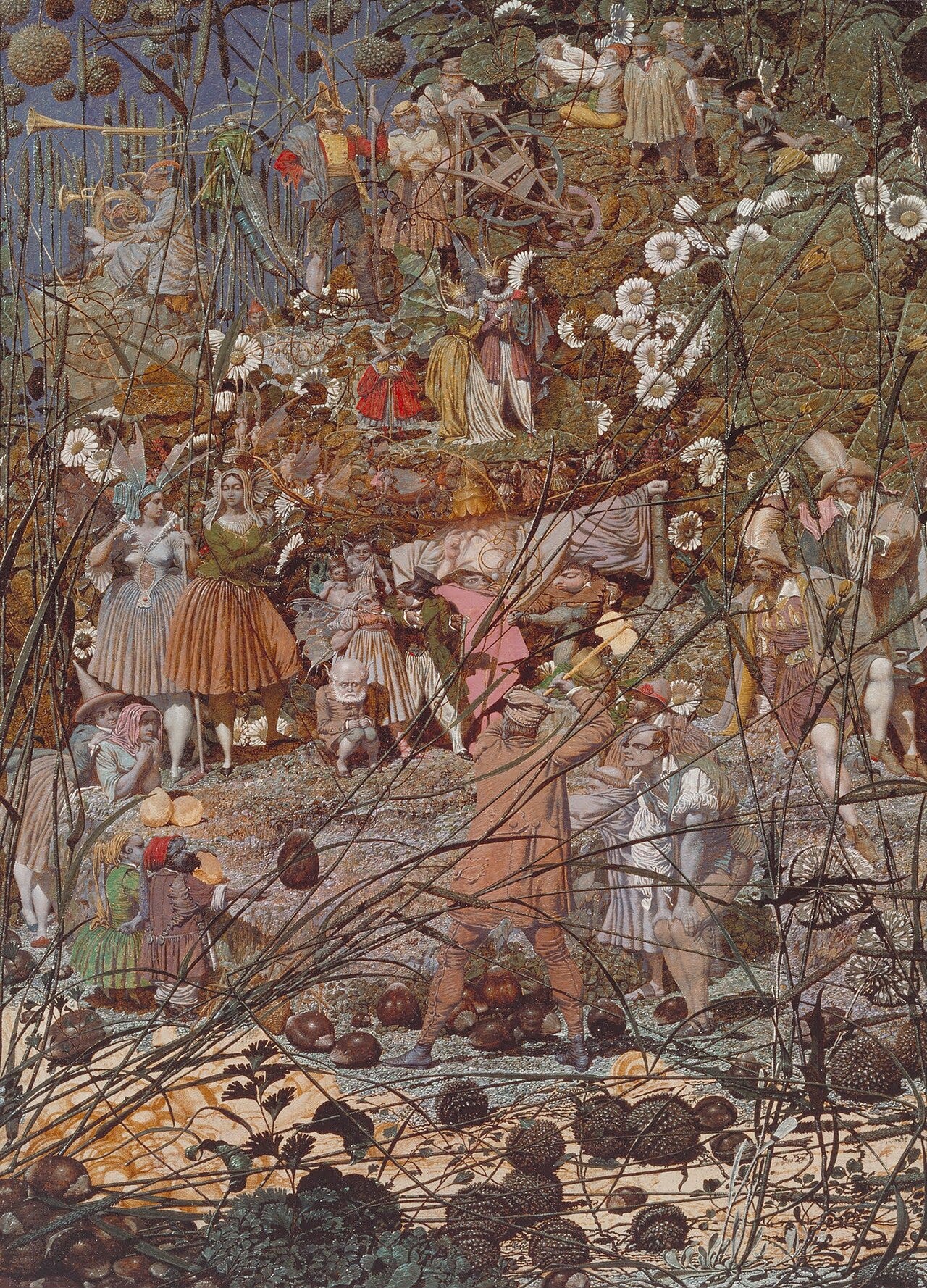
A hallucinatory fairy scene painted with single hair brushes over nine years, inside Bethlem and Broadmoor. Dadd killed his father in 1843 during a psychotic episode and spent the rest of his life in institutions.
The hospital let him paint, and his doctors kept the works. Freddie Mercury wrote a Queen song about this painting in 1974.
7 | The Rake in Bedlam, William Hogarth (1734)
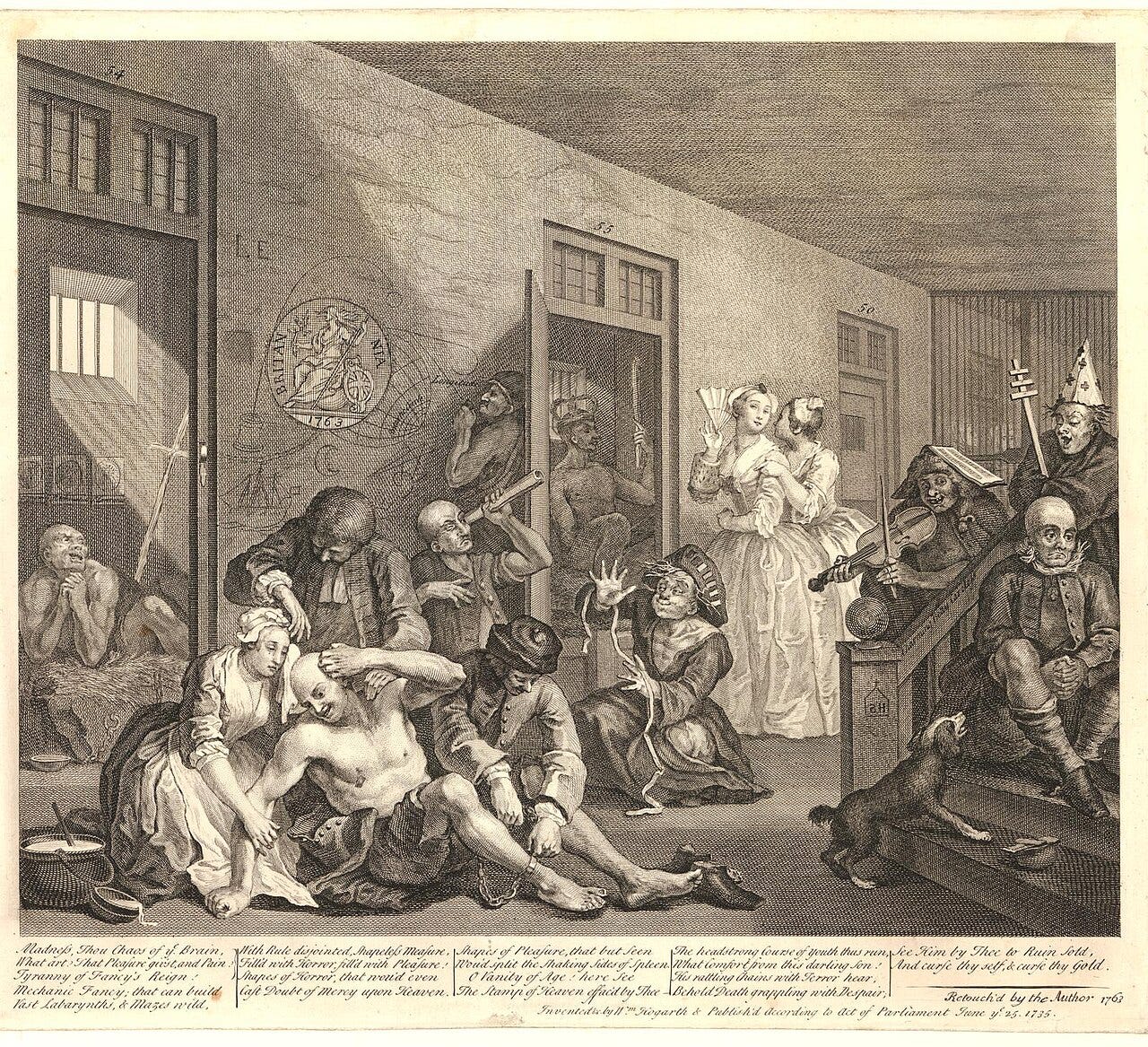
The last plate of A Rake's Progress: Tom Rakewell ends in Bedlam, while two fashionable ladies visit the asylum for entertainment, as Londoners really did for a penny.
Hogarth put the paying spectators in the picture to indict them. The moralist with a paintbrush The full account is in William Hogarth.
8 | Mad Kate, Henry Fuseli (1806)
A woman driven mad by grief stares past us on a stormy shore, hands clasped, hair loose. The figure comes from a poem by William Cowper, who fought mental illness himself.
Romanticism turned madness into weather. The painter of nightmares I go into it in Henry Fuseli.
9 | The Madness of Hugo van der Goes, Emile Wauters (1872)
The great Flemish painter Hugo van der Goes suffered a breakdown in 1481 and was treated in his monastery with music, on the theory that melody could heal the mind.
Wauters painted that scene four centuries later, and Van Gogh, who identified with Hugo, mentioned the picture in his letters more than once.
10 | Pinel Freeing the Insane, Tony Robert Fleury (1876)
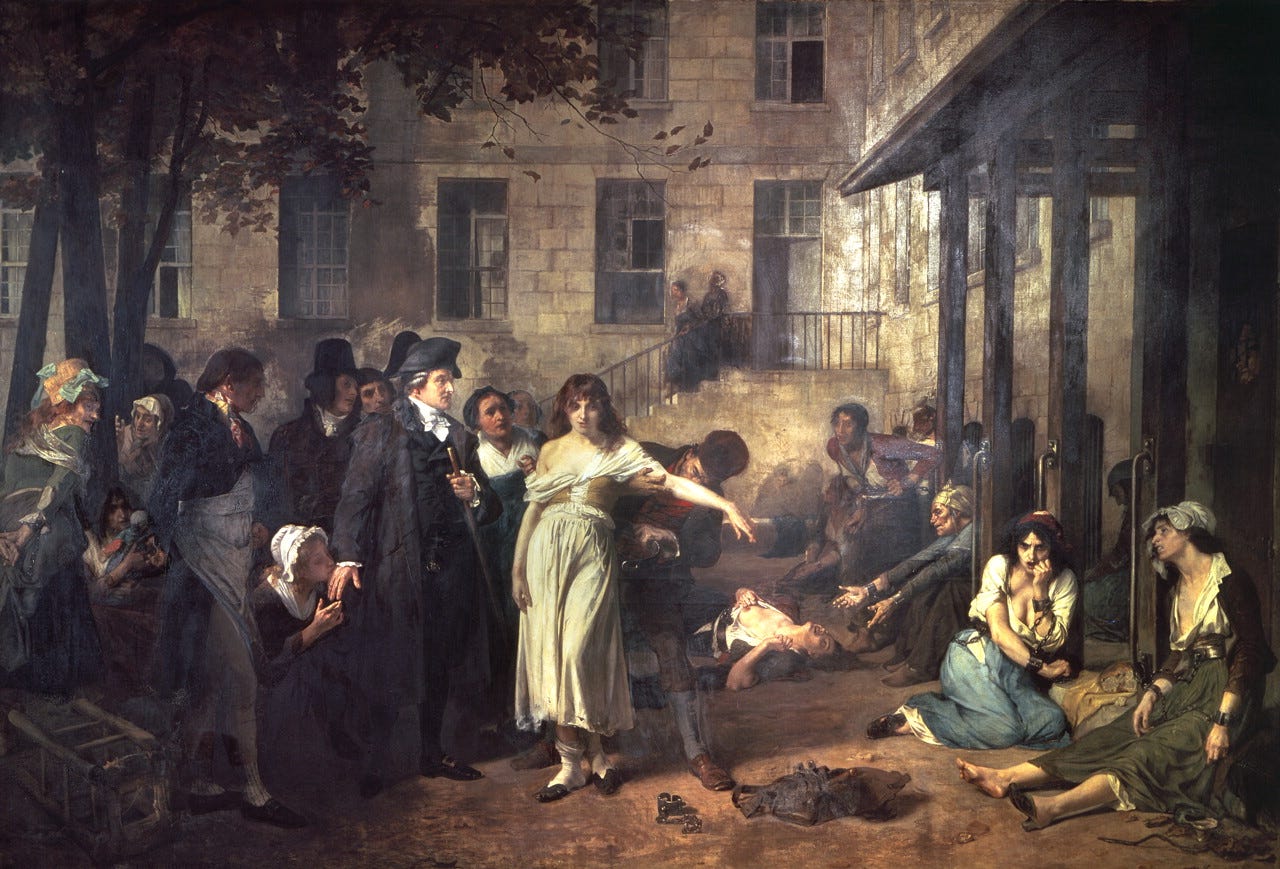
Dr Philippe Pinel orders the chains struck from patients at the Salpetriere around 1795, the founding legend of humane psychiatry.
Historians note the real unchaining owed much to the superintendent Jean Baptiste Pussin, whom the painting leaves out. Even medical progress gets a stage version.
11 | Malle Babbe, Frans Hals (about 1633)
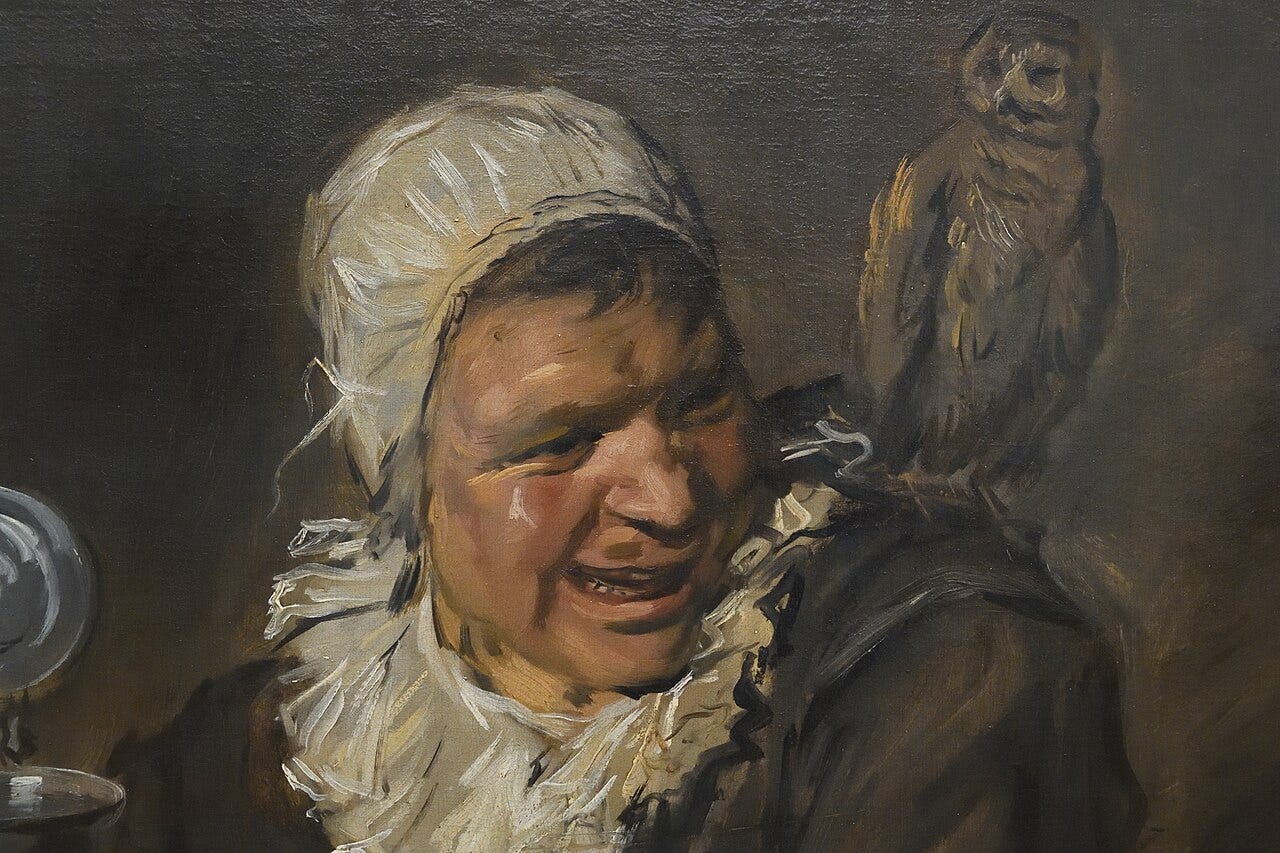
A cackling woman with a beer tankard and an owl on her shoulder. The real Malle Babbe lived in the Haarlem workhouse, and Hals painted her at close range, fast, without cruelty.
The owl marked folly in Dutch proverbs. The fastest brush of the Dutch golden age I cover that in Frans Hals.
12 | Saul and David, Rembrandt (about 1655)
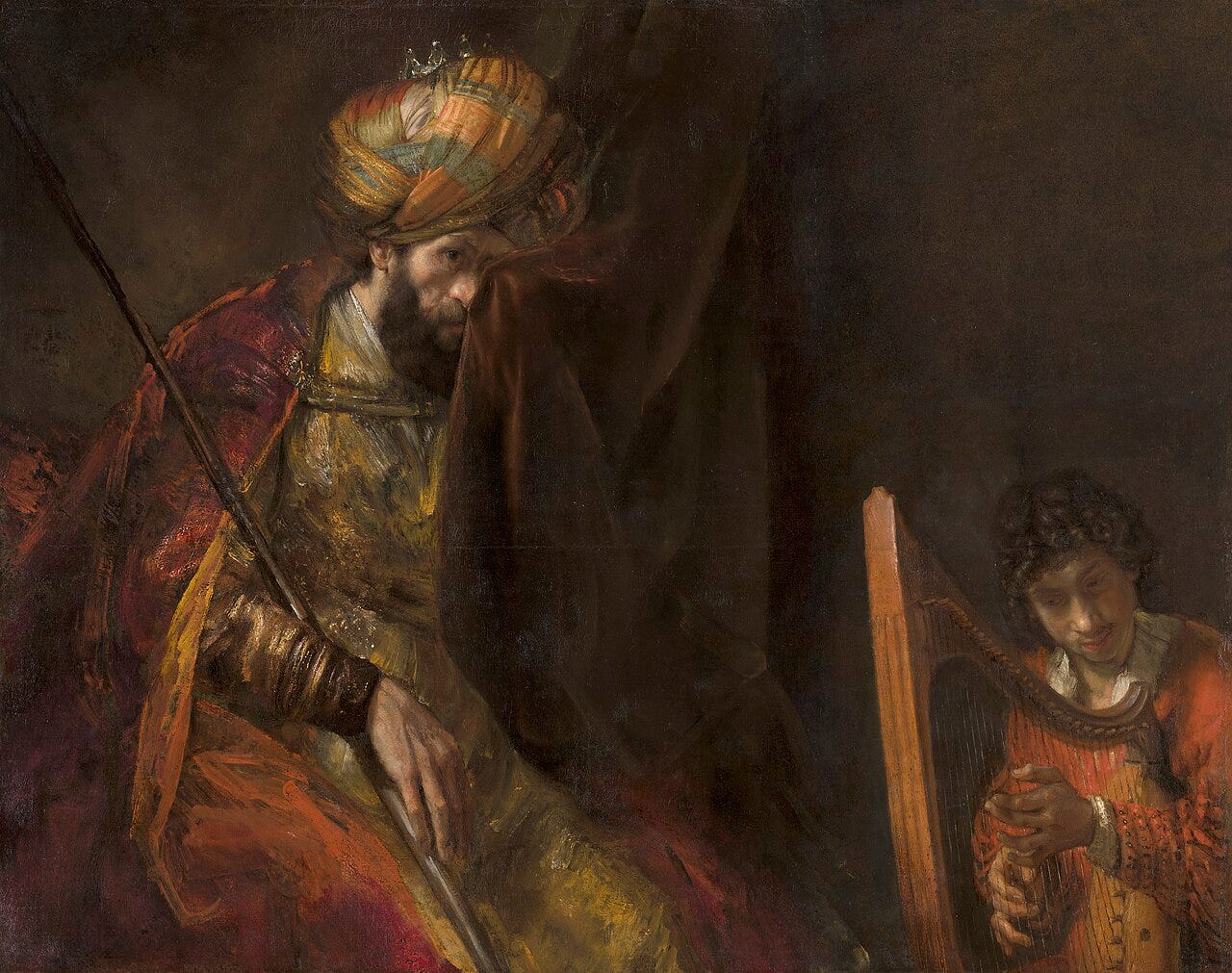
King Saul, tormented by an evil spirit, listens to young David's harp and hides his tears in a curtain, one hand still on his spear.
The Bible's first case study of mental torment, painted as a man trying not to cry. It hangs in the Mauritshuis, and the painter of inner weather More of it in Rembrandt.
The Met and the Rijksmuseum both hold works from this list's period, with full catalogue notes attached.
What people ask about madness in painting
What is the single best known? The Scream by association, Goya's Madhouse and Gericault's Monomaniacs by subject.
Did Van Gogh paint The Starry Night in an asylum? Yes, at Saint Remy in June 1889, from his room's view and his imagination combined.
What happened to Gericault's ten portraits? Five survive, in Lyon, Paris, Ghent, Winterthur and Springfield. The other five vanished in the 19th century.
Could people really visit Bedlam? Yes. Until the late 18th century, London's asylum admitted paying visitors as entertainment.
Were these painters mocking their subjects? The strongest works do the opposite: Gericault, Hals and Goya painted patients as people, decades before medicine caught up.
One last thing, and it is the strangest: in 2024, one of Gericault's lost monomaniac portraits was reported found in an Italian private collection, 160 years after the trail went cold. The attribution is still being examined.
This list shares its ground with two others on the site: the sleep that turns violent in Nightmares in Painting, and the wider unease traced in Creepy Paintings. All three sit inside this guide to art history's macabre side.