

170 000+ readers. Learn art the fun way.
This is a preview. Paid subscribers get the full story.
You’ll also get:
10 new stories every month
The full archive (130+ Art stories)
Your personal art guide. Comment, ask questions, DM me anytime
iPhone user? Subscribe at coolstoriesabout.art, not via the app. Apple adds 30% to the price.
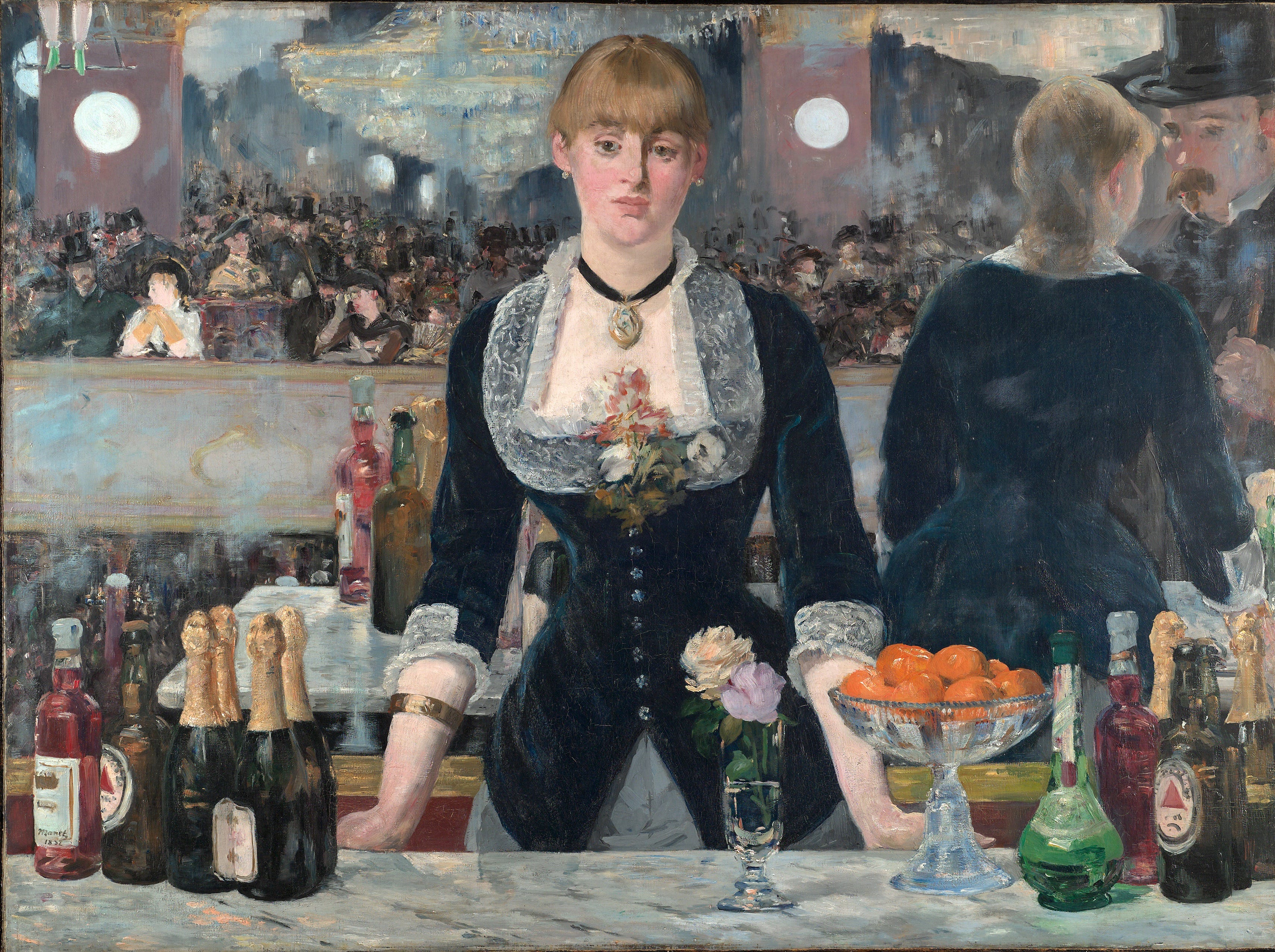
She looks sad.
That is the first thing you get. A young woman, standing behind a counter, in the middle of a room full of people having a good time, and her eyes are somewhere else.
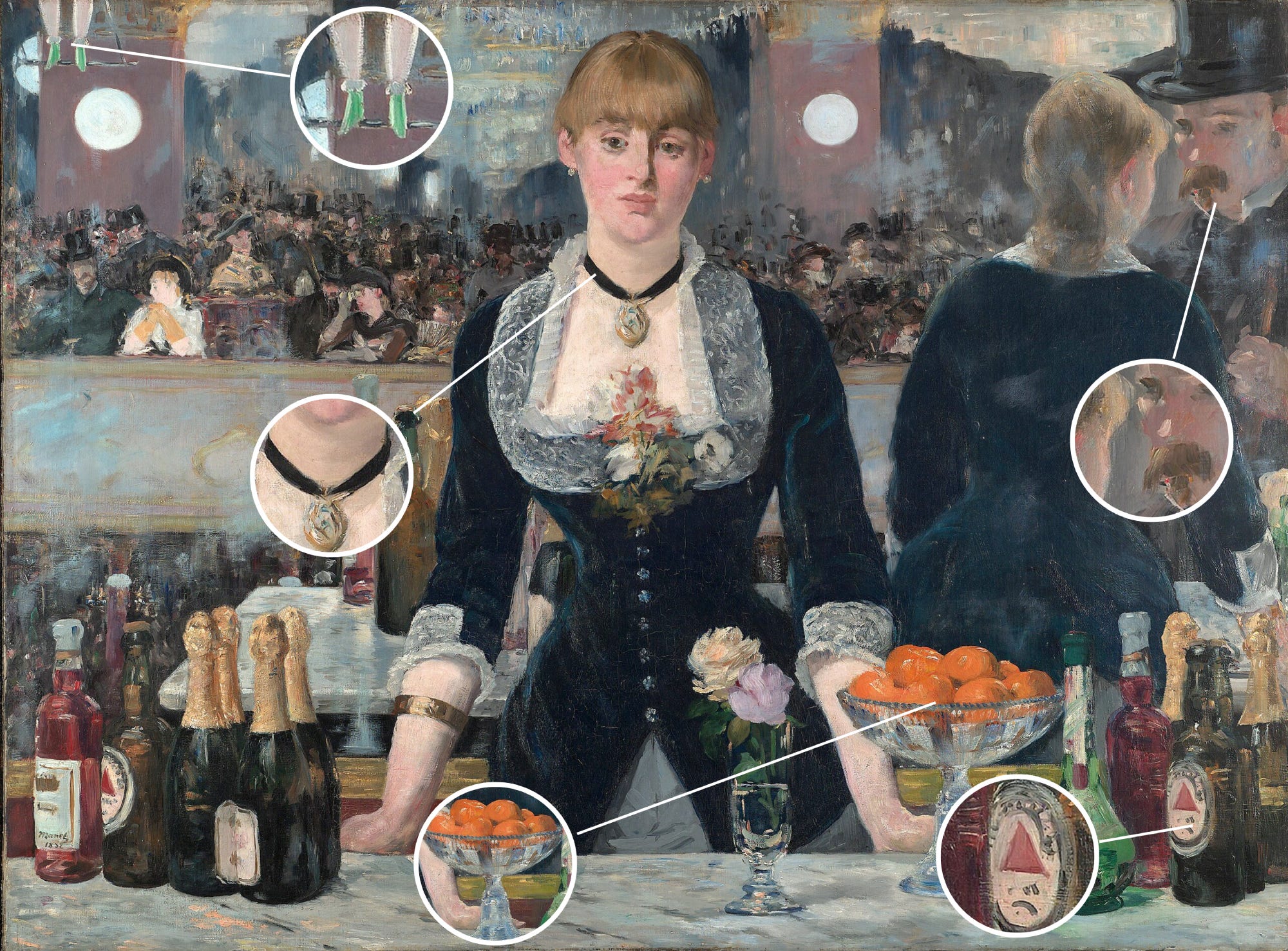
The painting is called A Bar at the Folies Bergère. It is the last major work Édouard Manet ever painted, in 1882, a year before he died.
In front of her, bottles, a bowl of fruit, two roses in a glass.
An ordinary night out, or so it seems.
We are going to look at it detail by detail.
Two Green Feet
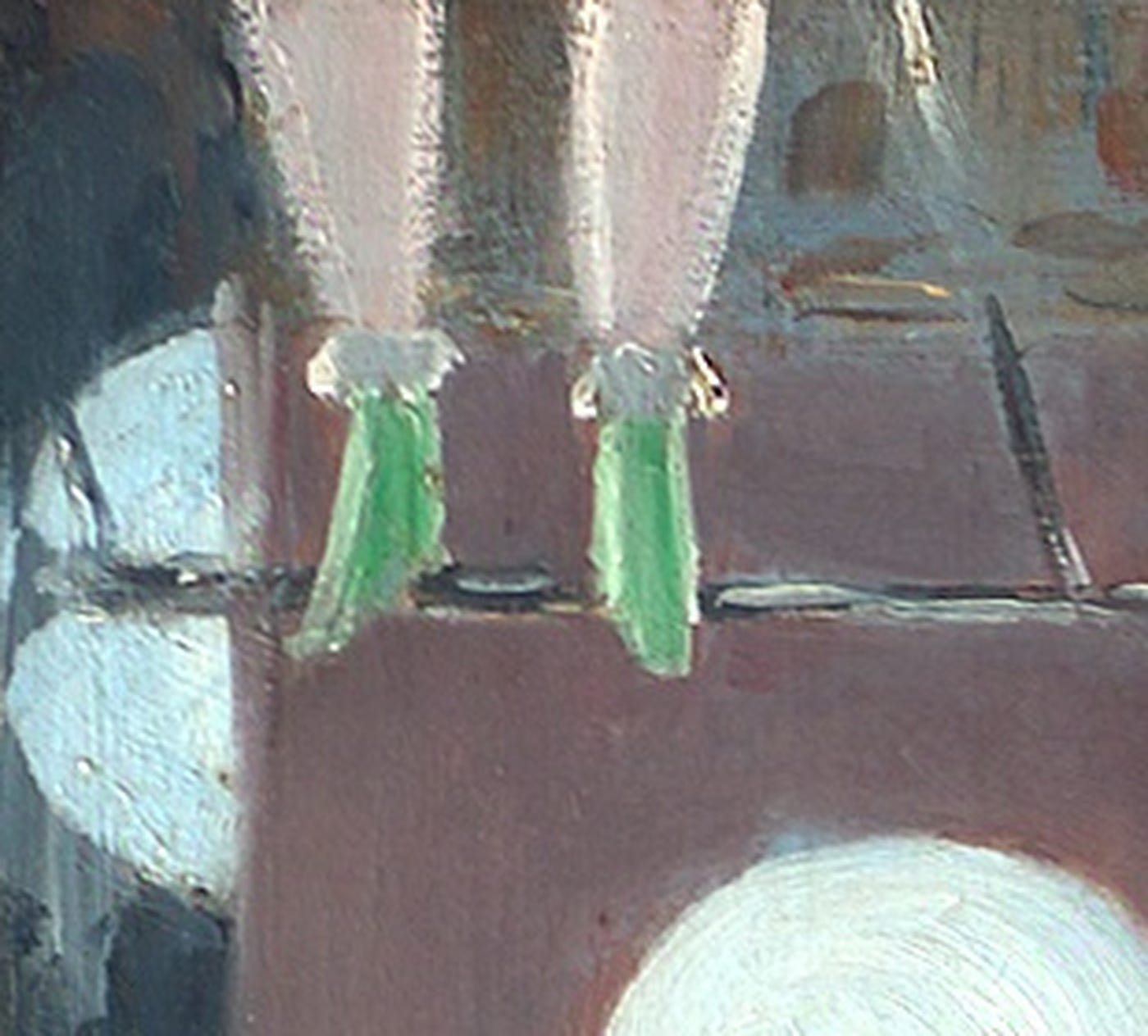
At the very top left of the painting, two small feet in green slippers hang in the air. The frame cuts the legs off at mid thigh.
A trapeze artist is working above everyone's heads while the room drinks.
The house opened in 1869, on the site of a mattress shop. A single evening there mixed dancers, an operetta, a pantomime, performing animals and acrobats.
The aerial acts filled the room. An American woman from Louisiana, Leona Dare, reigned there as the new queen of the trapeze.
Out of the whole show, Manet kept only what a man leaning on the counter would have caught sight of.
Two feet.
The Gold Bar
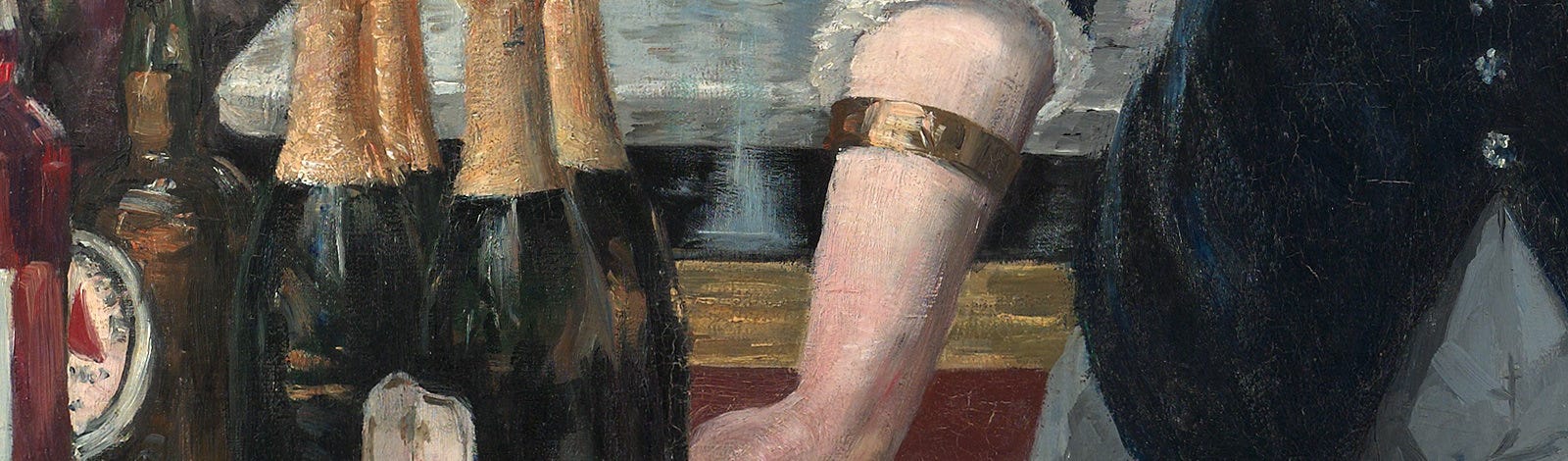
The woman behind the counter rests her hands flat on the marble. Follow the line of her wrists, first to the left, then to the right.
A gold bar crosses the painting at exactly that level. It is the frame of a mirror, and that mirror covers the entire wall behind her.
The crowd on the balcony, the chandeliers, the woman leaning on the railing watching through opera glasses: all of it is happening behind us, and it comes back to us through the glass.
She and her bottles are painted in sharp focus. Everything else dissolves, down to the faces on the balcony.
We are not looking at this scene from a museum room.
We are standing inside the hall, on the customers' side, one step from the marble.
Discover my new newsletter !

The Counter
Four drinks occupy the marble.
At both ends, champagne, gold foil turned toward us. The most expensive bottle in the house, the one you order so that people can watch you order it.
In the middle, a green liqueur, a red wine, and a footed crystal bowl overflowing with oranges.
Then two brown bottles marked with a red triangle. Bass, an English pale ale.
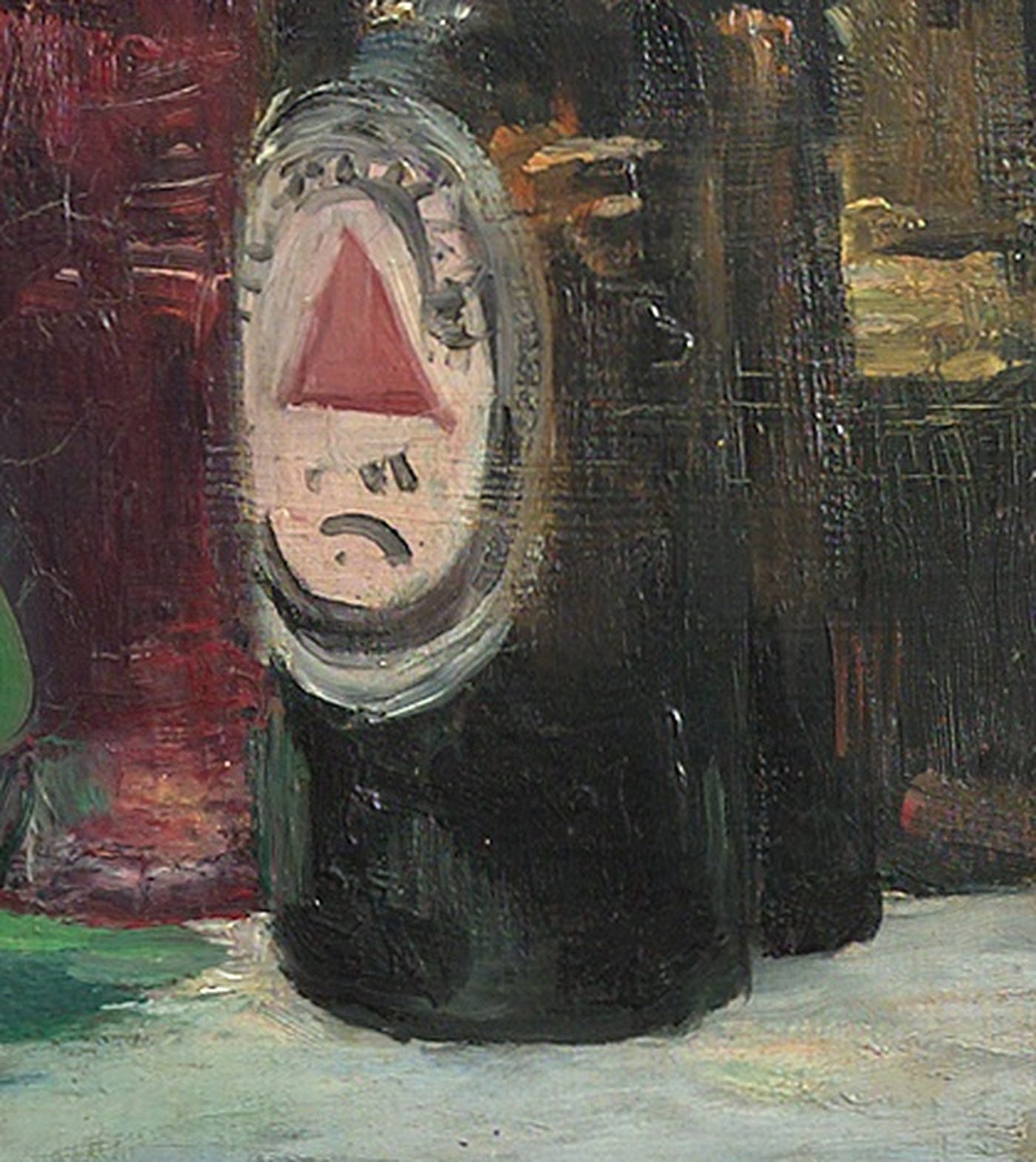
The Folies Bergère lives off English and American visitors, and the Paris of those years is obsessed with everything that comes from London.
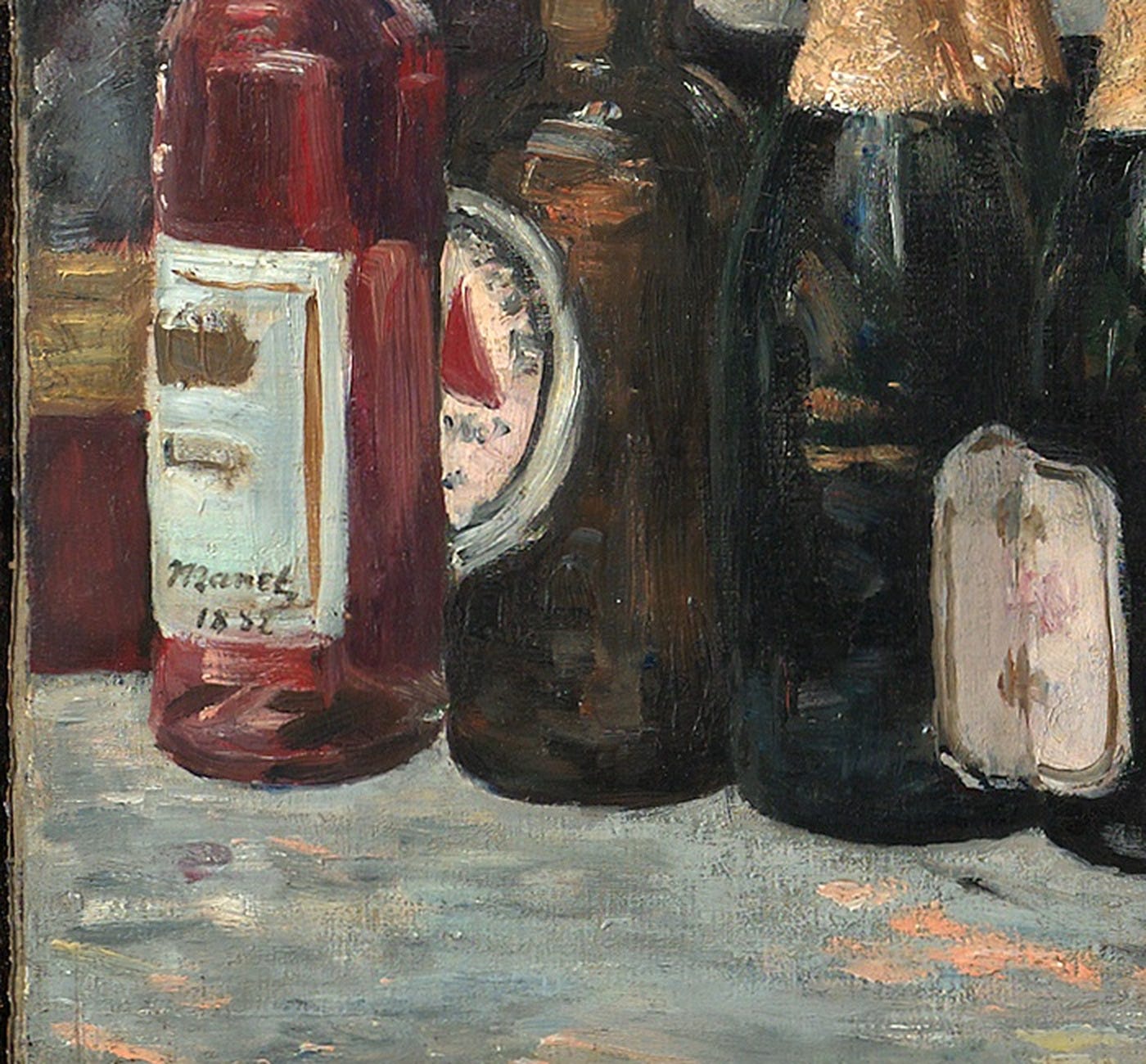
One last detail on that marble. The white label on the wine, far left, carries the painter's name and the year.
Manet signs his other canvases in a corner. This one, he signed in the exact spot where a manufacturer prints his brand.
The Black Ribbon
Move up to her throat.
A black velvet ribbon is tied tight around it, with a locket resting on her skin.
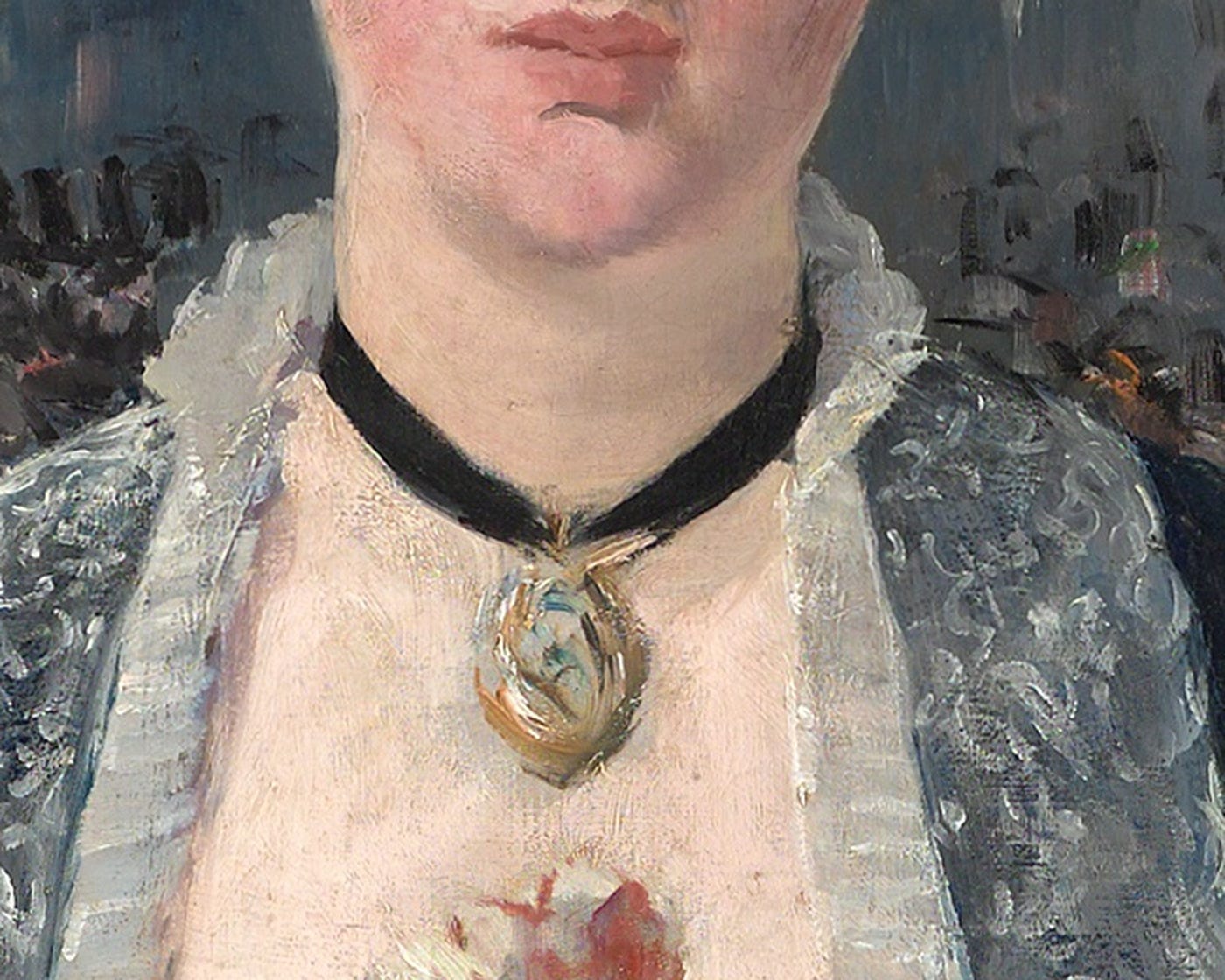
The rest of what she wears belongs to the house, which dresses its barmaids: dark velvet jacket, wide neckline trimmed with lace, lace at the wrists.
The ribbon comes from further back. Manet had tied an identical one around another woman's throat, seventeen years earlier.
That painting is called Olympia, and it remains the greatest scandal in the history of modern art.
Her Face
Her eyelids are lowered, and her gaze drifts slightly to our left, past us.
Makeup holds the face together: red cheeks, a sharply drawn mouth, bangs combed straight.
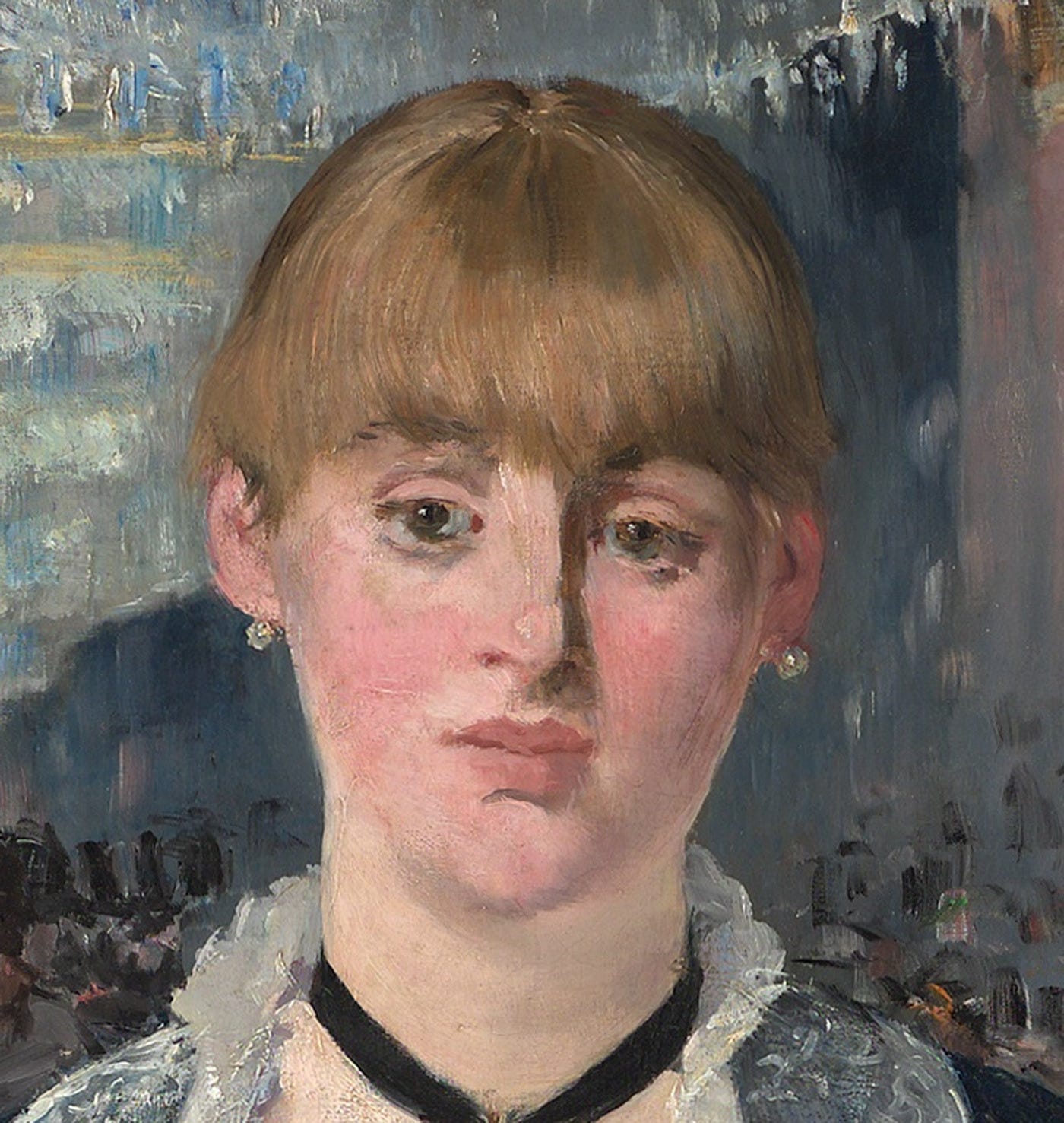
She has been prepared to be looked at.
The Reflection That Does Not Add Up
Her reflection takes up the top right of the painting. Same dress, same hair, same pale bodice.
The posture is another matter entirely.
In front of us she stands straight, arms braced, perfectly still. In the glass she is leaning forward, shoulders dropped, her head tilted toward a man in a top hat who is speaking to her from very close.
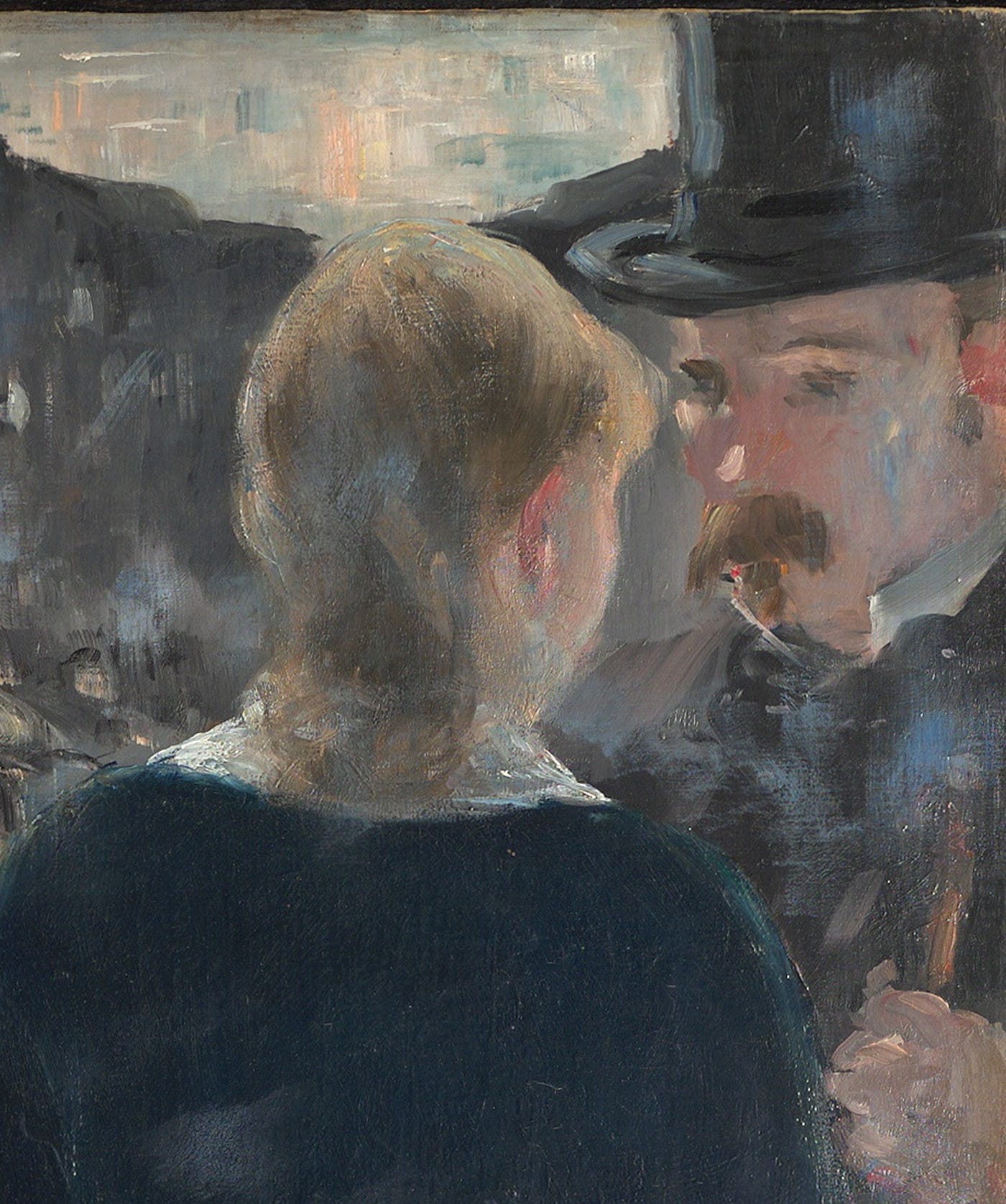
Stand up and lean forward in front of a mirror. Your reflection stays behind you. It never slides off to the side.
Suzon's drifts far to the right.
And the man in the top hat, who would have to be planted right in front of her to speak to her from that distance, occupies no space at all on our side of the counter.
No mirror on earth produces this image.
A painter of that caliber does not make a mistake about a reflection. He faked it on purpose, and his contemporaries saw nothing in it but bad draftsmanship.
This is not a clumsy piece of perspective. It is the key to the painting.
It tells you who this woman is, and what we are doing, standing in front of her.