
Maria Sibylla Merian (1647 to 1717) was a German painter and naturalist. She painted caterpillars changing into butterflies and moths, a change called metamorphosis. Her great book, Metamorphosis of the Insects of Suriname, appeared in Amsterdam in 1705.
Cool Stories About Art is a newsletter to learn art the fun way.
Join 200,000+ readers and get:
10 new art stories / month
The entire archive of content (140+ articles)
Comment, ask questions, and chat with other readers
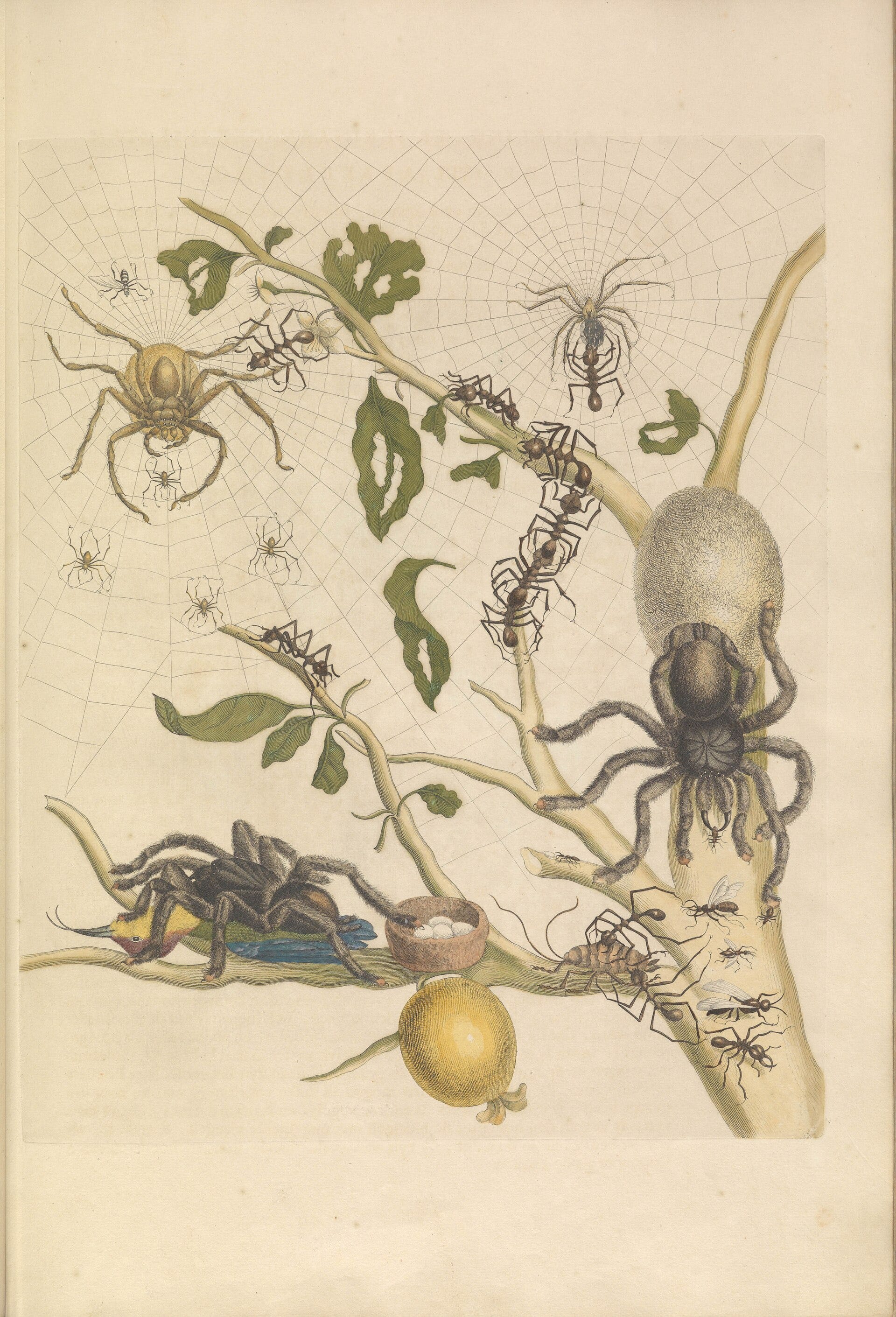
In 1699, at fifty-two, Maria Sibylla Merian sailed from Amsterdam to Suriname, a Dutch colony in South America. She wanted to see alive the butterflies she knew only as dead specimens. Yet one picture in her book, a giant spider eating a hummingbird, was doubted for more than a century by naturalists, people who study plants and animals.
Maria Sibylla Merian was born in 1647 in Frankfurt, a big trading city in what is now Germany. Her father, Matthäus Merian, was a famous engraver. He cut views of cities into copper plates, then inked the plates to print the pictures on paper.
Matthäus Merian died when his daughter was three. In 1651, her mother married Jacob Marrel, a flower painter who often added small insects to his pictures. Girls could not be apprenticed in a painter's workshop, so her stepfather taught the young Merian at home. When Marrel was away, his pupil Abraham Mignon took over the lessons.
Many people then believed that small creatures were born on their own, out of mud or rotting meat. Merian watched for herself. In 1660, at thirteen, she raised silkworms and drew each stage of their lives, from the egg to the moth.
Merian later wrote that young silkworms "shed their skins completely three or four times, just as a person pulls off a shirt over his head."
In 1665, Merian married Johann Andreas Graff, a painter trained by her stepfather. In 1670, the couple moved to Nuremberg, a rich merchant city in southern Germany, with their small daughter, Johanna.
In Nuremberg, Merian taught drawing to the daughters of rich families and searched their gardens for caterpillars. A second daughter, Dorothea, was born there in 1678.
In 1679, Merian published a book on caterpillars with 50 plates, full-page pictures that she engraved herself in copper.
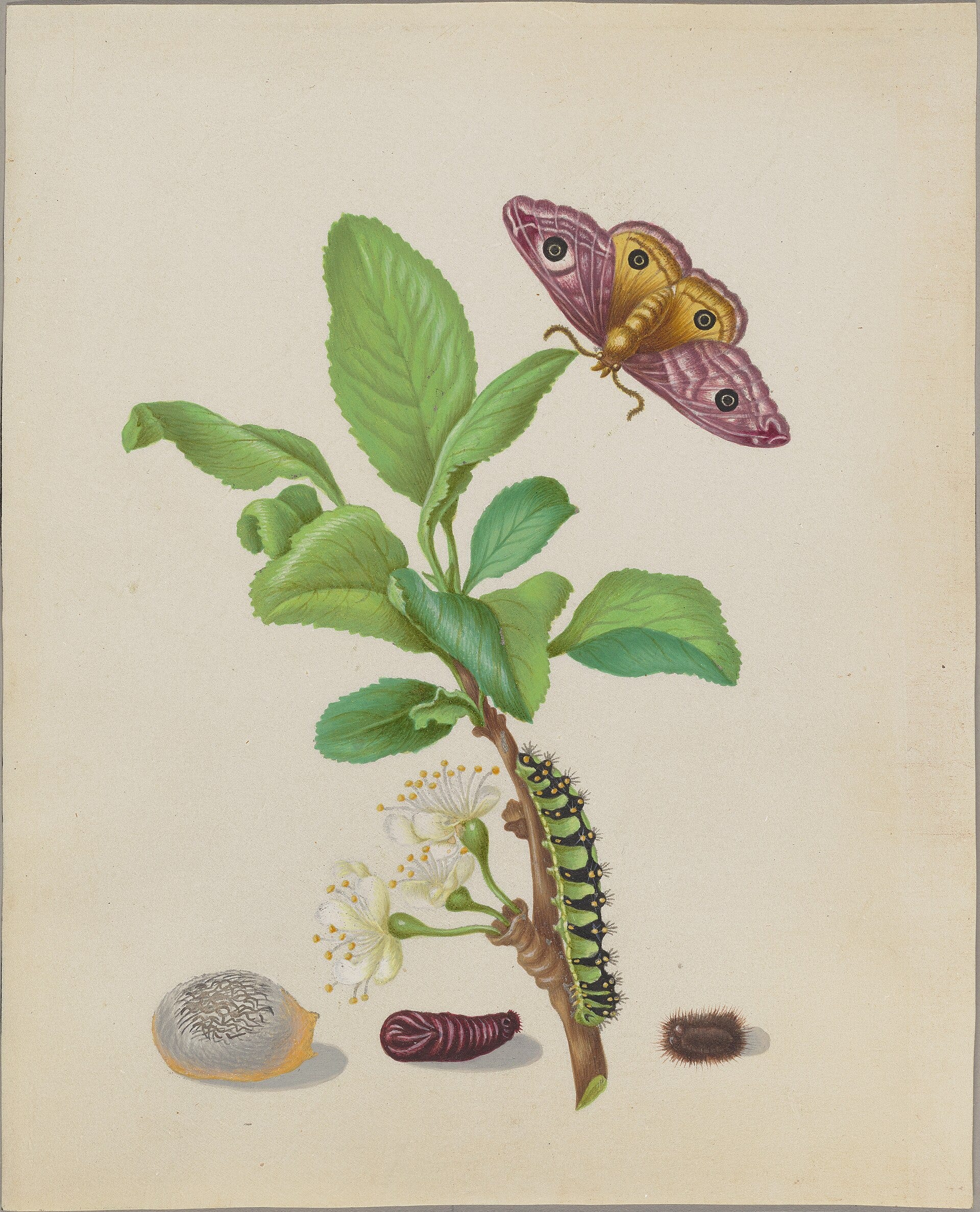
On each plate of the caterpillar book, Merian showed one plant with the caterpillar that eats it. Around the caterpillar, she drew what it becomes: the chrysalis, a closed case, then the moth or butterfly.
Naturalists came to rely on Merian's plates, with one exception: the spider of her book on Suriname.
Could a spider really kill a bird, or had Merian painted a fable?
In the rest of the story
Why the Dutch colonists of Suriname made fun of Merian.
What women in Suriname told Merian about the seeds of a flower.
Which fruit, crawling with insects, opens Merian's great book.
Which ruler bought Merian's paintings in the year she died.