
A mask is a face someone chooses to wear. For one night, or one performance, it lets a servant pass for a lord and a lord pass for no one at all. Artists have been drawn to that power since ancient Athens, from a clown dying in the snow at dawn to a rhinoceros stared at by masked nobles.
Cool Stories About Art is a newsletter to learn art the fun way.
Join 200,000+ readers and get:
10 new art stories / month
The entire archive of content (140+ articles)
Comment, ask questions, and chat with other readers
What a Mask Lets People Do
What do masks symbolize in art? The answer depends on where they were worn. On a stage, the mask is the character, and the actor disappears behind it. At carnival, it hides a name and a rank, which is why the powerful wore one too.
That double game is what kept artists coming back. A masked figure raises a question the picture never quite answers, who is under there, and some artists used the mask to show what a bare face keeps hidden.
Every work here shows a mask worn, held or carved, or a face painted as one, and each comes from the stage, the carnival or the masked ball. Costumes that leave the face bare stayed out.
12. Paul Fürst, Doctor Schnabel of Rome (1656)
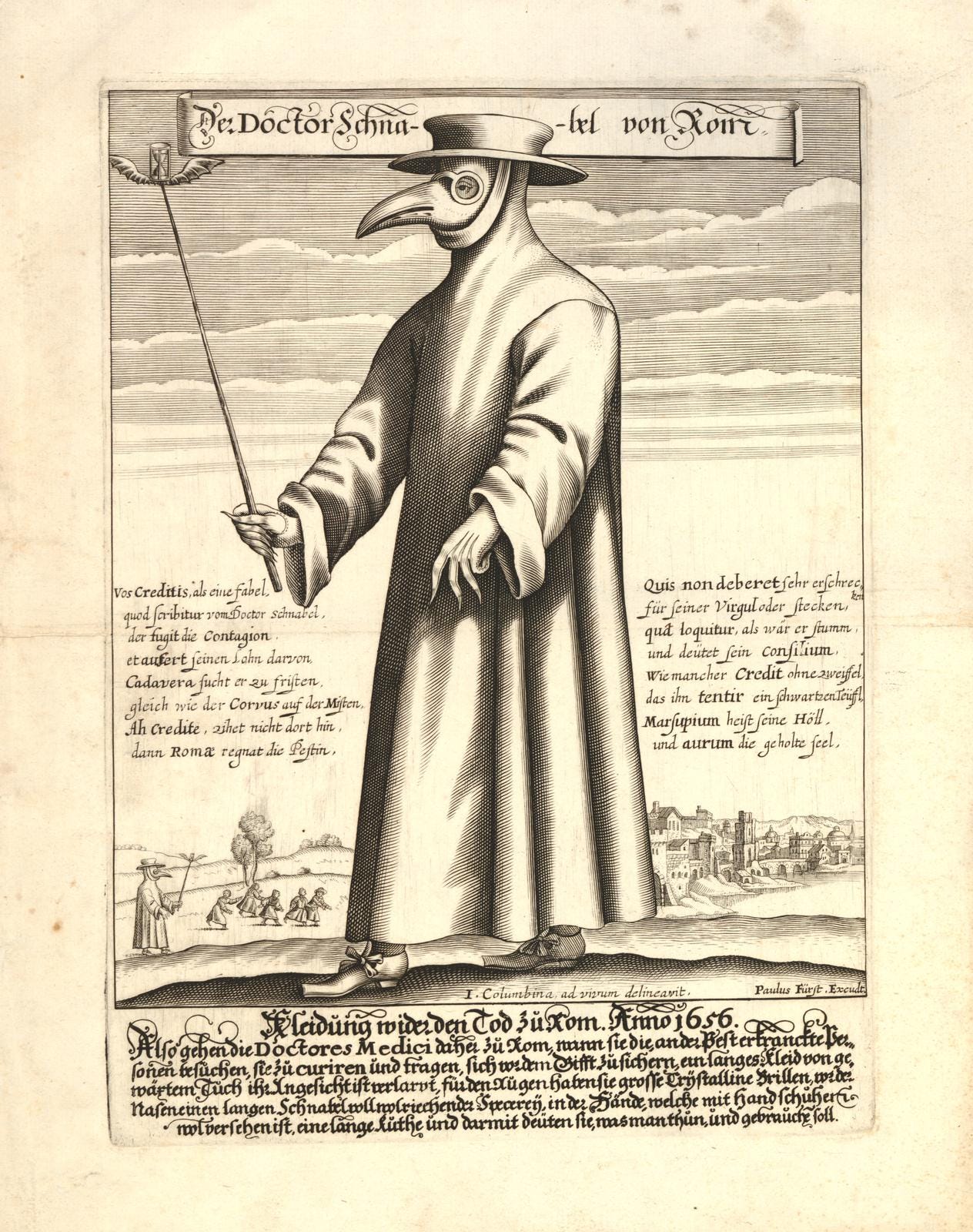
The first thing anyone notices is the beak, long and curved downward like a crow's, with two round glass lenses where the eyes should be. Under it stands a man in a floor-length coat and a wide hat, a stick in his gloved hand. Costume shops sell this plague doctor every autumn, and this sheet of 1656 is where he comes from.
The sheet was born of an epidemic. That year, plague struck Rome and Naples, and in Rome a printed broadside showed the habit worn by the city's doctors. In Nuremberg, the publisher Paul Fürst copied it as an engraving, named the figure Doctor Schnabel, Doctor Beak, and set a block of German verse beneath him.
The verse is what explains the beak. It was stuffed with fragrant spices, a defense against miasma, the corrupted air that doctors then blamed for the disease. Fürst also added claw-like gloves and a wand, and his doctor became a scarecrow who made his living from other people's deaths.
That mocking image is the one that lasted. A leather suit against plague is first described in a text credited to Charles de Lorme, physician to the French king Louis XIII, but evidence that real doctors wore one is thin, and for the medieval plagues there is none at all.
So historians still argue over which came first. Some think the beaked doctor began as a comic character, and that the real doctors of 1656 may have borrowed the disguise rather than the other way round.
From Fürst's sheet, the figure walked onto the stage and into the carnival of Venice, under the name Medico della peste. A caricature drawn to mock doctors had become a mask anyone could put on.
At a Glance
Artist: Paul Fürst (1608 to 1666), publisher, after an Italian broadside
Made: 1656
Medium: Engraving on paper
Size: 30.1 × 21.6 cm (11 7/8 × 8 1/2 in)
Where to see it: British Museum, London
About This Print
Did plague doctor masks actually work?
Not against plague. Few doctors are known to have worn the costume at all, and in 1656 nobody knew how the disease spread from one person to another.
11. Jean-Léon Gérôme, The Duel After the Masquerade (1857)
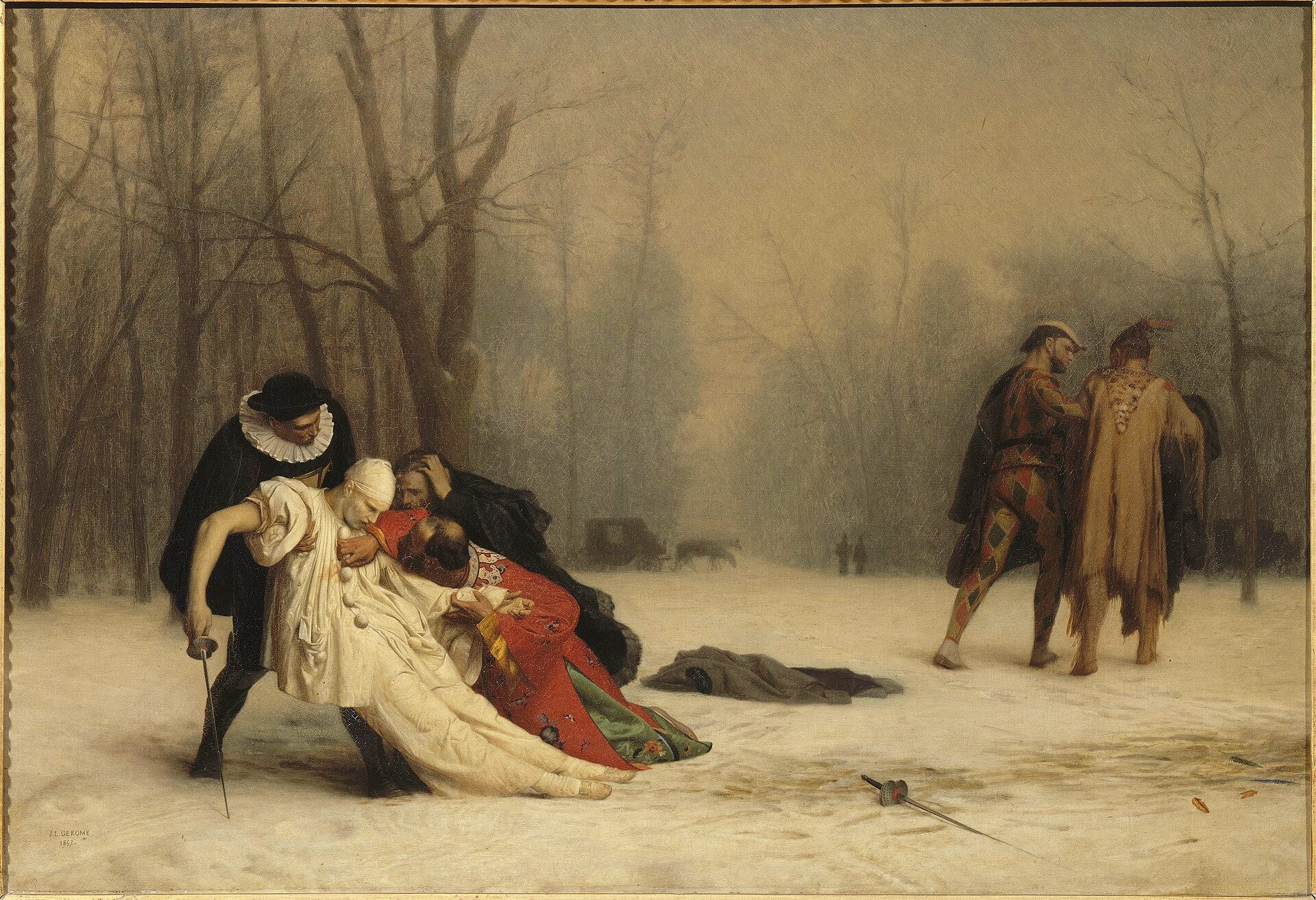
In the gray light of early morning, snow covers a wood outside Paris. A man dressed all in white, as Pierrot, sags into the arms of his friends. A few steps away, the man who has just wounded him walks toward a waiting carriage, and he too is still in fancy dress. Something went badly wrong at a party, and nobody here has had time to change.