

This is a preview. Paid subscribers get the full story.
Einstein vs. Bohr.
Edison vs. Tesla.
Napoleon vs. Nelson.
Coco Chanel vs. Elsa Schiaparelli.
Bette Davis vs. Joan Crawford.
Steve Jobs vs. Bill Gates.
You vs. the girl in math class who always beat you by one point.
Inspiration gets too much credit. Behind plenty of masterpieces, what you’ll mostly find is someone who couldn’t stand being outdone. Admit it: that girl in math class made you study harder than any teacher you ever had.
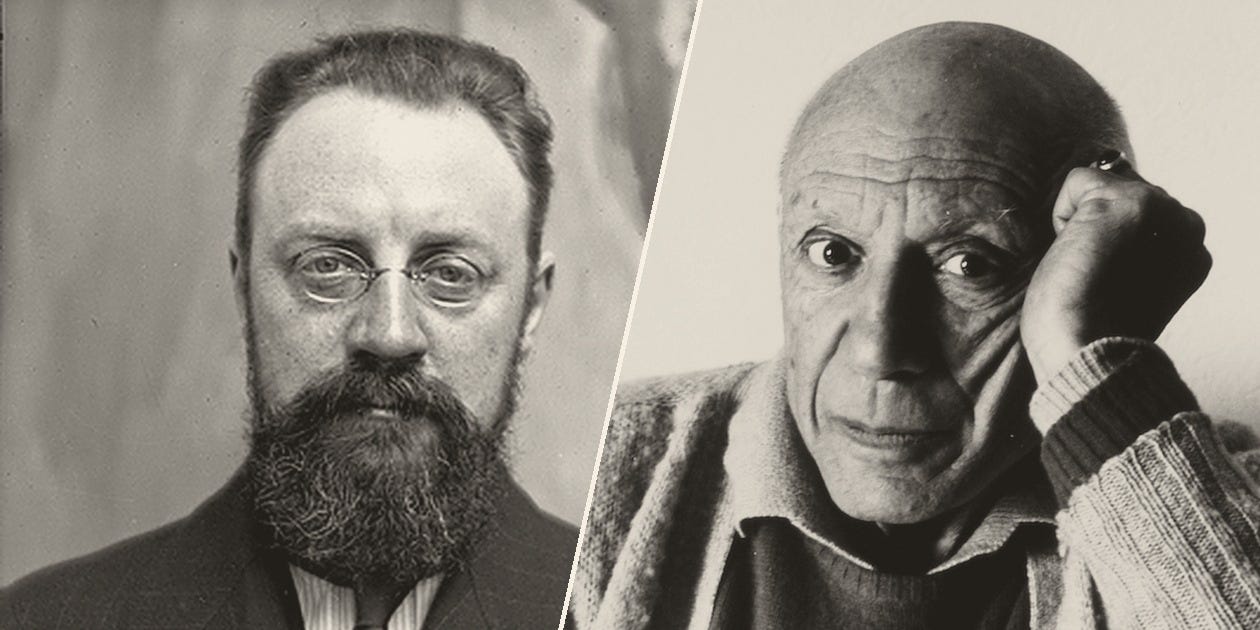
In art history, one rivalry dwarfs all the others. It pits the two greatest painters of the 20th century against each other: Henri Matisse and Pablo Picasso.
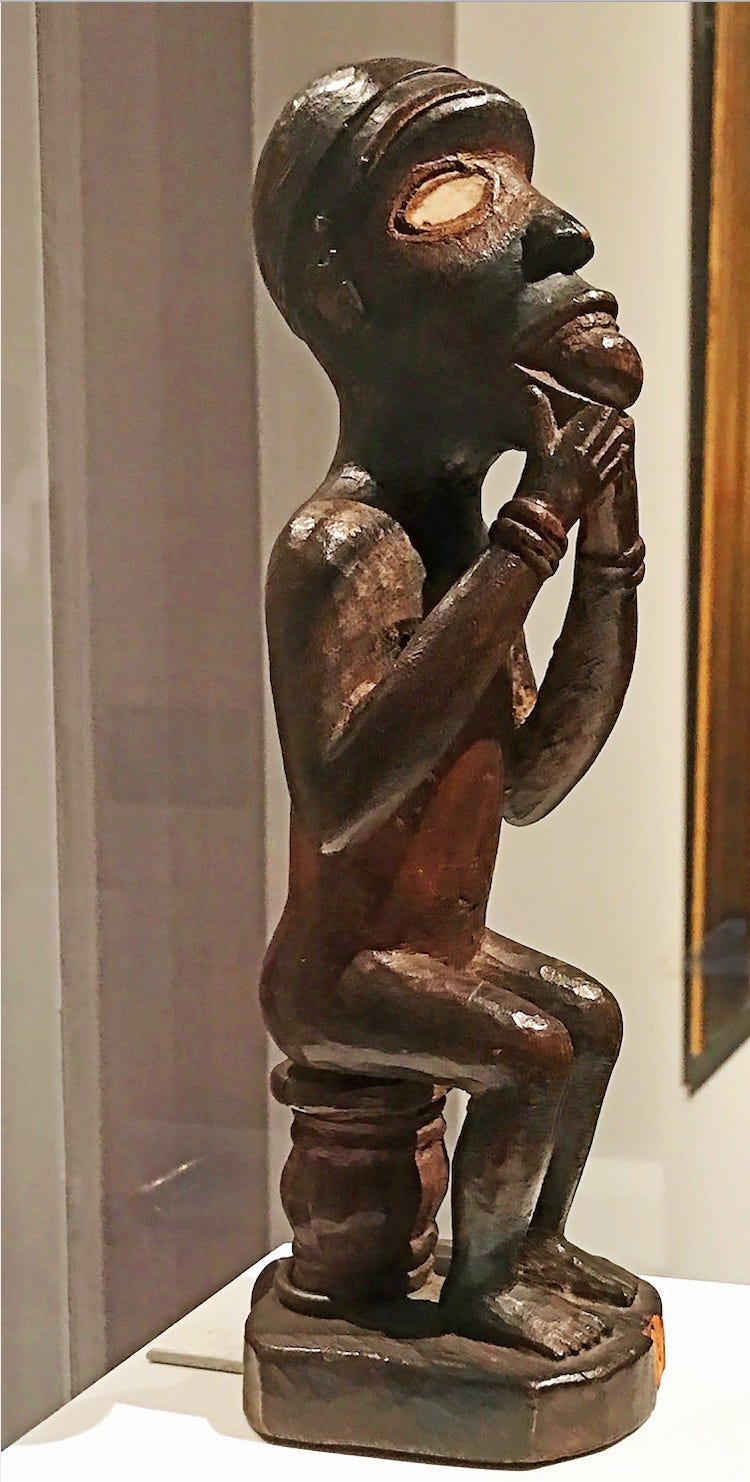
It begins with a small black wooden figure, bought for 50 francs in a junk shop.
The story opens on the Rue de Rennes in Paris, in the fall of 1906.
Rain is hammering the city. A 36-year-old man strides up the street, his dark coat soaked through and plastered to his body. Full-bearded, eyes restless beneath a broad forehead, he cuts through the crowd of pedestrians rushing to get out of the downpour, sidesteps umbrellas, leaps over puddles. He walks this way every week.
Suddenly he slows, then stops dead in front of a junk dealer’s window. Something in it has grabbed him: a small figure, black as pitch, seated with its head tilted up, its eye sockets hollow, its proportions wildly off, its expression raw.
The man at the window is Henri Matisse, the painter all of Paris is talking about.
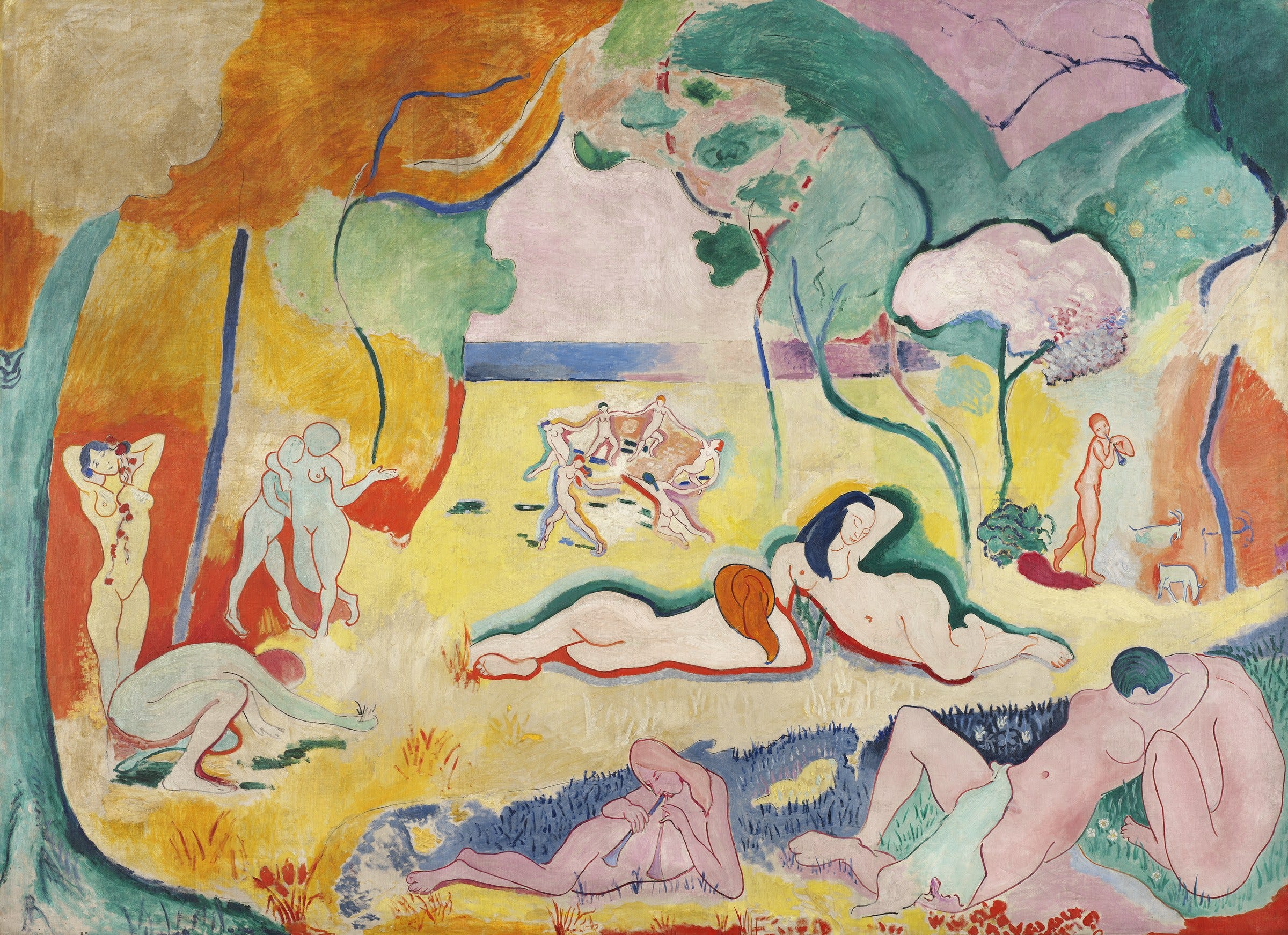
That spring, he showed an enormous canvas that provoked laughter and fury in equal measure: “Le Bonheur de vivre” (“The Joy of Life”), naked bodies stretched out in a landscape of impossible colors, beneath pink trees and a yellow sky. Matisse no longer paints the colors he sees. He paints the ones he feels, pure, straight from the tube.
One critic dubbed him and his circle les Fauves. The wild beasts. Matisse now leads the entire Paris avant-garde.
He pushes open the door. A bell jingles overhead. Inside, carved figures and objects crowd the shelves, brought back from Africa and Oceania in the luggage of soldiers, merchants and colonial officials. The owner, a heavyset man with a thin mustache, comes over. “A Vili figure, from the Congo, monsieur. A rare piece, it just came in. 50 francs.”
Matisse runs his fingertips over the rough wood. He is no novice. The year before, his friend the painter André Derain showed him a Fang mask from Gabon, and since then Matisse has gone back again and again to the ethnographic museum at the Trocadéro. These objects obsess him: their free forms, their arbitrary proportions, their sovereign contempt for likeness.
He pays without haggling and slips the figure into his coat pocket. Tonight, Henri Matisse has somewhere to be.
Know someone who would love these stories? Give them a month or a year, with a note from you. 🎁
Every Saturday at 9 p.m., the whole Paris art world converges on 27 Rue de Fleurus, on the Left Bank, home of Leo and Gertrude Stein. The brother and sister, two wealthy Americans living in Paris, have turned their salon into the crossroads of the avant-garde. The Steins buy what nobody else wants.
Paintings cover the walls from floor to ceiling, a Cézanne beside a Renoir. In the dining room, pride of place goes to “Le Bonheur de vivre,” which Leo Stein bought against everyone’s advice after three trips to the exhibition.
The salon is packed, the smoke thick. By the fireplace, the poet Guillaume Apollinaire is declaiming his verse. Around him, glasses clink, and between sips of red wine, the talk savages the academic establishment and rewrites art history.
The door flies open and a 25-year-old bursts in. Short and stocky, swimming in a suit too big for him, his jet-black hair slicked back, he weaves through the guests, skips the introductions and kisses Gertrude Stein on both cheeks.
Pablo Picasso. A Spaniard from Málaga who still speaks broken French and lives in a ramshackle studio in Montmartre, the Bateau-Lavoir. Gertrude Stein adores him. For months she has sat for him, 90 sessions in all, for a portrait he can’t finish. Her face has fought him so hard that in the end he has painted it out.
Tonight, though, every eye in the room is on Matisse. Picasso keeps stealing glances at “Le Bonheur de vivre,” eaten up by a jealousy he can barely hide. Matisse’s daring has shaken him, as it has shaken so many others, but he is sure of one thing: his rival stopped too soon. The real break will come from Picasso.
Matisse feels the stare and walks over. With an almost ceremonial gesture, Matisse draws the figure from his pocket and holds it out to the young Spaniard.
Picasso takes it, his fingers slowly tracing the ridges of the wood. He is captivated at once. Those impossible proportions. That total freedom of form. For the rest of the evening, he won’t let go of it.
Late that night, he climbs the hill of Montmartre back to the Bateau-Lavoir. He doesn’t go to bed. He reaches for a sheet of paper and a pencil.
That night, Picasso begins the painting meant to make the world forget “Le Bonheur de vivre.”
The greatest war in modern art has just begun.
What You’ll Discover
The painting born of that sleepless night
The vow Matisse makes when he sees it
Why Matisse is accused of sabotage
Sworn enemies or friends for life?
Which of the two wins the war
200,000+ readers learn art the fun way.
Paid subscribers get the full story. You’ll also get:
10 new stories / month
The full archive (150+ Art stories)
Your personal art guide. Comment, ask questions, DM me anytime
There’s only one person behind Cool Stories: me. Paid subscribers make it possible.
Less than a coffee a month. Cancel anytime.
Apple user? Subscribe at coolstoriesabout.art, not via the app. Apple adds 30% to the price.