
Michaelina Wautier was a painter born around 1614 in Mons, a town in what is now Belgium. She worked in Brussels, where she painted portraits, saints and children, and she died there in 1689.
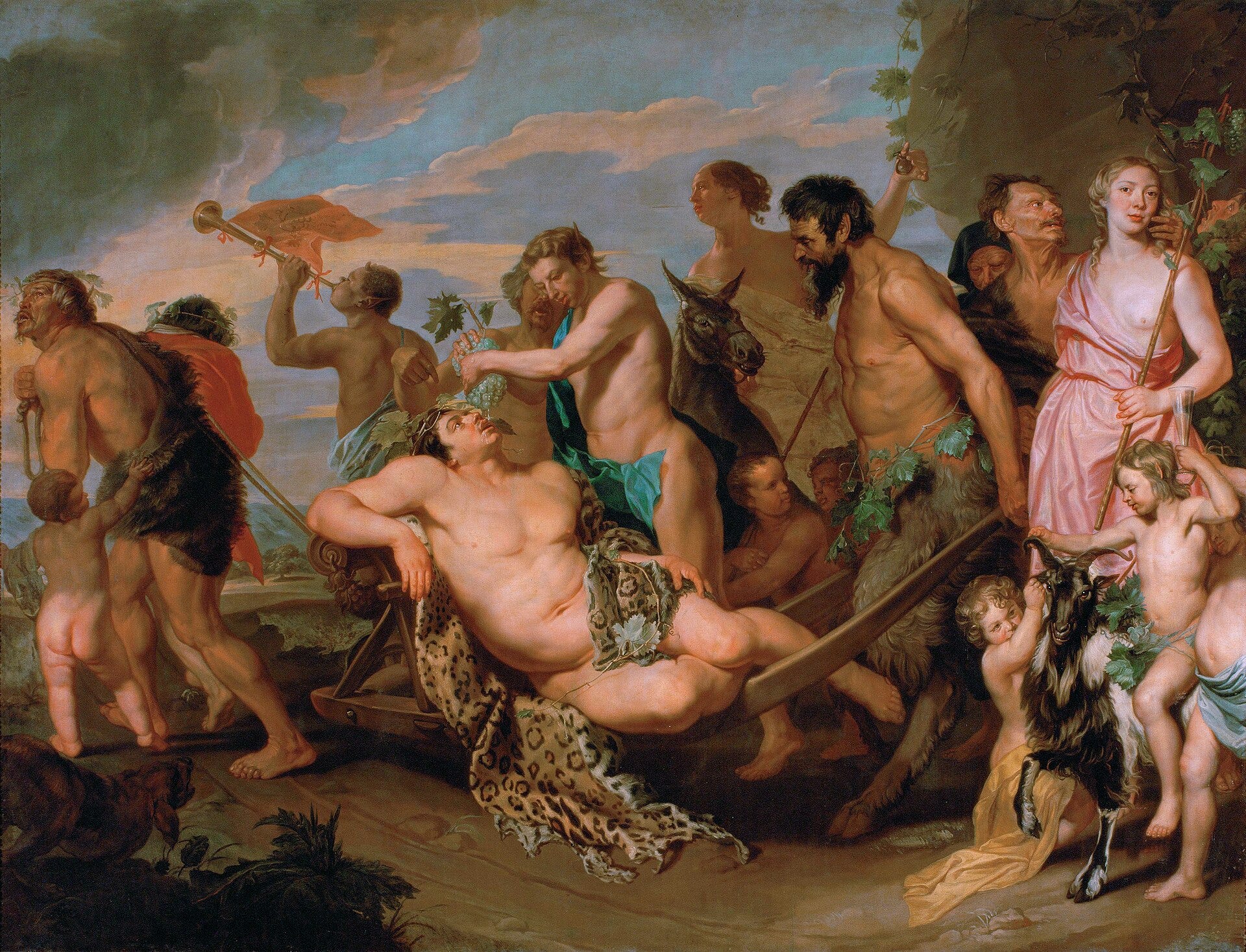
Her most famous painting, The Triumph of Bacchus, is a canvas almost nine feet high and more than eleven feet wide, crowded with nearly naked men around the drunken god of wine. The picture hangs in the Kunsthistorisches Museum, the great art museum of Vienna, Austria.
Wautier signed even small pictures of children, such as her series The Five Senses, with her name and the year. Her largest canvas carries no signature, and it was later credited to several other painters, all of them men.
Cool Stories About Art is a newsletter to learn art the fun way.
Join 200,000+ readers and get:
10 new art stories / month
The entire archive of content (140+ articles)
Comment, ask questions, and chat with other readers
Michaelina Wautier painted The Triumph of Bacchus some time before 1659. In her century, most women who earned a living with a brush painted flowers, still lifes or portraits. Huge scenes from ancient myth, full of naked bodies, ranked highest of all, and men painted nearly all of them.
Across Wautier's canvas moves a procession of about a dozen figures, most of them men. In the middle, Bacchus, the god of wine of the ancient Romans, rides drunk on a cart.
At the right edge walks a woman wrapped in a light cloth that leaves one breast bare. A man beside her reaches out to touch her. She ignores him and looks straight out of the canvas. No other figure in the procession looks at the viewer.
In her hand, the woman holds a staff wound with vine leaves. In the myths of Bacchus, a staff of vine leaves belongs to the bacchantes, the women who follow the god in his parades. The same staff also belongs to Ariadne, the princess Bacchus loved.
Nothing written on the canvas says who the woman is.
Who is the woman who looks out of The Triumph of Bacchus, a canvas on which Michaelina Wautier never wrote her name?
In the rest of the story, you'll find out:
why her earliest known painting survives only on paper
how she made a gray scarf look blue without any blue paint
how a prince's inventory gave three of her paintings to a sister who never painted
what a Belgian art historian was looking for when she found the giant canvas in a museum storeroom