
Michelangelo Buonarroti (1475 to 1564) was the defining artist of the Italian High Renaissance, the sculptor, painter and architect who created the Pieta, the David and the Sistine Chapel ceiling.
He worked for nine popes across nearly seventy years. People called him divine while he was still alive.
He is also one of the most misunderstood names in art. He thought of himself as a sculptor, not a painter, even as he covered the most famous ceiling on Earth. Here is the whole man, scene by scene.
Michelangelo in sixty seconds
Lived: 1475 to 1564, from a village near Arezzo to Rome, dying at 88.
Trained: in Florence, inside the household of Lorenzo de' Medici.
Three icons: the Pieta, the David and the Sistine Chapel ceiling.
Saw himself as: a sculptor first, always.
Also: designed the dome of St Peter's Basilica.
More incredible painter stories
If Michelangelo pulled you in, you will love these too:


That hidden self portrait was no accident. Old masters loved to smuggle meaning past the people paying them, as you can see in seven secrets hidden in famous paintings.
For the older genius, see Leonardo da Vinci: The Complete Story, who left his own buried secret in The Last Supper.
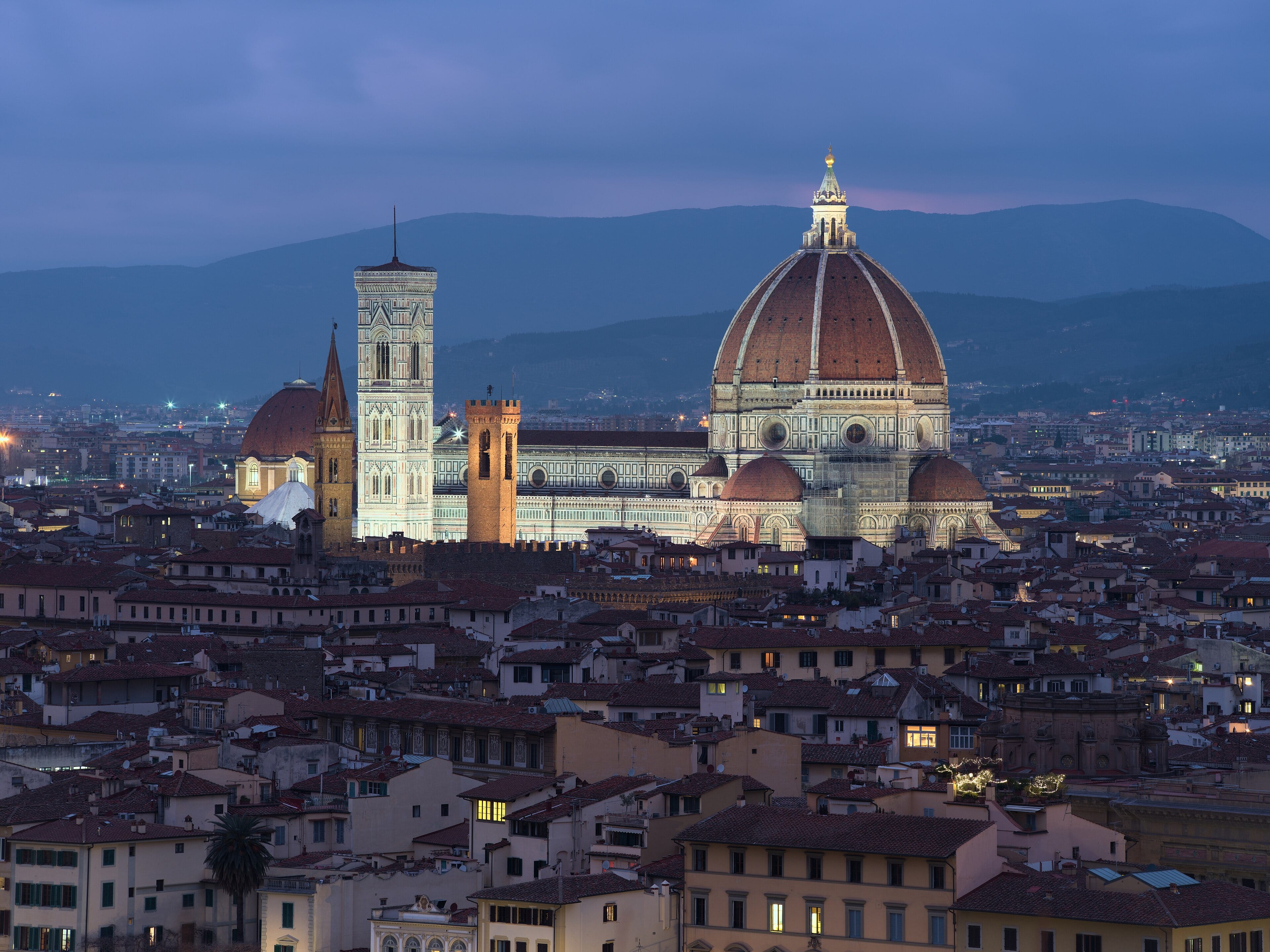
Born into the Medici circle
He was apprenticed at 13 to the painter Domenico Ghirlandaio in Florence. He did not stay long.
Spotted for his talent, he was taken into the sculpture garden of Lorenzo de' Medici, the most powerful man in Florence, and lived for a time in the Medici palace among ancient statues and scholars.
It was there, as a teenager, that a jealous fellow student broke his nose with a punch, flattening it for life. I look at what that did to his face in what Michelangelo looked like.
The man who called himself a sculptor
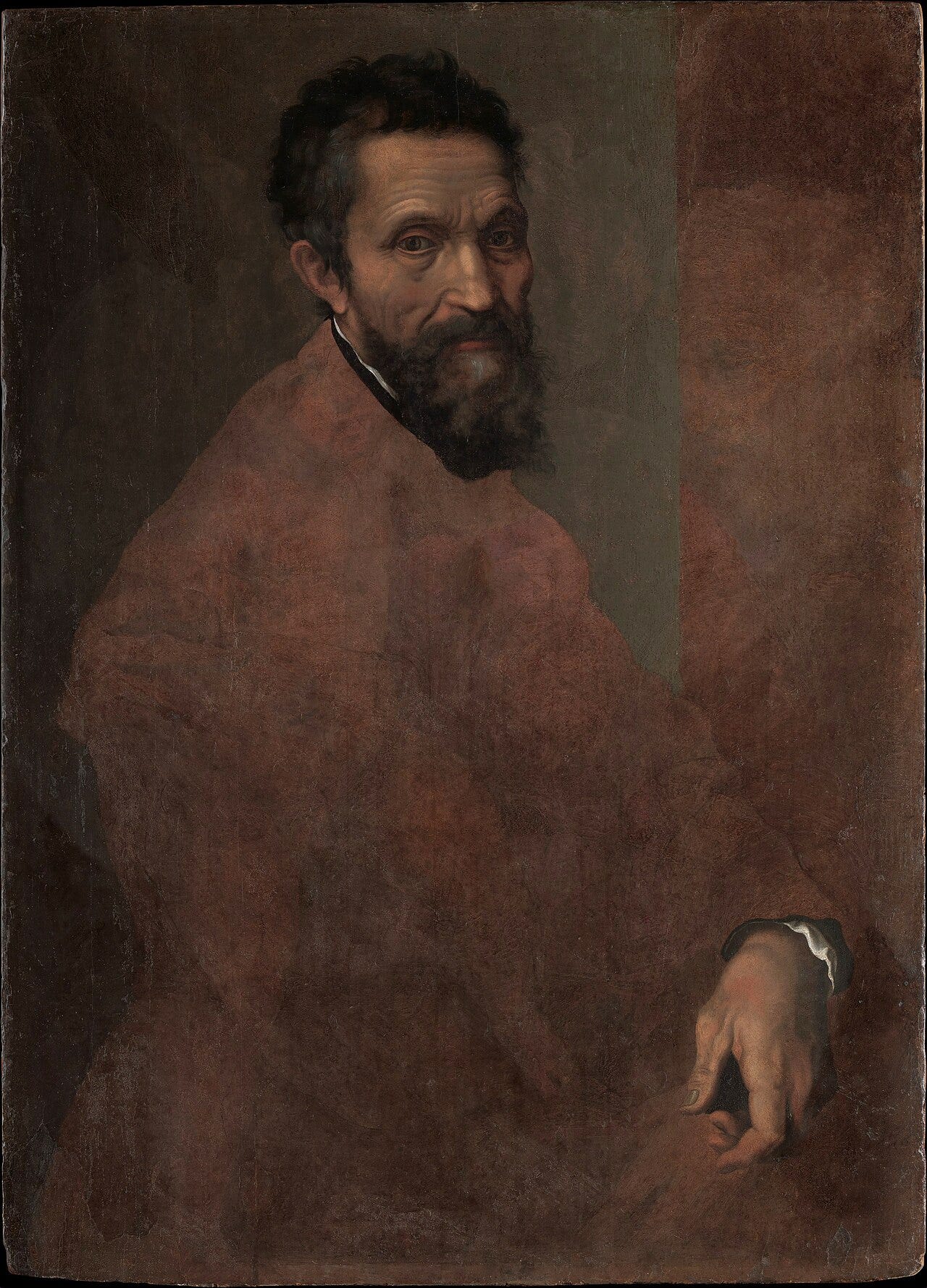
All his life he signed himself Michelangelo, sculptor. He took painting jobs grudgingly and resented being pulled off marble.
He had a theory about his craft. The figure, he said, was already inside the block. The sculptor's job was only to cut away the stone hiding it. That idea runs through everything he made.
The Pieta, signed in the marble
In 1498, at just 24, he carved the Pieta for a French cardinal, now in St Peter's. Mary cradles the dead Christ, calm and impossibly young.
It is the only work he ever signed. The story goes that he overheard visitors crediting it to another sculptor, so he came back at night and cut his name across Mary's sash.
He is said to have regretted the vanity and never signed again. If you are new to the form, here is what a Pieta is.
David, cut from a ruined block
Between 1501 and 1504 he carved the David from a tall, flawed block of marble that other sculptors had abandoned, known in Florence as the Giant.
He shows David before the fight, not after, tense and watching, his weight shifted onto one leg in the pose called contrapposto. Florence set it up as a civic symbol of the small republic standing against giants.
The original now stands in the Accademia in Florence, and I dig into why the David became so famous.
Four years under the ceiling
In 1508 Pope Julius II pushed him onto the Sistine Chapel ceiling. He fought the job, then gave it four years of his life, from 1508 to 1512. I dig into why Michelangelo painted the Sistine Chapel at all, given how hard he fought the commission.
He worked in buon fresco, painting into wet plaster more than 300 figures from the book of Genesis, including the Creation of Adam.
That one panel gets its own close look, the hands that never touch and the shape behind God, in The Creation of Adam: meaning, the hands, the hidden brain.
Almost everything people believe about it is slightly wrong: how it was actually painted, how long it really took, and whether he did it alone.
He also did not paint the whole room, as I explain in who painted the rest of the Sistine Chapel.
The Last Judgment and the breeches maker
He returned in 1536, in his sixties, to paint the wall behind the altar. The Last Judgment took five more years.
Its mass of nudes caused a scandal. After his death a painter was hired to add drapery over the most exposed figures and earned the nickname the breeches maker.
Michelangelo hid his own face in the scene, on the flayed skin held by a martyred saint. And you cannot photograph any of it today, for a surprising reason I unpack in why cameras are banned in the Sistine Chapel, inside the Vatican.
Terribilita and the unfinished giants
Contemporaries used one word for the force of his work: terribilita, an awe close to fear.
Not everything was finished. The tomb of Pope Julius II dragged on for decades and shrank to a fraction of the plan. All that survives of the grand scheme is the fierce Moses in Rome and a set of struggling figures known as the Slaves, who look as if they are fighting their way out of the raw marble.
The rival twenty years older: Leonardo
For a brief moment around 1504, Florence held both Leonardo da Vinci and Michelangelo, and they could not stand each other.
The city set them dueling battle murals on facing walls. Both were left unfinished, and the feud became legend.
The architect of St Peter's
At 71, when most men of his time were long dead, he took on the rebuilding of St Peter's Basilica.
He designed its great dome, which became the model for domes around the world, from London to Washington. He also shaped the Laurentian Library and the square of the Campidoglio in Rome. The sculptor had become the most important architect in Europe.
The last decades, faith and poetry
Michelangelo was also a serious poet, leaving behind hundreds of sonnets and madrigals.
Some are passionate love poems written to a young nobleman, Tommaso de Cavalieri, later quietly censored by his own family, a story I tell in Was Michelangelo Gay. In his final years his faith deepened, and he was still cutting a late, raw Pieta within days of his death.
A quiet death, a stolen body
He died in Rome in 1564, aged 88, having outlived almost everyone he had ever worked with.
He wanted to rest in Florence, not Rome. His nephew solved that by smuggling the body out of the city, and Michelangelo was buried in Santa Croce. The full account is in How Michelangelo Died.
His only finished panel painting
For all his fame as a painter, Michelangelo left just one easel painting that everyone accepts as his: the Doni Tondo, made around 1505 and now in the Uffizi.
It is a round Holy Family in hard, sculptural color, with a row of strange nude youths behind them. Even on a flat panel, he painted like a man carving stone. It is one of the great examples of the tondo, the round format Florence loved.
The Medici tombs in Florence
Back in Florence in the 1520s, he carved the tombs of the Medici in the New Sacristy of San Lorenzo.
The reclining figures of Day, Night, Dawn and Dusk drape across the tombs, half awake, heavy with thought. After the David, they are among his most admired sculptures, and they show a darker, more troubled hand than the young man who carved the Pieta.
Ranking Michelangelo's biggest works
If I had to rank his four most famous jobs, David comes first. It came from a block of marble every other sculptor in Florence had already turned down.
The Pieta is second. It is the one work he trusted enough to sign, cutting his name into Mary's sash at just 24.
The Sistine ceiling drops to third for me. Four years and more than 300 figures are staggering, but it is still a ceiling, seen at a slant with an aching neck.
The Last Judgment is last. It caused enough of a scandal that a painter got hired, after Michelangelo's death, to paint clothes onto the exposed figures. Elsewhere in the Vatican, Raphael finished the Stanza della Segnatura for the same pope in 1511, a year before Michelangelo's ceiling was even unveiled.
What everyone asks about Michelangelo
What is Michelangelo most famous for? The Pieta, the David and the Sistine Chapel ceiling.
Was he a painter or a sculptor? He called himself a sculptor, even though his ceiling is the most famous painting cycle in the world.
How long did the Sistine ceiling take? About four years, 1508 to 1512.
Did he really paint lying on his back? No. He stood on a scaffold with his head tilted back.
When did he die? In 1564, in Rome, aged 88.
What was Michelangelo's full name? Michelangelo di Lodovico Buonarroti Simoni.
Where was he born? In Caprese, near Arezzo in Tuscany, in 1475.
Was Michelangelo married? No. He never married and had no children.
Was he religious? Yes, deeply Catholic, more so in his later years.
Was Michelangelo rich? Very. He died wealthy, though he lived plainly.
More secrets to unlock


The figure waiting in the stone
Michelangelo believed every block of marble already held a figure, and that his only task was to free it.
I gather the odder details in interesting facts about Michelangelo. The unfinished Slaves are the proof of how he saw a lifetime of work. Half buried in rough stone, half pulled into the light, they line the corridor to the David in the Accademia in Florence, four bodies still fighting their way out of the marble five hundred years on.