
A winter field looks like the easiest subject there is: white ground, gray sky, a few bare trees. Claude Monet painted about 140 of them and never found it easy. He worked in Norway with ice hanging from his beard, and he kept one winter picture of his first wife beside him for the rest of his life.
Cool Stories About Art is a newsletter to learn art the fun way.
Join 200,000+ readers and get:
10 new art stories / month
The entire archive of content (140+ articles)
Comment, ask questions, and chat with other readers
Why Monet Kept Going Out in the Cold
Monet painted more winters than any of his Impressionist friends, about 140 canvases between the late 1860s and 1895. Winter set his usual problem at its hardest. A white field takes on every change in the sky and shifts color by the minute, and he painted its shadows blue, mauve or pink.
The season also gave him a deadline. Frost melts by midday, a thaw can come overnight, and a single gust of wind strips the branches bare. So he often painted the same motif on several canvases, each under its own light, to catch the effect before it was gone.
The selection follows his whole working life, from his first winter landscapes in Normandy to a journey to Norway. Every one of them hangs in a public museum, and the order climbs from the least familiar to the most celebrated.
12. The Red Kerchief (about 1868 to 1873)
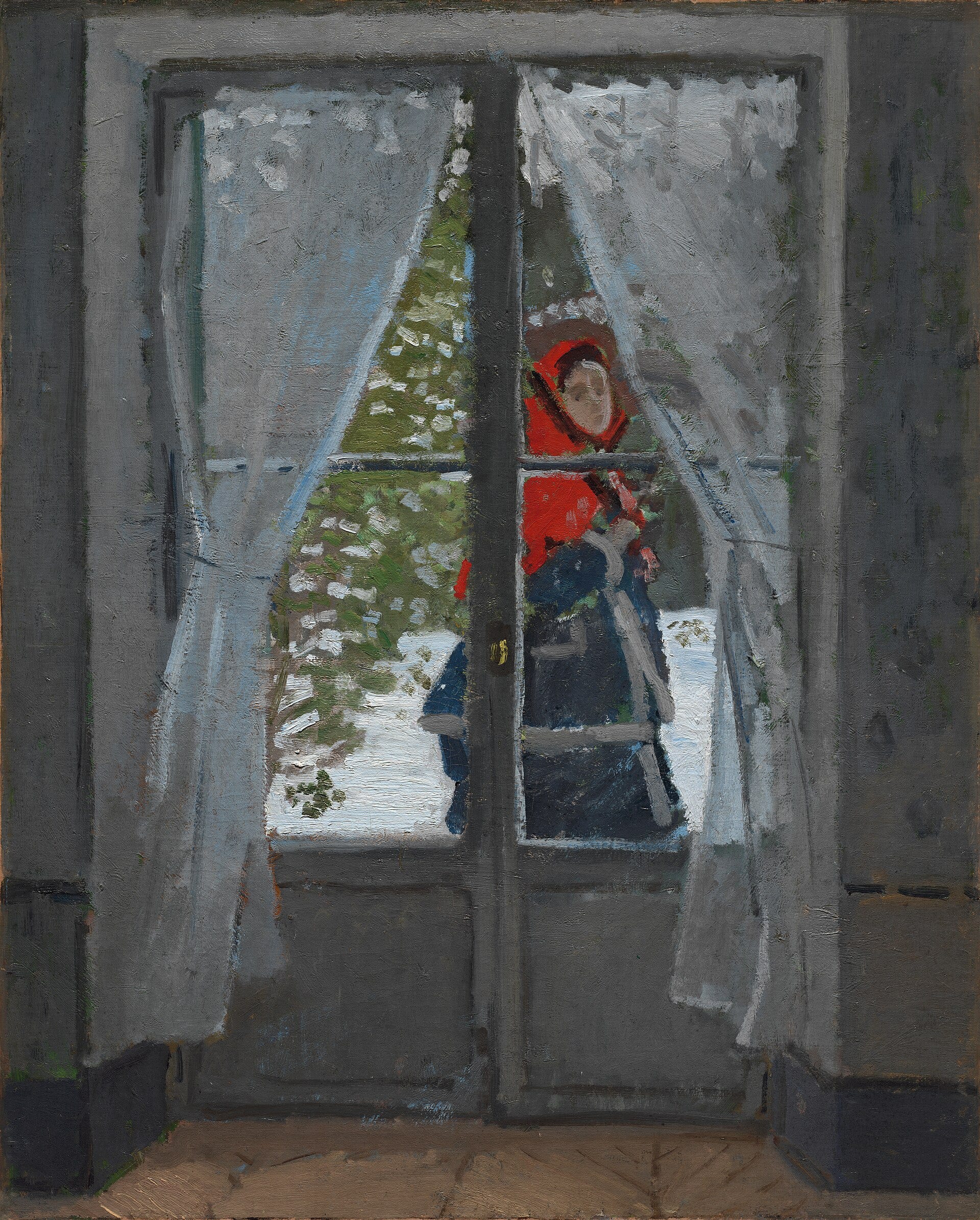
Through the tall panes of a French window, a woman in a red hooded cape glances into the room. She is outside and already moving on, and behind her the garden lies white under bare green trees. In The Red Kerchief, the woman is Camille, Claude Monet's first wife, passing the glass doors of their house at Argenteuil, near Paris, on a winter day.
The canvas can be dated only roughly, somewhere between 1868 and 1873, but what Monet tries in it is plain to see. He paints Camille's face with the same broad, loose strokes as the snow and the trees, and takes no more care over it than over the garden. Through the glass, the red of the cape catches the eye before anything else. The face is only a glance, caught as she goes by.
A portrait is supposed to hold its sitter still for the painter. Monet catches Camille halfway across the picture instead, a patch of red crossing the white garden, and treats her exactly as he treats the weather.
Camille died in September 1879 at Vétheuil, a village downriver from Paris. Monet lived another forty-seven years and never let this canvas go. It was still in his house at Giverny when he died in 1926.
At a Glance
Artist: Claude Monet (1840 to 1926)
Painted: About 1868 to 1873
Medium: Oil on canvas
Size: 99 × 79.8 cm (39 × 31 7/16 in)
Where to see it: Cleveland Museum of Art, Cleveland
11. Sandvika, Norway (1895)
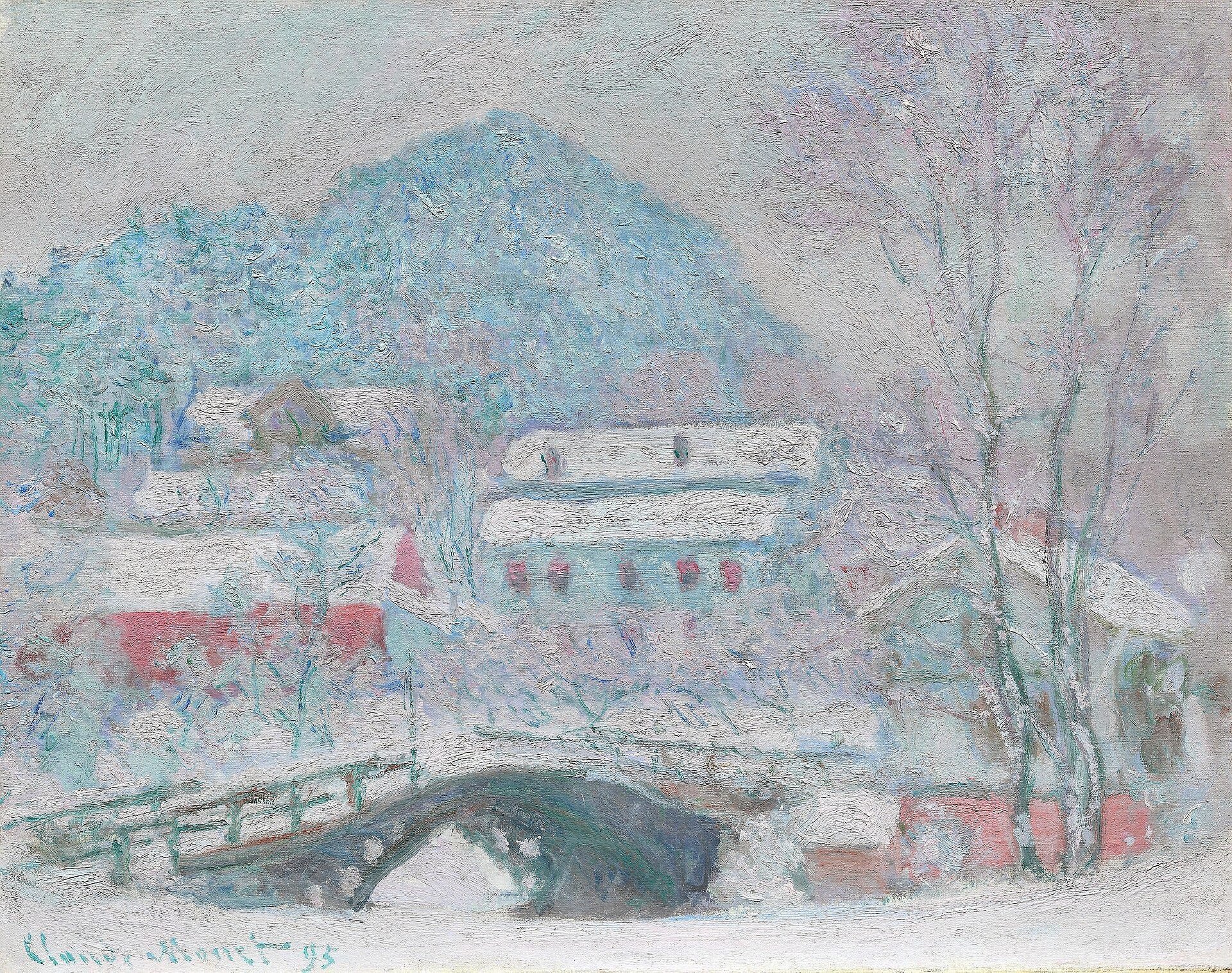
Sandvika, Norway comes out of a journey Monet began in late January 1895, when he left his house at Giverny for Norway in the worst season of the year for travel. Trains and ferries ran late in the cold, and many places could be reached only by sleigh or on skis. When he arrived on February 1, the fjords he had come to see were locked in ice and snow.