
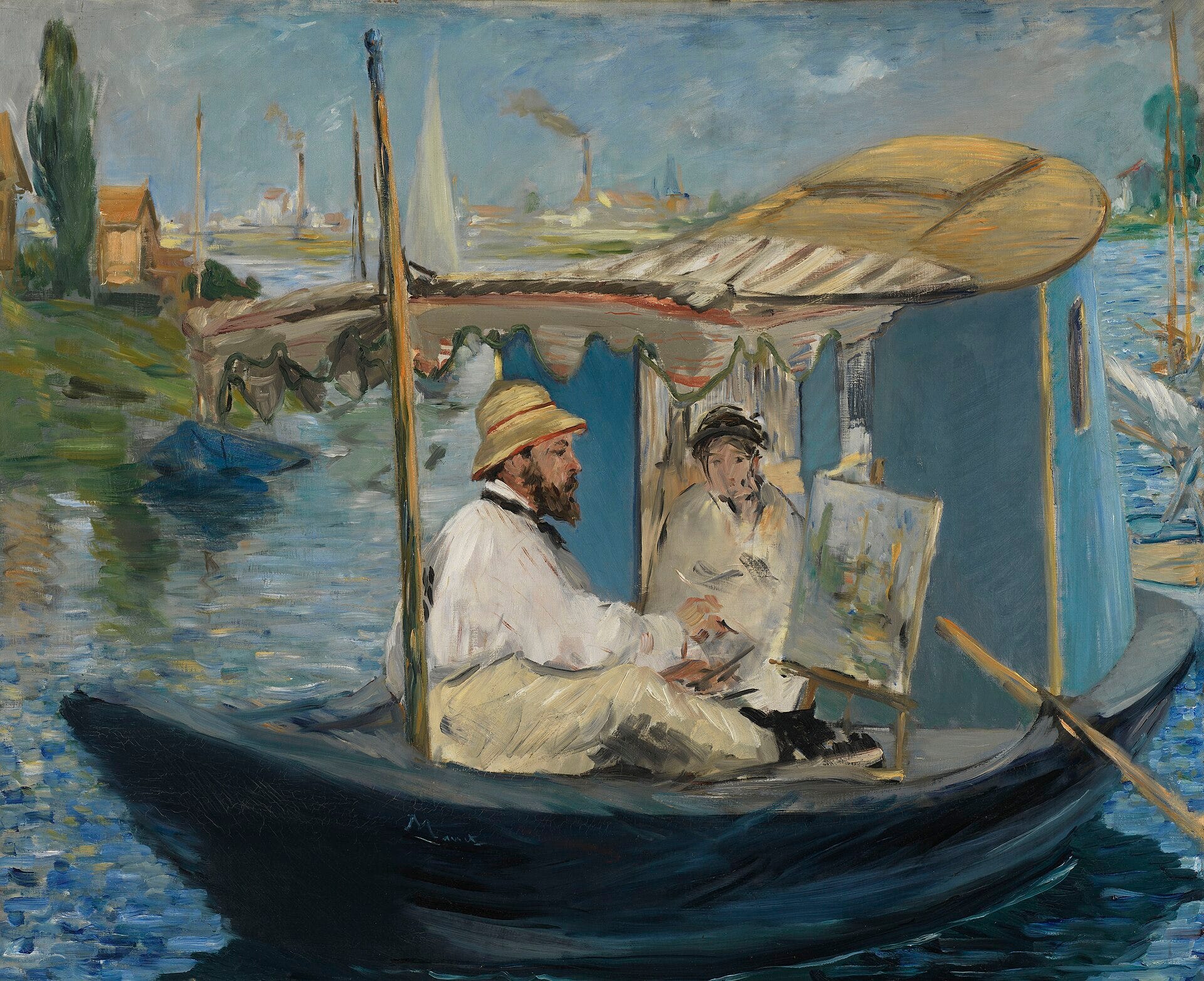
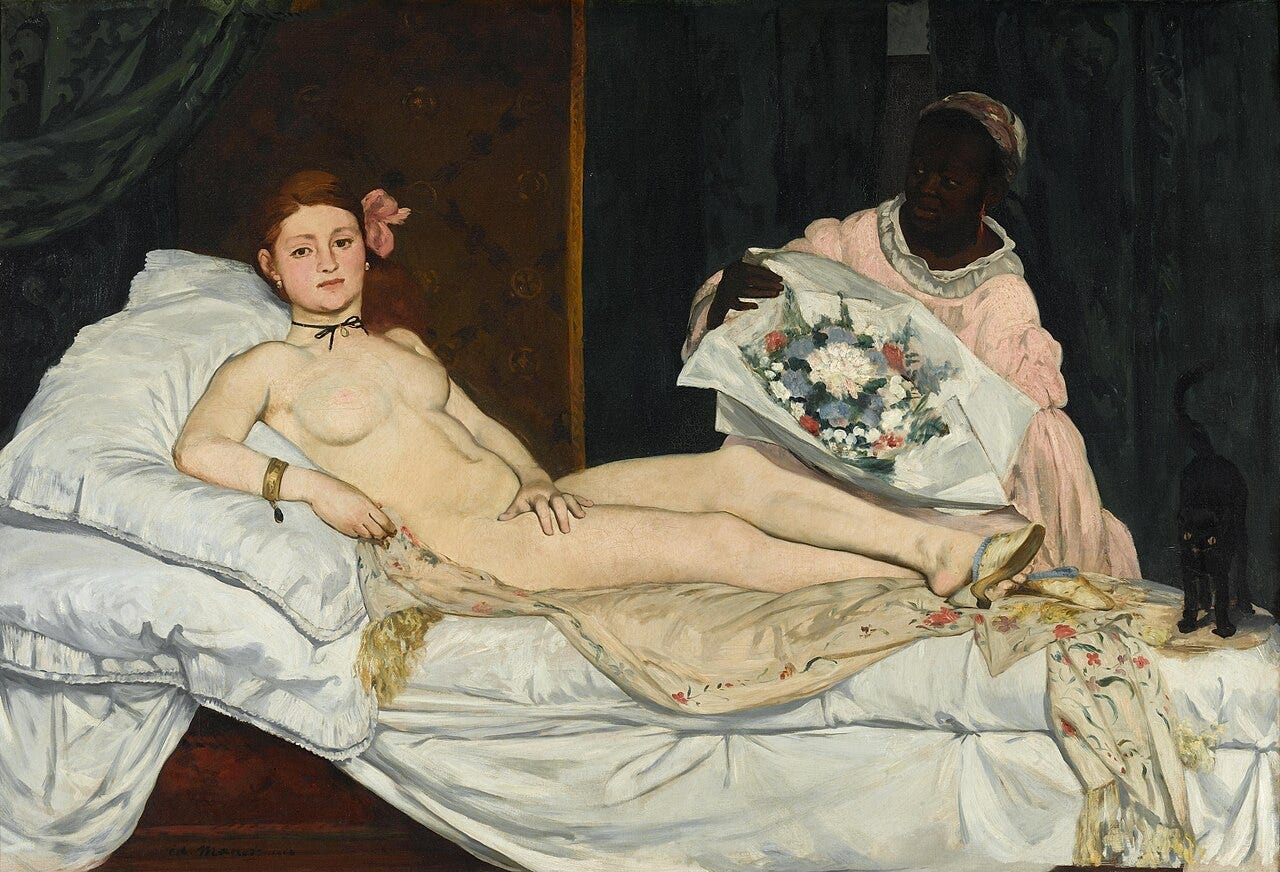
Édouard Manet and Claude Monet were two different French painters, eight years apart and good friends. Manet (1832 to 1883) painted people and modern Paris, like Olympia, the nude who stares straight back at the viewer. Monet (1840 to 1926) painted outdoors, following light across water, fields and haystacks, and he helped start Impressionism.
Their names sit one letter apart, which is why people keep swapping them. The two men first crossed paths in 1865 and stayed in each other's lives until Manet died.
Cool Stories About Art is a newsletter to learn art the fun way.
Join 200,000+ readers and get:
10 new art stories / month
The entire archive of content (1,000+ articles)
Comment, ask questions, and chat with other readers
Manet is often described as the older master who showed the younger painters how to break the rules. In the spring of 1874, Monet and his friends opened an exhibition of their own in Paris, outside the official Salon. Manet sent nothing. He turned down that show and the seven that followed, eight in all.
There was a famous quarrel, but it never broke the friendship. The two painters stayed close for years, and Manet painted portraits of the very people he refused to exhibit with. Why would Manet, who painted their portraits, keep his own pictures off their walls?
Why was Manet furious at Monet?
Because Manet believed the younger painter was copying him. The quarrel started at the Paris Salon of 1865, the great state exhibition held each spring, where paintings were hung in alphabetical order by the artist's name. Manet and Monet landed on neighboring walls.
Manet was showing Olympia, the nude that had scandalized Paris. Near it hung two large seascapes by Monet, and visitors admired them.
A remark attributed to Manet survives in the writing of the art historian Colin Bailey: "Who is this rascal who pastiches my painting so basely?" A pastiche is an imitation. The Metropolitan Museum of Art describes the first meeting between the two painters as strained for the same reason, because Manet saw a copyist in Monet. The remark comes without a date, so it may have been polished by retelling.
Monet was no worshipper either. In June 1867 Monet wrote to his friend Frédéric Bazille, a fellow painter, that Manet's earlier work was better than what Manet was painting at the moment. By then Monet had already answered Manet with a painting of his own.
What You'll Discover
How Monet answered Manet in paint.
Why Manet kept turning them down.
Who painted whom beside the Seine.
Who saved Olympia for France.