
Money in art means moneylenders, tax collectors, thirty pieces of silver and one dollar sign worth millions. Twelve paintings about coins and what they do to people, painted by artists who knew the problem from both sides.
The account, in five lines
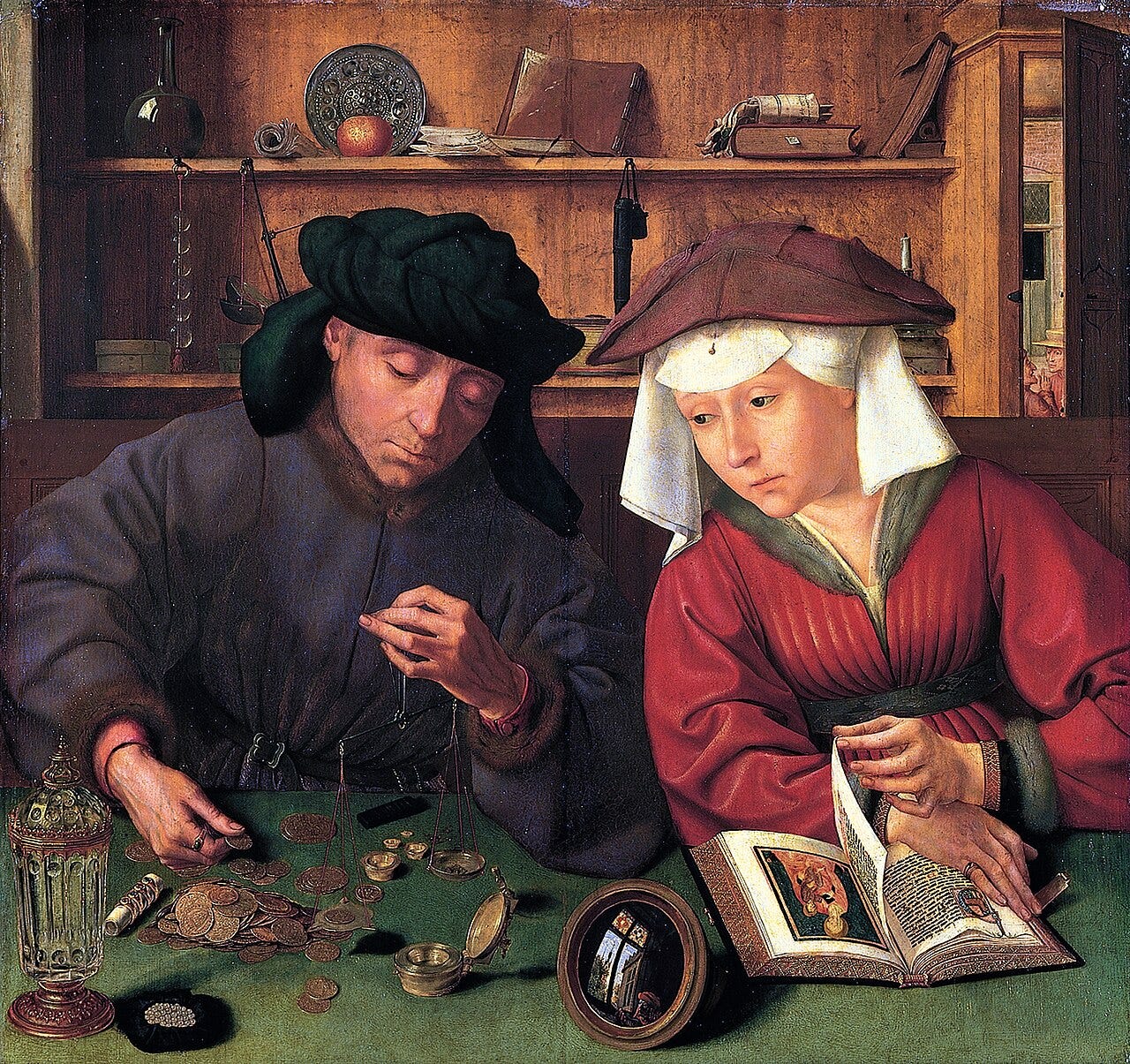
One moneylender’s wife has been distracted from her prayer book for exactly 500 years.
The most famous betrayal in history cost thirty pieces of silver, and Rembrandt painted the refund.
Two tax collectors have been sneering at the poor since 1540.
One painter put the money for his own commission inside the painting.
And Warhol printed the dollar sign itself, cutting out the middleman.
Learn art the fun way
1 | The Moneylender and His Wife, Quentin Matsys (1514)
A banker weighs coins while his wife turns a page of her prayer book, eyes drifting to the gold. The tiny convex mirror on the table reflects a window and a hidden figure.
Antwerp was becoming Europe’s money capital, and Matsys painted its conscience: piety losing a staring contest with profit. The Louvre owns it.
2 | The Tribute Money, Masaccio (about 1427)
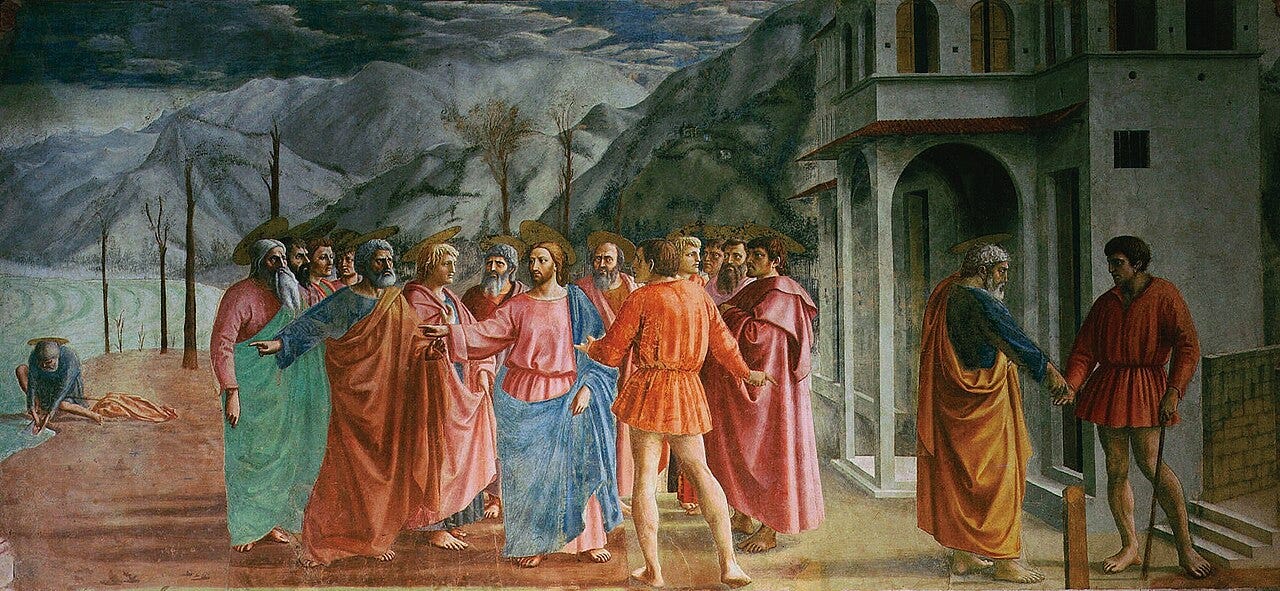
Jesus tells Peter to find a coin in a fish’s mouth to pay the temple tax, and Masaccio tells the whole story in one fresco, three episodes wide.
Florence was debating a new income tax at the time; the fresco doubles as civic commentary. The 26 year old who changed painting I cover that in Masaccio.
3 | Judas Returning the Thirty Pieces of Silver, Rembrandt (1629)
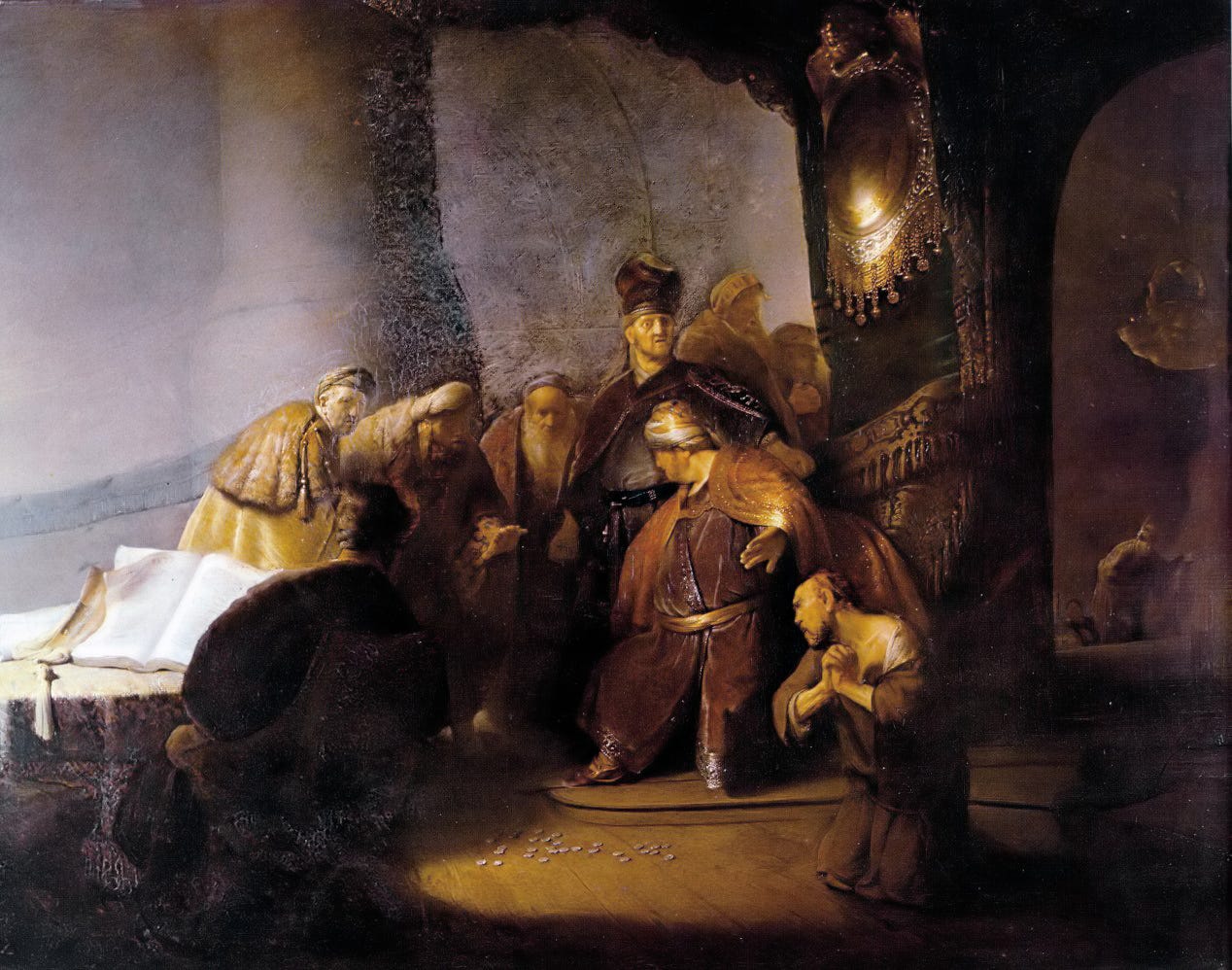
Judas kneels, wringing his hands, the silver scattered on the floor where he flung it. The priests turn away. Rembrandt was 23.
The scholar Constantijn Huygens saw it and wrote that this Dutch boy had beaten all of Italy. The career it launched More of it in Rembrandt.
4 | The Calling of Saint Matthew, Caravaggio (1600)
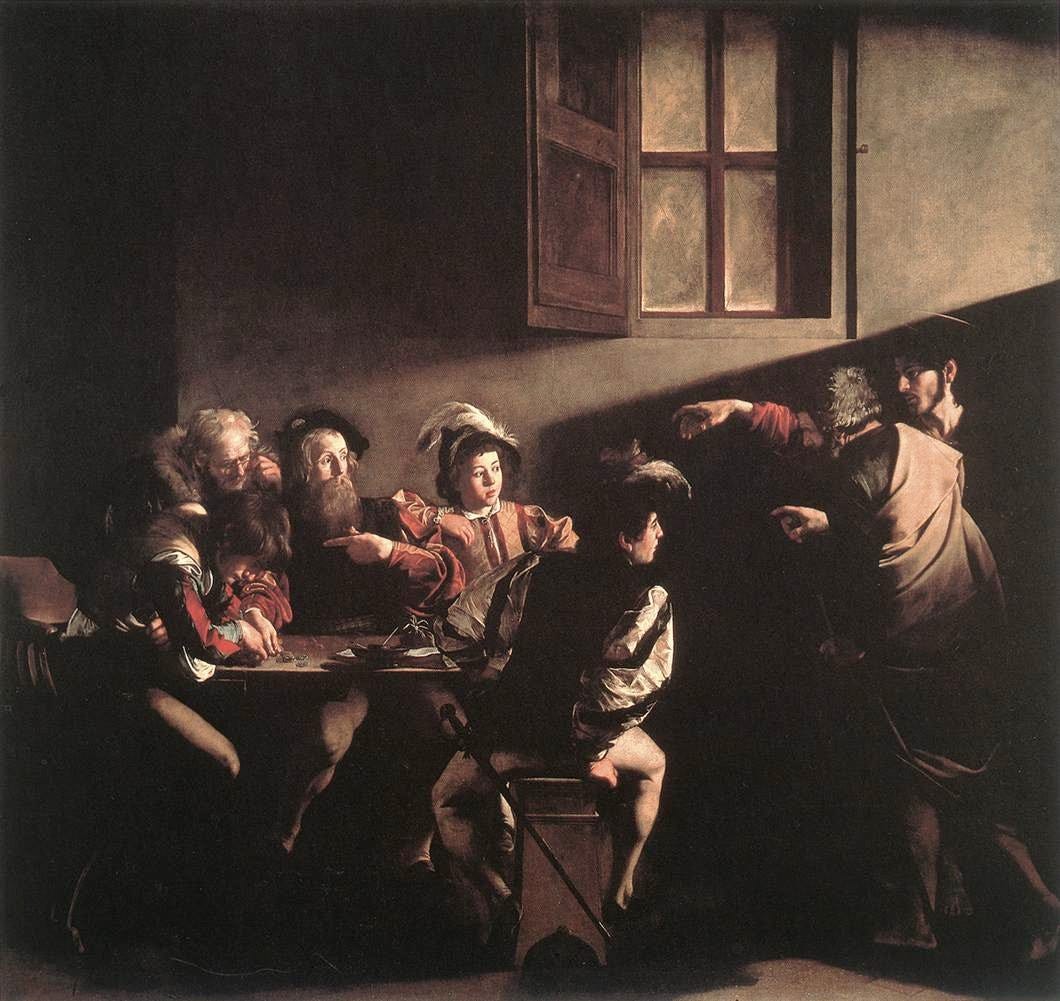
A tax office in a Roman basement: men counting coins by lamplight when Christ points at Matthew, who points at himself in disbelief, one hand still on the money.
The coin counters keep counting; they never notice the miracle. The painter of that darkness The full account is in Caravaggio.
5 | The Tax Collectors, Marinus van Reymerswaele (about 1540)
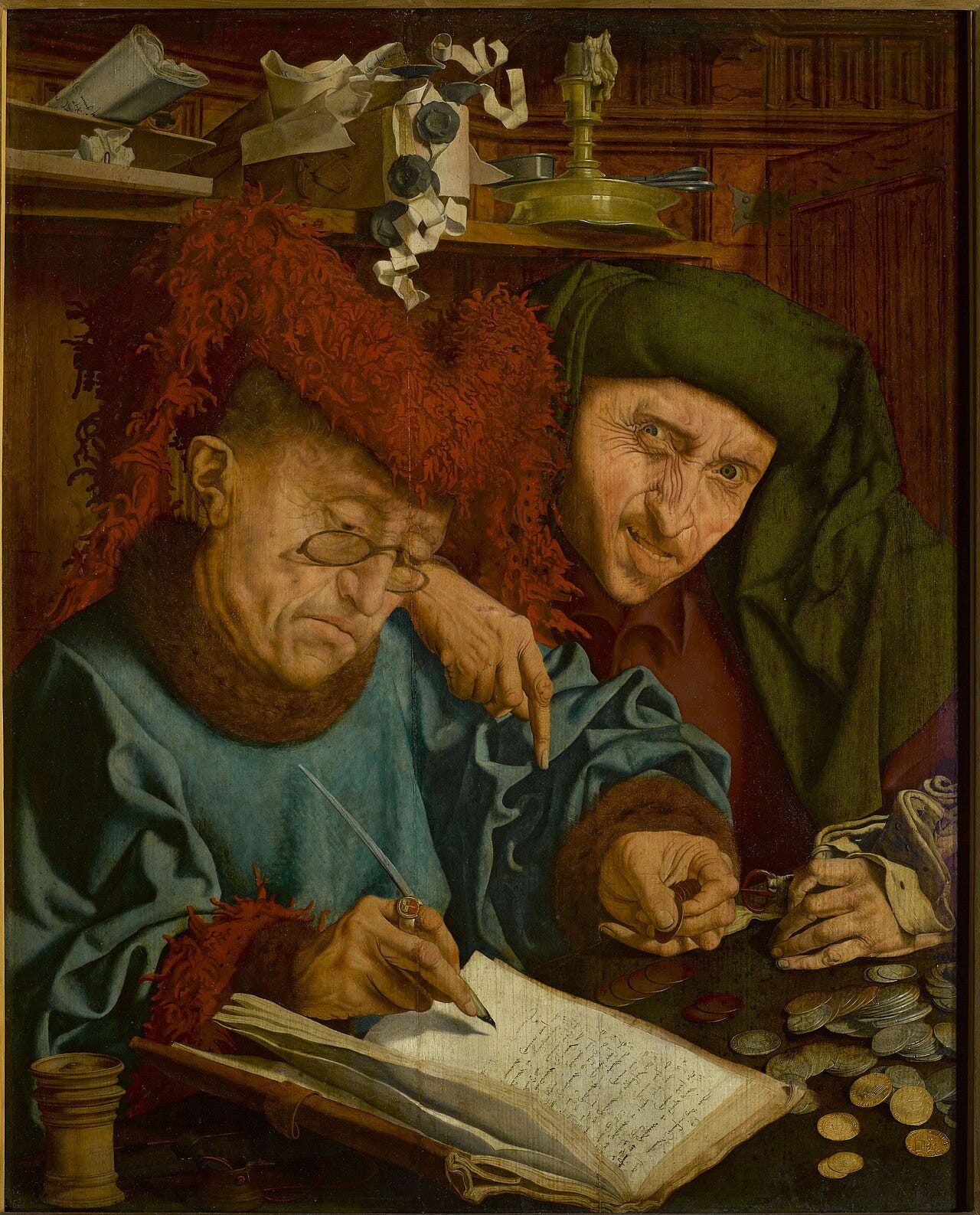
Two grimacing officials in absurd hats tally receipts with clawed fingers. Copies multiplied across Europe: everyone hated the tax man in every language.
Historians still debate whether it is satire or a commissioned office portrait, which may be the darkest joke of all.
Van Reymerswaele painted several versions in the 1540s of two men in outdated fifteenth century dress, which marks them as grasping and old fashioned. The ledgers are written in readable Flemish.
6 | The Payment of Dues, Georges de La Tour (about 1630)
A candle lights a table where a man counts out coins under the eyes of creditors. Debt collection as a nocturne.
La Tour lived through war and plague in Lorraine, and money changing hands by candlelight was daily fear. The master of that light I go into it in Georges de La Tour.
7 | The Tribute Money, Titian (about 1516)
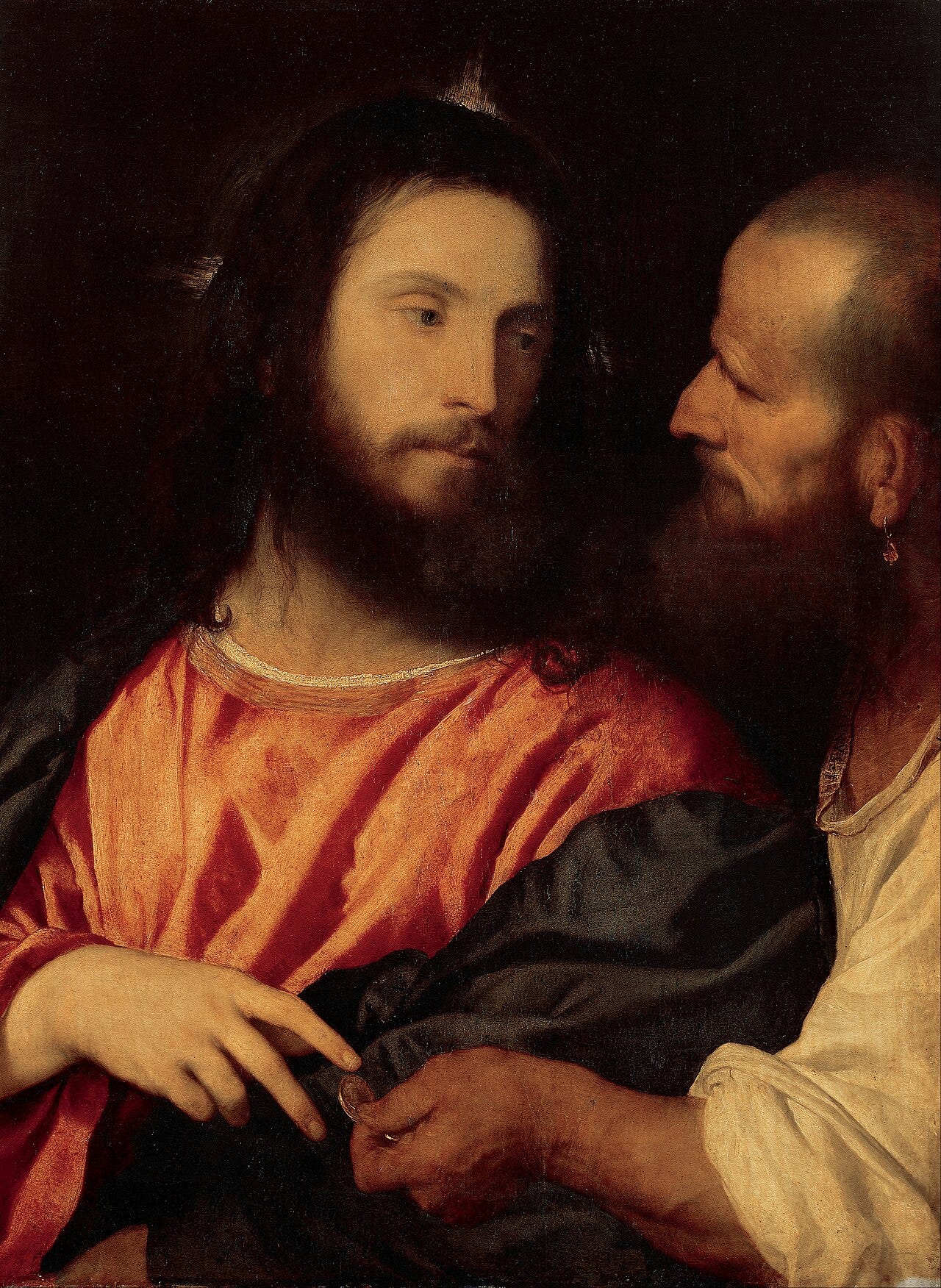
Render unto Caesar: a Pharisee holds the coin up to Christ, trying to trap him with it. Titian answers with faces, cunning against calm.
Painted for a duke’s coin cabinet door, money guarding money. The Venetian who died rich I cover that in Titian.
The subject is Matthew 22, render unto Caesar. Titian painted it for Alfonso d’Este around 1516 to be fitted to the door of a cabinet, so it was made to be looked at from very close.
8 | Marriage A la Mode, William Hogarth (about 1743)
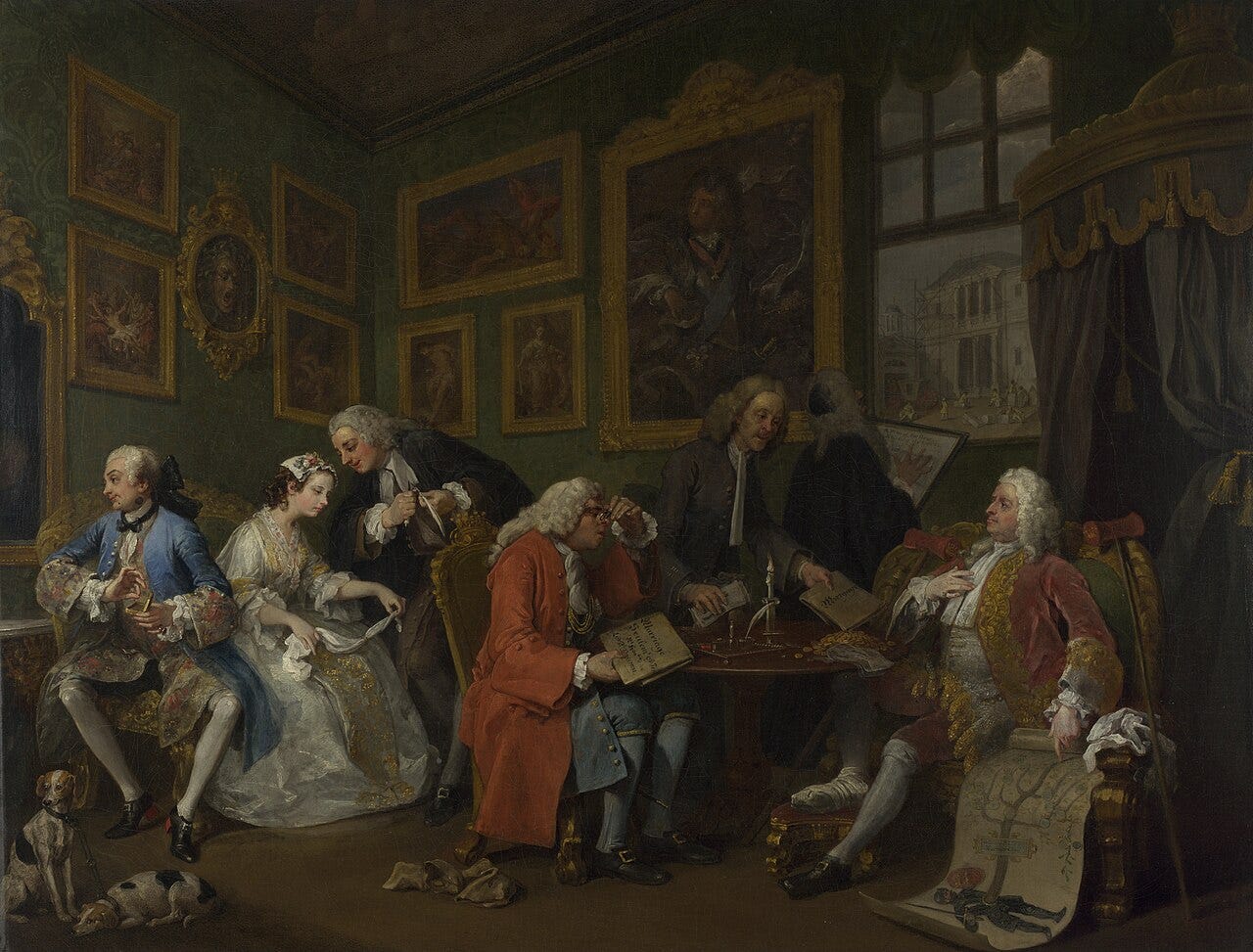
A bankrupt earl sells his son to a merchant’s daughter for her dowry, contracts on the table, and Hogarth follows the marriage to adultery, murder and suicide in six scenes.
Money is the villain of the whole series. The moralist who invented the graphic novel More of it in William Hogarth.
9 | The Worship of Mammon, Evelyn De Morgan (1909)
A woman clings to the knee of a giant golden idol of wealth, eyes shut in devotion. De Morgan painted capitalism as a religion, name and all.
She and her husband used their art earnings to fund his ceramics experiments, a private economy of their own.
10 | The Gold Weigher, Gerrit Dou (1664)
Rembrandt’s first pupil painted an old man testing coins on a balance by window light, every scratch on the scale pan visible.
Dou worked so finely he sold paintings by the square inch at record prices: a picture about weighing money that was itself worth its weight in it.
11 | Dollar Sign, Andy Warhol (1981)
Warhol dropped the product and printed the symbol: a dollar sign in acid colors, art about money as money.
He said good business is the best art, and the market agreed: the signs now sell for millions. The prophet of all this The full account is in Andy Warhol.
12 | Woman Holding a Balance, Johannes Vermeer (about 1664)
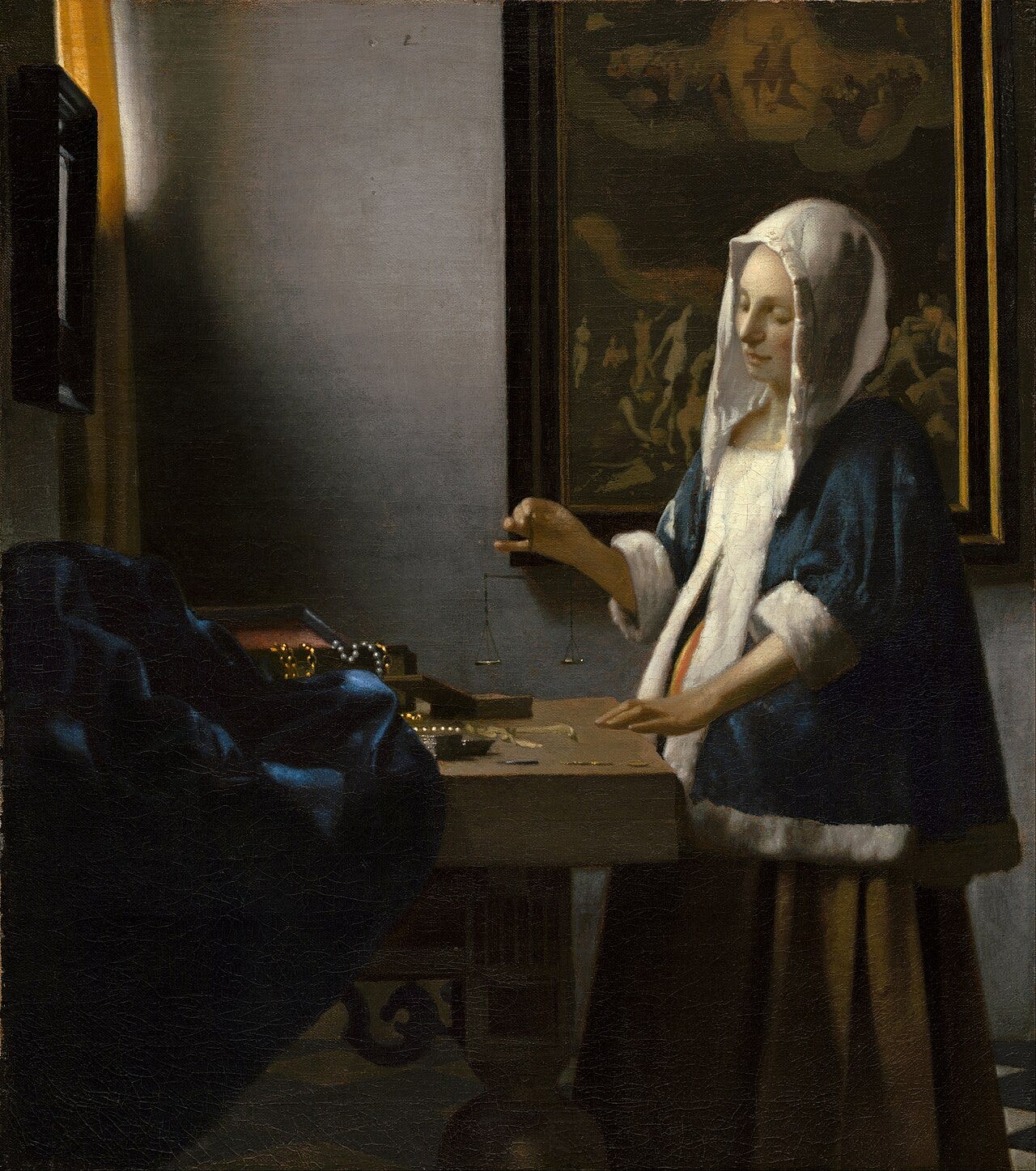
A woman stands at a table of pearls and gold, holding a tiny balance. Look closer: the pans are empty. Behind her hangs a Last Judgment.
Weighing nothing, in front of the weighing of souls: the quietest sermon about money ever painted. I go detail by detail through it in Vermeer’s Woman Holding a Balance.
The Rijksmuseum holds the Dutch banking pictures, and the Rijksmuseum has the Matsys and the Hogarth series in full.
The questions money in art keeps raising
What tops the list? The Moneylender and His Wife, with Caravaggio’s tax office and Warhol’s Dollar Sign close behind.
Why did Dutch and Flemish painters paint so many moneylenders? Antwerp and Amsterdam ran Europe’s finance. Painters worked for the very bankers they gently accused.
Are the scales in Vermeer’s painting weighing gold? No. Microscopic examination shows the pans are empty, which flips the painting’s meaning.
What did Warhol say about money and art? That making money is art, and good business is the best art. He printed the dollar sign to prove it.
Where is The Moneylender and His Wife today? The Louvre for Matsys, Florence for Masaccio, Dresden for Titian, the Rijksmuseum for Hogarth, Washington for Vermeer.
One last fact, rarely printed: Gerrit Dou’s patrons paid him an annual fee just for the right of first refusal on his paintings, a retainer system bankers would recognize instantly.
The FAQ above crowns Matsys as the sharpest painting on this list, but my own vote goes to Caravaggio’s Calling of Saint Matthew. Matsys shows one wife’s eye wandering toward gold while she holds her prayer book. Caravaggio raises the stakes: an entire tax office of men keep counting coins by lamplight while Christ points at Matthew two feet away, and not one of them looks up.
Vermeer’s empty scales are the painting on this list I find most effective. Warhol turned the dollar sign into a boast, printed in acid colors with no argument attached. Vermeer painted a woman weighing nothing at all, pearls and gold laid out before her, a Last Judgment hanging on the wall behind her head.
This subject is one thread in a wider theme. See how it fits into Objects and Symbols in Painting.
Wealth painted in coin and cloth needed guarding too, which is why so many of the same interiors hide a lock, a subject explored in our guide to keys and locks in art.