
A monochromatic painting uses one color, in tints, shades, and tones, or nothing but that color at all. One hue, pushed to the limit, can carry grief, silence, radical protest, or a patent dispute. Here are eleven ways a single color became the whole picture.
Monochrome in 30 seconds
Monochromatic means one hue plus its lighter tints and darker shades. Black-and-white counts: value without color.
The oldest monochromes are practical: ink paintings and grisailles, where one pigment did everything.
The modern monochromes are radical: one flat color presented as the entire artwork.
One color forces attention onto everything else: value, texture, edge, scale.
Every famous monochrome has a story attached, because when a painting is one color, the story is the second color.
The ink wash tradition (from the Tang dynasty): black as every color
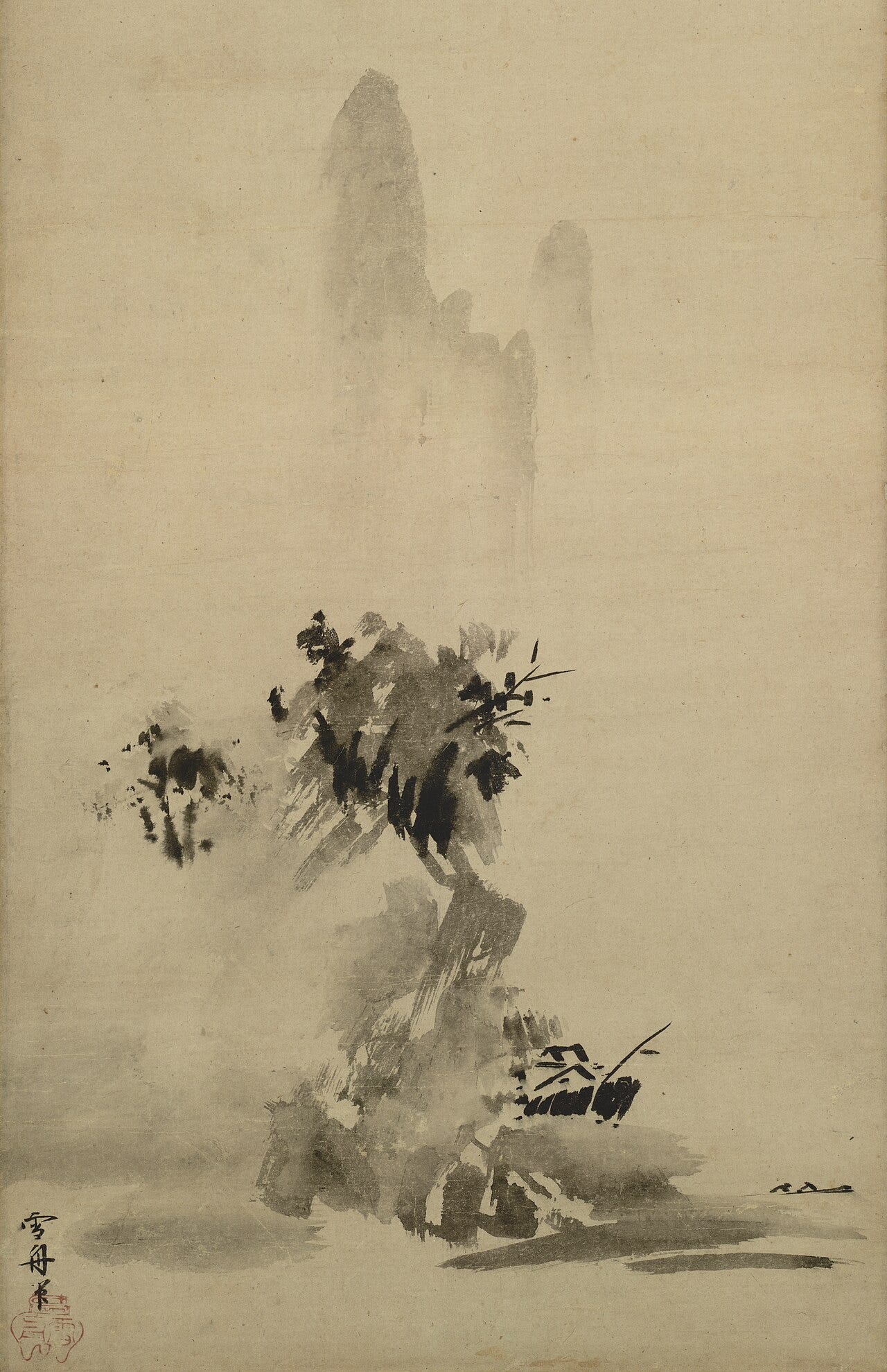
Chinese and then Japanese masters painted mountains, mist, and rivers in black ink alone, diluted into infinite grays. The tradition holds that ink contains all colors, if the hand knows how to ask.
Centuries of painters trained on one bottle of black. It remains the largest body of monochrome art ever made.
The ensō (Zen tradition): one color, one stroke
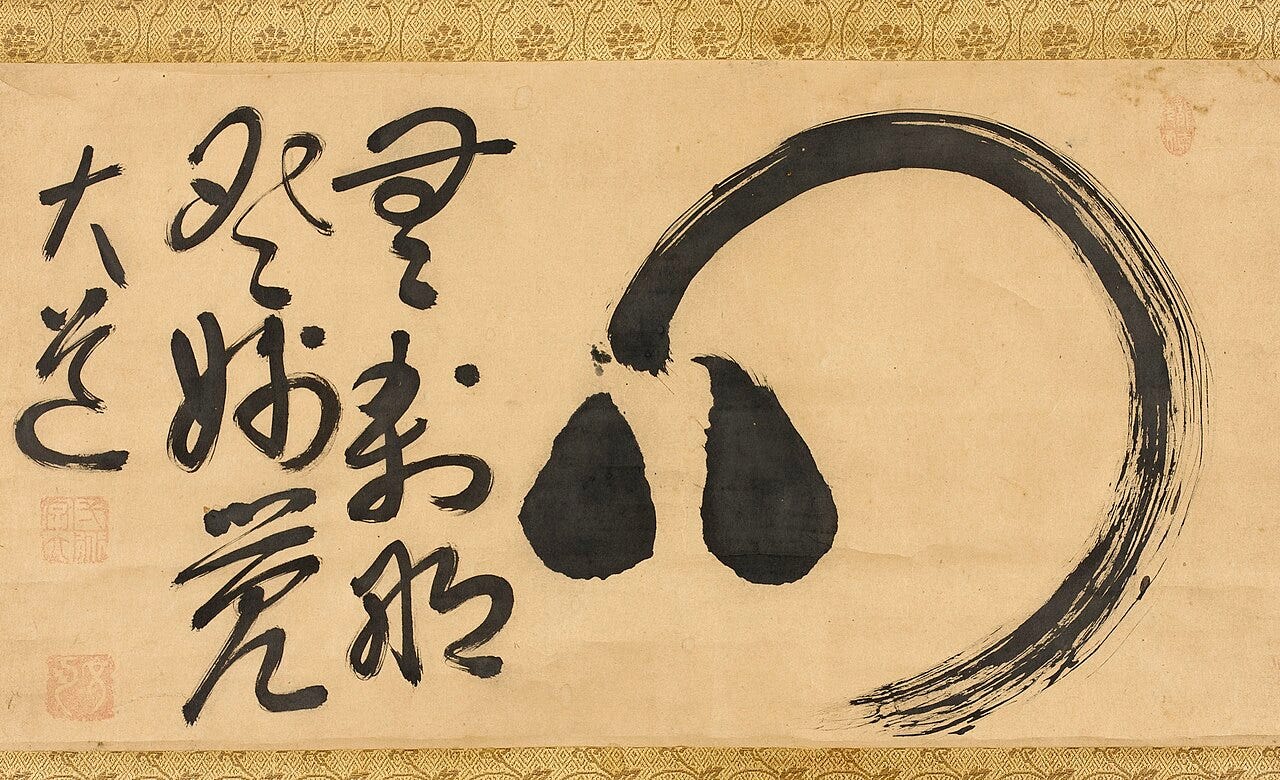
The Zen circle takes monochrome to its floor: one brush, one breath, one black ring on white. Nothing to adjust and nowhere to hide, which is the point.
The grisaille (from the Middle Ages): gray on purpose
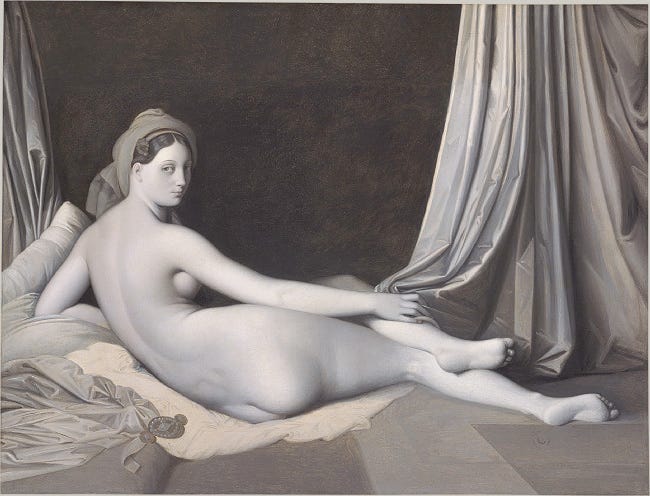
Painters made entire pictures in grays: to imitate sculpture, to settle values before color, or to mark solemn seasons, as when altarpiece wings showed gray saints during Lent. The Odalisque in Grisaille from the workshop of Ingres shows the practice at its most elegant: the famous nude, complete, in silver and smoke.
Learn art the fun way


Odilon Redon, the noirs (1870s-1890s): black as a country
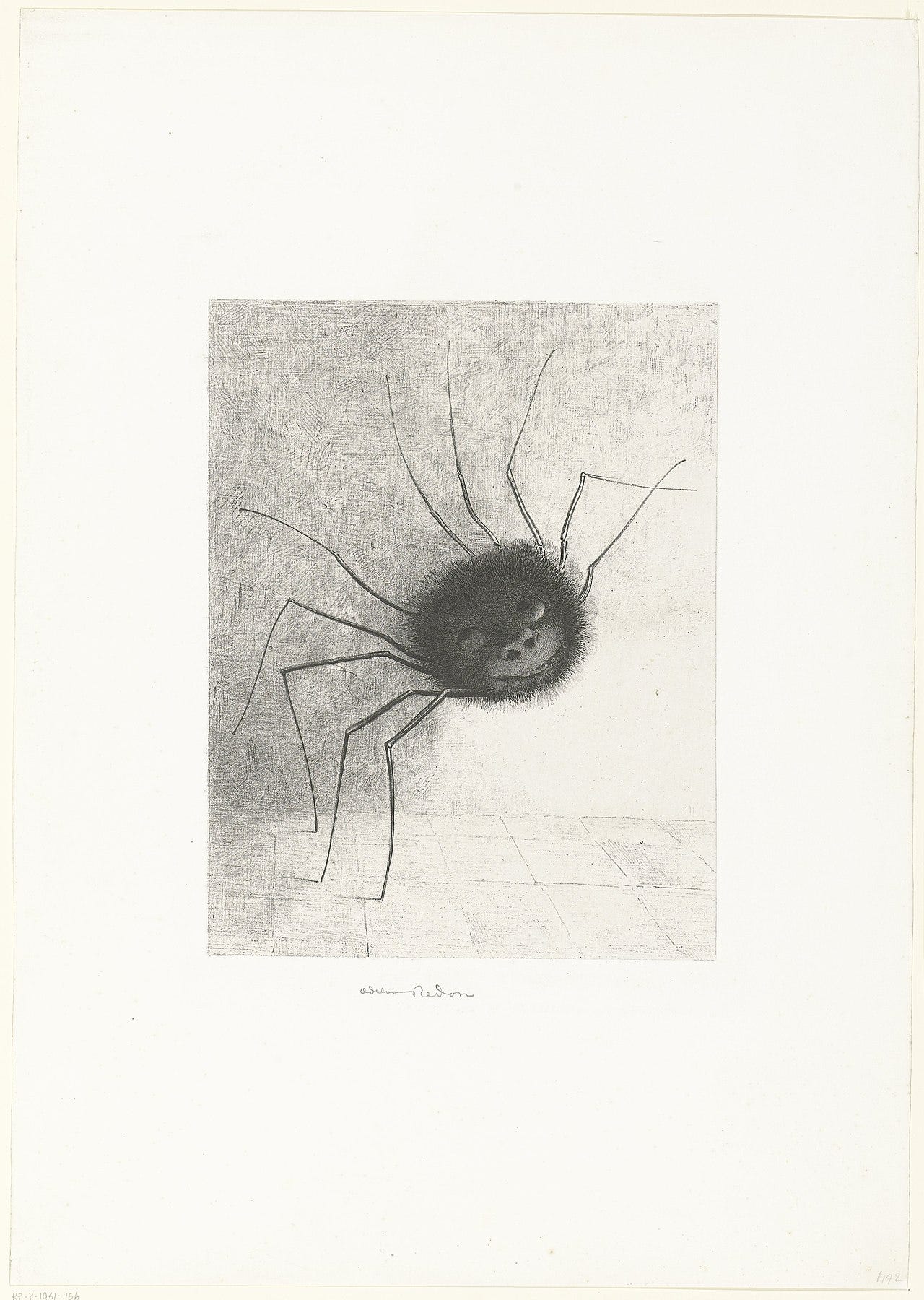
For twenty years Redon worked almost only in charcoal and black lithography: floating eyes, smiling spiders, black suns. He called them his noirs and said black is the most essential of all colors.
Then, past fifty, he switched to pastels and spent his last decades in blazing color. The man of black turned out to be saving it up.
Whistler, the Nocturnes (1870s): one key, barely lit
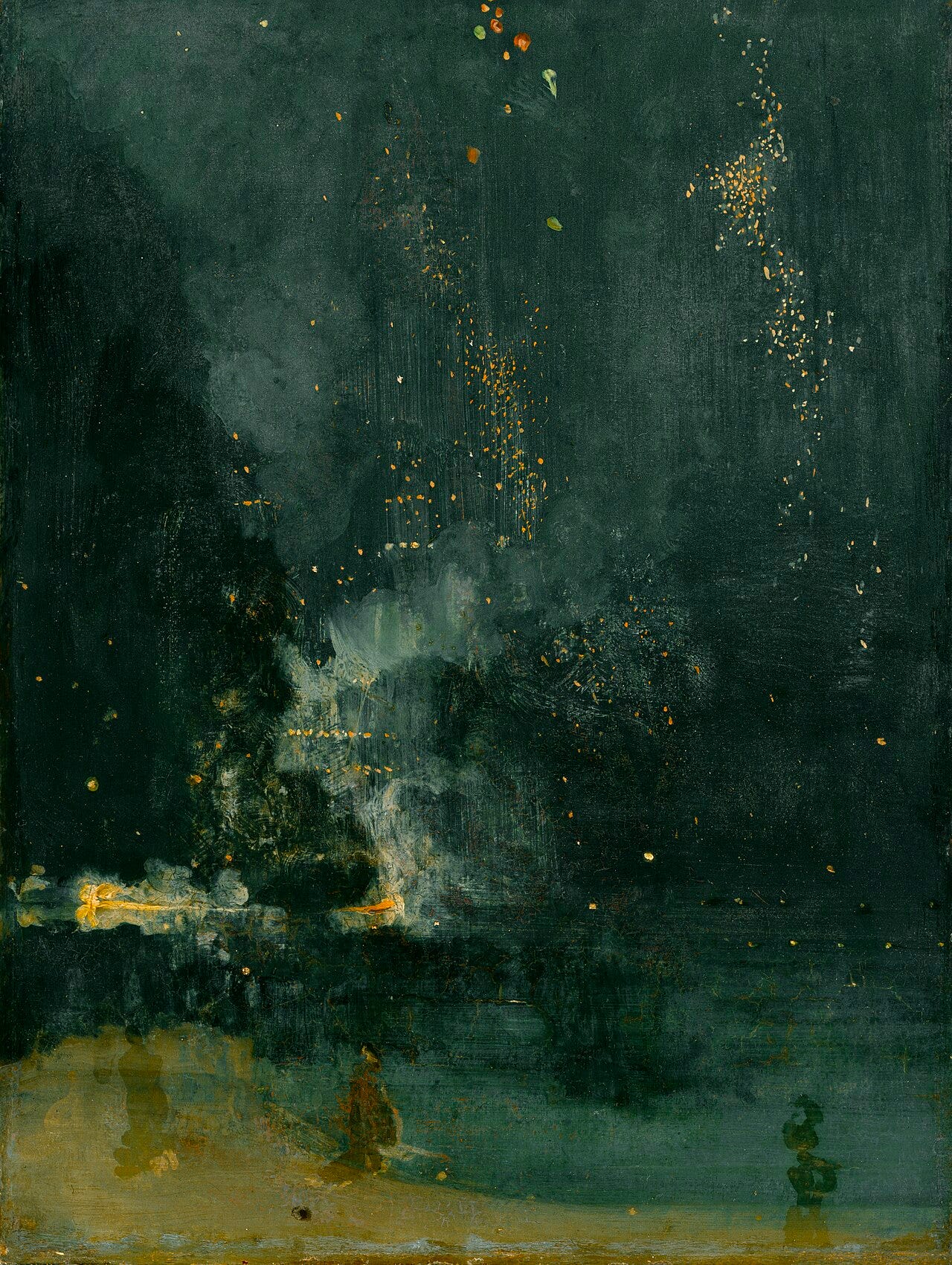
Blue-black river, blue-black sky, a few embers of gold: Whistler pushed a single cold hue to the edge of darkness and called the results Nocturnes, night music in one key.
Picasso, blue then rose (1901-1906): one color as a mood
For three years Picasso painted beggars, prisoners, and his own grief in blues, the Blue Period born after his friend Casagemas shot himself. Then love and Montmartre warmed the palette into the Rose Period: same painter, new hue, new life. We told the harder version of those years in our story on Picasso and his six women. Rights are enforced in some countries, so no images here.
Malevich, White on White (1918): the vanishing point
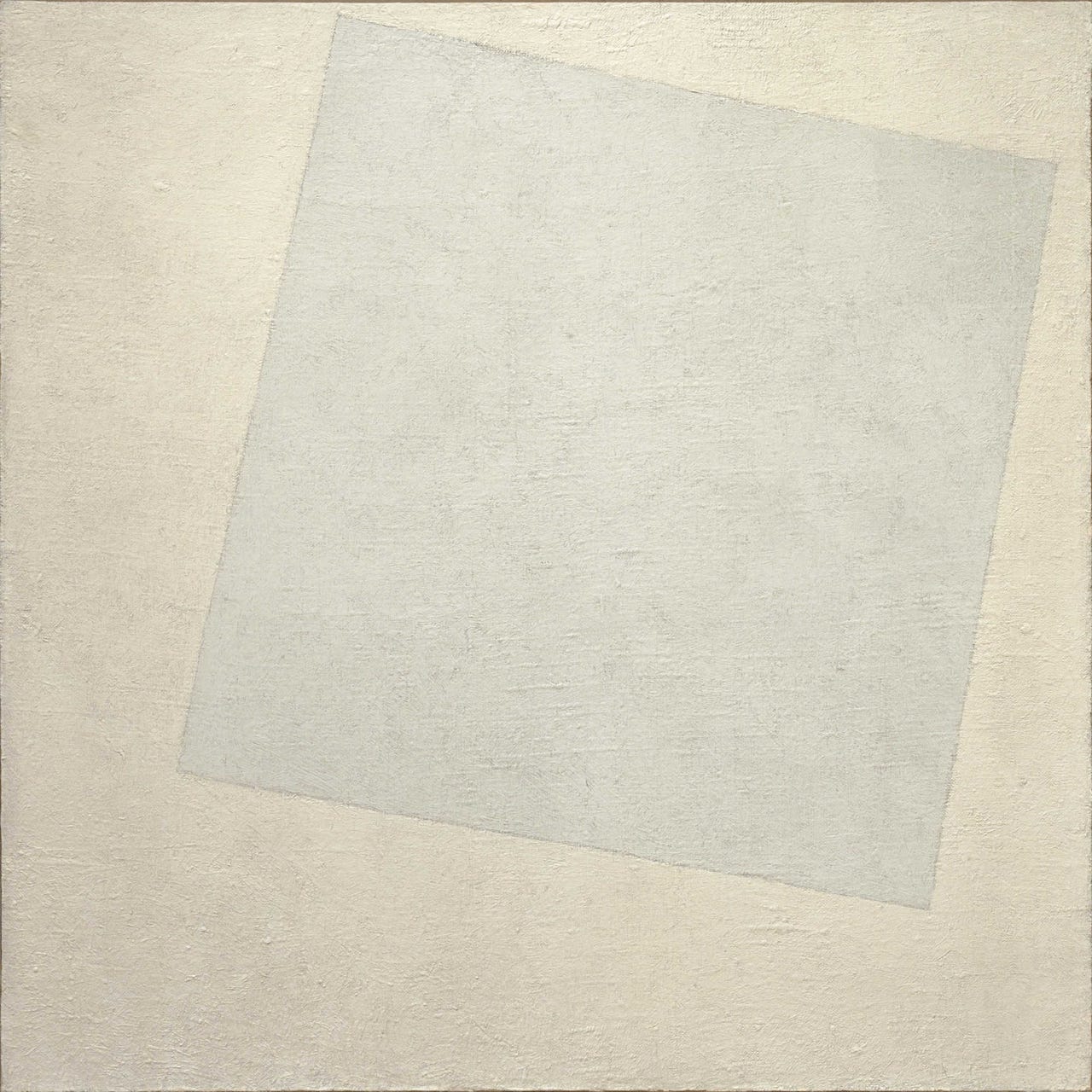
A white square, tilted, on a white ground: Malevich pushed painting to the last stop before nothing. Three years after the Black Square, even black was too much.
Klein, International Klein Blue (from 1957): the registered hue
Yves Klein rolled and sponged one deep ultramarine across canvases, sculptures, and bodies, and in 1960 registered his binder recipe in a French Soleau envelope: International Klein Blue, a color with paperwork.
He sold eleven nearly identical blue monochromes at different prices, arguing each held a different pictorial sensibility. Buyers agreed. Rights are enforced in some countries, so words only.
Klein pushed the idea past paint entirely. In 1958 he emptied a Paris gallery for a show called The Void, charging admission for a room with nothing in it but white walls. Yves Klein, The Complete Story walks through that whole stunt.
The American endgame: Reinhardt, Rothko, Rauschenberg
Ad Reinhardt spent his last decade on black squares he called the last paintings anyone could paint. Mark Rothko went red into maroon into black for the Rothko Chapel. And Robert Rauschenberg hung plain White Paintings in 1951, so empty that John Cage called them airports for the lights, shadows, and particles. Same rights caveat: words only.
You Might Also Like


Calling Malevich's white square the last stop before nothing treats decades of Chinese and Japanese ink painting, the largest body of monochrome work ever made, as a warm up act for a few Western canvases from the 1910s. The ink tradition got there first, by centuries, and never treated one color as an ending.
Klein registering his blue as a legal patent and charging different prices for nearly identical canvases is retold here as a philosophical statement, but it reads just as easily as a pricing trick dressed up in paperwork. Convincing buyers that eleven near identical objects feel different is a sales skill before it is anything else.
Redon spending twenty years in black then switching to pastels gets framed as a man quietly saving up his color. It could just as easily mean the black period ran its course and stopped paying, a duller explanation that fits the facts just as well.
Quick answers
What is a monochromatic painting? A work built from one hue and its tints, shades, and tones, or, in the radical modern sense, a single flat color presented as the whole work.
Why do artists paint in one color? To concentrate mood (Picasso's blue), to force attention onto value and texture (ink painting), or to make a philosophical point about what painting is (Malevich, Klein).
What is Yves Klein blue? International Klein Blue, a deep ultramarine whose special binder keeps the pigment matte and intense. Klein registered the recipe in 1960 and made it his signature.
What is the most famous monochrome painting? The Black Square for radicalism, Klein's IKB canvases for color, and Whistler's Nocturnes for the version you can live with.
Where to see these works
Ink landscapes fill the Asian wings of the Met, the British Museum, and the national museums of Tokyo and Taipei. The Odalisque in Grisaille is at the Met, Redon's noirs at Orsay and the Art Institute of Chicago.
The Nocturnes are at the Tate and the Freer, White on White at MoMA, Klein at the Pompidou, the Rothko Chapel in Houston, and the Black Square at the Tretyakov in Moscow.
One last fact
The monochrome wars never ended. When Anish Kapoor licensed exclusive artistic rights to Vantablack, the blackest coating made, the artist Stuart Semple answered with the world's pinkest pink, sold to everyone on earth except Kapoor. Kapoor got a jar anyway, and posted a photo of his middle finger dipped in it. One color is still enough to start a fight.