

200 000+ readers learn art the fun way.
This is a preview. Paid subscribers get the full story.
You’ll also get:
10 new stories / month
The full archive (140+ Art stories)
Your personal art guide. Comment, ask questions, DM me anytime
Apple user? Subscribe at coolstoriesabout.art, not via the app. Apple adds 30% to the price.
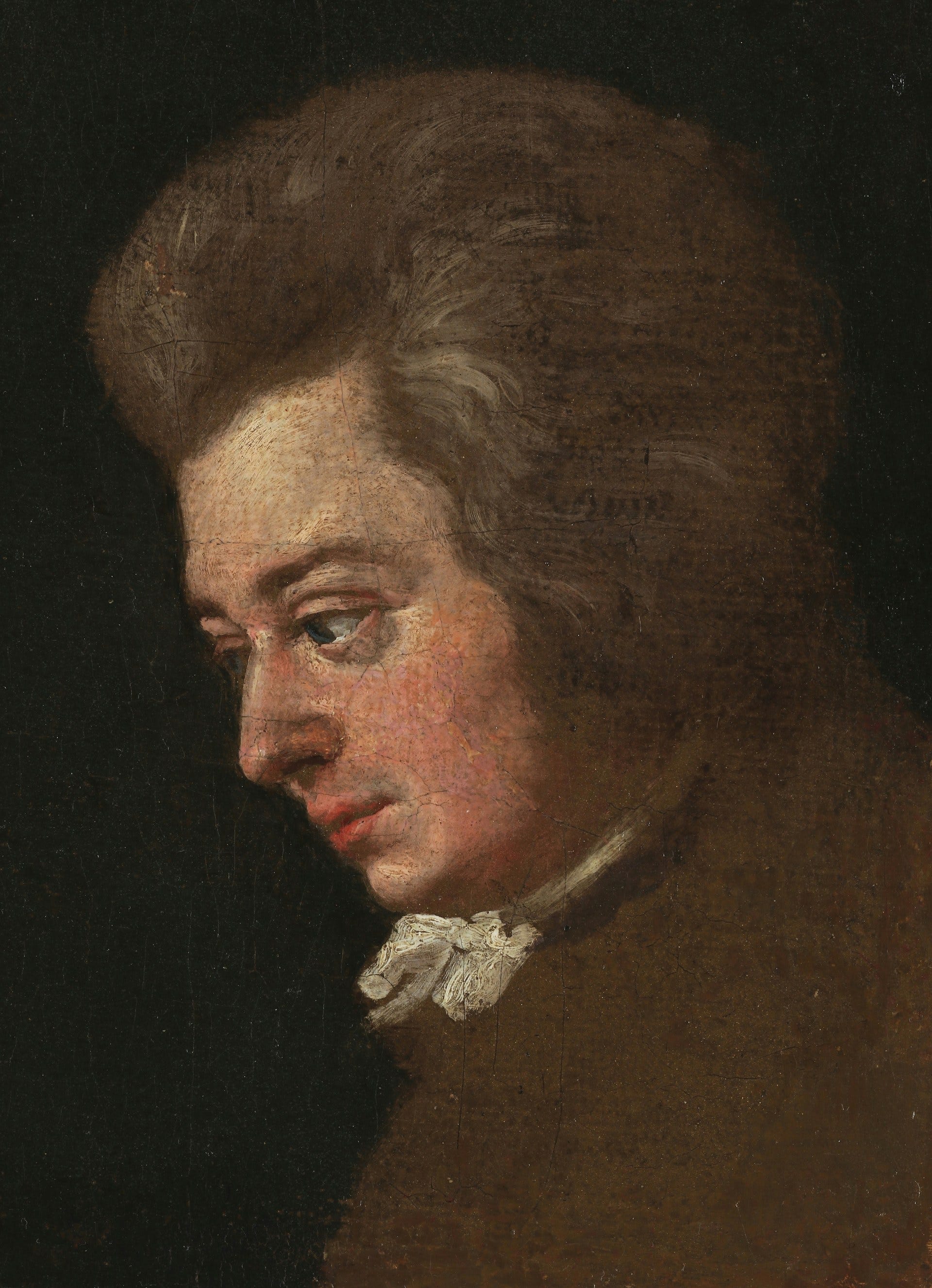
At every Academy Awards ceremony, the laughter stops for a moment. The lights go down, and across the giant screen pass the faces of those the movies have lost in the past year. While the faces go by, a choir sings, slow and solemn, and the music rises until the last one has gone.
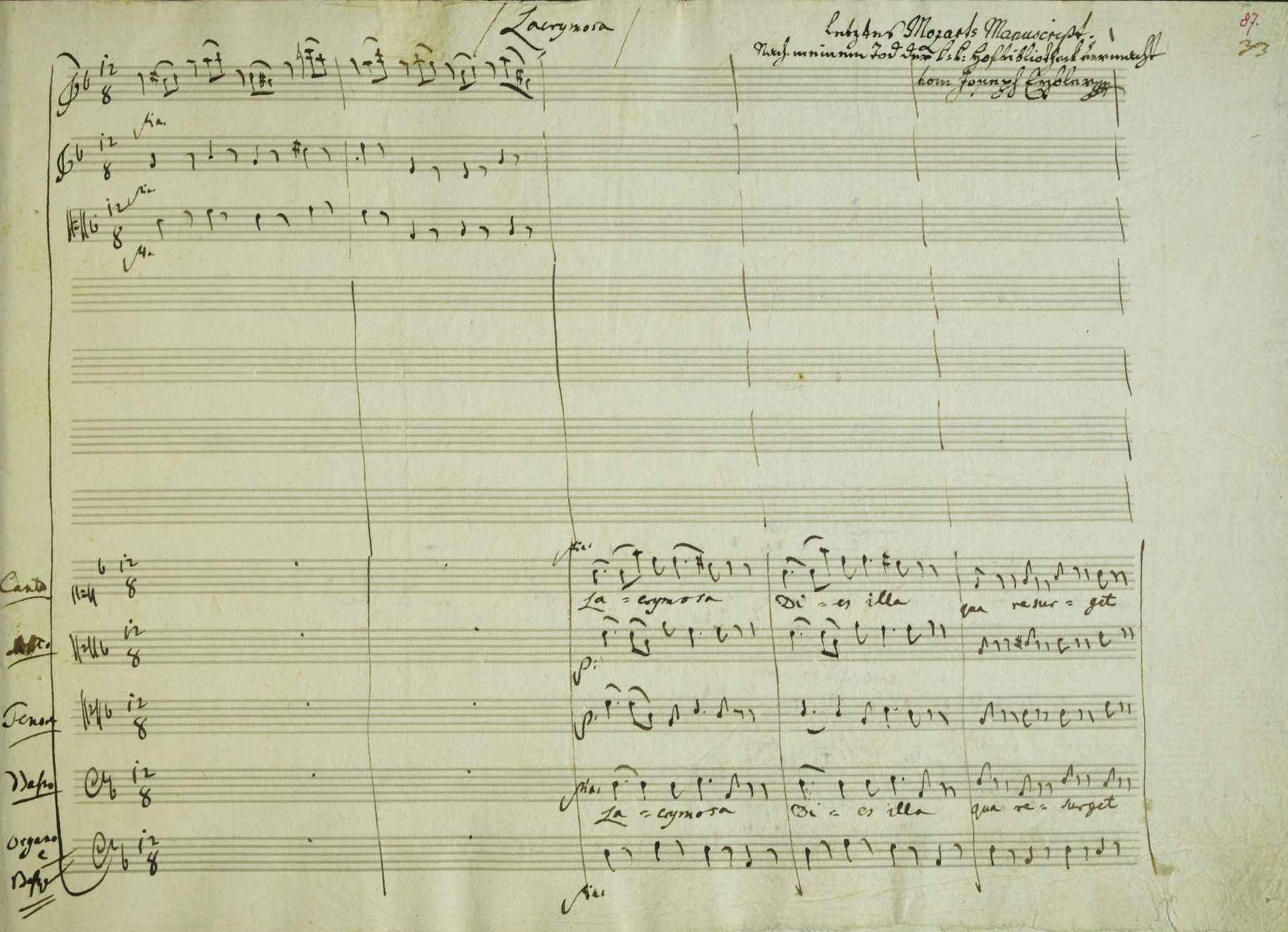
That music has a name: the Lacrimosa, a passage from Mozart’s Requiem, a Mass for the dead. On Spotify, it is Mozart’s second most-streamed track.
Mozart himself never knew who he was writing the Requiem for.
Discover my new newsletter !

Twenty-Five Florins
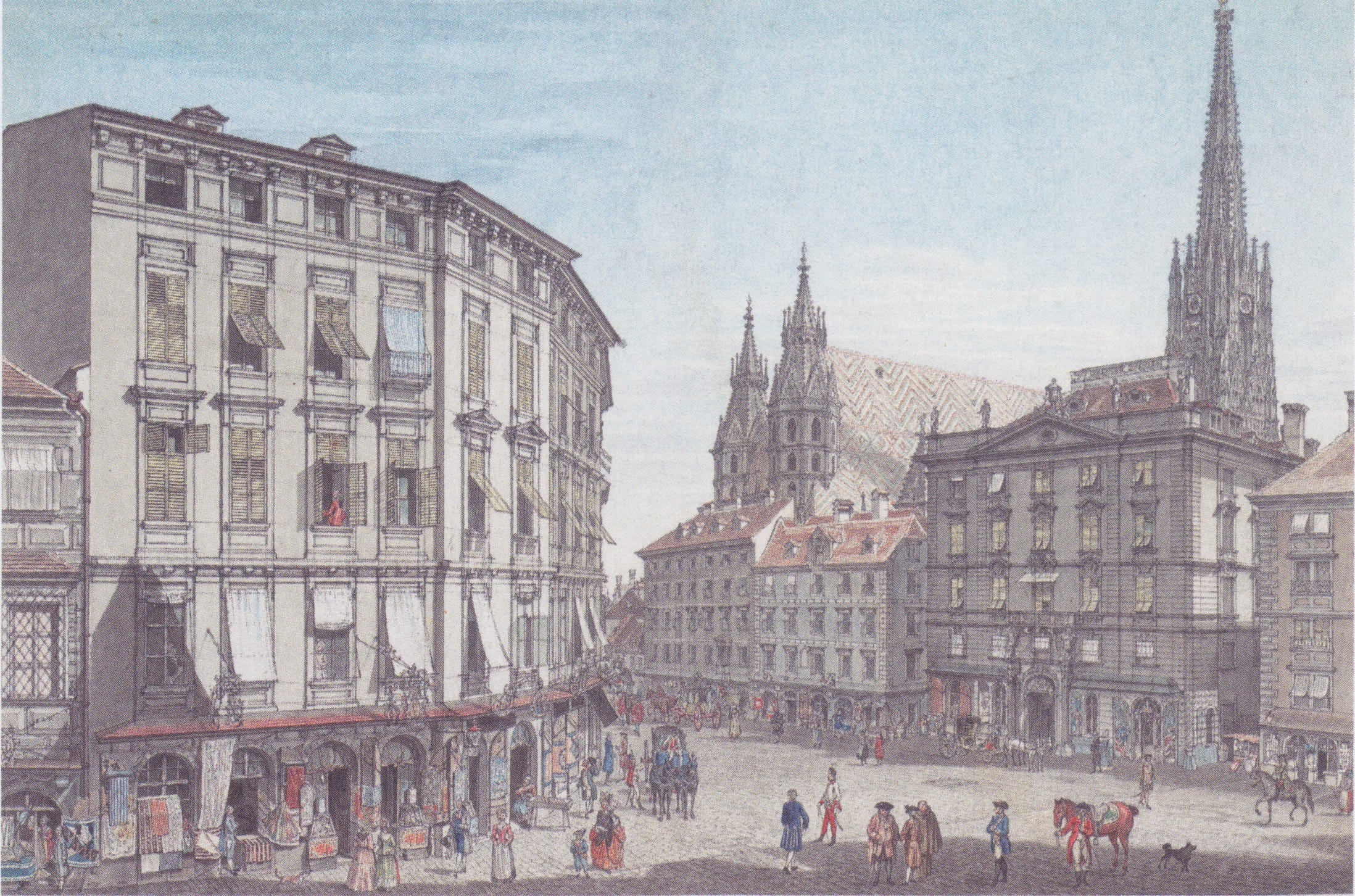
In the early summer of 1791, a letter leaves an upstairs apartment on the Rauhensteingasse in Vienna, a stone’s throw from St. Stephen’s Cathedral. Mozart, thirty-five, has written it in haste.
Dearest, most excellent friend! Most honorable brother. The friend is a silk merchant and a fellow Mason, a few blocks away. Mozart needs money, fast.
Constanze, his wife, twenty-nine, pregnant with their sixth child, is taking the waters at Baden, south of Vienna, and her hosts want to be paid before her treatment is over. My poor wife, I would not want to expose her to anything unpleasant.
Mozart asks for an advance. In a few days, he writes, 2,000 florins will reach him, and the friend can repay himself from that. Ever yours. Folded and sealed, the letter goes down the stairs in a servant’s hand.
The man who signs it was applauded as a child by all of Europe. At four, his father, a violinist in the Salzburg court orchestra, sits him at the harpsichord, and at five the boy is already composing. At six, he plays for Empress Maria Theresa in Vienna and ends up in her lap, kissing her.
At seven, the whole family sets off on a three-and-a-half-year tour: Versailles, where he plays for Louis XV, then London, where he plays for George III and, at eight, writes his first symphony.
The child whom kings once applauded now lives on borrowed money, and not for lack of work: the emperor pays him 800 florins a year as his court composer. But the household is expensive, with its servants and the eldest son’s boarding school outside the city.
Three years of war against the Ottoman Empire have kept the nobles away from the salons where they once paid to hear him. Six children in eight years, four of them dead in infancy, then Constanze’s long illness and her spa treatments, have swallowed the rest. Mozart owes nearly 1,400 florins to the merchant alone.
At the merchant’s, the seal breaks. He reads it, files it with the others, because he keeps them all, and hands the servant twenty-five florins. Then, at the bottom of the page, in his own hand, as on all the others, he notes the amount.
Know someone who would love these stories? Give them a month or a year, with a note from you. 🎁
The Landing
Three weeks later, Constanze is back from Baden, her belly so round the baby could come any day. A knock at the door. Mozart opens it, and the man on the landing holds out a letter, saying just three words.
“For Herr Mozart.”
Mozart has no time to ask his name: the man has already turned his back, and his footsteps fade down the stairs.
No name, no signature, on either side of the sheet. Inside, a string of flattering compliments, then three questions: would he write a Requiem Mass, at what price, and by when?
Sheet in hand, he goes to find Constanze. He has always felt he was meant to write great sacred music, and has never had the chance to devote himself to it.
“I don’t even know who’s writing to me.”
“You’ve always wanted this. Say yes.”
He sits down and answers at once: a price, no date, and a question, where to deliver the finished work.
The next day, the same knock, the same man, who takes the reply and leaves without a word.
A few days later, a third knock. This time the stranger comes in, walks to the table and counts out fifty ducats.
“The sum you asked for.”
More than three months of his imperial salary, and nine times the merchant’s advance.
“And since you have set a reasonable price, there will be a further payment on delivery.”
Before leaving, the stranger sets one condition.
“Write as you see fit, at your own pace, as the mood takes you. But make no attempt to find out who is commissioning this Mass. You will not find him.”
The door closes behind him.
Soon afterward, a second commission arrives from Prague: the new emperor, Leopold II, is to be crowned king of Bohemia there, and the city wants an opera from Mozart, La clemenza di Tito, within a few weeks. Mozart loves Prague. He accepts.
In late August, a month after the birth of their son, a loaded carriage waits outside the house.
Mozart climbs in first. Constanze lifts her foot to the step, and a hand catches her dress and holds her back.
The stranger is there, on the cobblestones, at her elbow.
“And the Requiem? What is to become of it?”
Mozart leans out of the window. This journey cannot wait, and he had no way of warning the patron who wrote to him. On his return, the Requiem will come before everything else, if the patron is kind enough to wait. The stranger says he is entirely satisfied.
The hand lets go of the dress. The carriage pulls away.
The opera gets written in eighteen days, on the road and then in Prague. On September 6, the evening of the coronation, the new emperor and his court receive it coolly.
Mozart spends the whole stay ill, pale, sad, swallowing remedy after remedy. He still jokes with his friends, and weeps when he says goodbye.
In mid-September, back in Vienna, he keeps his word. The Requiem takes over the whole table, and under the first notes he writes the Mass’s opening words, Requiem aeternam dona eis, Domine, “Grant them eternal rest, O Lord.”
A prayer for a dead person whose name he does not know, mourned by people he cannot name.
He shuts himself away for days on end, and the thicker the score grows, the worse he gets. Often he writes through his tears, repeating the same words.
“I fear I am writing a requiem for myself.”
One day a knock, and the same man, come to collect the score.
“The Requiem isn’t finished.”
“I know. You were wise not to name a date. How much more time do you need?”
“Four weeks. This work has gripped me more than I expected, and I’m taking it much further than I planned. Who sent you?”
“Someone who wishes to remain unknown.”
“And you? Who are you?”
“That matters even less. In four weeks I’ll be back.”
His footsteps go back down. The door closes.
The days pass, the four weeks run out, and the Mass is still not finished. What began as unease turns into deep melancholy, and each morning Constanze watches it sink deeper into his face.
One autumn day, to lift his spirits, she drives him to the Prater, Vienna’s great park on the Danube. They sit alone on a bench, away from the crowds.
Mozart talks about death. He is certain now that he is writing this requiem for himself. He tells Constanze so, and his eyes fill with tears.
“I can feel it all too well: I won’t last much longer. I’m certain someone has poisoned me. I can’t shake the thought.”
What You’ll Discover
Whether Mozart was really poisoned.
Who Mozart was really writing this Requiem for.
What Constanze did with the Requiem.
Who finished the Requiem.
Who the mysterious patron of the Requiem was.