
Nicolas Poussin was a French painter, born in Les Andelys, Normandy, in 1594, who died in Rome in 1665.
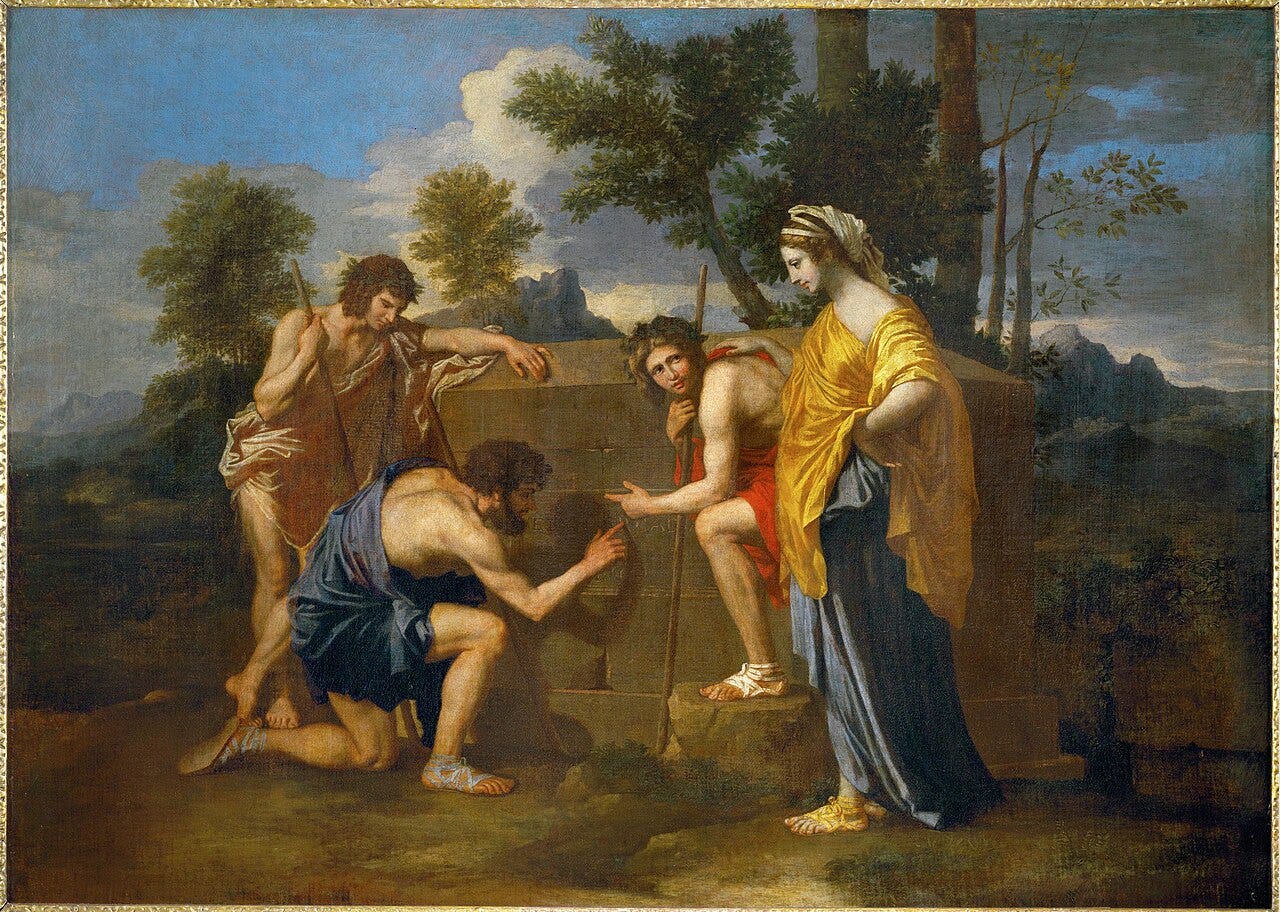
He spent almost his whole career in Rome, painting calm, carefully planned scenes from the Bible, ancient history and mythology, and he became the model of French classical painting without living in France. He is best known for Et in Arcadia Ego, a picture of shepherds reading an inscription on a tomb.
The King of France gave him a palace apartment and the title of First Painter. He left within two years and never came back.
Cool Stories About Art is a newsletter to learn art the fun way.
Join 200,000+ readers and get:
10 new art stories / month
The entire archive of content (1,000+ articles)
Comment, ask questions, and chat with other readers
The sentence on the tomb has no verb. Et in Arcadia ego: and in Arcadia, I. Poussin painted it twice, and ever since, readers have argued over the word the Latin leaves out. Is the speaker Death, announcing that it reaches even the happiest country? Or is it the dead man in the tomb, remembering that he too once lived there?
He planned the picture itself with great care. He modeled small wax figures, dressed them in wet cloth, set them on a stage inside a box lit through openings in its walls, and drew the scene through a single peephole before he painted a stroke.
The man who planned a canvas the way an architect plans a bridge also walked out on the King of France at the height of his fame, using a trip to fetch his wife as the excuse. French painters kept him as their model long after.
What You'll Discover
Why it took him three tries.
What he kept in a box.
Who is speaking from the tomb.
Why he fled the King's job.
What stopped his last painting.