
Nightmares in painting have a founding image and a long shadow. Fuseli put a demon on a sleeping woman's chest in 1781 and invented the visual grammar every later nightmare uses, Goya wrote that the sleep of reason produces monsters, and Bosch got there three centuries earlier without a theory.
Bosch's crowded, hallucinatory scenes belong to a wider set of strange pictures rounded up in Weird Paintings: 12 of the Strangest Pictures in Art.
Before the lights go out
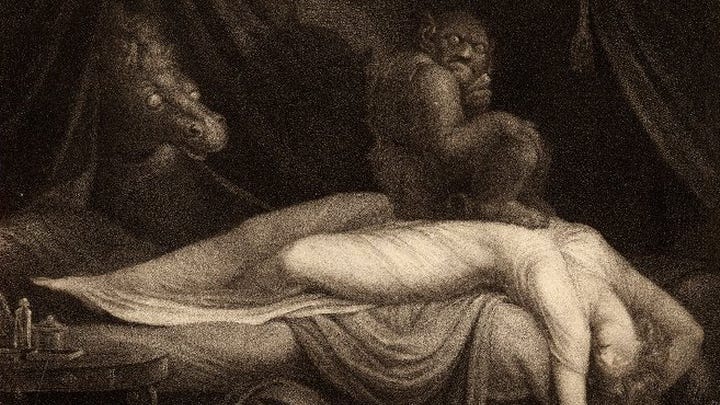
The word nightmare originally meant a crushing spirit, not a bad dream, and one painting takes that literally.
Freud reportedly kept a print of that painting in his consulting rooms.
One Spanish print carries its own caption explaining what produces monsters.
One painter spent nine years in an asylum making a picture of a fairy woodcutter.
One Polish artist refused to title anything, so the viewer supplies the horror.
Learn art the fun way
1 | The Nightmare, Henry Fuseli (1781)
A woman flung back across a bed, an incubus squatting on her chest, and a blind eyed horse pushing through the curtains. The composition is the whole subject.
The old meaning of the word was a spirit that sits on the sleeper and presses. Fuseli painted the etymology. More on him in Henry Fuseli.
2 | The Sleep of Reason Produces Monsters, Goya (1799)
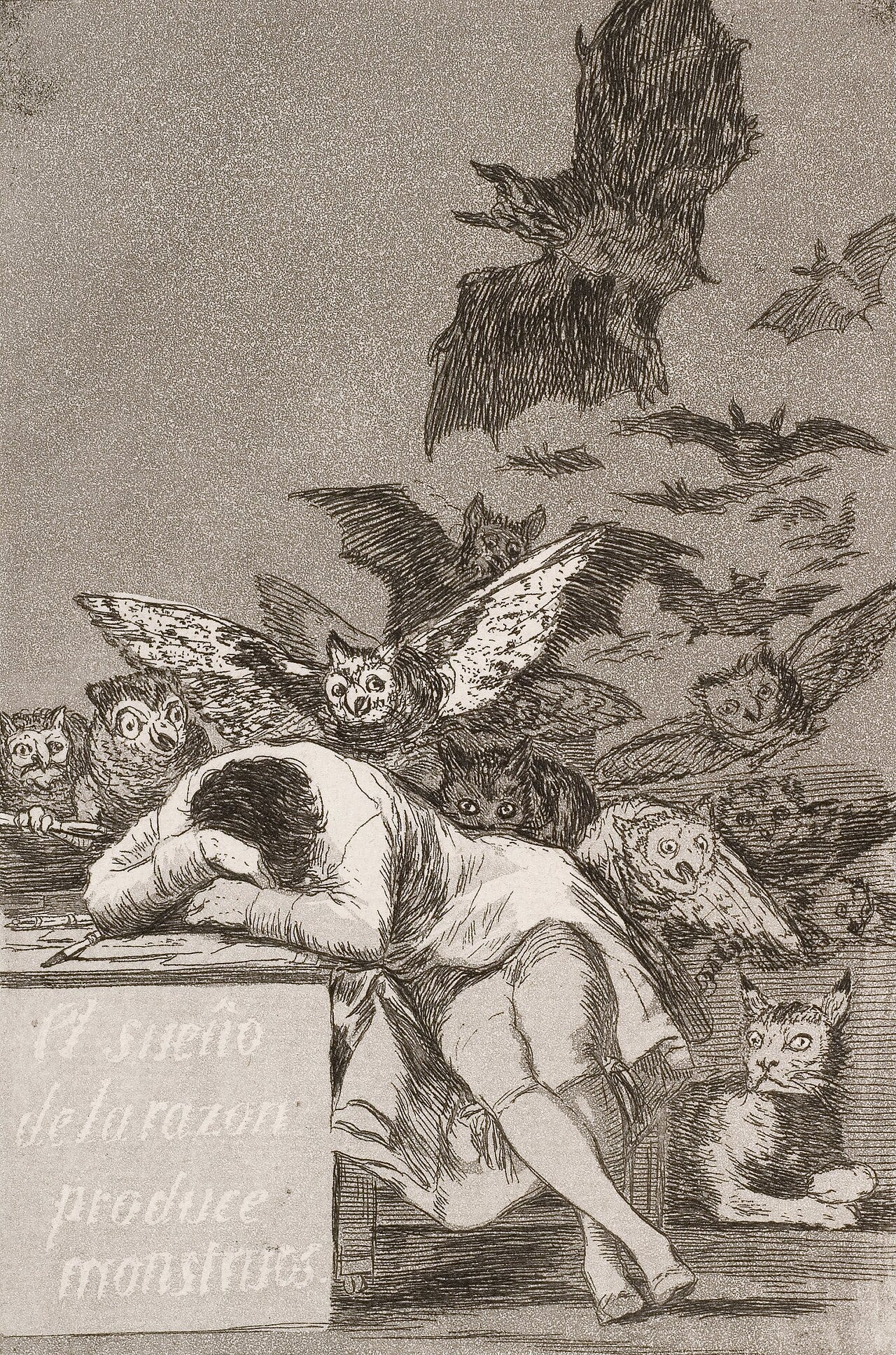
A man slumps over his desk while owls and bats rise behind him. The caption is printed on the desk itself, which is unusual and deliberate.
Goya meant that reason abandoned invites monsters, not that dreams are evil. More on him in Francisco Goya.
The Black Paintings were made for his own walls and never meant to be sold. I make the case for him in is Francisco Goya the greatest painter.
3 | The Temptation of Saint Anthony, Hieronymus Bosch (about 1501)
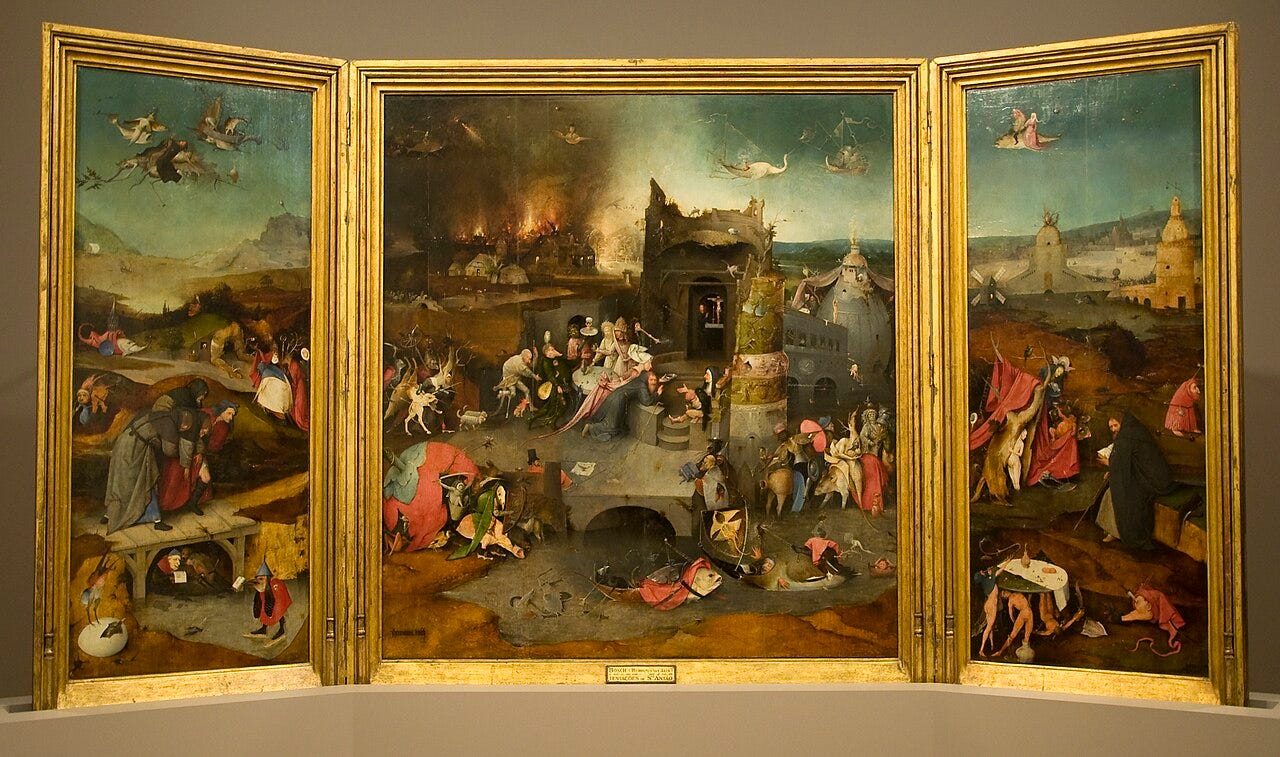
A saint kneels in a desert while buildings walk, fish fly and demons hold a committee meeting. Nothing about it is symbolic in a way anyone has fully decoded.
Bosch painted nightmare four centuries before the word acquired its modern sense. More on him in Hieronymus Bosch.
4 | Saturn Devouring His Son, Goya (about 1823)
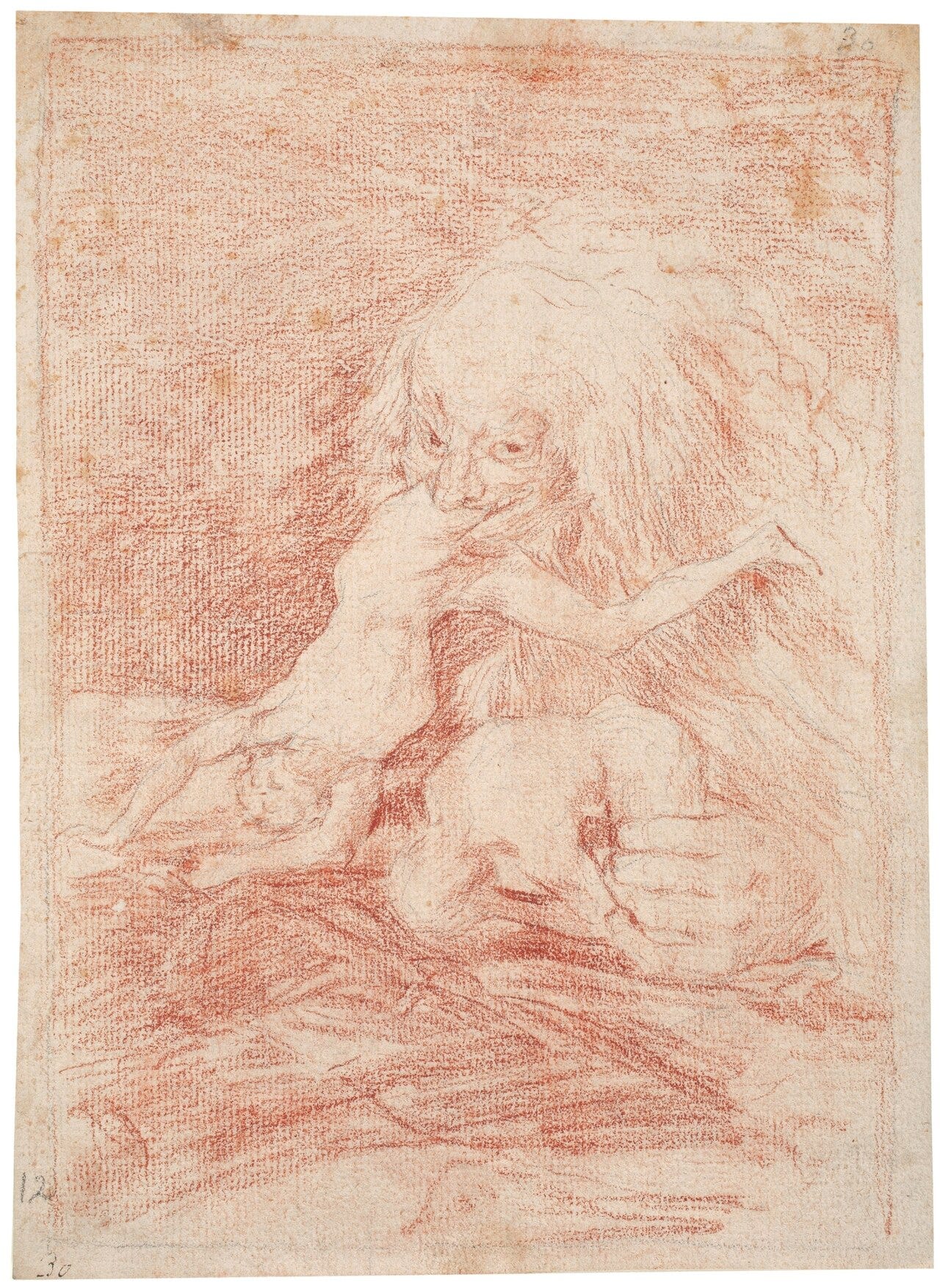
Painted directly onto the wall of Goya's own dining room, along with thirteen other Black Paintings he never intended anyone to see.
They were transferred to canvas after his death, which damaged them permanently. More of that darkness in hell in painting.
It was painted directly onto the plaster wall of Goya's dining room, alongside thirteen others, around 1820 to 1823. Nobody knows what he called it, and the transfer to canvas in the 1870s cut down the composition.
5 | The Fairy Feller's Master Stroke, Richard Dadd (1855 to 1864)
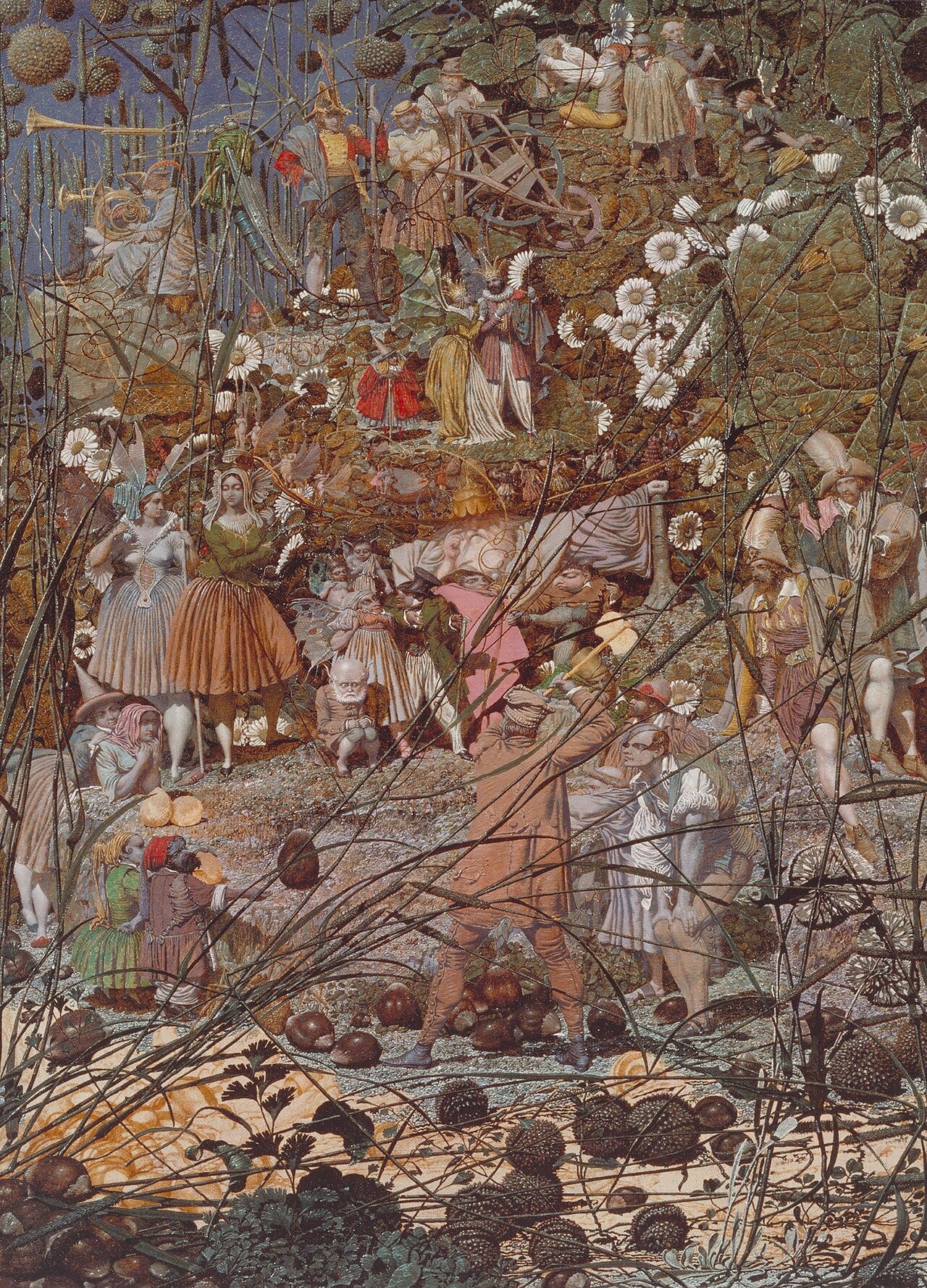
Nine years of work with single hair brushes inside Bethlem and Broadmoor, producing a scene so dense that figures keep appearing on the twentieth viewing.
Freddie Mercury wrote a Queen song about it in 1974. More on that world in madness in painting.
Dadd painted it between 1855 and 1864 in Bethlem, working with a magnifying glass, and it measures only about 54 by 39 centimetres. He wrote a long poem explaining every figure, which explains almost nothing.
6 | The Scream, Edvard Munch (1893)
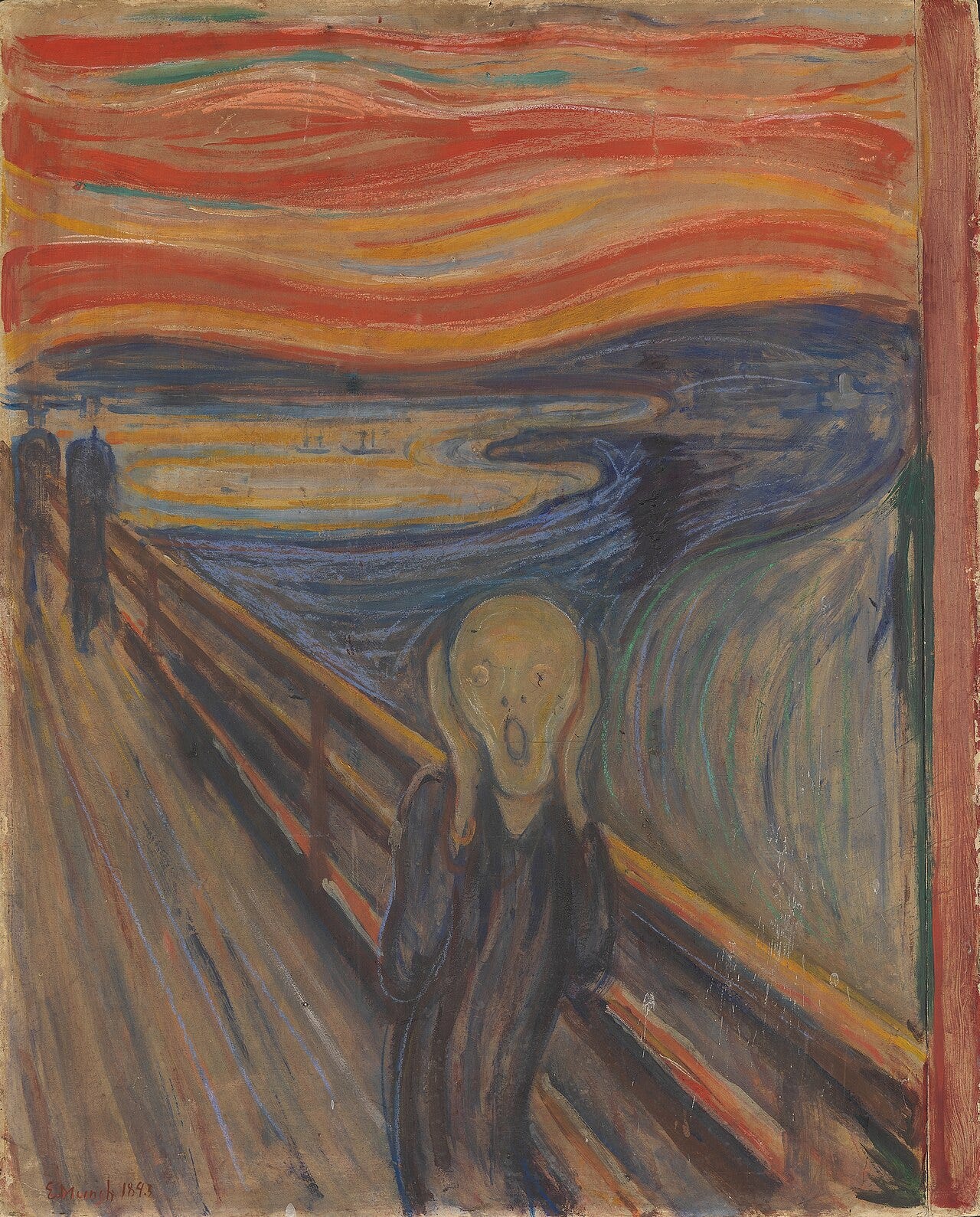
Not a dream but a panic attack, described by Munch in his diary: he was walking with friends at sunset when the sky turned blood red and he felt an infinite scream passing through nature.
The full story is in why Munch painted The Scream.
7 | The Nightmare, second version and the copies
Fuseli painted the subject repeatedly because the engraving sold so well, and pirated copies circulated across Europe within a few years.
It is one of the first images in art history to go viral in the modern sense. More painted sleep in dreams in art.
8 | Redon and the noirs
Odilon Redon drew floating eyeballs, smiling spiders and severed heads in charcoal for twenty years before he allowed himself colour.
He called those works his blacks and said they put the logic of the visible at the service of the invisible. More on him in Odilon Redon.
9 | The Isle of the Dead, Arnold Bocklin (1880 to 1886)
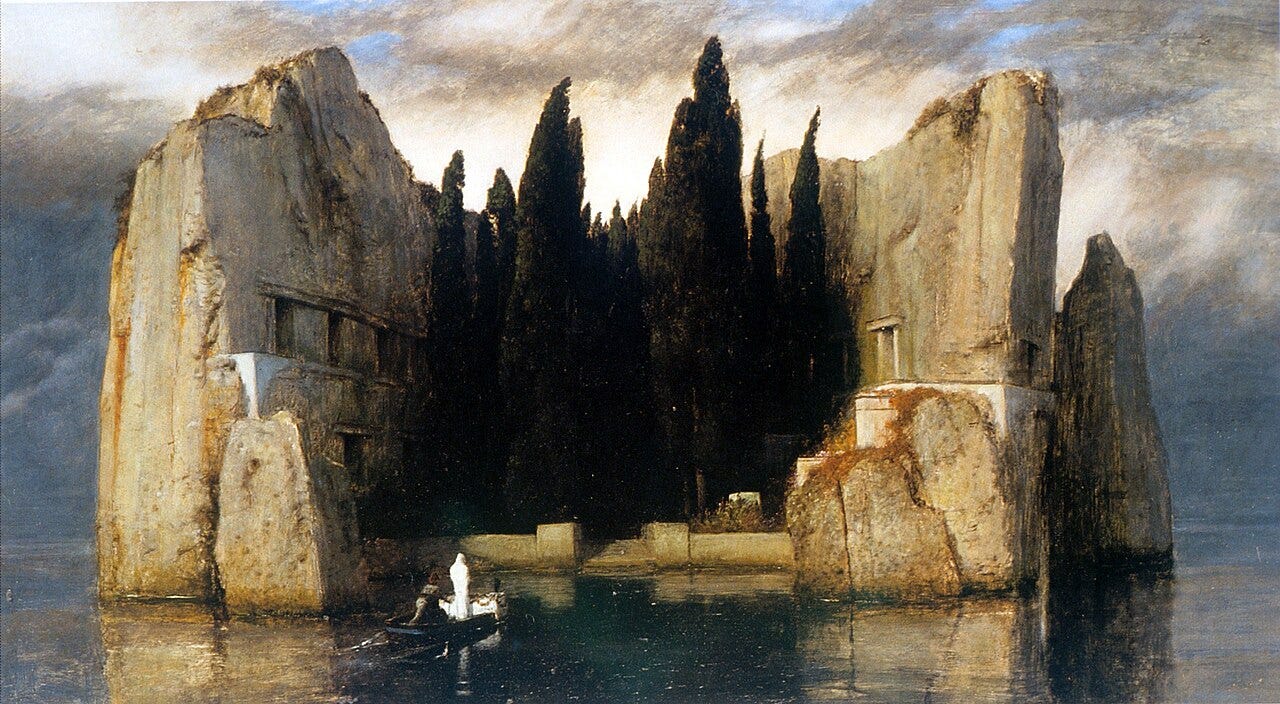
Not frightening on the surface, which is what makes it work: a boat, a shrouded figure, an island of cypresses and tombs, and total silence.
Bocklin said it should be a picture for dreaming over. More on him in Arnold Bocklin.
Bocklin painted five versions between 1880 and 1886. Hitler owned the third, Lenin had a reproduction, and Freud hung one in his consulting room, which is a strange list for one picture.
10 | Beksinski, and the refusal to explain
The Polish painter produced decades of decayed figures and impossible architecture and refused to give any of them titles.
Without a name, the viewer has to name it, which is exactly how nightmares work. More on him in Zdzislaw Beksinski.
He never titled his paintings and refused to explain them, saying meaning was irrelevant. He was murdered in his Warsaw flat in 2005 by the teenage son of his caretaker, over a small loan.
11 | The incubus in medieval manuscripts
Long before Fuseli, marginal drawings show sleepers pinned by small squatting figures, and medical texts describe the same crushing sensation.
What we now call sleep paralysis has been drawn for at least eight centuries, always in the same posture.
The word nightmare comes from the mare, an Old English word for a crushing spirit, not from the horse. Manuscripts show it squatting on a sleeper's chest centuries before Fuseli.
12 | Ernst, Dali and the twentieth century nightmare
Surrealism turned the nightmare into a method: Ernst built an elephant out of a corn bin photograph, Dali stretched watches over a dead landscape.
The difference is that they chose the dream deliberately. Fuseli's sleeper had no say. More of it in what is surrealism.
For me the medieval versions are the more frightening ones. They were painted by people who believed the creature on the chest was real, and that belief shows in how carefully it is drawn.
Nightmares on canvas, quick questions
What is sitting on the woman in The Nightmare? An incubus, the demon of folklore said to crush sleepers. The horse behind is the night mare taken literally.
Did Freud own a copy? Reports say a print hung in his Vienna consulting rooms, which fits the painting's long association with the unconscious.
What does the sleep of reason mean? That monsters appear when reason is abandoned, not that dreams themselves are dangerous. Goya printed the caption on the desk.
Why did Bosch paint monsters? He was a devout moralist painting temptation and damnation. The strangeness is theology, not fantasy.
Where is The Nightmare today? Detroit for The Nightmare, the Prado for Goya, Tate for Dadd, Basel for Bocklin.
Sleep paralysis, the sensation of waking unable to move with a weight on the chest, is documented in every culture that has written about sleep. Fuseli did not invent the image. He simply painted a thing that had been happening to people for as long as there have been people.
More painted horror sits in the Met and the Rijksmuseum.
The sleeper's demon has company on this site. The returning dead of Famous Ghost Paintings belong to the same fear, and both sit inside a wider survey of art history's darkest paintings.