
Norman Rockwell (1894 to 1978) was an American painter and illustrator who made more than 320 covers for The Saturday Evening Post between 1916 and 1963.
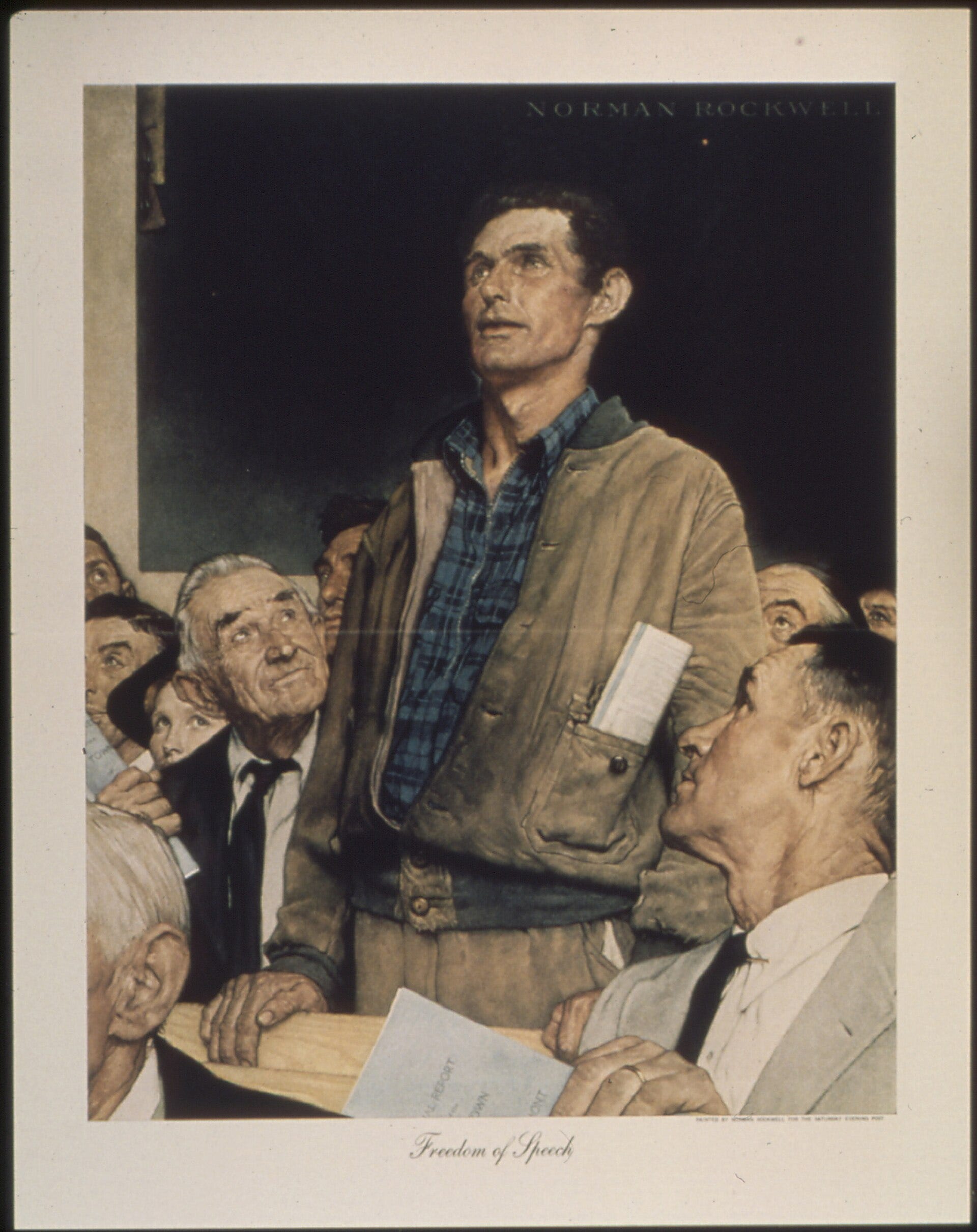
He is remembered for the Four Freedoms of 1943, which sold war bonds, and for The Problem We All Live With, a 1964 picture of six-year-old Ruby Bridges walking to school between federal marshals. Critics sneered at him for decades, then changed their minds.
People look him up for the cheerful America of the magazine covers. The painting that outlived them is not cheerful at all.
Cool Stories About Art is a newsletter to learn art the fun way.
Join 200,000+ readers and get:
10 new art stories / month
The entire archive of content (1,000+ articles)
Comment, ask questions, and chat with other readers
For forty-seven years Rockwell worked for one magazine, and he called it the greatest show window in America. In 1963, at 69, he left it for Look.
In January 1964 Look ran a picture unlike anything he had painted for the Post. A six-year-old girl walks to school between four deputy U.S. marshals, whose heads the painter cropped out of the frame. Behind them a wall carries a racial slur, the letters KKK and a splattered tomato.
The man known for Thanksgiving dinners and boys at the swimming hole had put a child in front of a crowd he left out of the picture. A psychiatrist who knew him well once said something about the man behind both kinds of painting.
What You'll Discover
How a teenager reached the Post.
Why Washington refused his best idea.
Why he walked out at sixty-nine.
What he cut from his sketch.
What a psychiatrist said about him.
What the critics finally conceded.