
Some of the most copied pictures in art history spend nearly all their lives in the dark. Light fades paper and ink, so these drawings rest in the boxes of museum print rooms and come out for a few weeks at a time. Art students know them line by line anyway, because generation after generation has sat down to copy them.
Cool Stories About Art is a newsletter to learn art the fun way.
Join 200,000+ readers and get:
10 new art stories / month
The entire archive of content (140+ articles)
Comment, ask questions, and chat with other readers
Why Students Copy the Masters
An old master drawing is a sheet by one of the great European artists who worked before about 1800. They drew with pen and ink, with sticks of red or black chalk, with charcoal, or with silverpoint, a silver stylus that leaves a fine gray line on specially coated paper.
For these artists, drawing came first. A pose, a face or a whole wall was settled on paper before any paint touched it, and a young artist learned the trade by copying the drawings of his master, then those of the masters before him.
Every drawing chosen here was copied, traced, engraved or reworked, by students or by great painters, and every one is still copied today. Two of them come from the nineteenth century, because the art schools of that century put them in students' hands beside the old masters.
12. Charles Bargue, Drawing Course, Part I (1868)
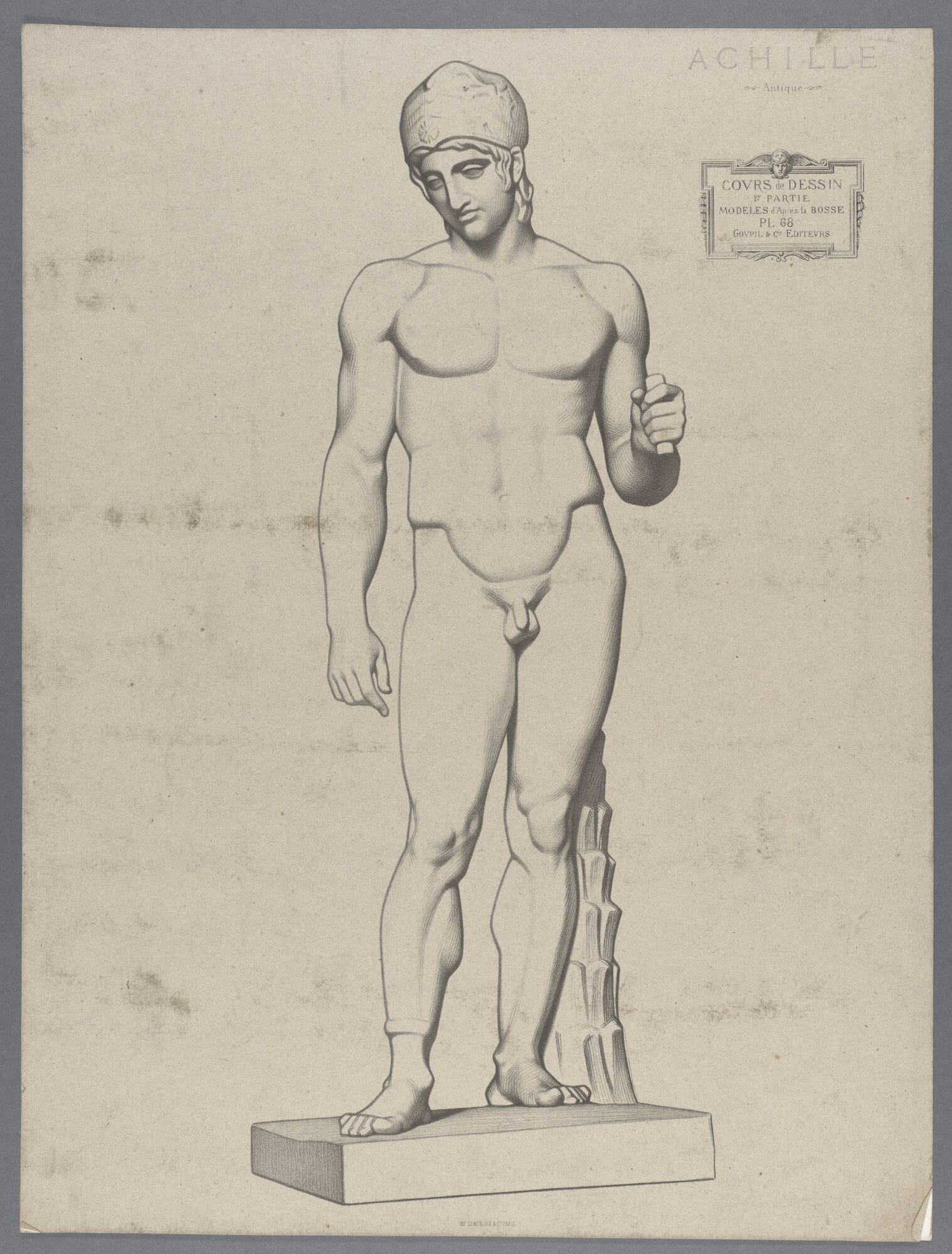
The helmeted head of Ares, the Greek god of war, is shaded in soft grays on a large sheet. Its model was not the ancient statue itself, a Roman marble now in the Louvre, but a plaster copy of the statue, and the sheet was never meant to hang on a wall. It is a plate from a drawing course published in Paris in 1868, made to be copied.
The course began as a business decision. Goupil, a Paris firm that sold prints across Europe, found the drawing of art students poor and set out to improve it. The painter Jean-Léon Gérôme, who was Goupil's son-in-law, lent his name and chose the models, and the plates themselves were drawn by Charles Bargue.
No written instructions came with them, because teachers knew how to use them. A student copied the plates one after another and earned the right to draw a living model only at the end. For half a century, art students around the world went through the series, until it vanished from the schools in the twentieth century. Since a full reprint in 2003, studios that teach drawing the old way have put it back on their easels.
What the plates teach shows best in the first part of the course. Most of them present the same model twice, once finished and once reduced to an outline of dots, straight lines and angles. A straight line and an angle can be measured, while a curve is hard to judge by eye. So the shape is fixed first with a few straight lines, and the shading follows, from light to dark.
The course also reached a student far from any school. In the summer of 1880, a former preacher of 27 was living in Cuesmes, a coal-mining village in Belgium, and had decided to become an artist. Hermanus Tersteeg, his former boss at the Goupil gallery in The Hague, lent him the charcoal exercises. On September 7 he told Theo in a letter that all sixty sheets were done. The young man was Vincent van Gogh.
He did not stop there. Copying good things first, he judged, was far better than working without that foundation, and before drawing a single miner from life he wanted to copy the other two series as well.
At a Glance
Artist: Charles Bargue (about 1826 to 1883), with Jean-Léon Gérôme (1824 to 1904)
Drawn: 1868, in Part I of the Drawing Course, published 1868 to 1871
Medium: Lithograph after Bargue's drawing of a plaster cast, on paper
Size: About 61 × 46 cm (24 × 18 in) per plate
Where to see it: Musea Brugge, Bruges, and impressions in many print rooms
About This Drawing
What is the Charles Bargue drawing course?
A set of 197 lithographs published in Paris by Goupil between 1868 and 1871, drawn by Charles Bargue with the help of Jean-Léon Gérôme. It comes in three parts, plaster casts of ancient sculpture, drawings after the masters and male nudes, all meant to be copied in charcoal.
11. Jan van Eyck, Portrait of an Old Man, formerly called Cardinal Niccolò Albergati (about 1435 to 1440)
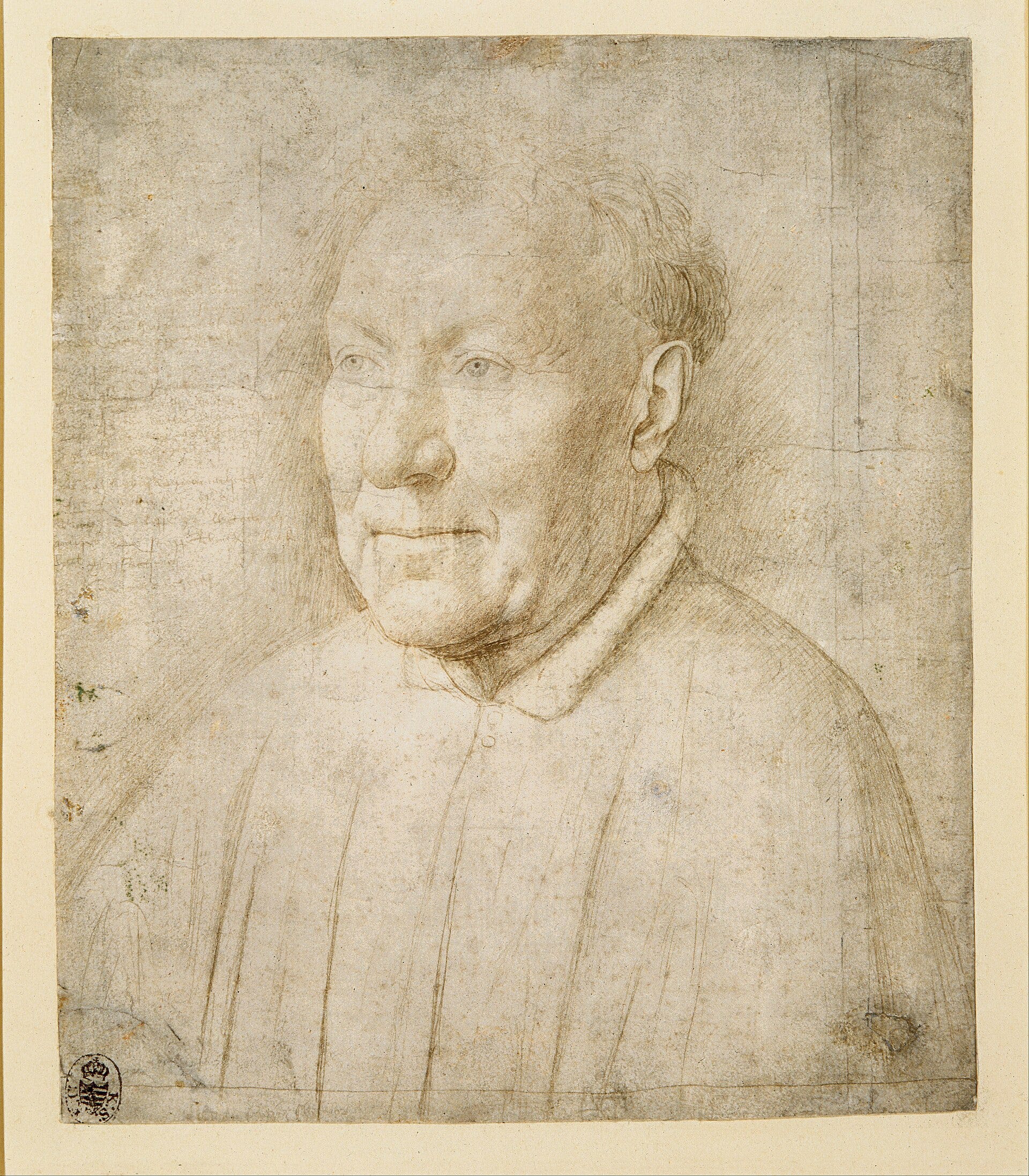
An old man looks out in three-quarter view, every crease of his face set down in fine gray lines. He is clean-shaven, and not one of those lines could have been erased. Beside his face, on the left, runs a block of tiny handwriting, too faint to be read with the naked eye.