
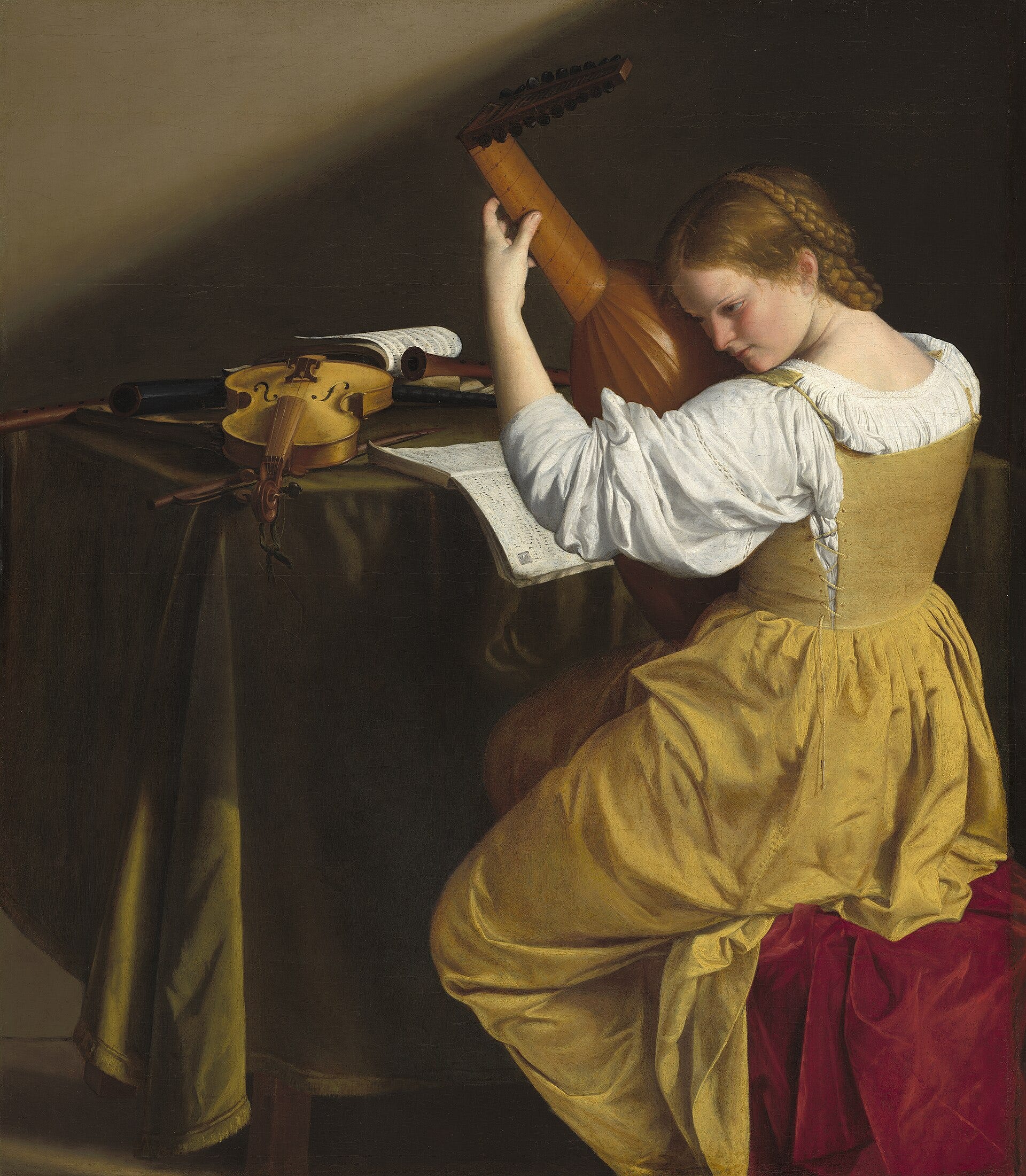
Orazio Gentileschi (1563 to 1639) was an Italian painter, a friend of the famous Caravaggio. He painted saints and musicians from living models, in clear daylight, like The Lute Player, now in Washington, and The Annunciation, in Turin. His daughter was the painter Artemisia Gentileschi.
Cool Stories About Art is a newsletter to learn art the fun way.
Join 200,000+ readers and get:
10 new art stories / month
The entire archive of content (140+ articles)
Comment, ask questions, and chat with other readers
Orazio Gentileschi taught his daughter Artemisia to paint, and she became one of the most famous painters of the century. In 1612, he took the man who had raped her to court. Soon after the trial, Artemisia left Rome, and for most of the next twenty-five years father and daughter lived in different cities.
Orazio was baptized in 1563 in Pisa, a city of central Italy, under another family name: Lomi. As a boy, he moved to Rome, the pope's city, to live with an uncle, and he took the uncle's name, Gentileschi.
He spent some twenty years in Rome painting frescoes, pictures made directly on walls, in churches. He was close to forty when he met Caravaggio, a painter eight years younger, whom many artists in Rome would soon imitate.
Caravaggio posed ordinary people in front of him and painted them as saints and angels, under a hard light. Orazio became his friend and began to paint from living models too.
Orazio's wife died in 1605, and he raised their children alone. He taught them his method, and Artemisia, the eldest, learned faster than her brothers.
The trial of 1612 parted father and daughter. Artemisia made her name in other Italian cities, while Orazio's work took him north, as far as London.
In 1638, Artemisia, by then a celebrated painter, traveled to London, where Orazio, past seventy, was painting for the queen of England. He died a few months after her arrival.
After a trial and years in different cities, what brought father and daughter together in London in 1638?
In the rest of the story
What Orazio lent Caravaggio, and why he had to explain it to a judge.
What the judges did to Artemisia to test her word during the trial.
Whether the man she accused ever paid for what he did.
Which famous painter got the credit for one of Orazio's canvases for ninety years.