Oskar Kokoschka: The Complete Story

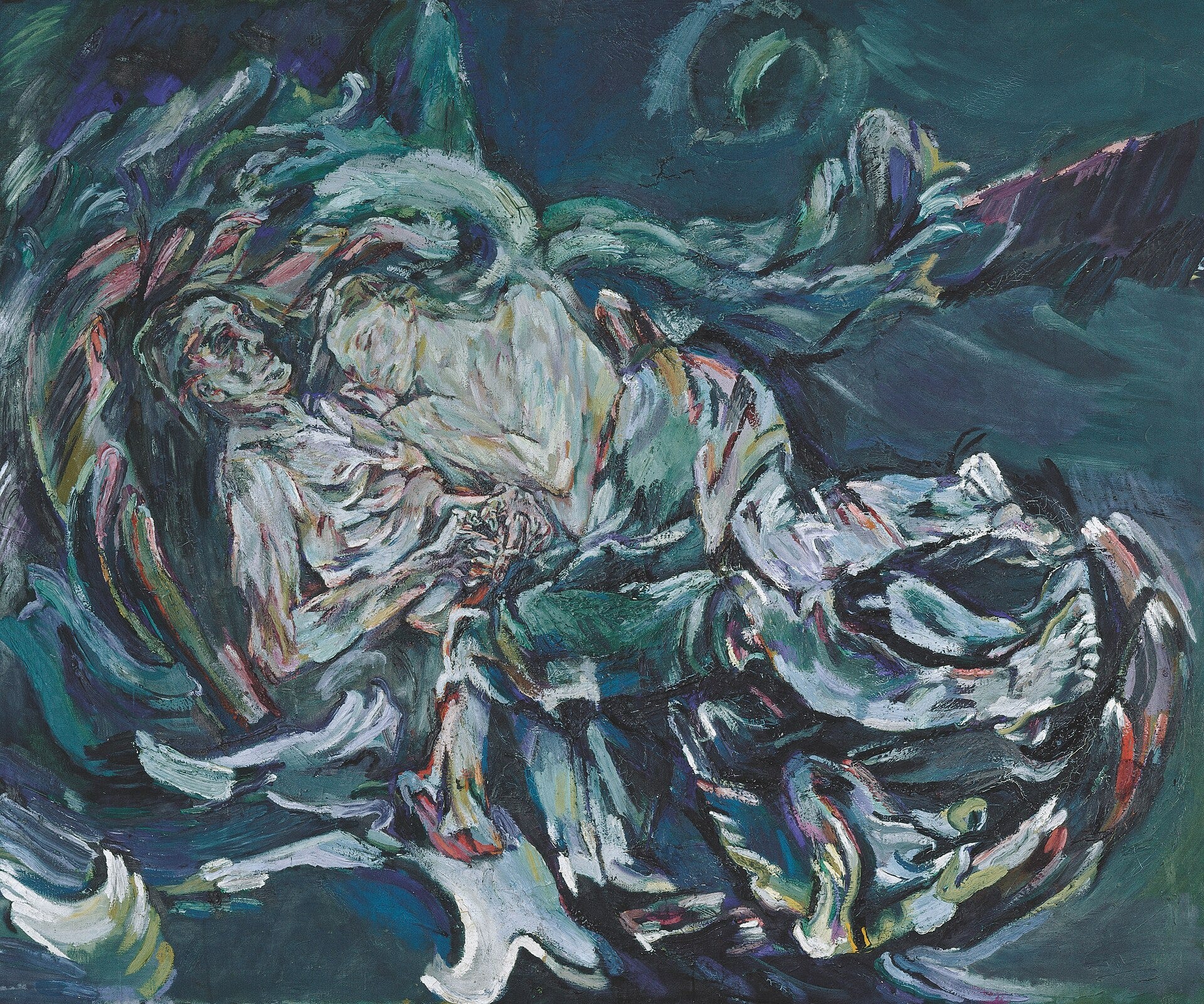
Two lovers lie tangled together in a swirling storm, drifting on a small boat through a blue night. The Bride of the Wind is one of the great love paintings of the modern age, and Oskar Kokoschka painted it about a love affair that was already tearing him apart.

Oskar Kokoschka x Emil Orlik

He was an Austrian artist, a leading Expressionist, known for raw psychological portraits, his doomed love for Alma Mahler, and a long life that spanned the worst of the twentieth century.


110,000 readers get the story behind the art every week. Join free.


If this pulled you in

If you like knowing what is actually going on inside a picture, start with these three:


Portraits of the nerves

Kokoschka painted people as if he could see beneath the skin, with restless brushwork, clawed hands and anxious eyes that seem to reveal the sitter inner life.

These searching works are landmarks of Expressionism, a form of portrait painting that aimed at the soul rather than the surface.

Alma and the doll

Oskar Kokoschka by Hugo Erfurth 1919

His passionate affair with Alma Mahler, widow of the composer, obsessed him. When she left him, he was shattered.

In his grief he commissioned a life sized doll made in her likeness, which he kept, dressed and even took out in public, one of the strangest episodes in modern art, before he destroyed it.

The wound of war

Kokoschka volunteered in the First World War and was badly wounded, bayoneted and shot in the head, injuries that haunted him for life.

The experience deepened the darkness in his work and turned him into a lifelong opponent of war and tyranny.

Branded and exiled

The Nazis declared his art degenerate and removed it from German museums. Kokoschka fled, first to Prague and then to Britain, where he became a citizen.

In exile he painted fierce political pictures attacking fascism, and lived long enough to see his reputation restored after the war.

A few questions about Oskar Kokoschka

What is he known for?

Expressionist portraits and the painting The Bride of the Wind.

Who was Alma Mahler?

His lover, whose loss inspired some of his greatest work.

Why did he flee?

The Nazis branded his art degenerate.

When did he die?

In 1980, in Switzerland.

Why his raw vision lasts

Kokoschka painted feeling without a filter, and his portraits still seem to lay a person bare. He lived through two world wars, exile and heartbreak, and turned all of it into images that refuse to look away, which is why The Bride of the Wind still aches more than a century later.


110,000 readers get the story behind the art every week. Join free.


He was also a gifted writer, and one of his early plays is sometimes called the first true Expressionist drama, so his restlessness spilled across art forms.

Late in life he founded a summer art school in Salzburg that he called the School of Seeing, passing on his belief that the artist task was to look harder than anyone else.

He travelled widely between the wars, painting cities and landscapes across Europe and North Africa with the same nervous energy he brought to faces, so that even his views feel charged with feeling.

His long life let him bridge the worlds of the old Vienna of Klimt and Schiele and the postwar Europe of his exile, and museums now treat him as one of the last great links to that vanished culture, with major retrospectives drawing crowds across the continent.

His political paintings of the war years, fierce attacks on fascism and indifference, show that the same hand that painted lovers could turn to savage protest when the moment demanded it.

Today his work hangs in the leading museums of Vienna, London and beyond, securing his place among the founders of modern Austrian art.


Two stories a week, a hundred secrets unlocked. Start free.