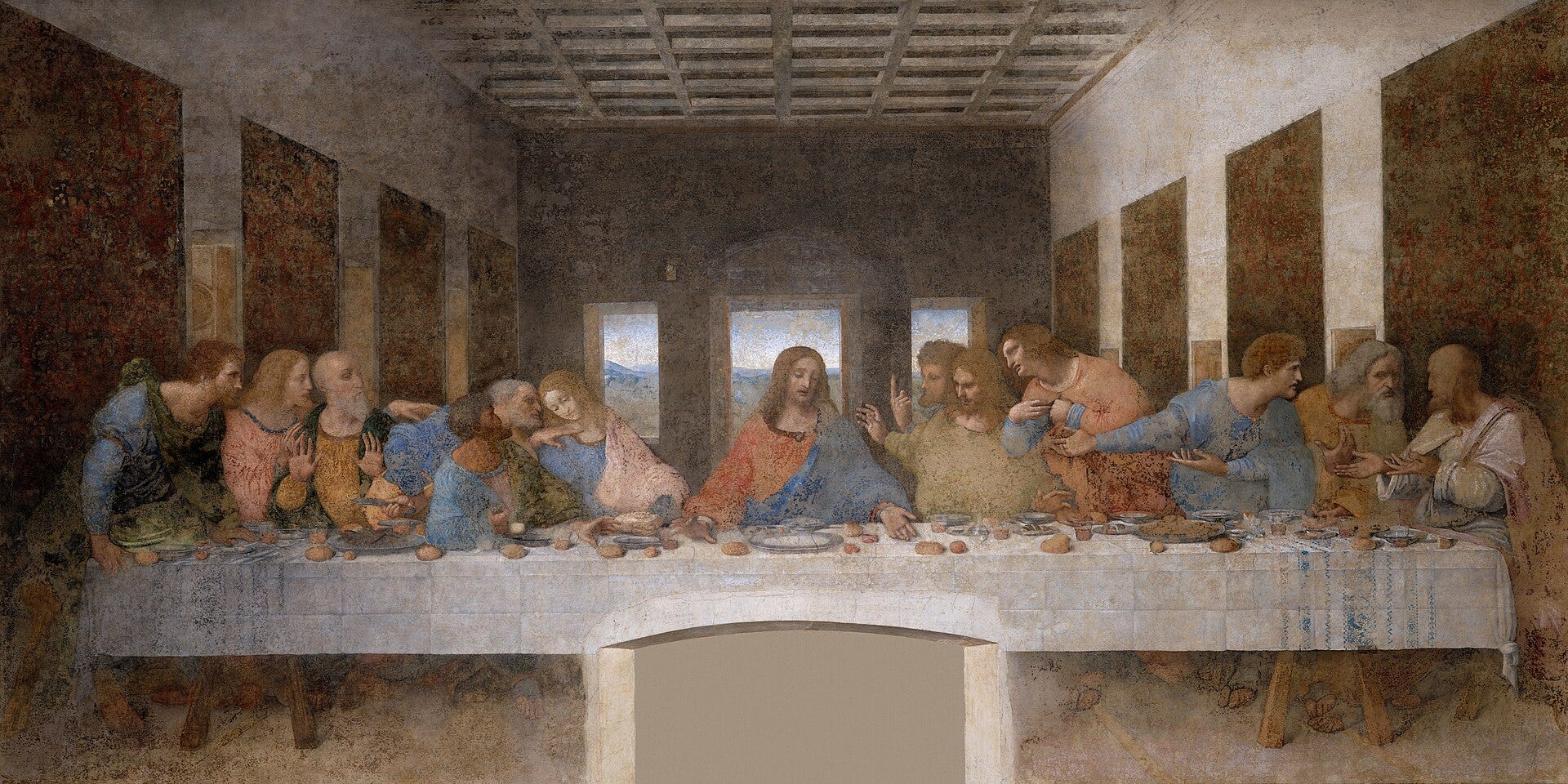
Painting technique is how paint gets from brush to surface: chiaroscuro and sfumato control light, impasto piles paint on thick, fresco bonds pigment into wet plaster, pointillism separates color into dots, and oil and watercolor are the two mediums nearly all seven techniques run through.
I have written a full guide to each one already, with the paintings that built it and the painters who pushed it the furthest.
Four of these control how paint physically sits on a surface. Two control light instead. The last two, oil and watercolor, are the actual materials the others mostly run through.
Chiaroscuro
Chiaroscuro builds a painting out of light against dark, with almost no gray step in between. Caravaggio pushed it further than anyone, and Rembrandt and Georges de La Tour both built entire careers on it too.
Famous Chiaroscuro Paintings walks through ten of them, from Caravaggio's Calling of Saint Matthew to Rembrandt's Belshazzar's Feast. If chiaroscuro, tenebrism, and sfumato blur together in your head, chiaroscuro vs tenebrism vs sfumato sorts out exactly where each one stops and the next begins.
Sfumato
Sfumato dissolves the edge itself, so one shape fades into the next with no visible line, the reverse of chiaroscuro's hard break between light and dark. Leonardo da Vinci invented it and used it in a way no one after him fully matched.
Famous Sfumato Paintings covers six of his, the Mona Lisa's smile among them, all built from that same soft edge.
Impasto
Impasto piles paint on thick enough to cast its own shadow, straight out of the tube instead of thinned and blended flat. Van Gogh used it on The Starry Night and the Sunflowers, and Rembrandt used it decades earlier on his own aging face.
Famous Impasto Paintings collects nine of them, including Soutine's Carcass of Beef, each one built from paint thick enough to read as texture, not just color.
Fresco
Fresco is a wall technique, not a style: pigment goes straight into wet plaster, and the color dries into the wall itself instead of sitting on top of it. That bond is why frescoes like the Sistine Chapel ceiling have survived five hundred years.
Famous Fresco Paintings covers twelve of them, and What Is Fresco Painting? is the short version if you just need the definition.
Pointillism
Pointillism replaces brushstrokes with thousands of tiny dots of pure, unmixed color, placed side by side so the eye blends them into a single tone from a distance. Georges Seurat spent two years painting A Sunday on La Grande Jatte this way.
Famous Pointillist Paintings covers twelve of them, and What Is Pointillism? is the short version if you just need the definition.
Oil Painting
Oil paint dries slowly, which is exactly what makes it useful: painters could blend, layer, and rework a passage over days instead of minutes. Jan van Eyck used that slow drying time to paint jewel like detail into the Arnolfini Portrait in 1434.
Famous Oil Paintings covers twelve of them, from van Eyck's detail to Van Gogh's thick ridges of paint.
Watercolor
Watercolor works the opposite way: thin, transparent pigment mixed with water, with the white of the paper doing the work that white paint does in oil. Durer used it for scientific level detail in The Great Piece of Turf in 1503.
Famous Watercolor Paintings covers twelve of them, proving the medium is not only for beginners or quick sketches.
Oil paint took over from fresco and tempera largely because of drying time: painters gained days to rework a passage instead of minutes, and by the 1500s oil had become the default choice for panel and canvas painting across Europe.
Quick answers
What is the difference between chiaroscuro and tenebrism? Chiaroscuro is light built against dark to model form. Tenebrism pushes that further, with darkness swallowing most of the canvas.
What is the difference between impasto and other oil techniques? Impasto is thick, textured paint applied straight from the tube. Most oil painting instead relies on thin, blended layers.
Is fresco painting the same as mural painting? Fresco is one method of mural painting, with pigment going into wet plaster. Some murals instead use paint applied to a dry wall, a related technique called secco.
Why would a painter use watercolor instead of oil? Watercolor dries fast and travels easily, useful for outdoor and quick work. Oil dries slowly, useful for detailed, reworked studio paintings.
What is sfumato used for? Sfumato softens the edge between two areas of a painting so there is no hard line, most often used on skin and the edges of a face.
Which of these techniques came first? Fresco is the oldest of the seven, used since antiquity. Oil painting became the dominant technique in Europe only by the 1500s.
Can a single painting use more than one of these techniques? Yes. Many oil paintings combine techniques, for example thin glazes across most of the canvas with impasto reserved for a few highlights.