
Under a surprising number of famous paintings there is another painting. Sometimes the artist changed their mind, sometimes they reused an expensive canvas, and sometimes they painted over a portrait of somebody they had fallen out with. X ray and infrared imaging now find these hidden pictures routinely.
Learn art the fun way
1 | The Blue Room, Pablo Picasso (1901)
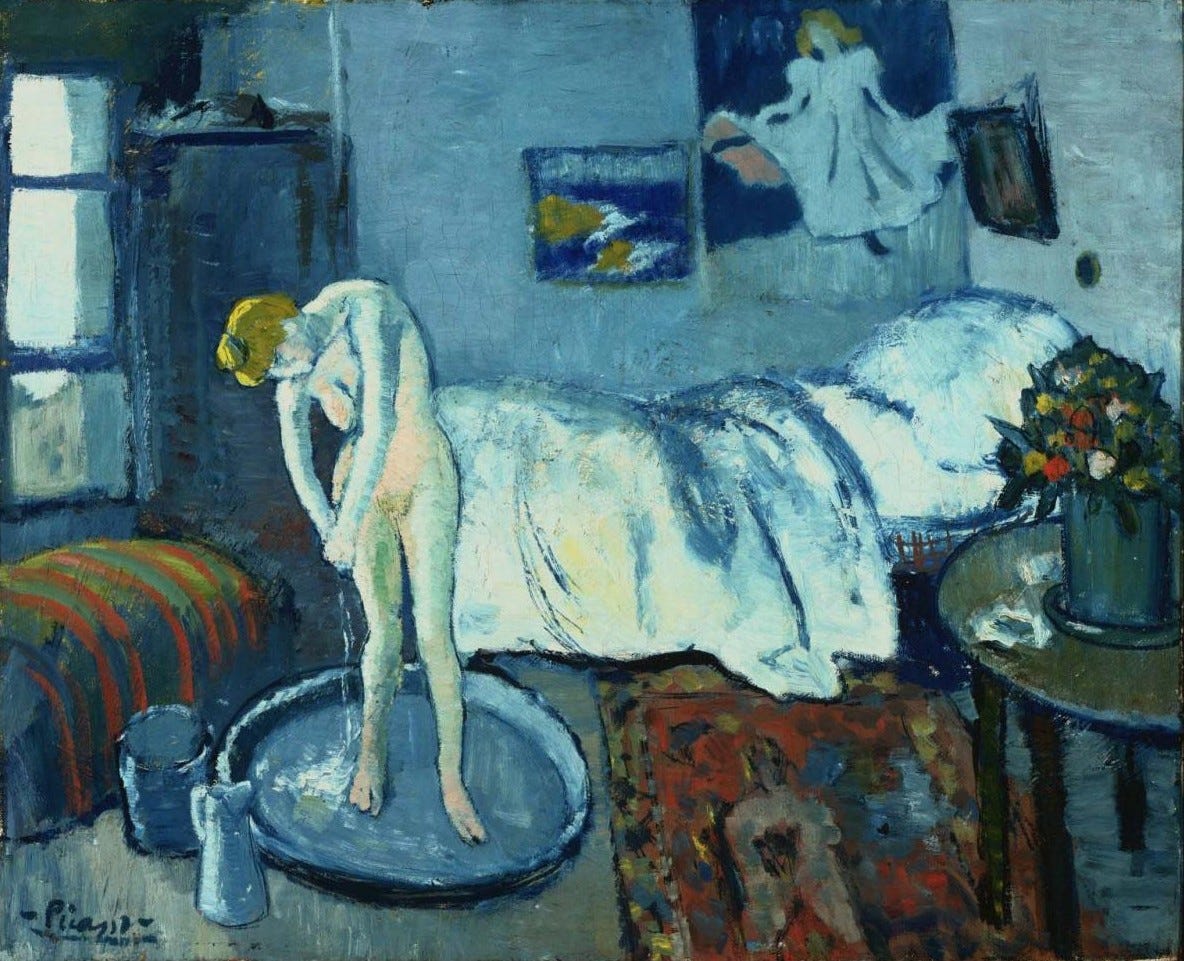
A woman bathing, and beneath her a bearded man in a bow tie with his chin on his hand. Conservators saw a shape in a 1954 examination, confirmed it by X ray in 1992, and produced a colour reconstruction in 2014.
Picasso was broke in 1901 and reused the canvas within months. More on him in Pablo Picasso.
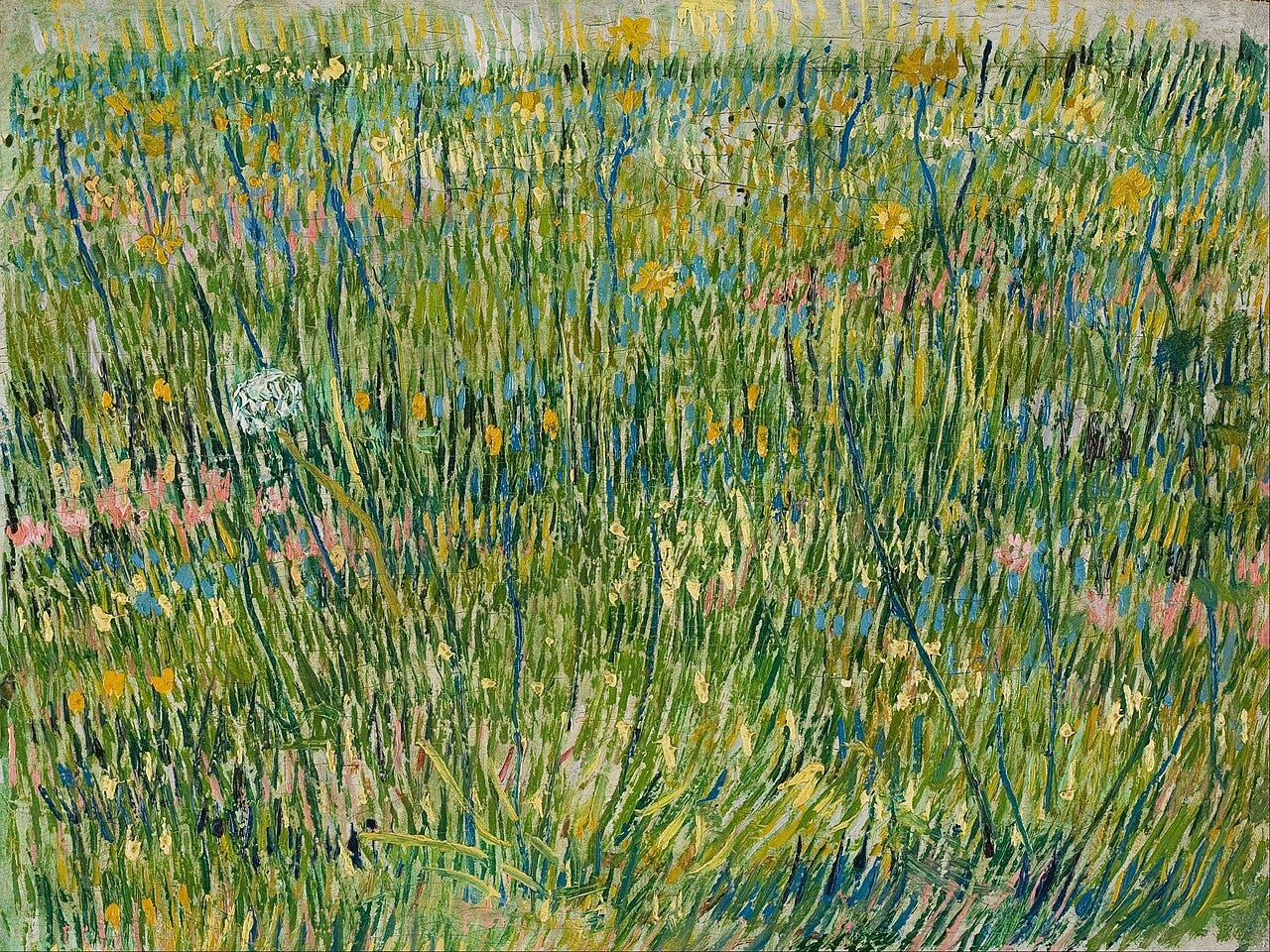
2 | Patch of Grass, Vincent van Gogh (1887)
X ray fluorescence scanning in 2008 recovered the head of a peasant woman under the grass, in colour, from the metal pigments still sitting in the lower layer.
Around a third of his early canvases carry an earlier picture. More on him in Vincent van Gogh.
3 | Girl Reading a Letter at an Open Window, Vermeer (around 1658)
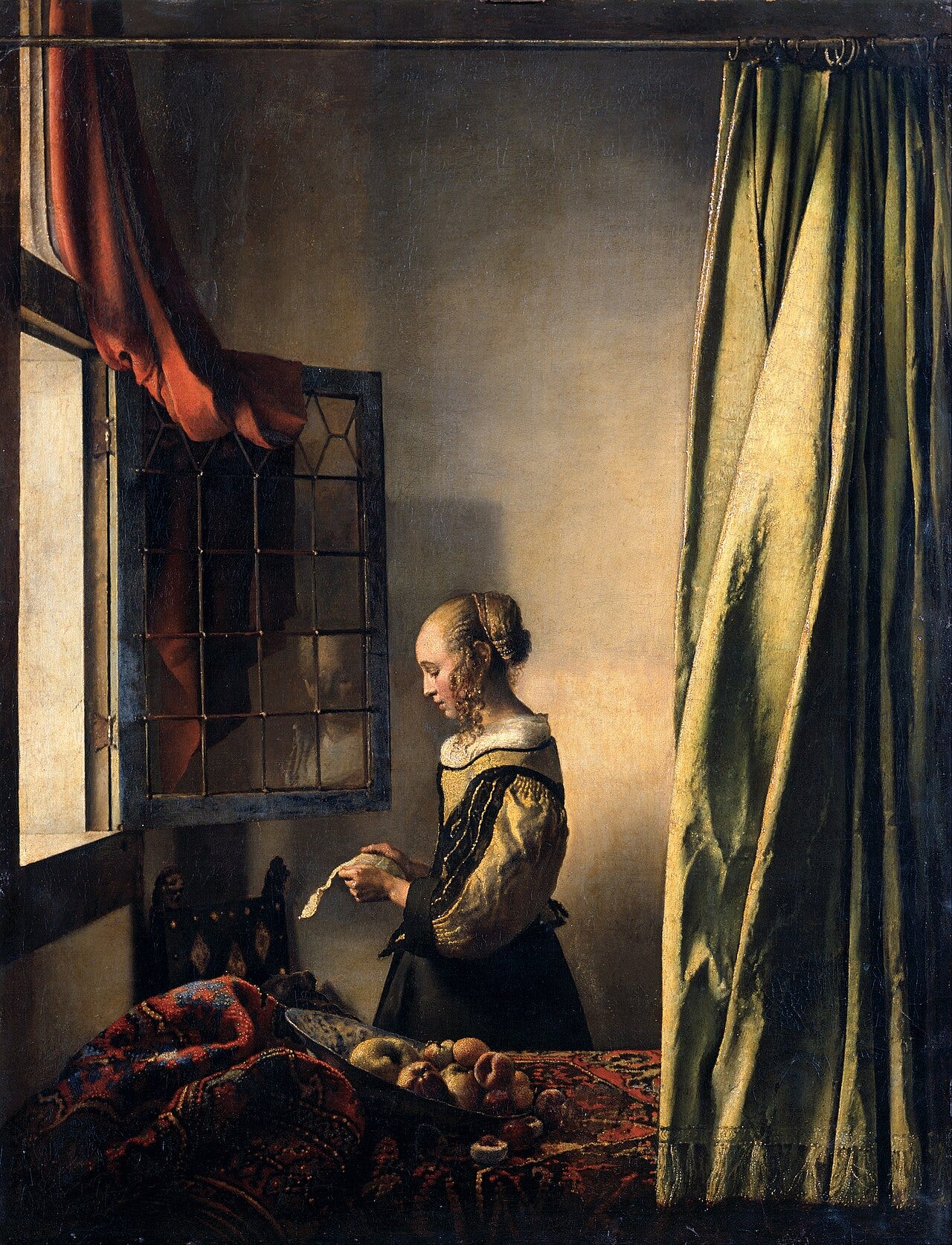
A large painting of Cupid hung on the back wall. It was known from X rays since 1979, and long assumed to be Vermeer’s own change of mind. Analysis showed the overpaint came decades after his death, and it was removed by 2021.
More on him in Vermeer.
4 | Portrait of Don Ramon Satue, Francisco Goya (1823)
Scanning at the Rijksmuseum in 2011 found a uniformed figure with medals underneath, facing the other way, most likely a Bonapartist general Goya thought better of showing.
More on him in Francisco Goya.
The Rijksmuseum scanned it in 2011 with X ray fluorescence and found a figure in a uniform with a sash and medals. The date on the visible portrait is 1823, right after the French backed regime collapsed, which is a good reason to paint someone out.
5 | Old Man in Military Costume, Rembrandt
The Getty and Los Angeles conservators recovered a second head under this one, wearing a different hat, using synchrotron based scanning.
Rembrandt reused panels constantly. More on him in Rembrandt.
The buried head faces the other way and wears a different hat. Conservators at the Getty imaged it with a synchrotron beam in 2011, mapping the mercury in the vermilion to rebuild the face underneath.
6 | Pentimento, the word for it
Pentimento is Italian for repentance. It names the change of mind that becomes visible when the upper paint thins with age and the earlier version starts to show through.
The term is explained in what is pentimento.
Vasari already uses the idea in the sixteenth century. The change becomes visible with age because oil paint grows more transparent over decades, so the layer beneath slowly climbs back through.
7 | The Arnolfini Portrait and the moving feet
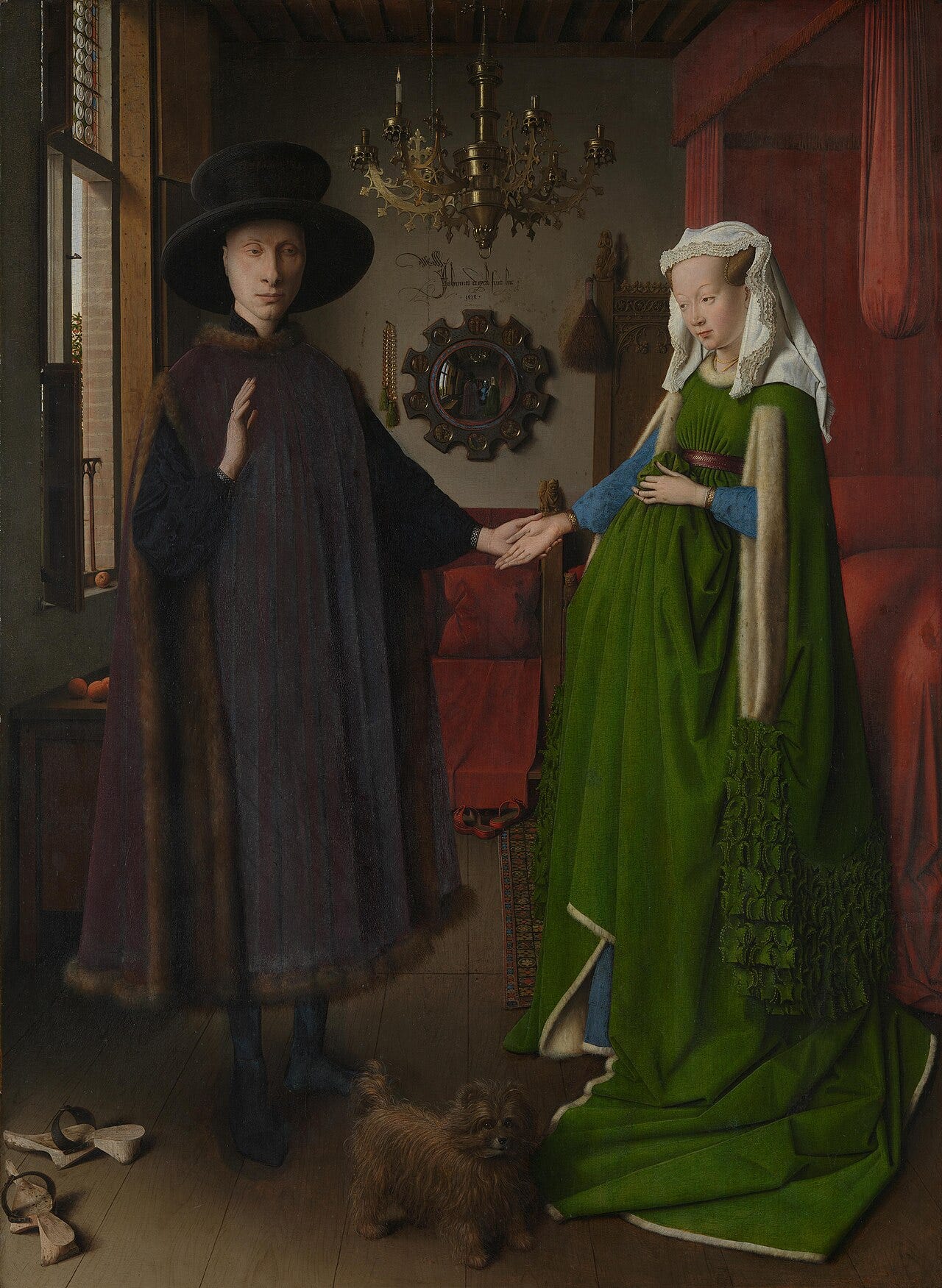
Infrared reflectography shows van Eyck moved the man’s right hand, the woman’s face and the position of the feet before settling. The underdrawing does not match the finished panel.
More on him in Jan van Eyck.
That panel rewards this kind of looking more than any other. I take it apart in the Arnolfini Portrait, detail by detail.
8 | How the scans actually work
X ray shows dense pigments like lead white. Infrared passes through many upper layers to reveal carbon underdrawing. X ray fluorescence maps individual elements, which is how a buried head can be given back its colours.
None of it touches the painting.
X radiography catches heavy elements like the lead in lead white. Infrared reflectography passes through most pigments but stops at carbon black, which is what underdrawing is made of. Neither touches the surface.
9 | The Old Guitarist and the woman’s face
Look at the guitarist’s neck in raking light and you can see a woman’s face, upside down and reused, without any equipment at all.
It is the easiest hidden painting in the world to spot in person.
The face is at the guitarist’s neck, upside down, and you can see it with the naked eye in raking light at the Art Institute of Chicago. X rays in 1998 revealed a second figure as well, a woman with a child.
10 | Why they reused canvas
The cost sat in the ground layer, the gesso or chalk priming, which took days to prepare before a brush touched it.
Prepared canvas and panel were among the largest costs a working painter had. Scraping back and repainting was normal practice, not a confession.
The romance of the hidden picture is mostly a story about money.
11 | What conservators will not do
A buried picture is almost never uncovered, because removing the top layer destroys the finished work. Vermeer’s Cupid was an exception only because the overpaint was proved to be a later hand.
Reveal what the artist did not paint, keep what they did.
The Vermeer was the exception because analysis proved the overpaint was applied at least several decades after his death, so removing it restored his intention rather than erasing it. That test is the whole ethics of the field.
12 | Where this is going
Scanning is now cheap enough that whole collections are being imaged, and the finds have moved from famous single pictures to entire bodies of work.
Expect the number of known hidden paintings to keep rising.
Hidden paintings, common questions
How do they find a painting under a painting? X ray for dense pigments, infrared for carbon underdrawing, and X ray fluorescence to map individual elements and rebuild the buried colours.
What is hidden under Picasso’s Blue Room? A portrait of a bearded man in a bow tie, seen by X ray in 1992 and reconstructed in colour in 2014.
Was Vermeer’s Cupid uncovered? Yes. Analysis showed the overpaint was applied decades after his death, so it was removed, and the picture was shown with the Cupid restored in 2021.
Why did painters reuse canvas? Prepared canvas and panel were expensive. Reusing a support was routine, especially early in a career.
Where is The Blue Room today? The Phillips Collection for the Blue Room, the Van Gogh Museum, the Gemaldegalerie in Dresden for the Vermeer, the Rijksmuseum for the Goya.
Pentimento means repentance. Every painter who scraped back a canvas left a confession that nobody could read for four hundred years, and now a machine reads it in an afternoon.
More on these techniques sits at the Met and the Rijksmuseum.