Paintings Ruined by Restoration: 10 Disasters

From Beast Jesus in Spain to the Louvre resignations over a Leonardo.

In 2012, a retired Spanish parishioner named Cecilia Gimenez tried to fix a fading fresco of Christ in her local church. She turned it into a lopsided, furry faced blob the internet nicknamed Beast Jesus, and it remains the most famous restoration disaster in art history.

Faded fresco of Christ crowned with thorns, before restoration
Elias Garcia Martinez, Ecce Homo, before its 2012 restoration.

Most restoration disasters are not that cartoonish. Some are centuries old, caused by well trained professionals working with the wrong chemicals, the wrong deadline, or the wrong idea of what the artist actually intended. A few were done right and still caused an uproar.

Here are 10 real, documented cases, ranked from purely amateur to genuinely disputed among professionals, no invented stories, every one of them verifiable.

  • Cases: 10 documented restoration disasters, from amateur fixes to disputed professional cleanings

  • Span: 1715 to 2020

  • Most viral: Ecce Homo, Borja, Spain, 2012

1. Ecce Homo, Borja, Spain, 2012

Elias Garcia Martinez painted this fresco of Christ crowned with thorns in the early 1900s in a small church near Zaragoza. By 2012 it had faded badly, and 82 year old parishioner Cecilia Gimenez decided to fix it herself, without permission or training.

The result was mocked worldwide as Ecce Mono, behold the monkey. It should have been a tragedy for the tiny town of Borja.

The fresco of Christ after Cecilia Gimenez's amateur restoration attempt, widely nicknamed Ecce Mono or Beast Jesus
Ecce Homo after Cecilia Gimenez's 2012 restoration attempt, nicknamed Ecce Mono or Beast Jesus.

Instead it became the opposite, tourism jumped from about 5,000 visitors a year to 40,000 within a year of the fiasco going viral, and the site still draws 15,000 to 20,000 pilgrims annually.

Gimenez later negotiated a share of the profits from merchandise and ticket sales tied to her accidental fame, and remained a minor celebrity in Spain for the rest of her life.

2. The Immaculate Conception, Valencia, Spain, 2020

A private collector in Valencia owned a copy of Bartolome Esteban Murillo's Immaculate Conception and paid a furniture restorer 1,200 euros to clean it. The restorer was not trained in painting conservation at all.

Two attempts at fixing the Virgin Mary's face left it looking like a crude cartoon. The story pushed Spanish conservation experts to publicly demand tighter regulation of who is legally allowed to touch historic artwork.

Bartolome Esteban Murillo painting of the Immaculate Conception, the Virgin Mary surrounded by clouds and cherubs
Bartolome Esteban Murillo, The Immaculate Conception, the composition later damaged by an amateur restoration in Valencia.

One painting. One story. Every week. Free, with 170,000 readers who never sat through an art history lecture.


Three More Paintings With a History Behind the Paint

A ruined restoration is just one way a painting's backstory turns out to be stranger than the image itself. These three go just as deep.


3. The Virgin and Child with Saint Anne, Louvre, 2008 to 2012

This is not an amateur story. The Louvre commissioned a full professional cleaning of Leonardo da Vinci's late masterpiece, removing centuries of yellowed varnish to reveal brighter original colors underneath.

Two senior French conservation experts, Segolene Bergeon Langle and Jean Pierre Cuzin, resigned from the advisory committee in protest, arguing the cleaning had gone too far and stripped away material that was Leonardo's own, not later grime.

The Louvre's team disputed that, and the painting was unveiled anyway in 2012.

The fight was never really about whether the painting looked different afterward, everyone agreed it did. It was about whether brighter automatically means more accurate, a question conservators still argue about on every major cleaning project.

Leonardo da Vinci painting of the Virgin, Child, and Saint Anne
Leonardo da Vinci, The Virgin and Child with Saint Anne, after its 2012 Louvre cleaning.

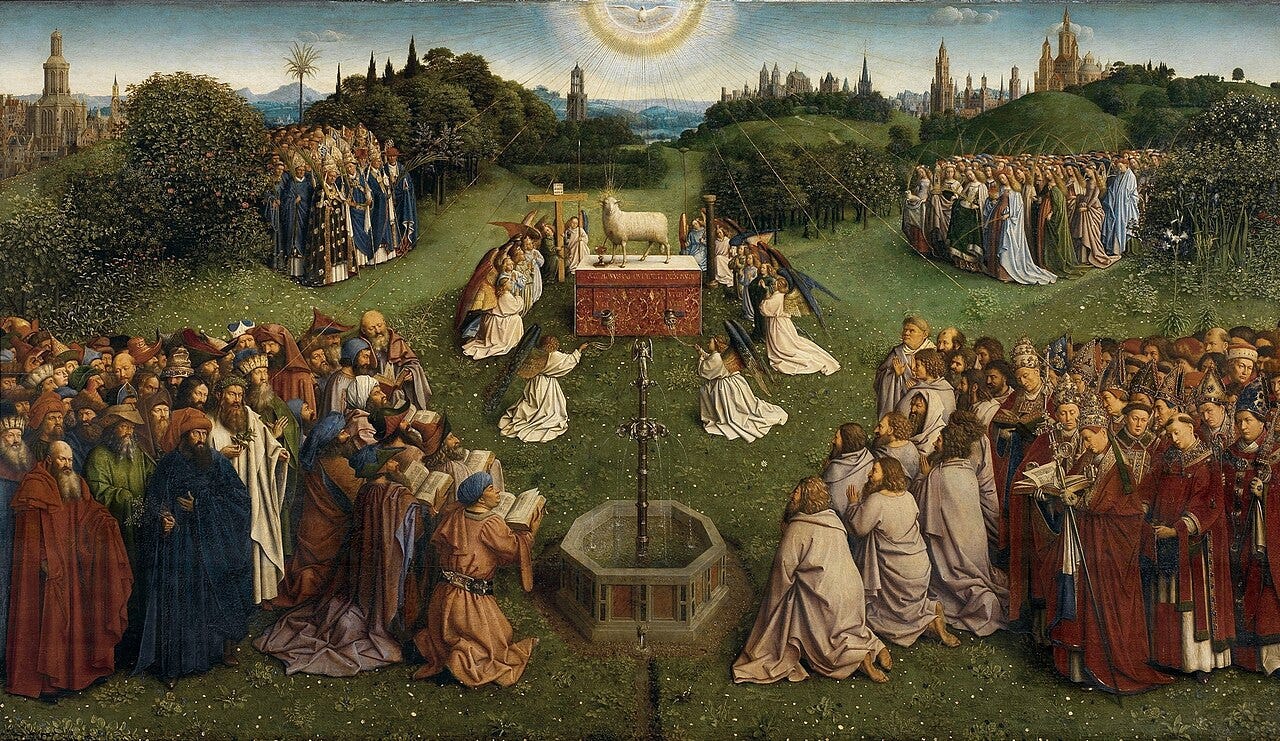
4. The Ghent Altarpiece, Mystic Lamb panel, 2019

An eight year, 2.4 million dollar restoration of Jan and Hubert van Eyck's 1432 altarpiece removed 16th century overpaint that had covered the face of the sacrificial lamb for nearly 500 years.

What emerged underneath had forward facing, unmistakably human eyes and a strangely flattened snout. The internet immediately compared it to a startled person in a lamb costume.

A later scientific study confirmed the restorers had it right, this genuinely was Van Eyck's original intention, which makes it the rare case where the correct restoration is the one that unsettled people.

Close detail of the Lamb of God from the Ghent Altarpiece after restoration, showing forward facing eyes
Jan van Eyck, detail of the Lamb of God, Ghent Altarpiece, after its 2019 restoration.

5. The Night Watch, Rembrandt, 1715

In 1715, Amsterdam's city hall needed Rembrandt's enormous 1642 group portrait to fit between two columns. Rather than build around the painting, officials simply cut it down, trimming roughly two feet from the left side and smaller amounts from the other three edges.

Two full figures on the left side were sliced off entirely and lost forever.

In 2021, the Rijksmuseum used artificial intelligence trained on a smaller 17th century copy of the original composition to digitally reconstruct the missing edges, though the physical canvas itself remains permanently trimmed.

Rembrandt's group portrait The Night Watch
Rembrandt, The Night Watch, 1642.

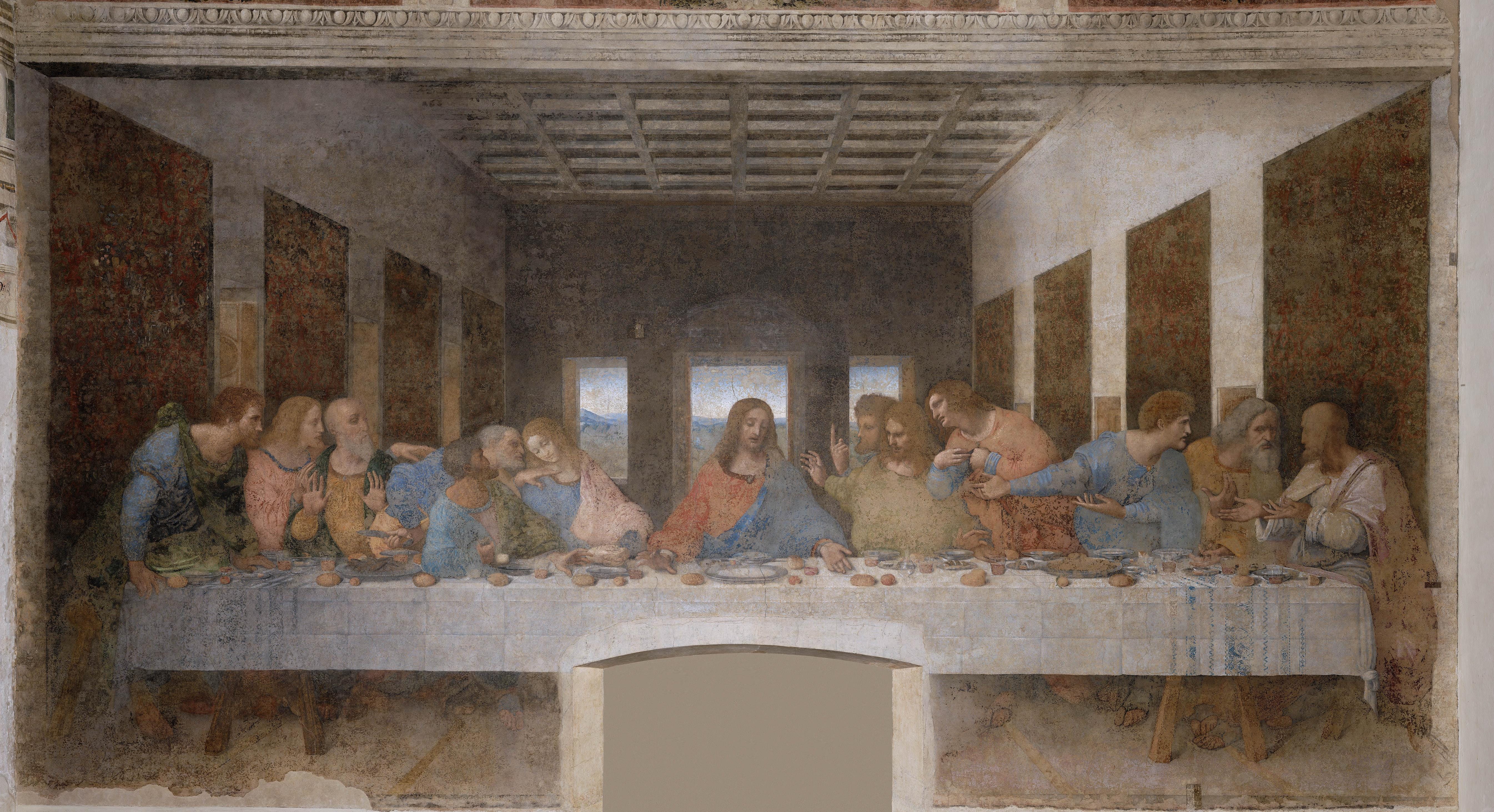
6. The Last Supper, Leonardo da Vinci, starting 1726

Leonardo's experimental painting technique started degrading almost immediately after he finished it in 1498. The first major restoration attempt, by Michelangelo Bellotti in 1726, made things dramatically worse.

Bellotti scrubbed the surface with caustic soda, then coated it in oil varnish and repainted large sections by hand. Three more heavy handed restorations followed over the next two centuries. In 1652, monks even cut a doorway directly through the wall, removing Christ's feet entirely.

By the time a careful, scientific restoration finished in 1999, conservators estimated no more than half the visible surface was still original Leonardo paint.

That last figure is worth sitting with. The single most reproduced religious painting in Western history is, by the numbers, more restoration than Leonardo.

Leonardo da Vinci's mural The Last Supper
Leonardo da Vinci, The Last Supper, after its 1999 restoration.

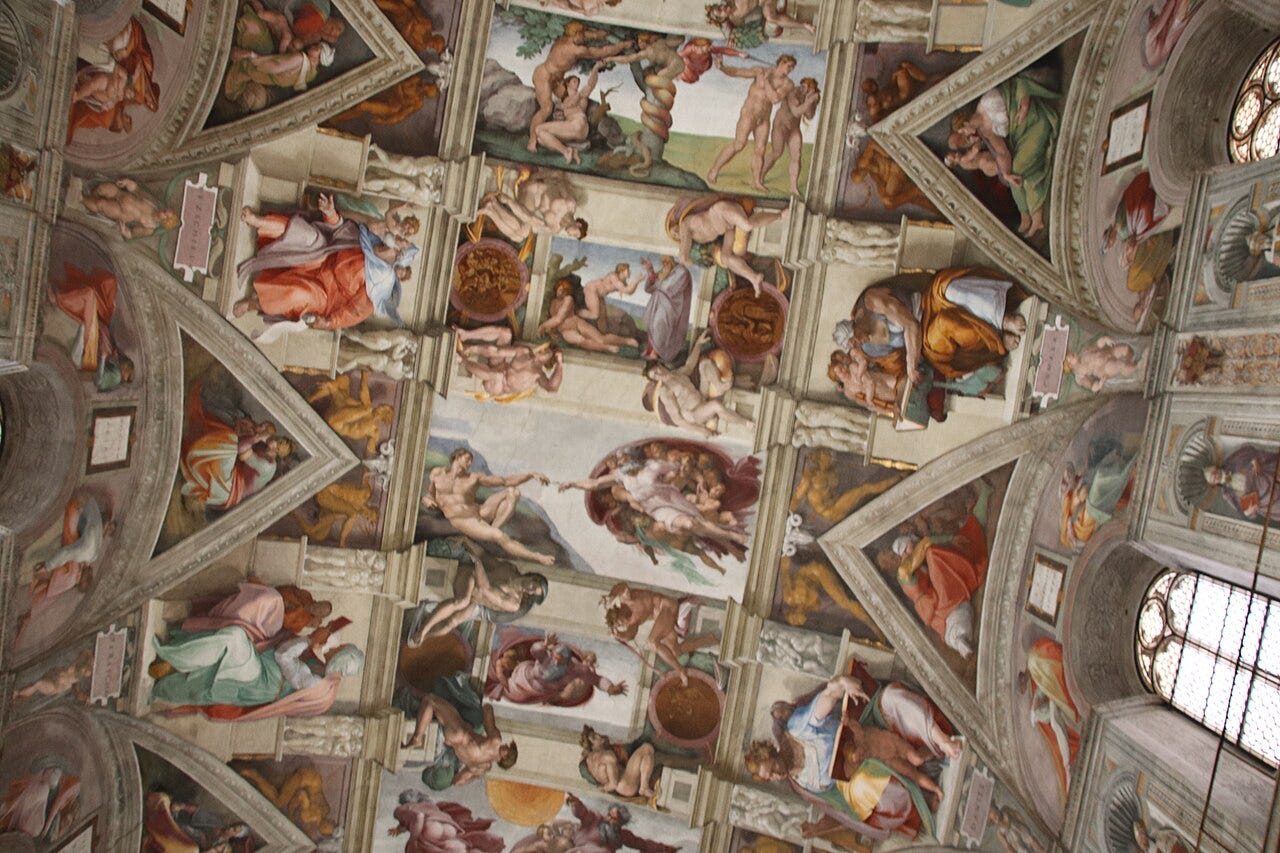
7. The Sistine Chapel ceiling, Michelangelo, 1980 to 1994

The Vatican's 14 year cleaning of Michelangelo's ceiling stripped away centuries of soot, dust, and candle smoke, and revealed colors far brighter than anyone alive had ever seen on the frescoes, vivid pinks, turquoise skies, and saturated robes.

American art historian James Beck publicly accused the Vatican of destroying the greatest fresco cycle in Western art, arguing the restorers had scrubbed away shading Michelangelo had deliberately added after the plaster dried.

The Vatican maintained the new colors were simply the truth under centuries of grime, and the debate has never fully settled.

Section of Michelangelo's Sistine Chapel ceiling frescoes
Michelangelo, Sistine Chapel ceiling, after its 1980 to 1994 cleaning.

No boring lectures, ever. Join 170,000 readers learning art the fun way, free.


8. The National Gallery Cleaning Controversy, London, 1947 to 1963

After the Second World War, London's National Gallery adopted an aggressive new cleaning philosophy, removing varnish and old glazes completely rather than leaving a softening layer behind, and showcased the results in a 1947 exhibition of cleaned pictures.

Titian's Bacchus and Ariadne became one of the most publicly debated examples. Critics said the cleaned surface looked flatter and colder than the glowing, glazed picture people had known for generations.

Italian restorer Cesare Brandi and other prominent scholars argued in the Burlington Magazine for over a decade that this approach was stripping away deliberate artistic finishing touches, not just dirt.

The dispute became one of the longest running fights in the history of art conservation and permanently changed how museums think before removing a single layer of varnish.

Titian's painting Bacchus and Ariadne, showing Bacchus leaping from his chariot toward Ariadne on a Mediterranean shore
Titian, Bacchus and Ariadne, National Gallery, London, one of the paintings at the center of the 1947 to 1963 cleaning controversy.

9. Saint George and the Dragon, Estella, Spain, 2018

This one is technically a carved wooden sculpture rather than a painting, but the disaster is close enough in spirit and severity that it belongs on this list. A local crafts teacher with no restoration training repainted the 16th century figure.

Saint George emerged with bright pink cheeks, a flat blank expression, and colors nobody associated with a centuries old religious carving. Regional authorities eventually funded a proper professional restoration to reverse the damage.

Conservators examining the wooden sculpture of Saint George after its professional restoration in Estella, Spain
The Saint George sculpture from Estella, Spain, during its professional restoration after the 2018 amateur repainting.

10. The Pattern Behind All of These Cases

Line these nine specific disasters up and a pattern appears. Almost every one comes down to the same root cause, someone without the right training, the right materials, or the right humility making an irreversible decision on a surface that cannot be undone.

Spain in particular has seen this happen repeatedly at the parish level, where well meaning volunteers with genuine affection for a local artwork have access to it and almost no oversight. That gap between good intentions and technical skill is where most of these stories actually begin.

How Museums Try to Prevent the Next One

Major institutions now treat any cleaning or repair as a slow, documented, reversible process wherever possible. Test patches, chemical analysis, and committees of outside experts are standard before anyone touches a significant surface.

The Ecce Homo case actually pushed several Spanish regions to pass or tighten laws requiring certified professionals for any work on protected heritage art, a direct legal legacy of one woman's well meaning Sunday afternoon.

For more on paintings that carry an outsized history behind a simple image, the most stolen paintings in history and the greatest painters of all time are good next reads.


Three More Stories Hiding Behind Famous Paint

Restoration disasters are not the only place a painting hides a story bigger than the frame. These three reward a second look.


Ten minutes, one masterpiece. That is the deal. 170,000 readers already took it, free.


Quick Questions About Restoration Disasters

  • What happened to the Ecce Homo painting in Spain? An 82 year old parishioner named Cecilia Gimenez attempted an unauthorized amateur restoration in 2012, turning a faded fresco of Christ into a cartoonish image nicknamed Beast Jesus, which went on to boost local tourism massively.

  • Why did The Night Watch get cut down? In 1715 the painting was trimmed on all four sides so it could fit between two columns at Amsterdam's city hall, permanently removing two figures on the left edge.

  • Is The Last Supper mostly original Leonardo paint? No. After centuries of heavy handed restorations, conservators estimate no more than half of the visible surface can still be attributed directly to Leonardo's own hand.

  • Was the Sistine Chapel restoration a mistake? It remains genuinely disputed. The Vatican considers it an accurate recovery of Michelangelo's true colors, while critics like James Beck argued it stripped away deliberate shading the artist added after the plaster dried.

  • Why do amateur restorations happen so often in Spain specifically? Many historic religious artworks sit in small parish churches with limited funding and minimal legal oversight, so a well meaning local volunteer can sometimes access and alter a piece before anyone with training gets involved.


Never miss a story. 170,000 readers get one painting explained every week, free.