
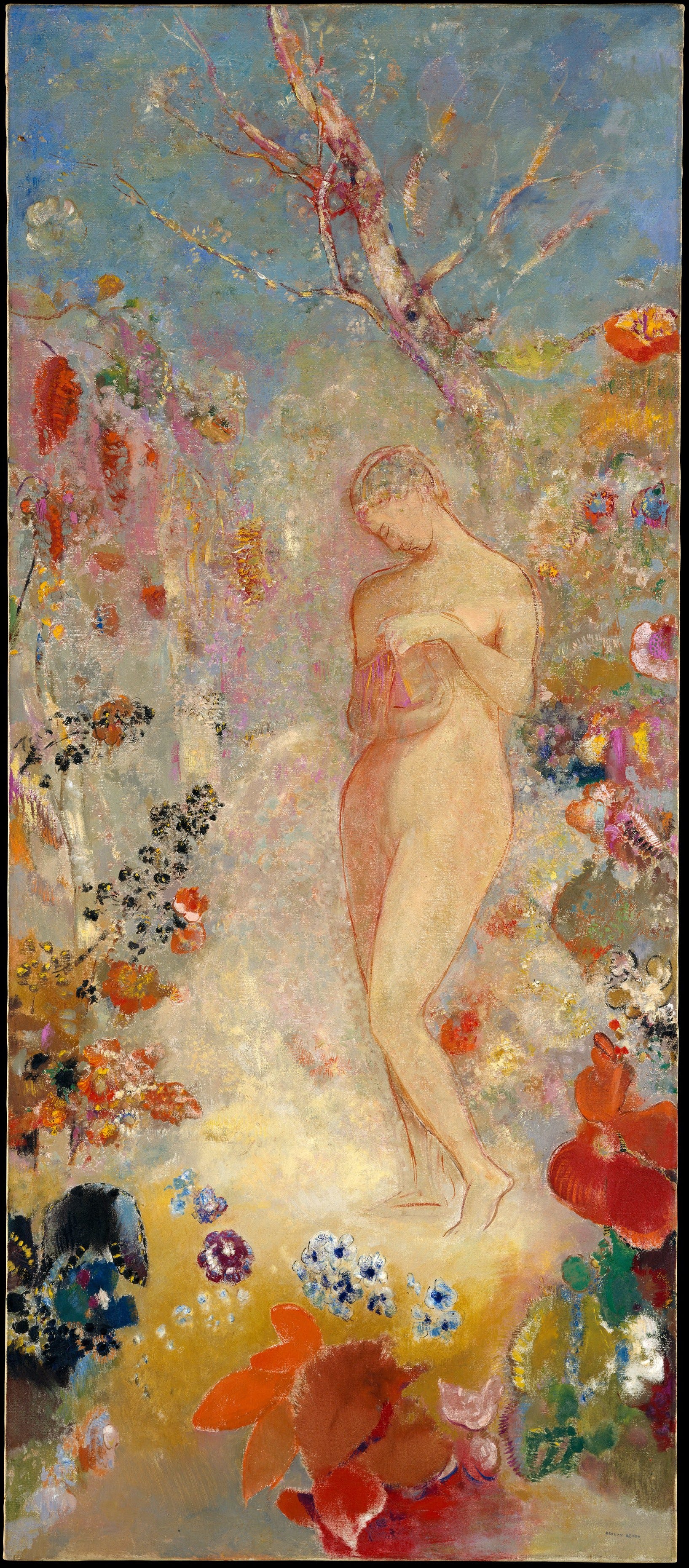
Pandora's box started out as a jar. Hesiod, the Greek poet who first wrote down her story, gave her a large storage jar, and the box only appeared in 1508, in a Latin collection of proverbs by the scholar Erasmus. Painters have chosen between the two ever since, and one of them painted her holding a real silver ewer from the goldsmiths' hall in Amsterdam.
Cool Stories About Art is a newsletter to learn art the fun way.
Join 200,000+ readers and get:
10 new art stories / month
The entire archive of content (140+ articles)
Comment, ask questions, and chat with other readers
A Jar, a Box, and a Face Nobody Described
Hesiod never describes Pandora's face. What he tells is how she was made: Zeus ordered her shaped from clay and water, the goddesses dressed and adorned her, and every god added a gift. Her name means "endowed by all."
That gap in the text kept bringing artists back to her. Each of them had to invent a face and decide what she holds. Then each had to settle on an instant: before the lid lifts, while it lifts, or once the evils are out.
Every work chosen here takes Pandora as its subject, from her making to the empty box. Alongside the paintings, the list includes an ancient Greek vase, a painted ceiling and a still life. What ties them together is the container itself, which becomes a jar, a ewer, a casket or a chest depending on who holds the brush.
12. Barend Graat, Pandora (1676)
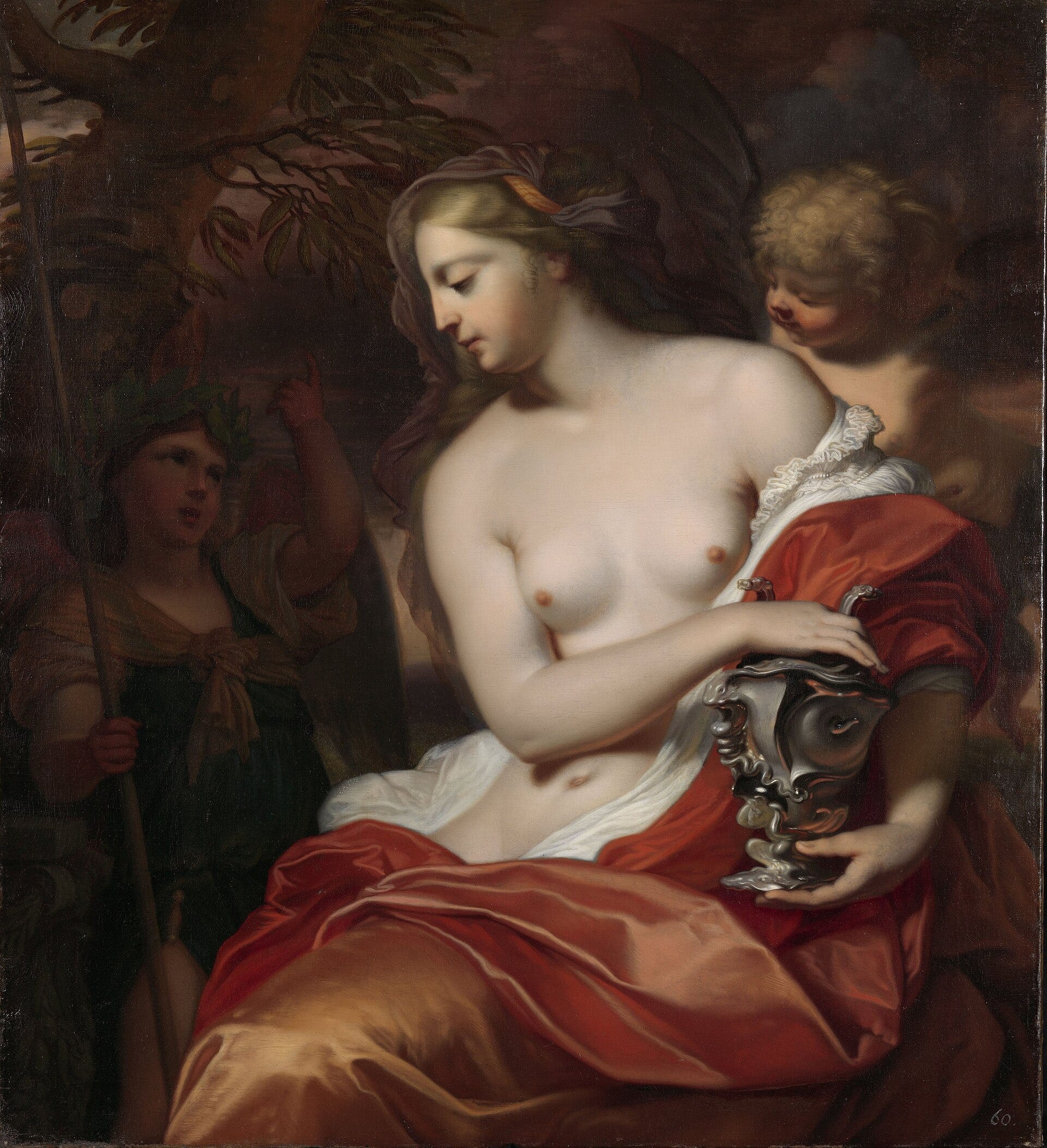
Pandora holds a tall ewer of gilded silver whose surface seems to be melting. Lumps of metal swell into faces and animal shapes that slide into one another. She grips its foot, touches its rim, and keeps her head turned away.
That ewer was real. Barend Graat painted this Pandora in Amsterdam in 1676, but the object in her hands had been made more than sixty years earlier by the Utrecht silversmith Adam van Vianen, who signed and dated it in 1614. The Amsterdam goldsmiths' guild had ordered it and kept it in the room where its members met.
The guild wanted it as a memorial to Adam's younger brother, Paulus van Vianen, who had died in Prague in 1613 while working for Emperor Rudolf II. Paulus was credited with the auricular style, named after the lobe of the ear, in which silver looks soft, as if it were still flowing.
From the guild hall, the ewer made its way into painting. Artists in the circle of Pieter Lastman and Rembrandt copied it into their own pictures, so by 1676 Amsterdam had long been used to seeing it on canvas.
Graat's part was to make it fit the myth. He gave the ewer a second handle and took away its lid. Behind Pandora he placed a fair-haired child with bat wings in place of arms, and in the shadows at the left a figure crowned with laurel who holds a spear and points to the sky. The creatures Van Vianen had let rise out of the silver became the evils about to get out.
At a Glance
Artist: Barend Graat (1628 to 1709)
Painted: 1676
Medium: Oil on canvas
Size: 113 x 102 cm (44.5 x 40.2 in)
Where to see it: Rijksmuseum, Amsterdam
11. Henry Howard, The Opening of Pandora's Vase (1834)
In 1834, the architect Sir John Soane ordered a set of paintings for the ceiling of the room where he dined, in his house at 13 Lincoln's Inn Fields in London. Over the table, he wanted Pandora, at the moment when all the cares and miseries of life escape from her vase. It was an odd thing to look up at during dinner, and Soane had his reasons.