
Paris has been painted more than any city on earth, and the paintings are a record of it being demolished. Caillebotte painted the new boulevards while the old streets were still coming down, Monet painted the same station a dozen times, and Van Gogh painted the view from his brother’s window.
The city in twelve views
Between 1853 and 1870, most of medieval Paris was demolished. The Impressionists painted the replacement.
One painter got permission to set up an easel inside a working railway station and had the trains held for the smoke.
One rainy street corner is painted from a viewpoint that no longer exists.
The Eiffel Tower was hated by painters and writers, then painted constantly.
One view of the city was painted from an asylum, from memory.
Learn art the fun way
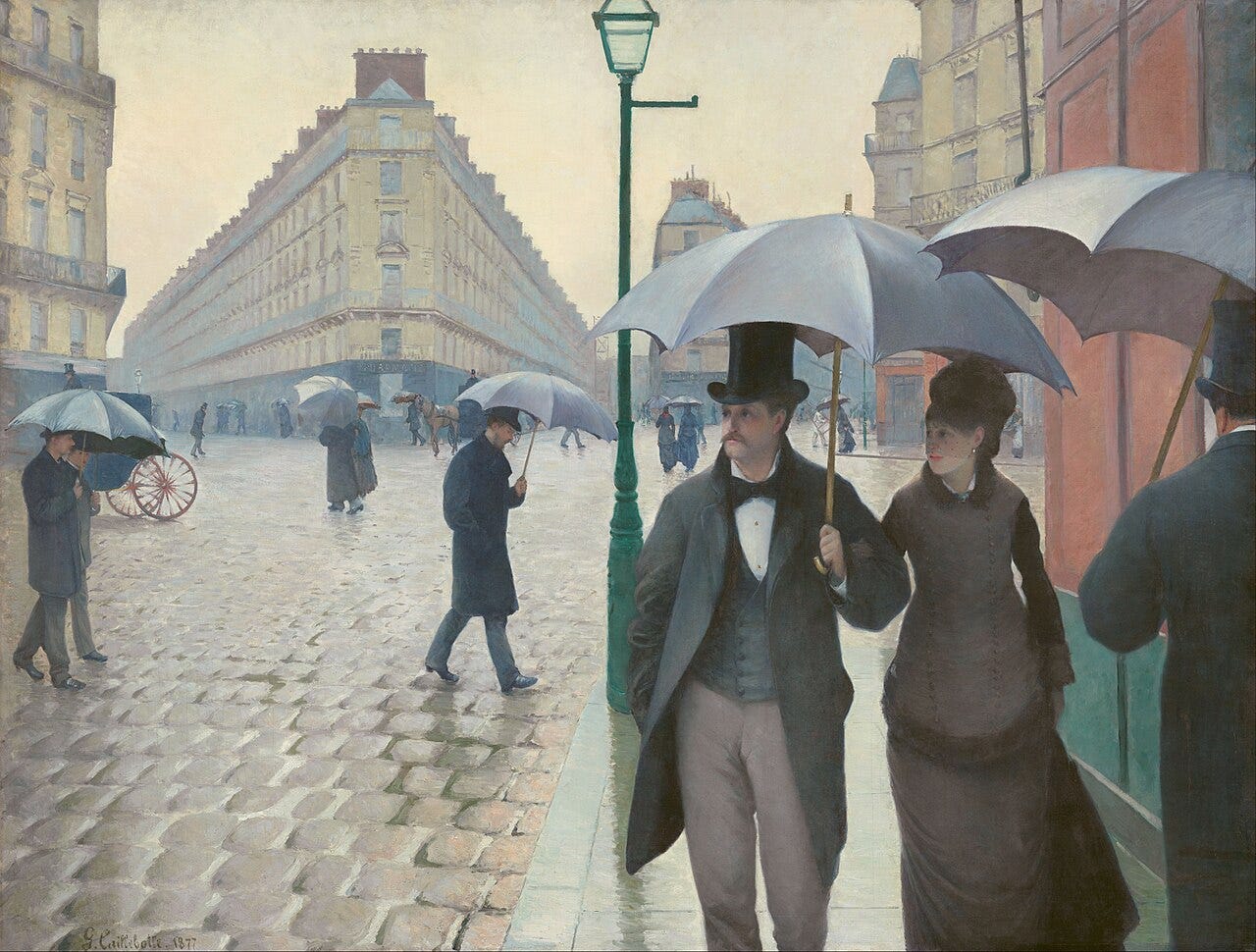
1 | Paris Street, Rainy Day, Gustave Caillebotte (1877)
A crossroads near the Gare Saint Lazare, wet cobbles, umbrellas, and buildings so new they look like a stage set. Because they were.
Caillebotte used a camera like framing, cutting a figure at the right edge. More on him in Gustave Caillebotte.
2 | The Gare Saint Lazare series, Claude Monet (1877)
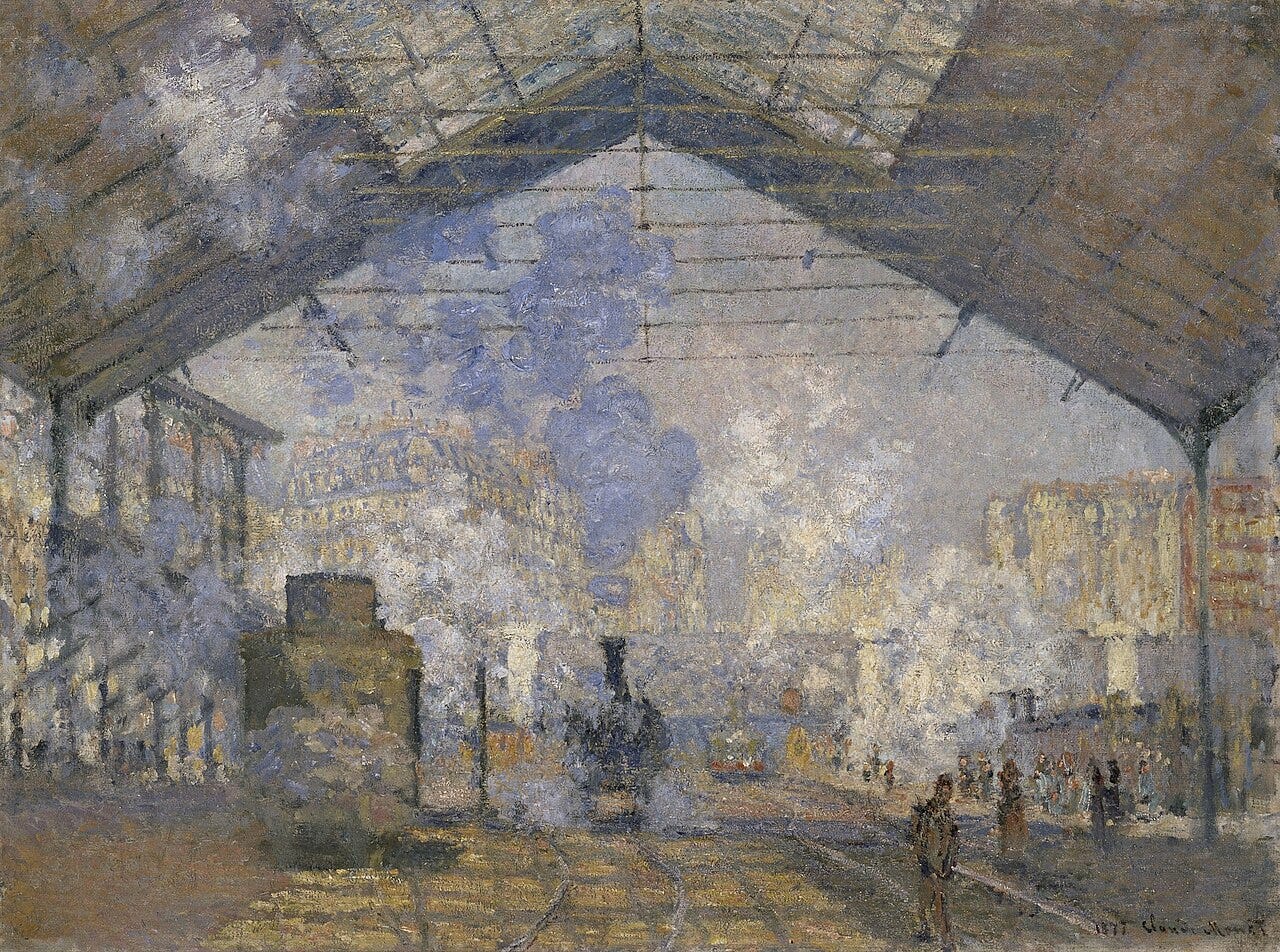
Monet talked the station director into letting him paint on the platforms, and had trains held so the smoke would build under the glass roof.
He made twelve canvases of it in a few months. More on him in Claude Monet.
3 | The Floor Scrapers, Gustave Caillebotte (1875)
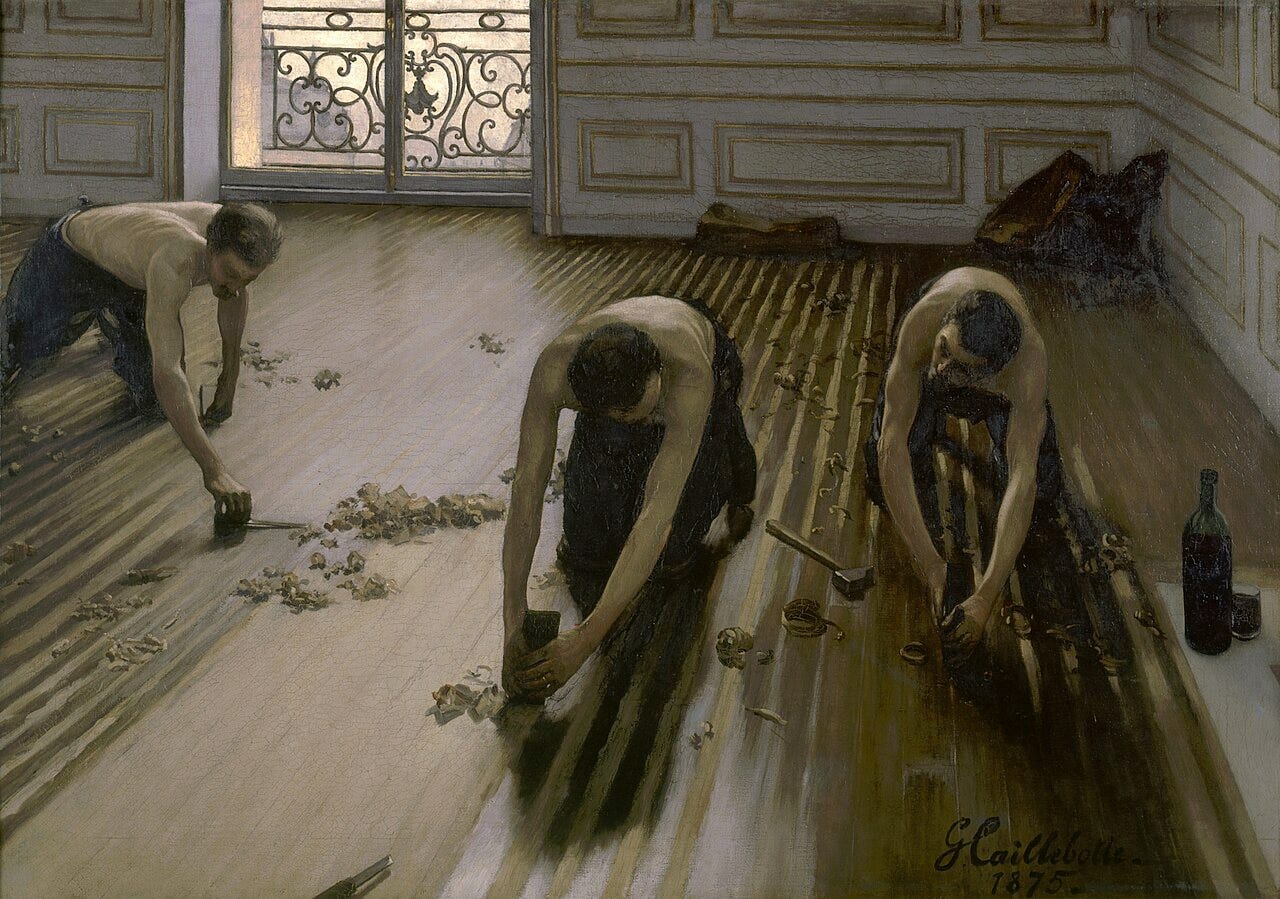
The other half of the story: the new Haussmann apartments needed finishing, and Caillebotte painted the men on their knees doing it.
The Salon rejected it. More of that in blacksmiths and workers in painting.
The jury of the 1875 Salon rejected it as vulgar, so Caillebotte showed it with the Impressionists the following year. It is one of the first paintings of the urban working class shown without a peasant costume.
4 | Boulevard Montmartre, Camille Pissarro (1897)
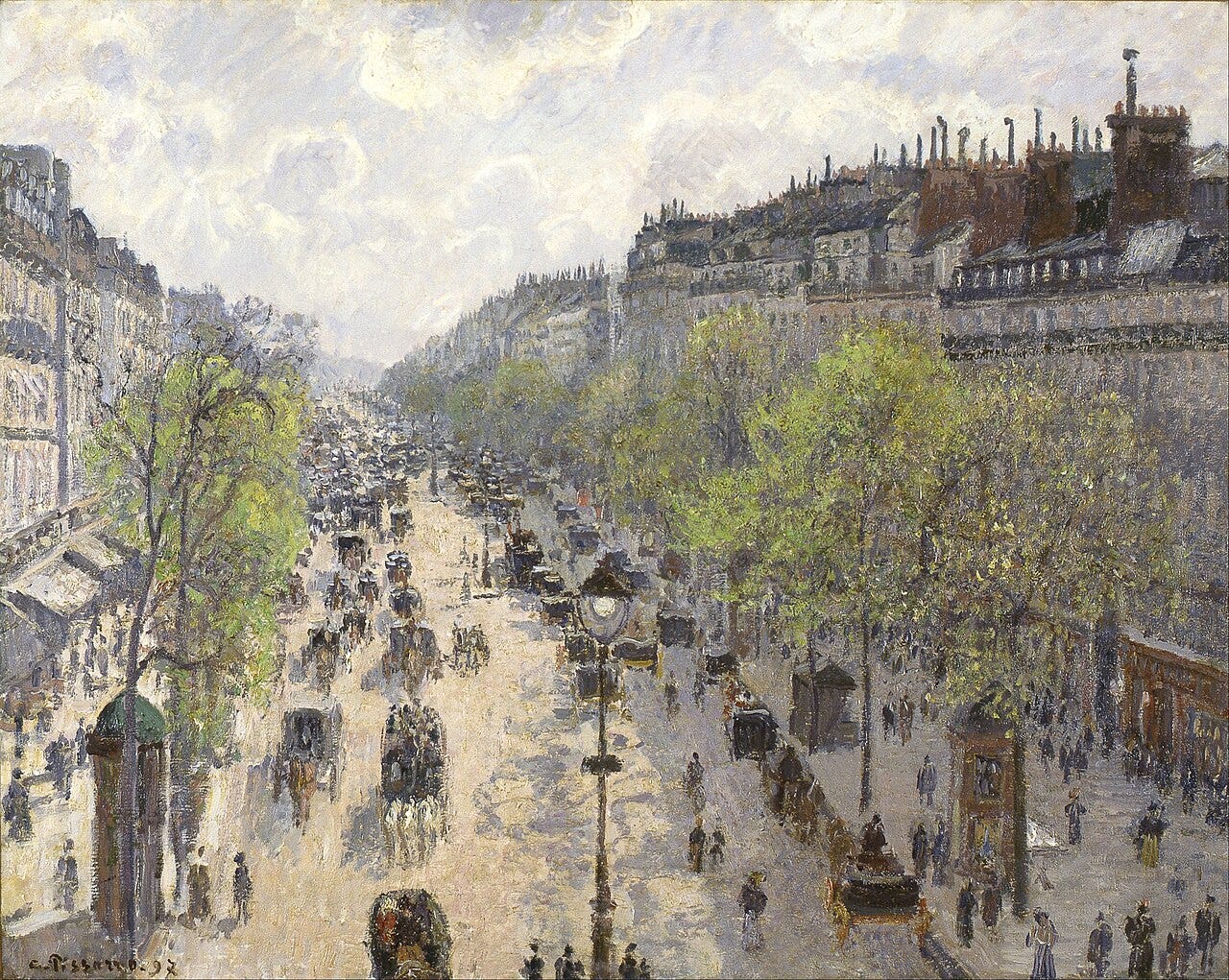
Pissarro rented hotel rooms above the boulevards and painted the same view in every weather and season, from a window, because his eyes could no longer take the outdoor air.
He made fourteen canvases of one stretch of street. More on him in Camille Pissarro.
He took a room at the Hotel de Russie in February 1897 and painted the same stretch of boulevard fourteen times before the light changed for good. He was sixty six and had eleven more canvases of the Avenue de l’Opera still to come.
5 | Moulin de la Galette, Pierre Auguste Renoir (1876)
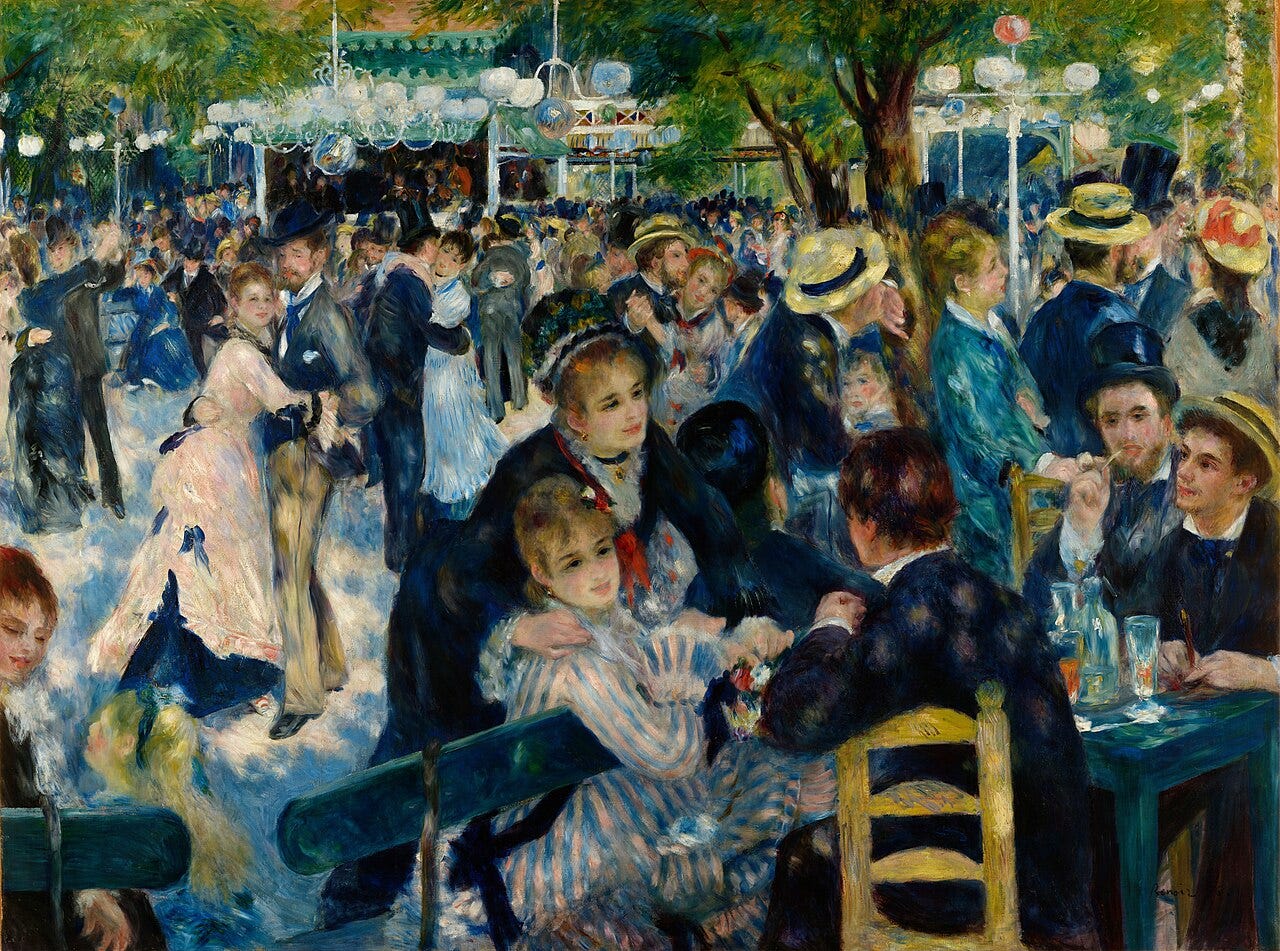
A Sunday dance in Montmartre, dappled light through leaves, painted on the spot with friends posing as the crowd.
Renoir carried the large canvas up the hill every day for months. More on him in Pierre Auguste Renoir.
6 | At the Moulin Rouge, Henri de Toulouse Lautrec (1892)
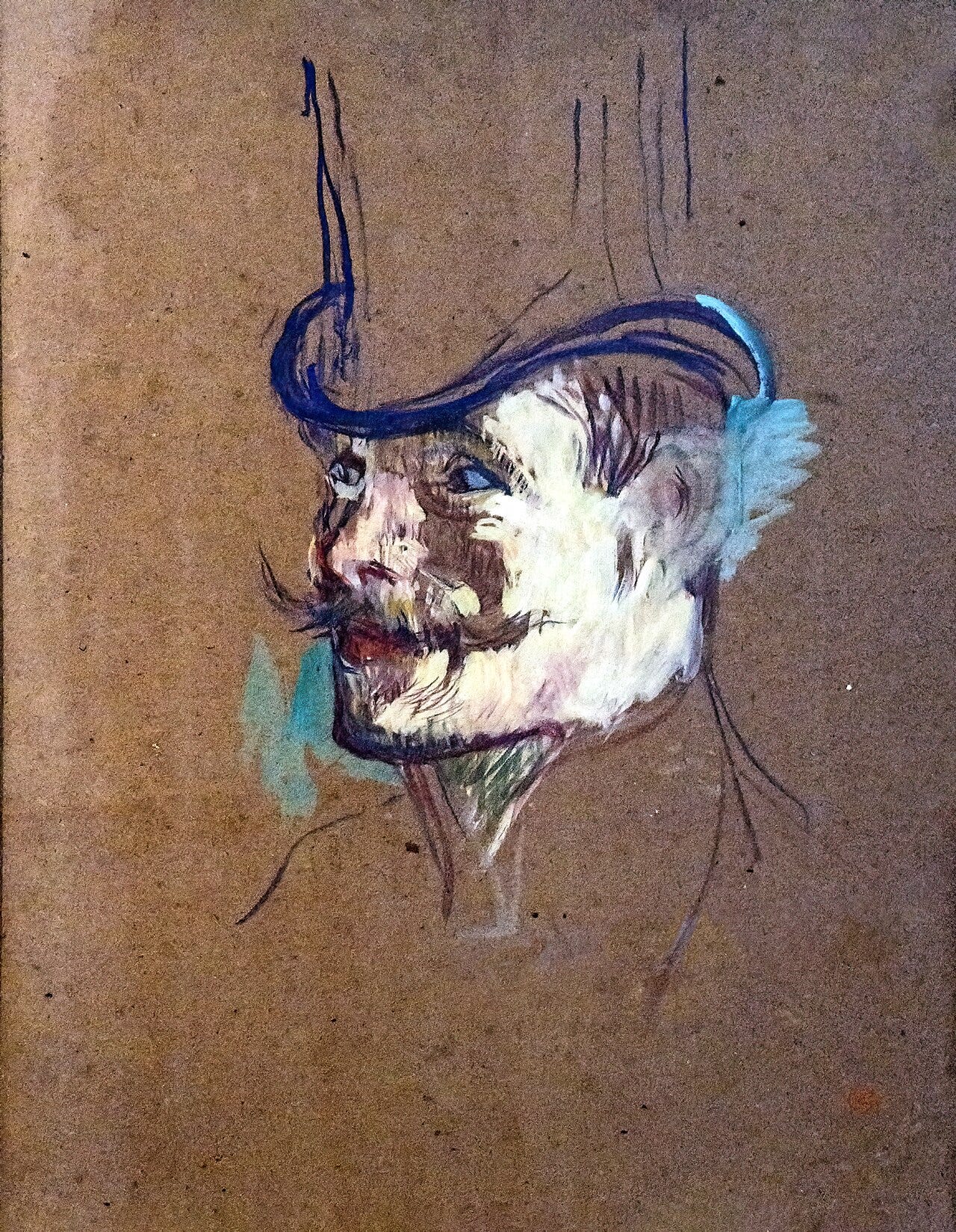
The same hill fifteen years later, at night, indoors, under gaslight, with the green face of a dancer at the edge of the frame.
Lautrec was there most nights for years. More on him in Toulouse Lautrec. That same Montmartre nightlife sits among the scandals collected in Famous French Paintings: 12 That Shook the Art World.
7 | View of Paris from Montmartre, Vincent van Gogh (1886)
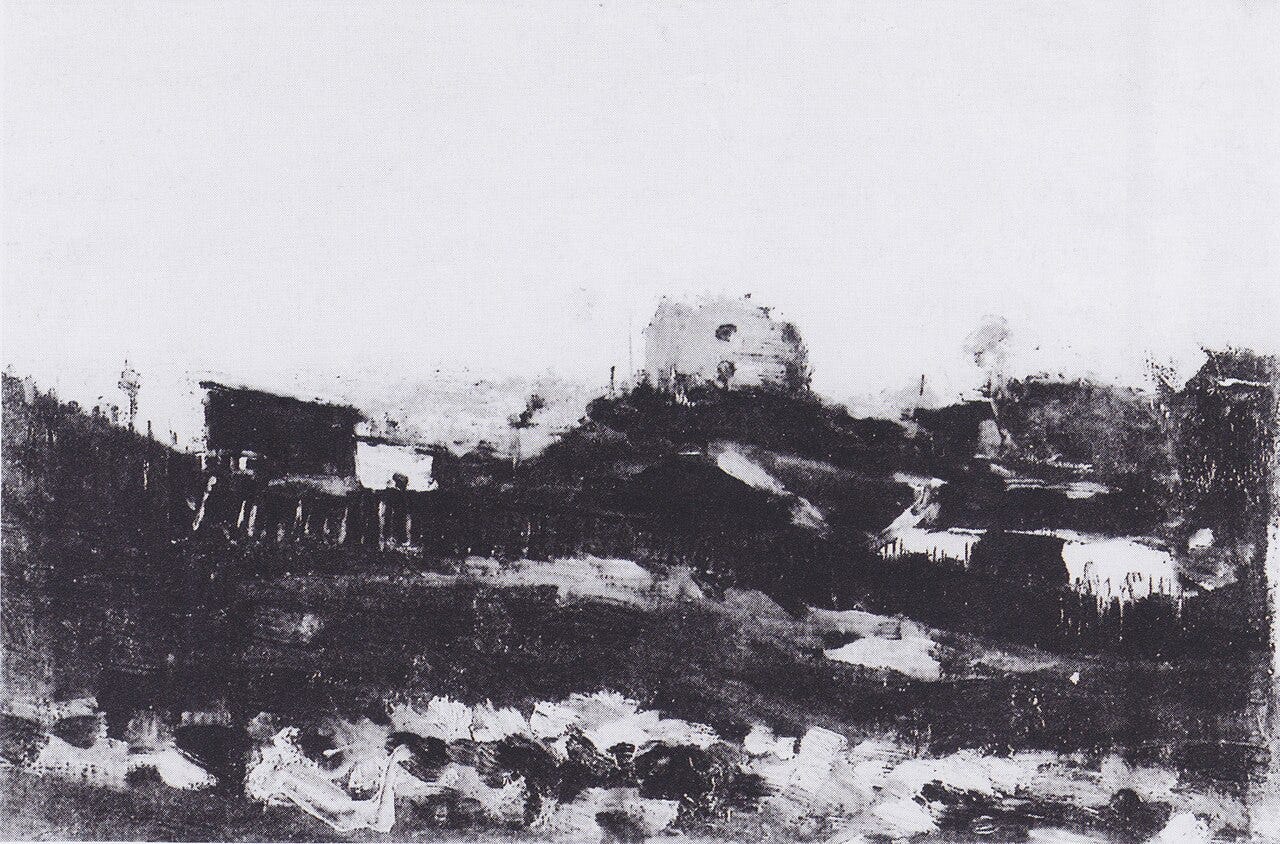
Van Gogh lived with his brother Theo in the rue Lepic and painted the city from the hill above it, with windmills still standing.
Montmartre was still half village when he arrived. More on him in Vincent van Gogh.
He and Theo shared a flat at 54 rue Lepic from June 1886. Two of the old windmills were still standing then, the Moulin de la Galette and the Moulin du Radet, and he painted them both.
Montmartre kept its painters after Van Gogh moved on. Maurice Utrillo, born and raised on the hill, spent decades painting its quiet streets, working from postcards during the years he could not face going outside.
8 | The Eiffel Tower, from insult to icon
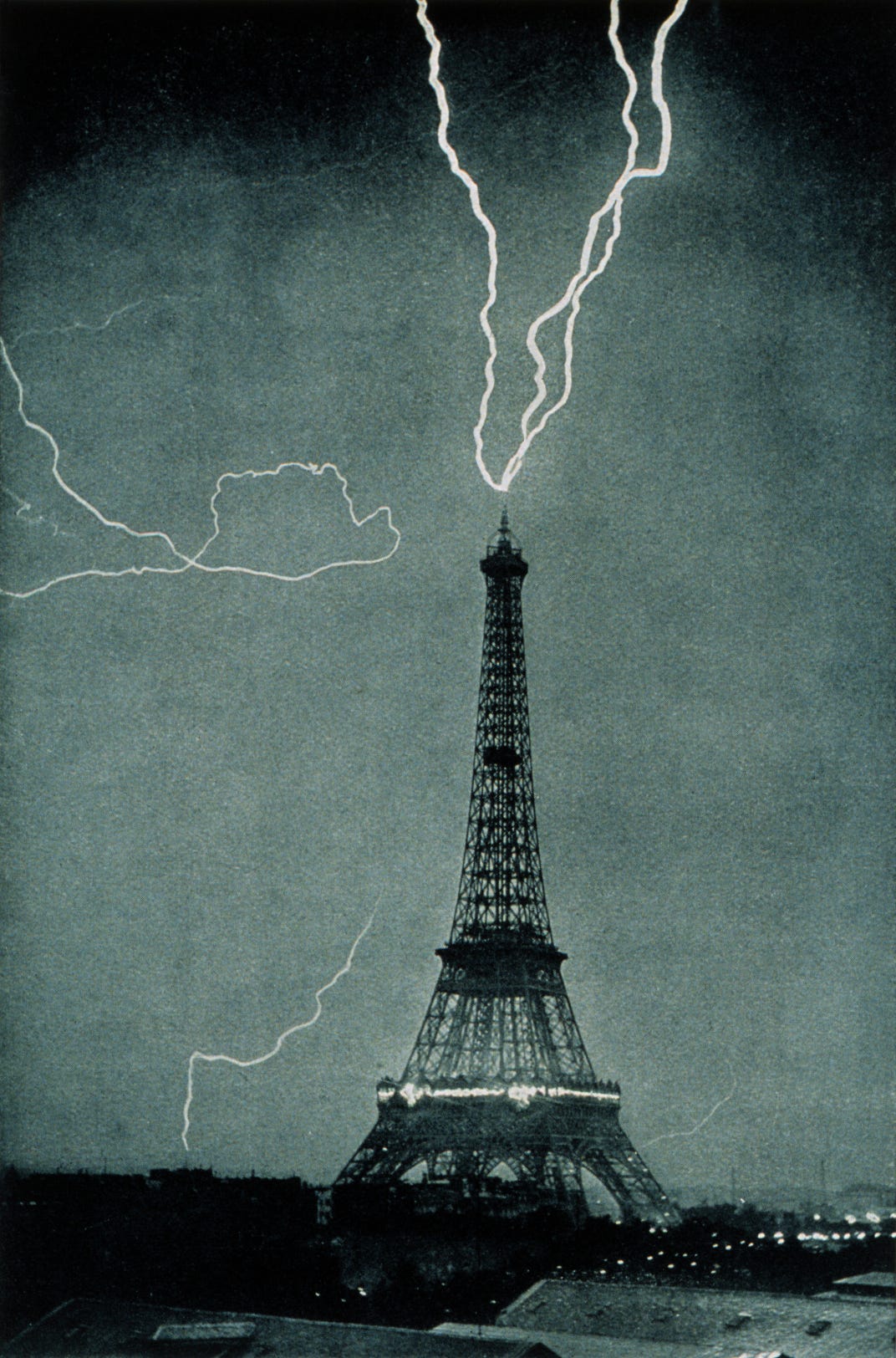
Three hundred artists and writers signed a protest against the tower in 1887, calling it a useless monstrosity. Within twenty years painters could not leave it alone.
Robert Delaunay alone painted it around thirty times. More on him in Robert Delaunay.
The protest of February 1887 was signed by Maupassant, Dumas the younger, Gounod and Garnier among others. The tower was meant to be dismantled after twenty years and was saved because the army wanted its radio antenna.
9 | The Seine, painted from a boat
Monet had a floating studio built so he could paint the river from the middle of it, and Daubigny had done the same twenty years earlier.
The Seine is the reason Paris has more painted water than any inland city.
Monet had the studio boat built at Argenteuil around 1874, copying an idea from Daubigny, whose own floating studio was called Le Botin. Manet painted Monet at work in it, which is the best surviving record of the arrangement.
10 | Notre Dame, painted before and after
Painters recorded the cathedral through revolution, restoration, war and the 2019 fire. Old canvases are now used as documents by the restorers.
A painting made as a view can end up as an architectural record.
Hugo published Notre Dame de Paris in 1831 partly to shame the city into repairing the building, and the restoration under Viollet le Duc began in 1844. Everything a painter shows of the spire after that date is a nineteenth century invention.
11 | Utrillo and the white streets
Maurice Utrillo painted Montmartre streets from postcards, mixing plaster into his paint to get the exact chalk white of the walls.
He painted the neighbourhood he could not walk through sober. More on him in Maurice Utrillo.
12 | The Paris nobody painted
Almost nobody painted the demolition itself. Haussmann destroyed around 20,000 buildings, and the Impressionists mostly painted what replaced them.
Photography recorded the ruins. Painting recorded the boulevards. Between them you get the whole city.
I find that gap more telling than any of the boulevards. The buyers wanted the city that replaced the ruins, so the ruins were left to the photographers.
Painting the city without the confusion
Why does Impressionist Paris look so new? Because it was. Haussmann rebuilt the centre between 1853 and 1870, and the painters worked in the finished streets.
Did Monet really have trains held? He persuaded the station director to delay departures so steam would fill the shed while he painted.
Why did Pissarro paint from windows? A chronic eye condition made outdoor work painful, so he rented rooms above the boulevards and painted from indoors.
Was the Eiffel Tower hated? Yes. Three hundred artists and writers signed a protest in 1887, and several later painted it repeatedly.
Where is Paris Street, Rainy Day? Orsay for most of the Impressionists, the Art Institute of Chicago for Paris Street Rainy Day, the Van Gogh Museum in Amsterdam.
Haussmann’s works displaced roughly 350,000 people. The painters we love for their sunlit boulevards were standing in the middle of the largest eviction in the city’s history.
More painted Paris sits at the Met and the Rijksmuseum.
This subject is one thread in a wider theme. See how it fits into Cities and Places in Painting.