
Paul Klee was a violinist who became a painter. Born near Bern in 1879, he died in 1940 in Muralto, Switzerland. He painted birds, angels, fish and imaginary machines that look drawn by a child, and he taught at the Bauhaus with thousands of pages of notes. The Nazis drove him out of Germany in 1933. Switzerland, the country he came from, never made him a citizen while he lived.
The paintings look like play. The notebooks behind them look like science. People who search his name usually want to know which of the two he really was.
Cool Stories About Art is a newsletter to learn art the fun way.
Join 200,000+ readers and get:
10 new art stories / month
The entire archive of content (1,000+ articles)
Comment, ask questions, and chat with other readers
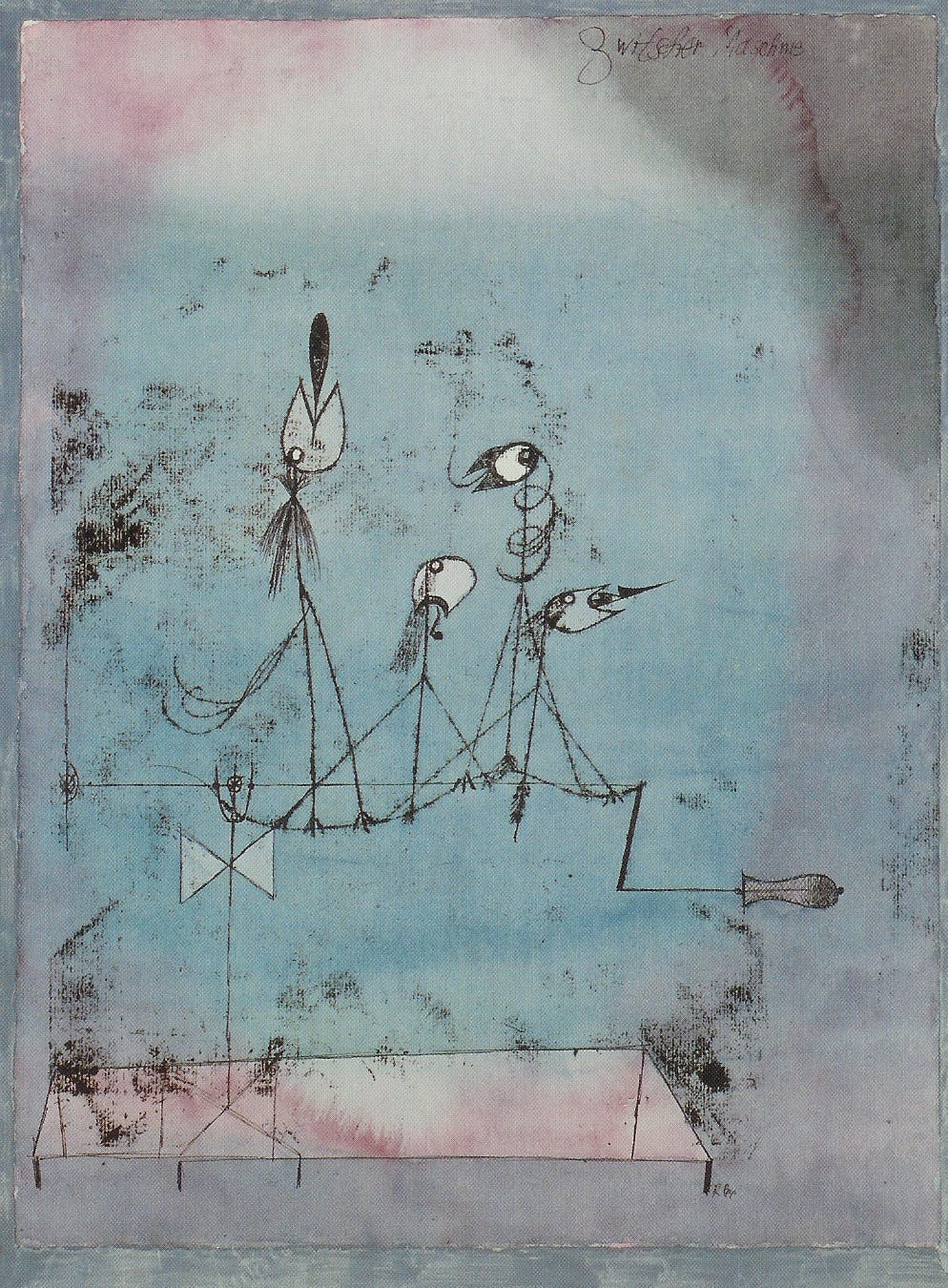
Take the picture above. Three birds stand on a wire, and the wire ends in a hand crank. The Nazis called pictures like this the work of a child or a madman. They took this one from a Berlin museum and sold it off, and the Museum of Modern Art in New York bought it in 1939.
The painter they were punishing was not even a German in the way they meant. Klee was born near Bern and grew up in Bern. His father was a German music teacher, and under the law of the time that made the son German as well. So when Germany threw him out, he went home to a country that had never given him its passport.
He applied for Swiss citizenship near the end of his life. The authorities approved the request six days after he died on 29 June 1940. The man who looked like a child with a pencil was a professional violinist, and he had turned down music for a reason.
What You'll Discover
Why a violinist gave up music.
What two weeks in Tunisia changed.
Why his childlike art was a science.
How the Nazis made him an exile.
What his dying hands produced.