
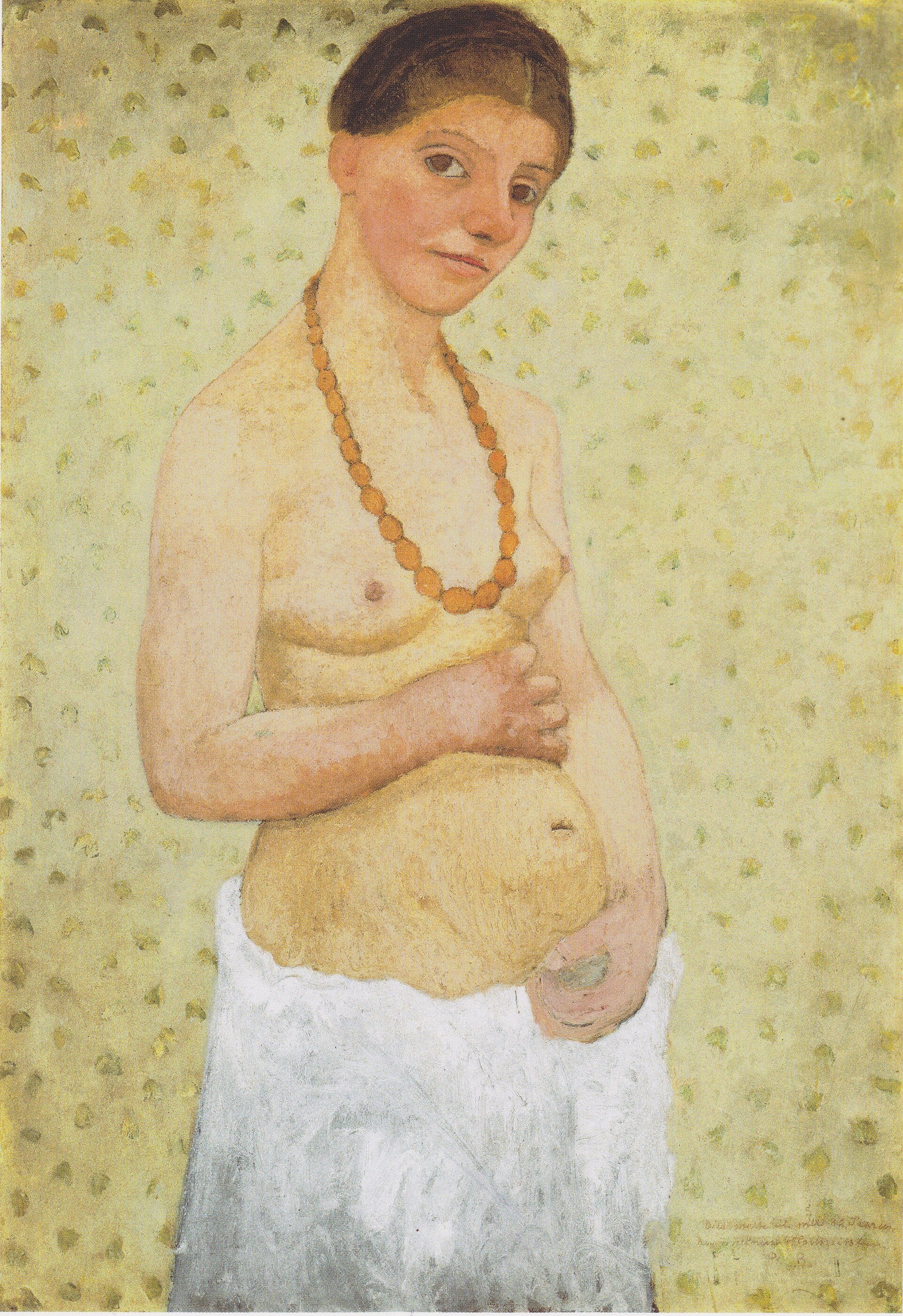
Paula Modersohn-Becker (1876 to 1907) was a German painter of village women and children. She is best known for her self-portraits, among them Self-Portrait on Her Sixth Wedding Anniversary, the first known nude self-portrait by a woman, at the Paula Modersohn-Becker Museum in Bremen.
Cool Stories About Art is a newsletter to learn art the fun way.
Join 200,000+ readers and get:
10 new art stories / month
The entire archive of content (140+ articles)
Comment, ask questions, and chat with other readers
In her lifetime, Paula Modersohn-Becker sold only a handful of paintings. At thirty, she left her husband to live and paint alone in Paris. At thirty-one, she died, eighteen days after the birth of her daughter. Twenty years later, a museum of her paintings opened in Bremen, the first in the world devoted to the work of a woman painter.
She was born Paula Becker on February 8, 1876, in Dresden, in the east of Germany. When she was twelve, the family moved to Bremen, a big port in the north of the country, where her father took a post with the railroads.
Her father wanted her to have a trade, so she first trained as a schoolteacher, with private painting lessons on the side. Then she went to Berlin to study painting. The official art academies of Germany did not accept women, so from 1896 to 1898 she attended a school run by the Association of Women Artists of Berlin.
In 1898, Paula settled in Worpswede, a village on the flat, wet moorland north of Bremen. Painters had moved there to paint the countryside and the farmers, and Worpswede had become an artists' colony, a place where several artists live and work side by side.
She took lessons from one of the painters of the colony, Fritz Mackensen, and became the best friend of a young sculptor, Clara Westhoff.
In December 1899, the two friends and a third young woman painter of the colony showed their studies, paintings made for practice, at the Kunsthalle, the art museum of Bremen.
Arthur Fitger, a Bremen painter who also wrote art reviews for a local newspaper, attacked the young women's studies in a very harsh review. Paula was twenty-three. After that review, she almost stopped showing her paintings in public. She never stopped painting.
How did a painter attacked at twenty-three end up, twenty years after her death, with a museum of her own in the same city?
In the rest of the story
What she went looking for in Paris, on the last night of 1899.
Why, at thirty, she no longer knew which name to sign.
Why she longed to go back to Paris, a month before she died.
Whose fortune built her museum in Bremen, and where the money came from.