
Phidias (around 480 to around 430 BC) was a Greek sculptor from Athens. He led the team of sculptors who decorated the Parthenon, the great marble temple of the goddess Athena.
He was famous above all for two giant statues of gold and ivory: the Athena Parthenos inside the Parthenon, and the Statue of Zeus at Olympia. The Zeus was counted among the Seven Wonders of the ancient world, a list of famous monuments that included the Great Pyramid of Egypt.
Yet Athens accused Phidias of stealing gold from its goddess. His two great gold and ivory statues have vanished, and no surviving marble is known for certain to be his own work.
Cool Stories About Art is a newsletter to learn art the fun way.
Join 200,000+ readers and get:
10 new art stories / month
The entire archive of content (140+ articles)
Comment, ask questions, and chat with other readers
Around the time of Phidias's birth, the Persian Empire, a great power centered in what is now Iran, invaded Greece.
The Persian army burned the temples on the Acropolis, the rocky hill above Athens. The Greeks fought back and drove the Persians out.
One of Phidias's first great works celebrated the victory over Persia. Around 456 BC, he set up on the Acropolis a bronze Athena, the goddess of wisdom and war who protected Athens.
The statue stood about 30 feet tall and was paid for with treasure taken from the Persians at Marathon, where Athens had won an earlier battle in 490 BC.
Some six centuries later, the Greek traveler Pausanias wrote that sailors could see the point of her spear and the crest of her helmet from the sea.
Around 449 BC, Pericles, the politician who led Athens, put Phidias in charge of rebuilding the temples of the Acropolis.
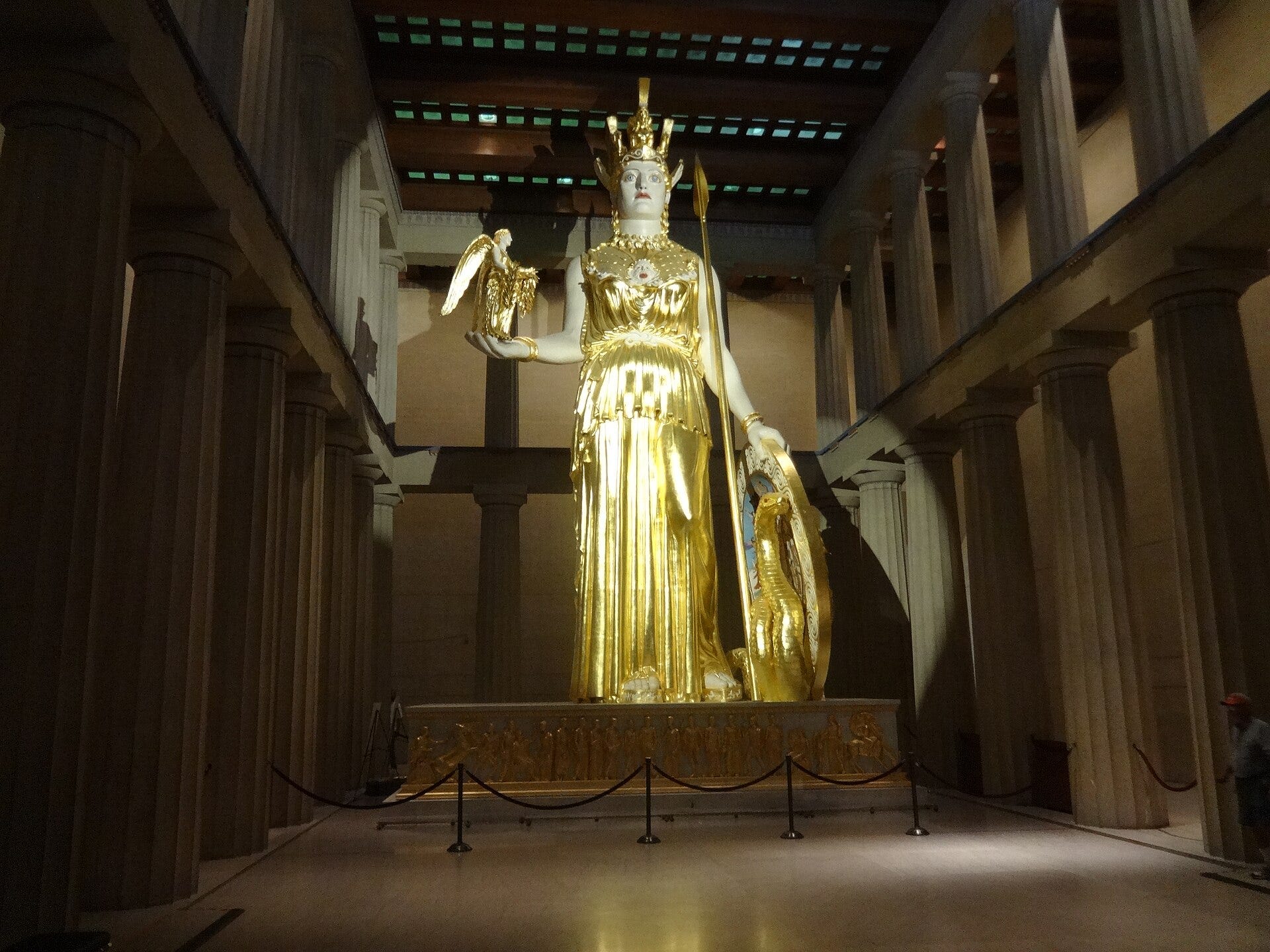
Inside the new Parthenon, Phidias made a second statue of the goddess, about 38 feet tall, covered with ivory and about a ton of gold.
The statue was finished in 438 BC. Within a few years, Phidias was accused of keeping some of its gold. Plutarch, a Greek writer who told the story five centuries later, says the accuser was one of Phidias's own workers.
What became of the sculptor who was trusted with a ton of Athena's gold, and then accused of stealing it?
In the rest of the story
How the statue itself answered the charge that Phidias stole the gold.
Why two faces on Athena's shield made things worse for Phidias.
Why Phidias's family was still cleaning his Zeus six centuries later.
What a workshop buried under a church reveals about Phidias, and what it cannot.