
Poison in painting is politics with a cup in its hand. Socrates reaches for hemlock, Cleopatra holds an asp, a Borgia pope watches a dinner, and one Victorian canvas shows a Renaissance woman testing her poisons on a servant. Twelve paintings about the quietest weapon.
The dose, in five lines
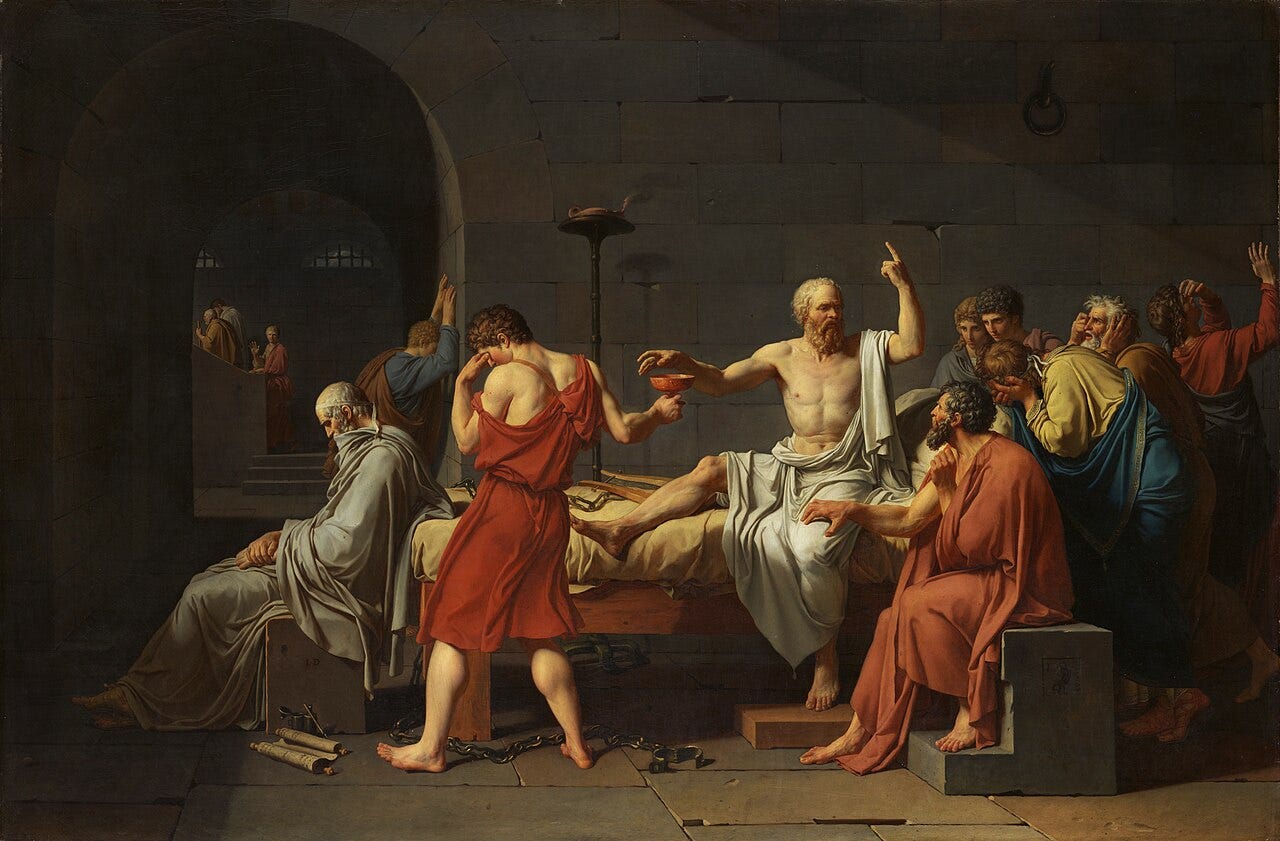
One philosopher argues about the soul while reaching for the cup that will kill him.
One queen’s suicide was painted hundreds of times, usually with more snake than history allows.
One Renaissance duchess was accused of poisoning by rumor, and painters believed the rumor for 400 years.
One painter died of the pigment trade’s favorite ingredient: lead.
One wallpaper color killed Victorians slowly for decades because it was so fashionable.
Learn art the fun way
1 | The Death of Socrates, Jacques Louis David (1787)
Socrates points upward mid argument while reaching blindly for the cup of hemlock. His students collapse around him; only he is unmoved.
David painted it two years before the Revolution as a lesson in dying for principle. I go into his whole story in Jacques Louis David.
2 | The Death of Cleopatra, Guido Reni (about 1640)
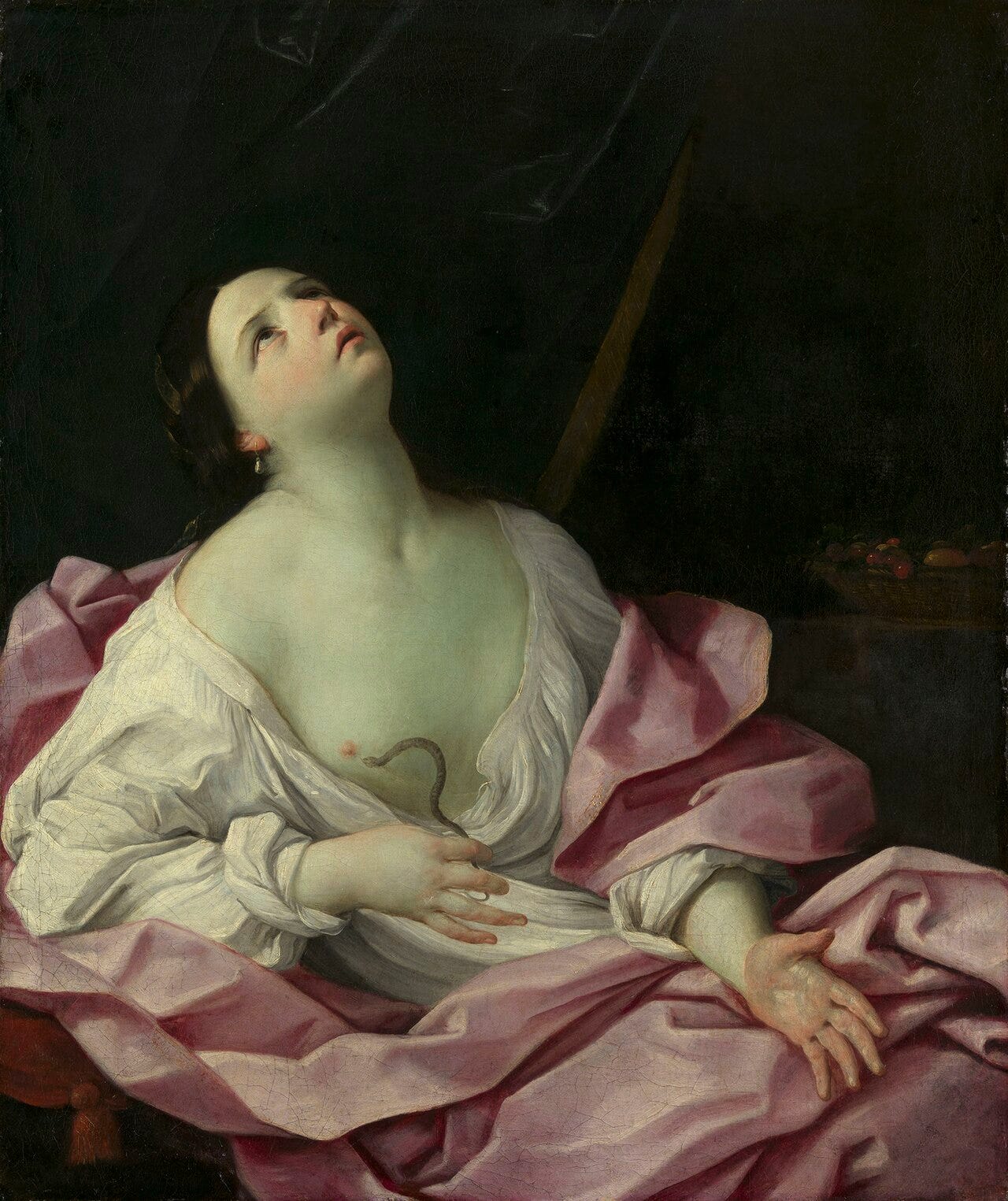
The queen bares her breast to an asp, eyes to heaven. Roman sources actually disagree about the snake, and modern historians suspect a poison mixture instead.
Painters kept the snake because it is easier to paint than pharmacology. Reni I cover that in Guido Reni.
3 | The Love Potion, Evelyn De Morgan (1903)
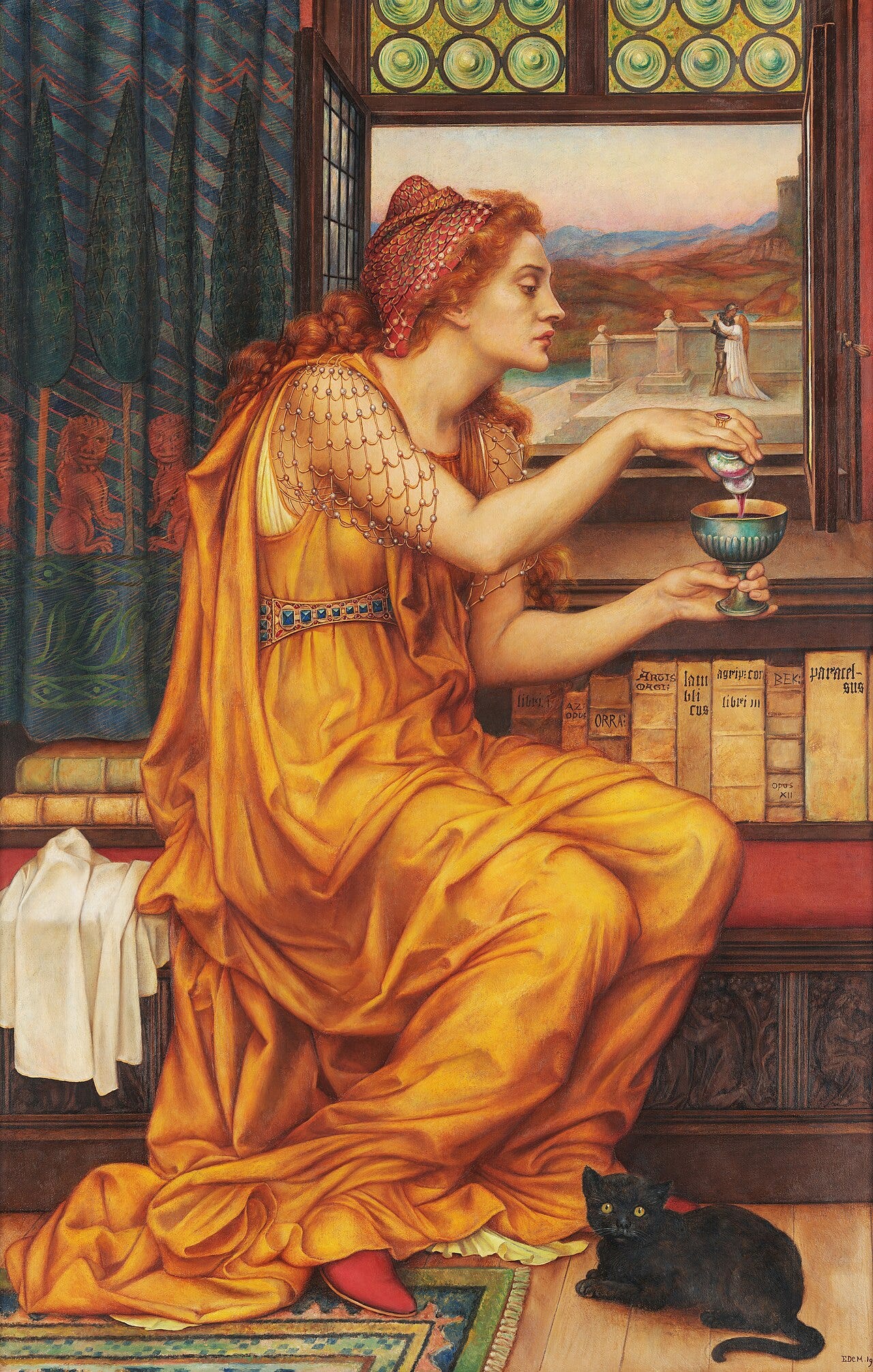
A woman in gold mixes a potion with a black cat at her feet and lovers visible through the window. Her shelf of books says she is a scholar, not a witch.
De Morgan painted female knowledge as power that society insisted on calling sorcery.
4 | Lucrezia Borgia and the poison legend
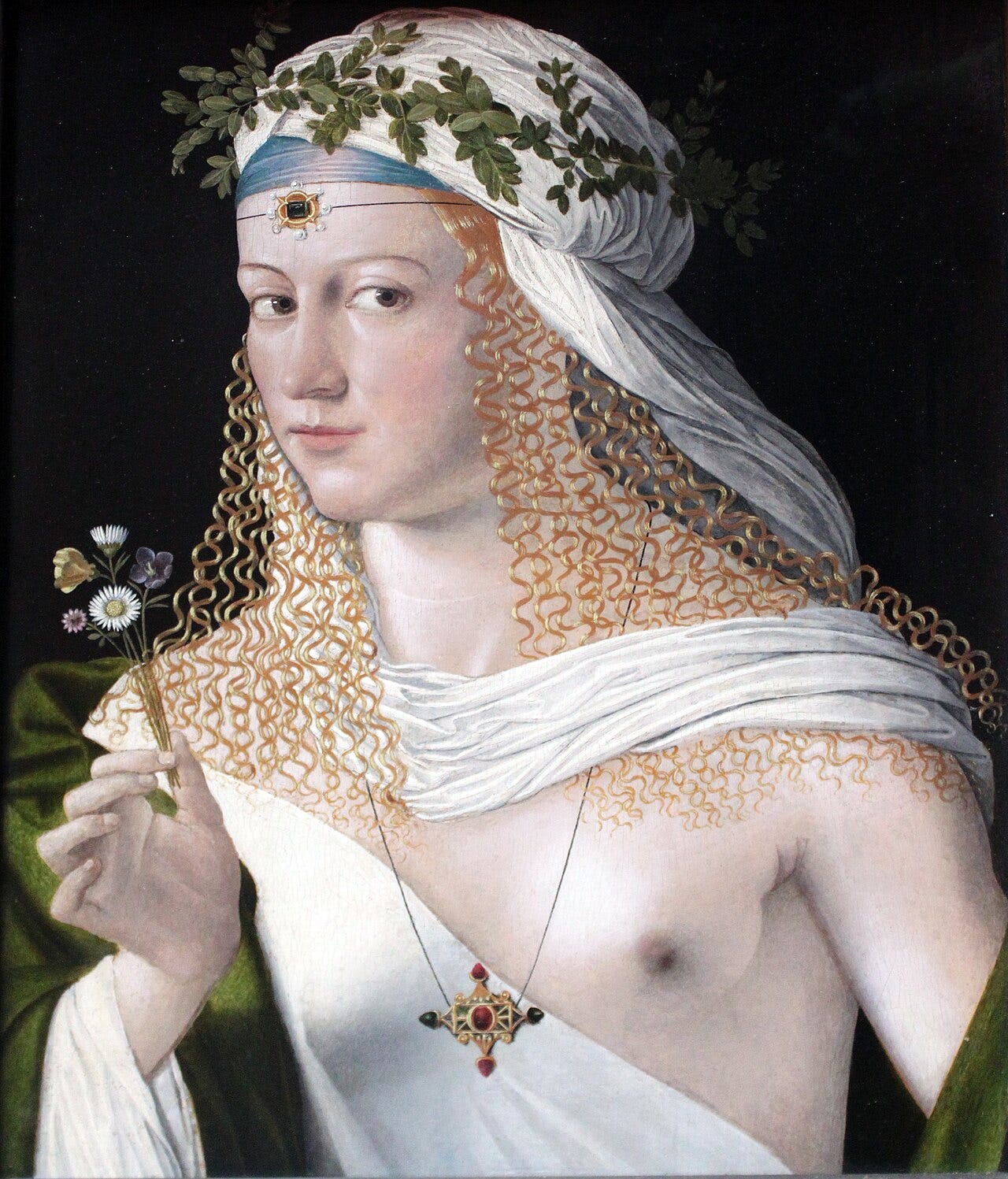
Victorian and Romantic painters loved Lucrezia with a ring of poison, an image invented centuries after her death by her family’s enemies.
Historians now find no evidence she poisoned anyone. The portrait tradition kept the ring anyway.
The hollow ring that supposedly held her poison is a nineteenth century invention. Contemporary evidence for her poisoning anyone is thin, and most of the legend was written by her family’s political enemies.
5 | Locusta Testing Poison on a Slave, Joseph Noel Sylvestre (1876)
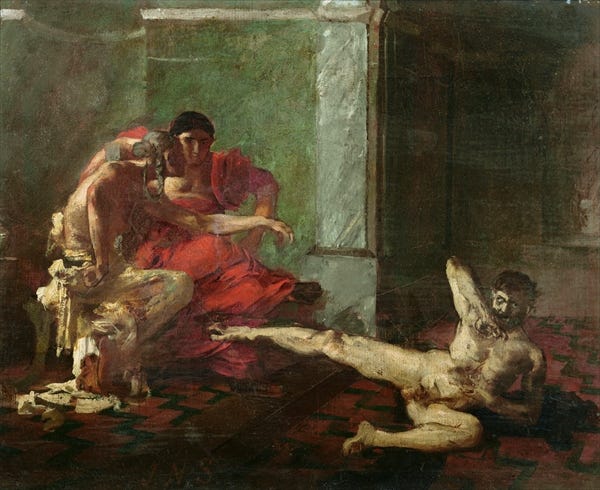
Nero’s poisoner watches a slave convulse while the emperor waits for the verdict. The Salon rewarded exactly this kind of clinical cruelty.
Locusta was a real professional, executed under Galba. The painting treats her as a scientist, which is the disturbing part.
Locusta was a real poisoner employed by Nero, executed in 69. Joseph Noel Sylvestre painted her in 1876 testing a dose on a slave in front of the emperor, which is what Tacitus and Suetonius describe.
6 | The Death of Chatterton, Henry Wallis (1856)
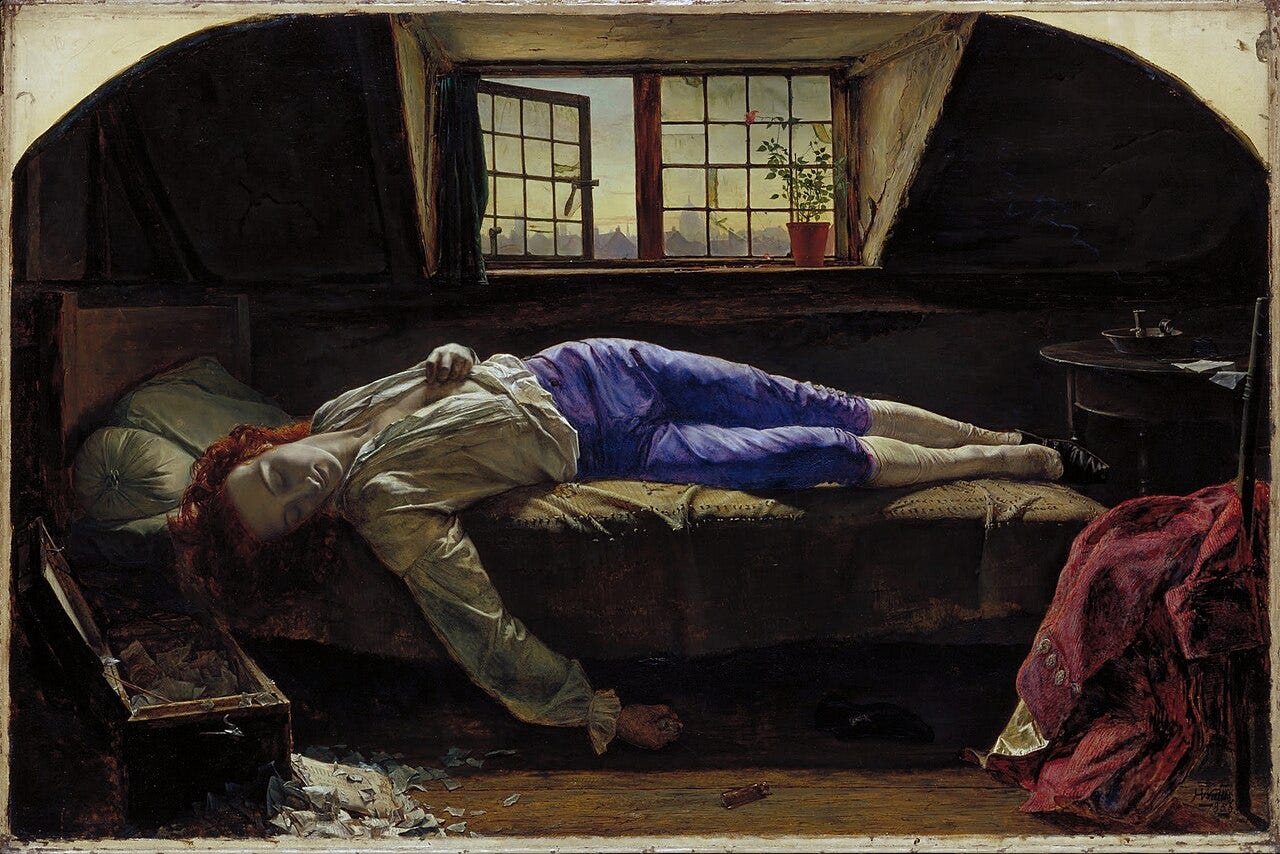
The teenage poet lies dead in an attic, arsenic bottle on the floor. Wallis made him a martyr of neglected genius.
Modern scholars argue he was self medicating and overdosed by accident. The full story is in the saddest paintings in art history.
The arsenic is in the phial on the floor. Wallis painted it in 1856 in the attic in Brooke Street where Chatterton had actually died in 1770, and the model was the novelist George Meredith.
7 | Socrates, Poussin and the classical death scene
Before David, seventeenth century painters staged philosophical deaths as calm geometry, with the poison cup as a still life object among others.
Poussin turned dying into an argument about composition. More on him in Nicolas Poussin.
The cup is hemlock and the year is 399 BC. David painted it in 1787 with Socrates reaching for the cup without looking at it, still mid argument, which is exactly how Plato describes the scene in the Phaedo.
8 | Circe Offering the Cup to Ulysses, John William Waterhouse (1891)
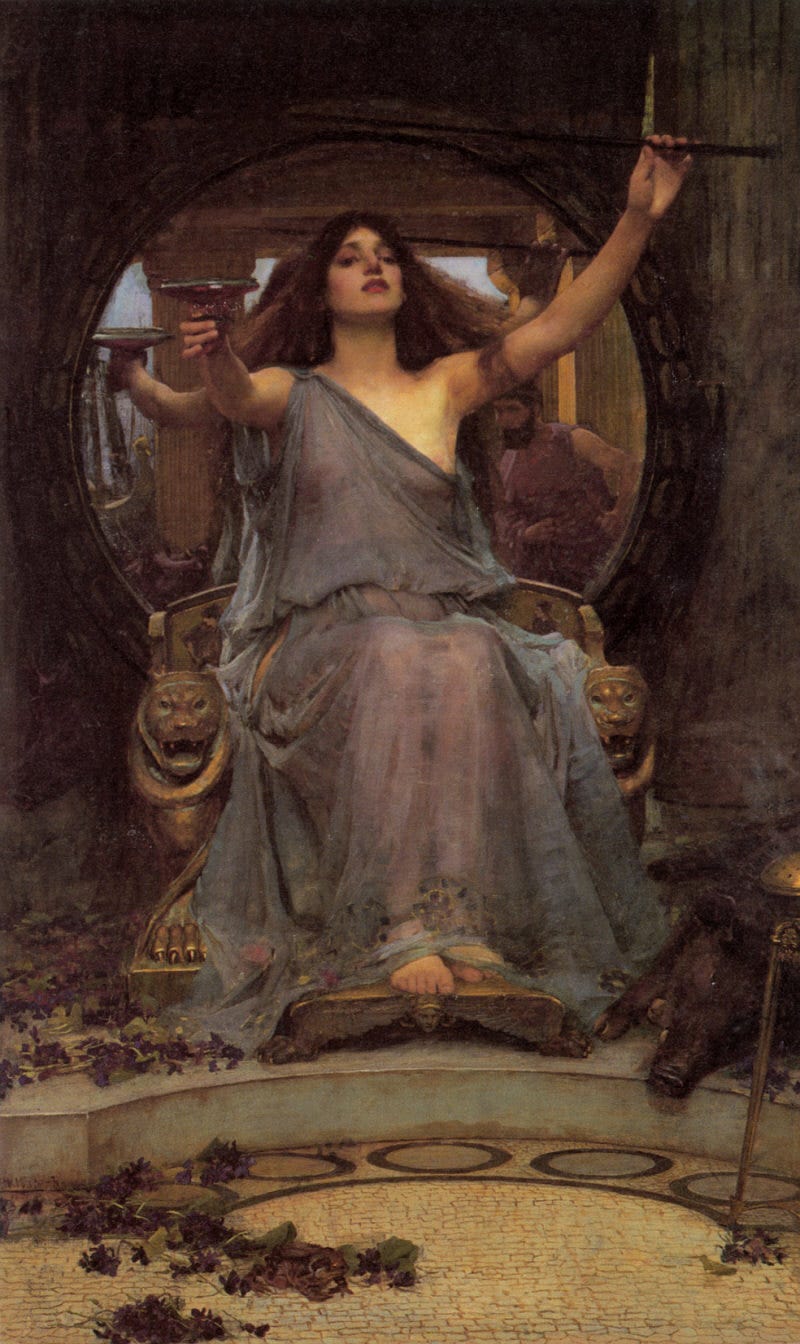
The enchantress holds out a drugged cup, her wand raised, Ulysses reflected in the mirror behind her. Waterhouse gives her the whole canvas.
Circe is the original potion mixer of Western literature. The rest of his life is in John William Waterhouse.
Waterhouse painted it in 1891, with Ulysses reflected in the mirror behind her. In the Odyssey the drug turns his men into pigs, and two of them are at her feet.
9 | The Poisoned Woman, Emile Jean Horace Vernet (1830s)
Nineteenth century France was gripped by poison trials, and Salon painters supplied the illustrations: a woman on a bed, a doctor too late, a glass on the table.
Arsenic was cheap, tasteless and untraceable until the Marsh test arrived in 1836.
Nineteenth century France had a genuine panic about arsenic, which was cheap, tasteless and used as rat poison. The Marsh test, developed in 1836, is what finally made it detectable in a body.
10 | Scheele’s green and the poisoned wallpaper
The bright arsenic green that Victorians put on wallpaper, dresses and artificial flowers slowly poisoned households for most of the century.
Painters used the same arsenic pigments on canvas. Emerald green sat in the paintbox of Cezanne, Monet and Van Gogh.
11 | Lead white and the painters it killed
The most used white in art history was lead carbonate, made by suspending lead over vinegar and dung. Handling it caused colic, palsy and death.
Caravaggio’s remains were tested in 2010 and showed high lead levels, which some researchers link to his rages. I cover him properly in Caravaggio.
12 | Vanitas and the poisoned cup
Dutch still life painters slipped poison into the moral furniture: the wine glass beside the skull, the fly on the fruit, the flower already turning.
The whole visual language is in what is vanitas.
The Met owns the Death of Socrates itself, inside a collection you can search free. The Rijksmuseum holds the Circe and Chatterton side.
Hemlock, arsenic and your questions
What tops the list? The Death of Socrates by David, with Reni’s Cleopatra as the classical rival.
Did Cleopatra really die from a snake bite? Uncertain. Ancient sources disagree and several historians favor a poison mixture over an asp.
Was Lucrezia Borgia a poisoner? There is no evidence. The poison ring is propaganda from her family’s enemies, adopted by painters much later.
Were artists poisoned by their own paints? Yes. Lead white and arsenic greens were standard, and lead poisoning has been proposed in Caravaggio’s case.
Where is The Death of Socrates today? The Met for David, Windsor for Reni, De Morgan in London, Waterhouse in Oldham.
One last thing, and it is the strangest: when the Marsh test made arsenic detectable in 1836, French poisoning trials collapsed almost overnight. The favorite murder weapon of a century was defeated by a glass tube.
The skull on the table has its own genre and its own rules: I go through twelve of them in famous vanitas paintings.