
Polykleitos, also spelled Polyclitus, was a Greek sculptor from Argos, a city in southern Greece. He made statues in bronze from about 450 to 415 BC.
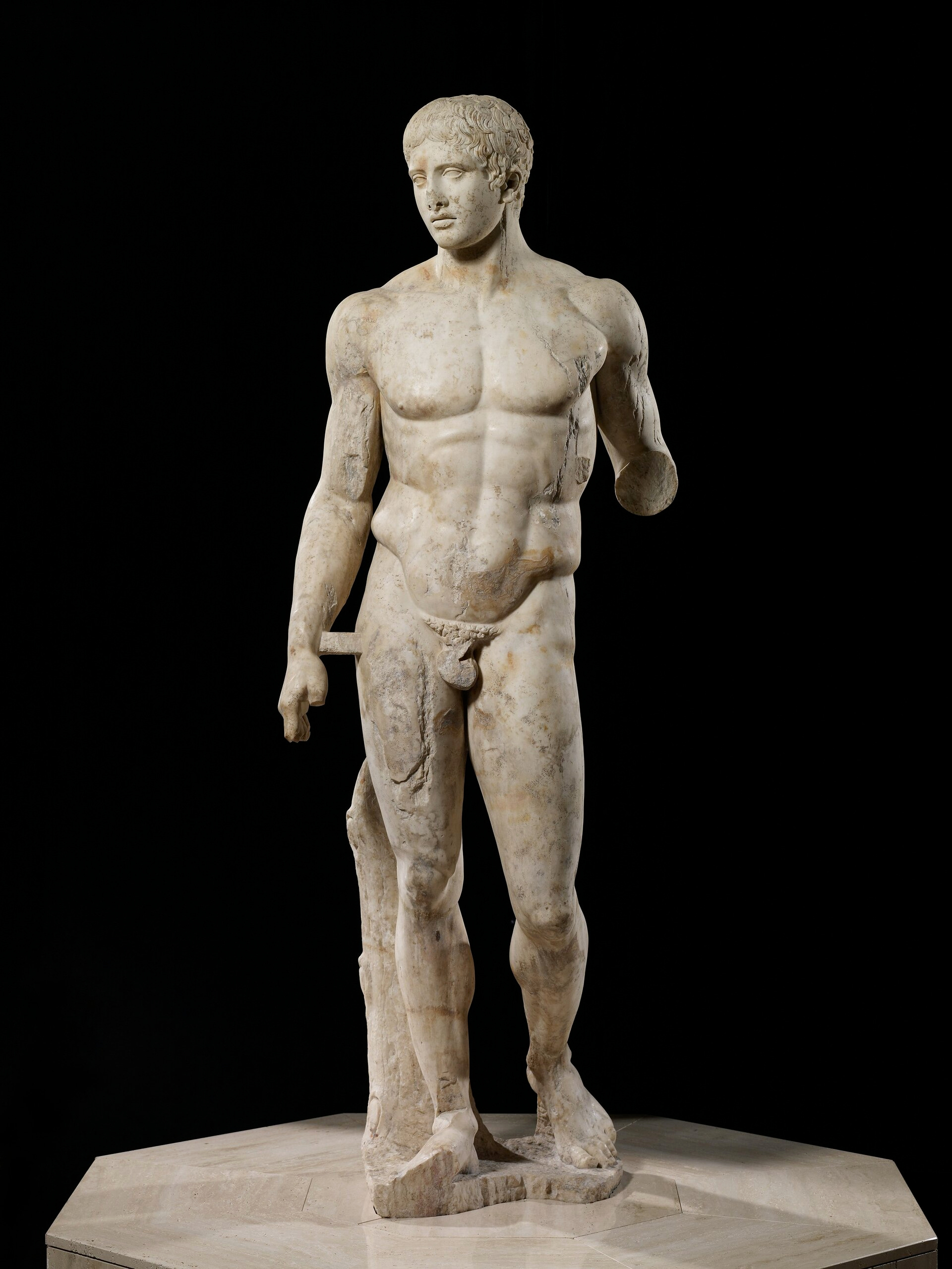
*Polykleitos is famous for the Doryphoros, or Spear Bearer, a statue of a nude young athlete. He also wrote the Canon, a book that set the measurements of the ideal human body.*
In his lifetime, Polykleitos was ranked among the greatest sculptors in Greece. Yet his statues and his book are lost, and the date of his death is unknown.
Cool Stories About Art is a newsletter to learn art the fun way.
Join 200,000+ readers and get:
10 new art stories / month
The entire archive of content (140+ articles)
Comment, ask questions, and chat with other readers
Most of the bronzes Polykleitos made showed young athletes who had won at Olympia. The games of Olympia, held every four years in honor of Zeus, the king of the gods, were the original Olympic Games.
Greek athletes trained and competed naked, so their statues were naked too. What set Polykleitos apart from the other sculptors of Greece was a book.
Polykleitos wrote down the measurements he gave the human body, part by part, and called his book the Canon, from a Greek word for a measuring rod. He also made a statue that followed the book exactly. No ancient writer names that statue, but it is now identified with the Spear Bearer.
Bronze was precious. Over the centuries, most Greek bronze statues were melted down so that their metal could be used again, and the bronzes of Polykleitos went the same way.
Yet in museums from Naples to Minneapolis, the same nude young man stands again and again, carved in marble in Roman times. None of those marble athletes carries the name of Polykleitos, and for a long time the sculptor they copied was a mystery.
With the bronze gone and no name carved on any copy, how did anyone prove that the marble athletes were copies of the lost Spear Bearer of Polykleitos?
In the rest of the story
Why a sculpture contest went to the statue everyone ranked second.
How a sleeping priestess gave Polykleitos the most important order of his life.
Why a Roman lawyer pretended he could not remember Polykleitos's name.
How dozens of nameless marble athletes were finally traced back to Polykleitos.