
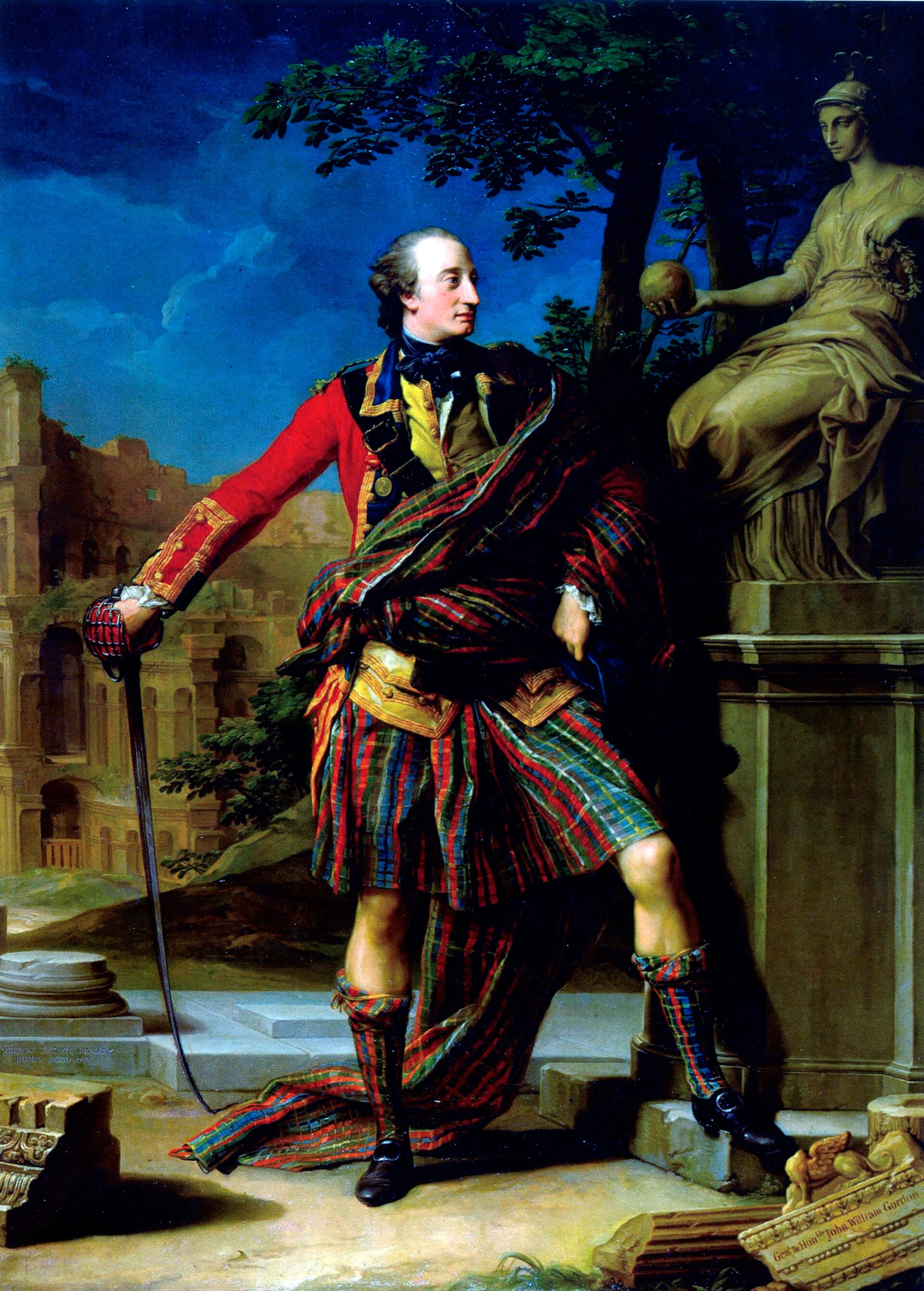
Pompeo Batoni (1708 to 1787) was an Italian painter in Rome, the favorite portrait painter of rich British travelers. His portrait of Colonel William Gordon is at Fyvie Castle in Scotland, and his Diana and Cupid at the Metropolitan Museum of Art in New York.
Cool Stories About Art is a newsletter to learn art the fun way.
Join 200,000+ readers and get:
10 new art stories / month
The entire archive of content (140+ articles)
Comment, ask questions, and chat with other readers
In 1769, Joseph II, the Holy Roman Emperor, head of a union of German and Central European states, came to Batoni's studio in Rome with his younger brother. The emperor could have called any painter in Europe to his palace in Vienna, yet the two brothers stood for Batoni like the British travelers who filled his rooms.
Pompeo Batoni was born in 1708 in Lucca, a city of Tuscany, in central Italy, which was then a small independent republic. His father was a goldsmith, and the boy learned to draw in the family workshop.
A nobleman of Lucca paid Batoni an allowance, and the money took him to Rome at about twenty, in the late 1720s. Rome was the pope's city and the capital of art in Europe, full of ancient ruins and statues.
Batoni earned his living painting fans and miniatures, portraits small enough to hold in the hand. Above all, he drew the ancient statues of Rome for foreign collectors.
In April 1732, a sudden storm broke over Rome. Count Forte Gabrielli, a nobleman from central Italy, took shelter under a portico on the Capitoline, the hill of Rome where palaces kept ancient sculptures.
Under the arches, the count found Pompeo Batoni drawing the ancient carvings. Gabrielli visited his studio and ordered an altarpiece, a large painting set above an altar, for his family's chapel in a church of Rome.
The foreign collectors who bought Batoni's drawings were often rich young Britons. In the 1700s, they finished their education with the Grand Tour, a journey across Europe that lasted months, sometimes years, and ended in Rome.
The travelers had read the Latin authors at school. In Rome, they finally saw the ruins and statues of their books, and they brought paintings, drawings and copies of statues back to Britain.
Why would Emperor Joseph II come to stand in a painter's studio, just like the British travelers?
In the rest of the story
Why an English couple asked Batoni to paint a girl he had never met.
What Batoni promised in writing to a rich Englishman, and for how much.
What a Scottish colonel wore over his shoulder to pose in Rome.
The Latin words Batoni painted under the emperor's table, and why.