
Pregnancy in painting was almost never allowed to be the subject. Art historians have argued for two centuries about whether the woman in the Arnolfini Portrait is pregnant, one Renaissance panel was painted to hang above a bed as a fertility charm, and Frida Kahlo painted her own miscarriage on a hospital sheet.
What you are actually looking at
The most famous pregnancy in art is probably not a pregnancy at all, just a fashionable dress.
One fresco of a pregnant Virgin was so venerated that women still travel to it.
Painted birth trays were given to mothers who survived childbirth, with a scene on each side.
The first unflinching painting of losing a pregnancy was made in 1932.
Learn art the fun way
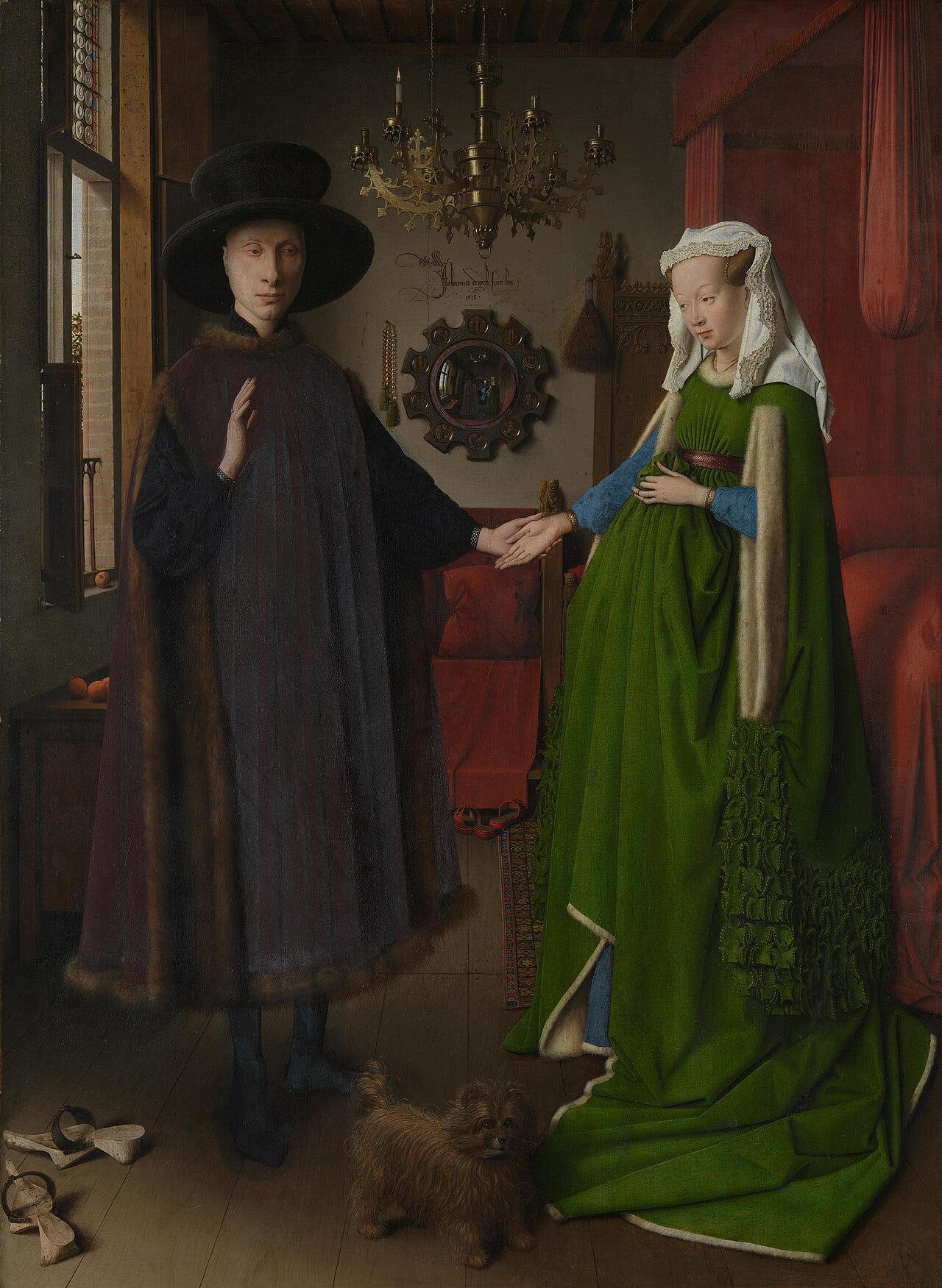
1 | The Arnolfini Portrait, Jan van Eyck (1434)
The woman gathers a heavy green gown in front of her stomach, and generations of viewers have read it as pregnancy. Most specialists now disagree.
The volume comes from the fabric, which was the fashion, and the same silhouette appears in virgin saints of the period. I go into the whole room in the Arnolfini Portrait.
2 | The Madonna del Parto, Piero della Francesca (about 1460)
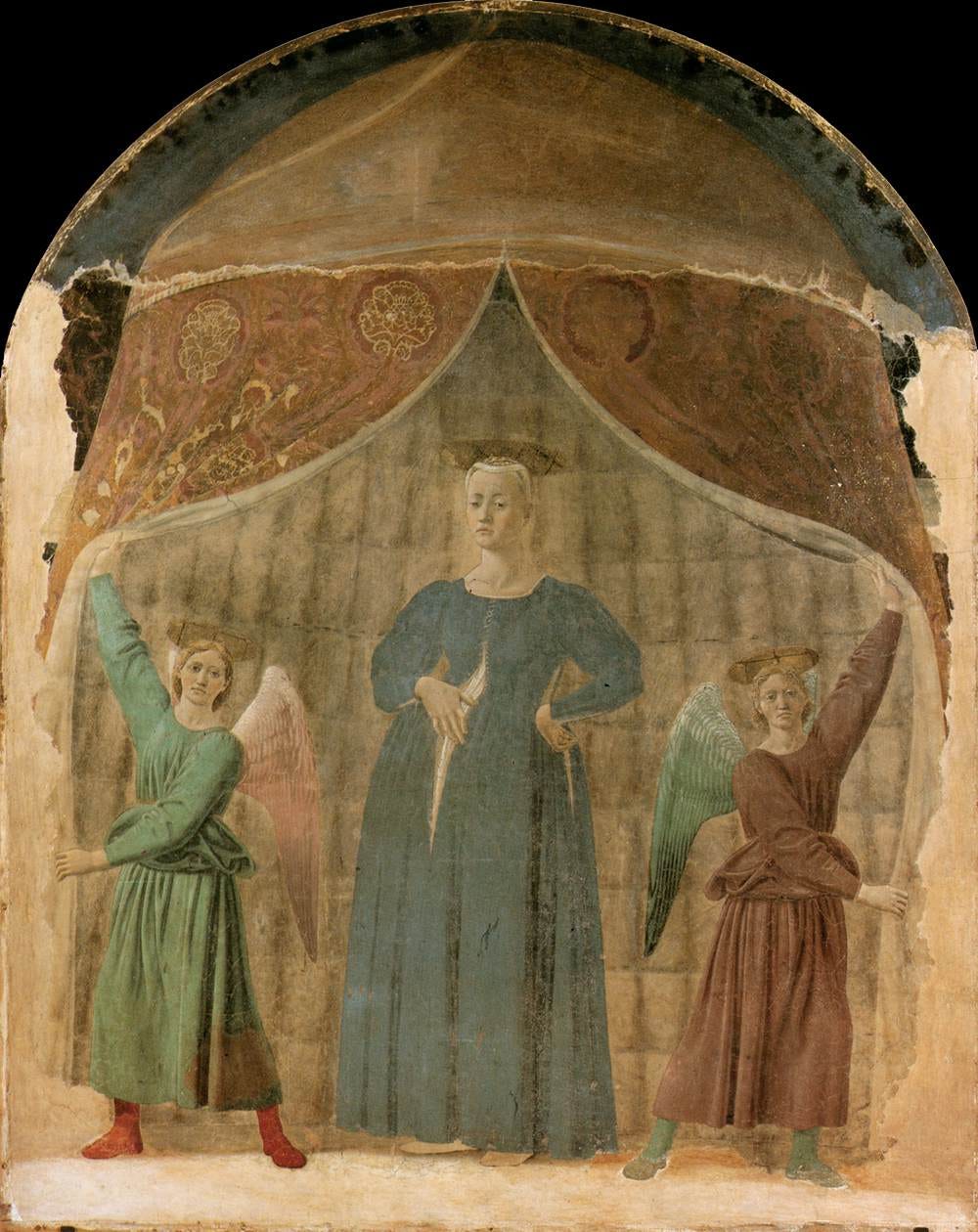
A visibly pregnant Virgin stands in a tent held open by two angels, one hand resting on the opening of her dress.
Pregnant Madonnas were rare and this one became a pilgrimage site for expectant mothers. It is in Monterchi. More on him in Piero della Francesca.
3 | The Visitation, and two pregnancies meeting
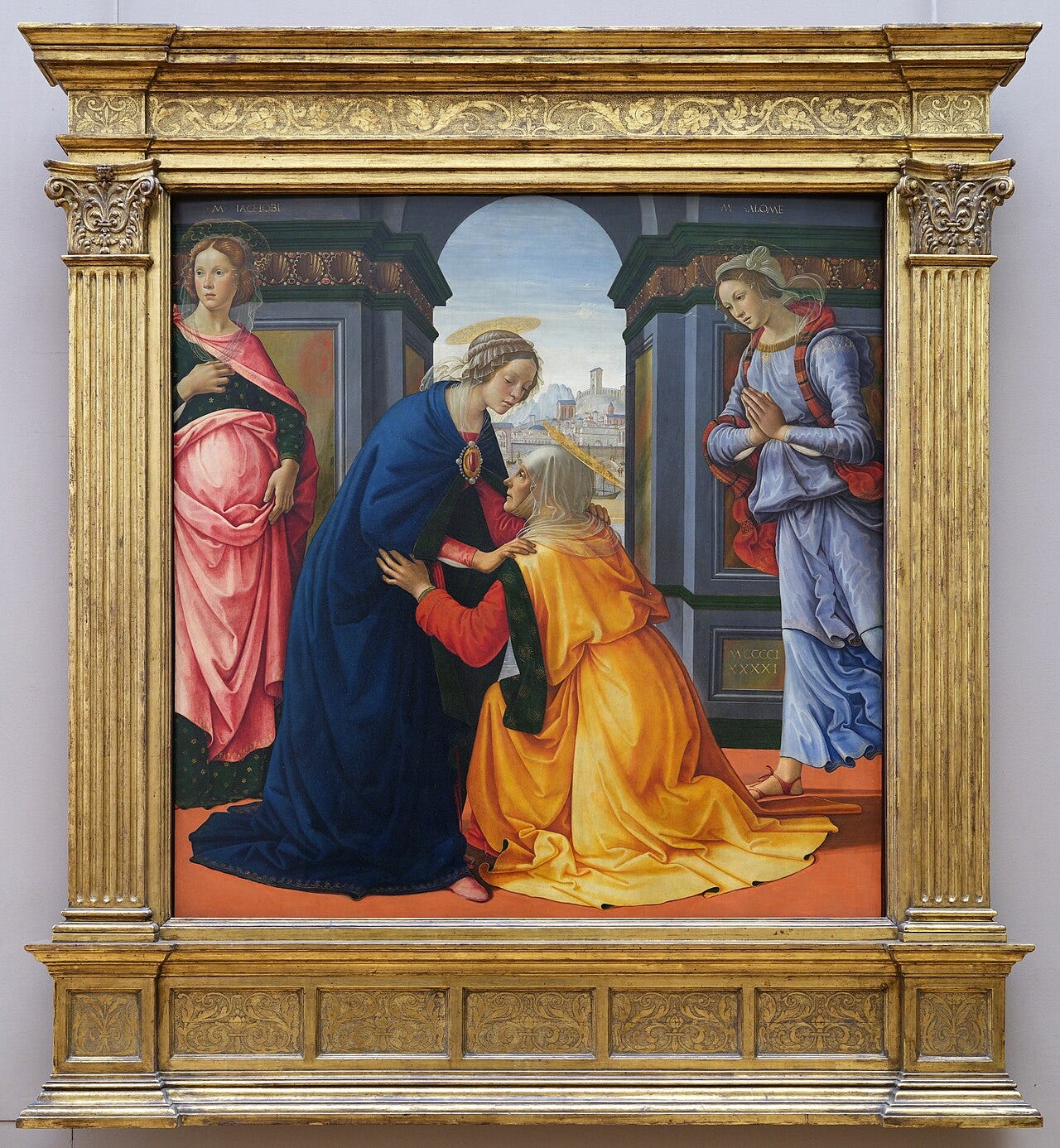
Mary and Elizabeth embrace, both pregnant, in one of the few Bible scenes that is entirely about two women and no men.
Renaissance painters used it to show pregnancy openly under religious cover. Ghirlandaio and Pontormo both made great versions.
Luke 1 has Mary visit her cousin Elizabeth, both pregnant, and the child moves in the womb. Pontormo painted it around 1528 at Carmignano with the two women almost touching foreheads, and the drapery does the rest.
4 | Birth trays and the desco da parto
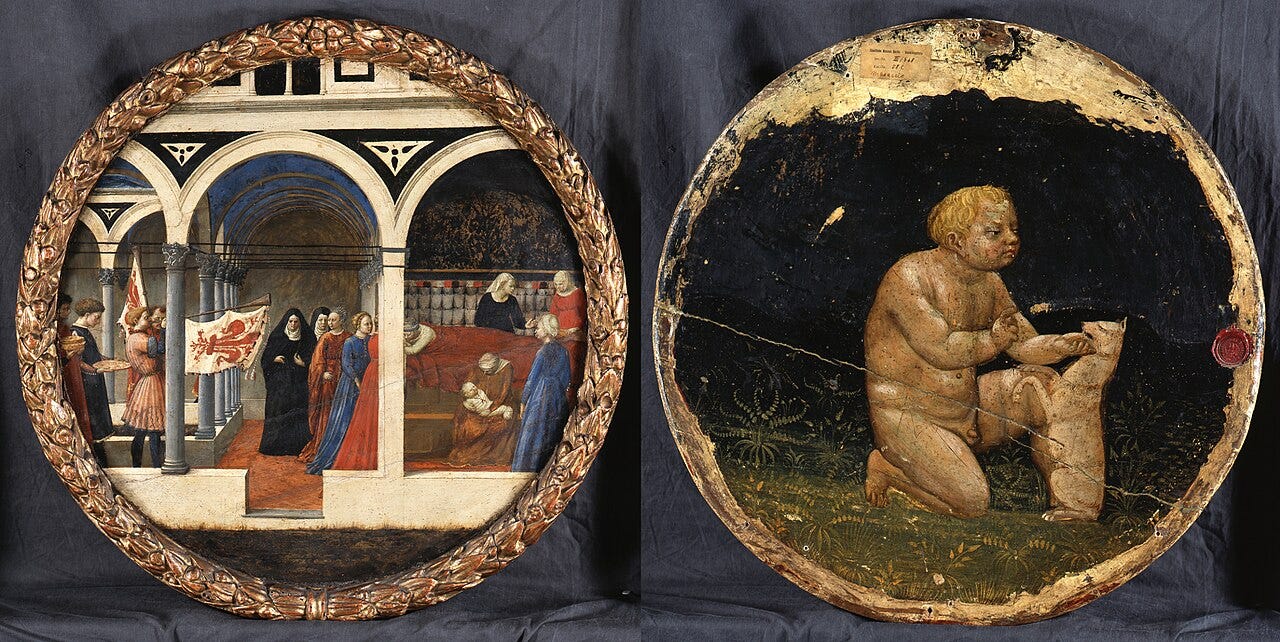
Florentine families gave new mothers painted wooden trays, decorated on both sides, delivered with food after a successful birth.
Childbirth killed a significant share of women, so the tray was a trophy of survival. Several are in museums today.
A desco da parto was a painted wooden tray given to a mother after a successful birth, carrying food to her bed. They were kept afterwards as family objects, which is why so many survive in Florentine collections.
5 | Henry VIII, Jane Seymour and the heir
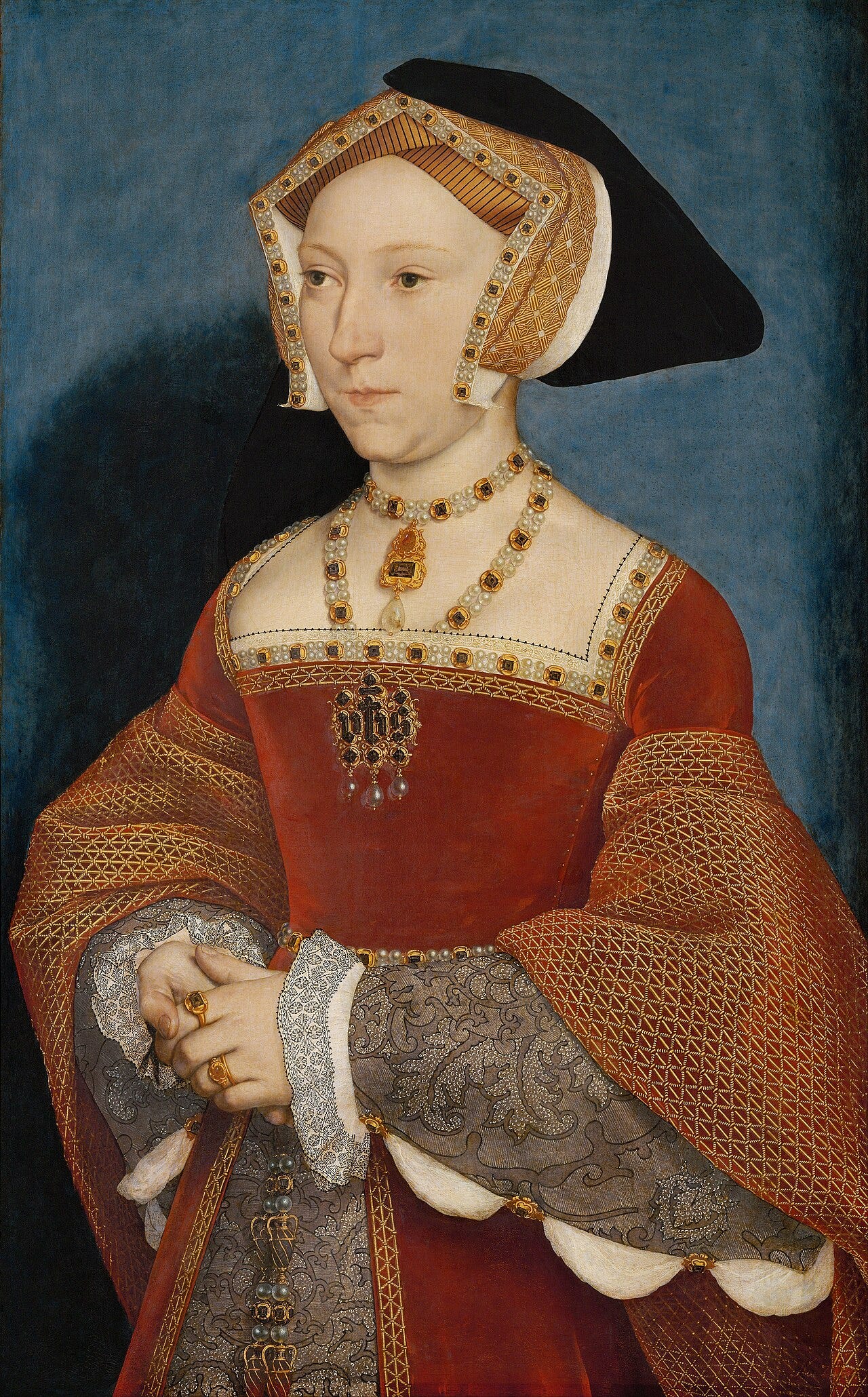
Tudor portraits rarely show pregnancy, but they show its consequences: Jane Seymour died twelve days after giving birth to the son the dynasty needed.
Holbein painted her a year before. More royal machinery in famous paintings of kings and queens.
Jane died on 24 October 1537, twelve days after giving birth to Edward. Holbein painted her before the pregnancy, and the dynastic portrait of the family made later shows her posthumously, as if still alive.
6 | Henry Frick Detroit, and Frida Kahlo (1932)
Kahlo lost a pregnancy in a Detroit hospital and painted herself on the bed, naked, connected by red threads to a foetus, a snail, an orchid and a pelvis.
Nothing like it existed before. Her whole life is in my guide to Frida Kahlo.
7 | Marie Antoinette and the political womb
A queen’s pregnancy was a state matter, announced, gossiped about and doubted. Vigee Le Brun eventually painted her as a mother surrounded by children, with an empty cradle for the daughter who had died.
It was image repair, and it failed. The painter is in Vigee Le Brun.
8 | The pregnant nude that scandalised the Salon
Nineteenth century academies allowed the nude only as goddess or allegory. A visibly pregnant nude broke the alibi, which is why almost none were exhibited.
The rules of that game are in what is the nude in art.
A visibly pregnant body was acceptable in a religious scene and unacceptable in a secular nude, which is the whole double standard in one rule. Painters worked round it by calling the picture an allegory.
9 | Munch and the sick room
Munch painted birth and death in the same visual language, both taking place in a room with a bed and a woman lying in it.
His mother and sister both died young, which shaped everything he made. More on him in Edvard Munch.
He returned to the sickbed and the inheritance of illness across the Frieze of Life. The mother figure in those pictures is his own, who died of tuberculosis when he was five.
10 | Van Gogh, Sien and the drawing called Sorrow (1882)
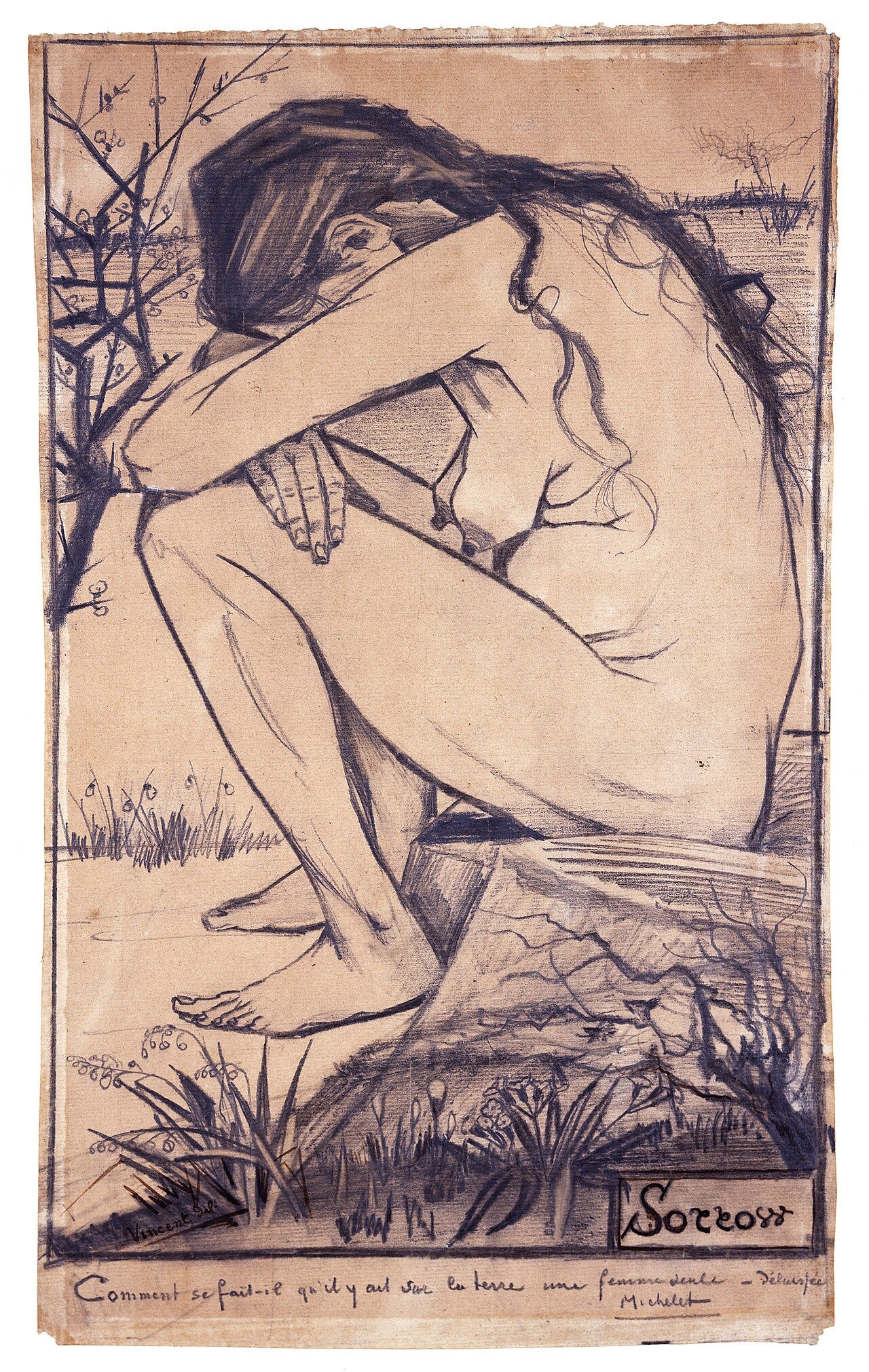
Van Gogh drew a pregnant woman he had taken in from the street, seated naked with her head on her arms, and wrote the word Sorrow beneath it.
He called it the best figure drawing he had made. I go into his whole story in Vincent van Gogh.
11 | Mary Cassatt and the nursery
Cassatt painted mothers and children constantly and never once painted a pregnancy, which was still unshowable in polite nineteenth century subject matter.
The whole genre is in famous mother and child paintings.
12 | The twentieth century and the visible body
After 1900 the pregnant body slowly enters art as itself: Schiele drew pregnant women in a Vienna clinic, and later Jenny Saville painted the body at full scale without apology.
Schiele got access through a doctor friend, and his drawings are among the first clinical and human at once. More on him in Egon Schiele.
Answers to the pregnancy questions
Is the Arnolfini woman pregnant? Most specialists say no. The bulk is fabric, and the same silhouette appears on virgin saints of the period.
Why are pregnant Madonnas rare? The Church preferred the Annunciation or the Nativity. A visibly pregnant Virgin was uncommon enough that surviving examples became shrines.
What is a desco da parto? A Florentine birth tray, painted on both sides, given to a mother after a successful delivery.
Who first painted miscarriage directly? Frida Kahlo, in Henry Ford Hospital in 1932, painted after losing a pregnancy in Detroit.
Where is The Arnolfini Portrait today? Monterchi for the Madonna del Parto, the National Gallery for the Arnolfini, Mexico City for the Kahlo.
A number worth carrying: painted birth trays exist because surviving childbirth was an achievement. In fifteenth century Florence, a significant proportion of women died in or shortly after labour, which is why the gift was a celebration rather than a decoration.
Several trays and related objects are catalogued at the Met, with more maternity imagery at the Rijksmuseum.
This subject is one thread in a wider theme. See how it fits into Family and the Stages of Life in Painting.