
Proportion in art is the size relationship between parts: head to body, figure to frame, part to whole. Artists spent millennia perfecting ideal proportions, then centuries breaking them on purpose. Here are ten works that tell both halves of the story.
Proportion in 30 seconds
Proportion compares sizes inside the work: a head to its body, a figure to a doorway.
The classical canon measures the body in head-lengths: seven and a half for realism, eight or more for heroes.
The golden ratio (about 1.618) is real mathematics, but most claims of it hiding in famous paintings are modern wishful thinking.
Distortion is proportion used as a voice: stretch a neck and you change the emotion, not just the anatomy.
The rule of thumb, literally: at arm's length, your thumb covers about what a painted head should.
The Egyptian grid (c. 1350 BC): proportion as law
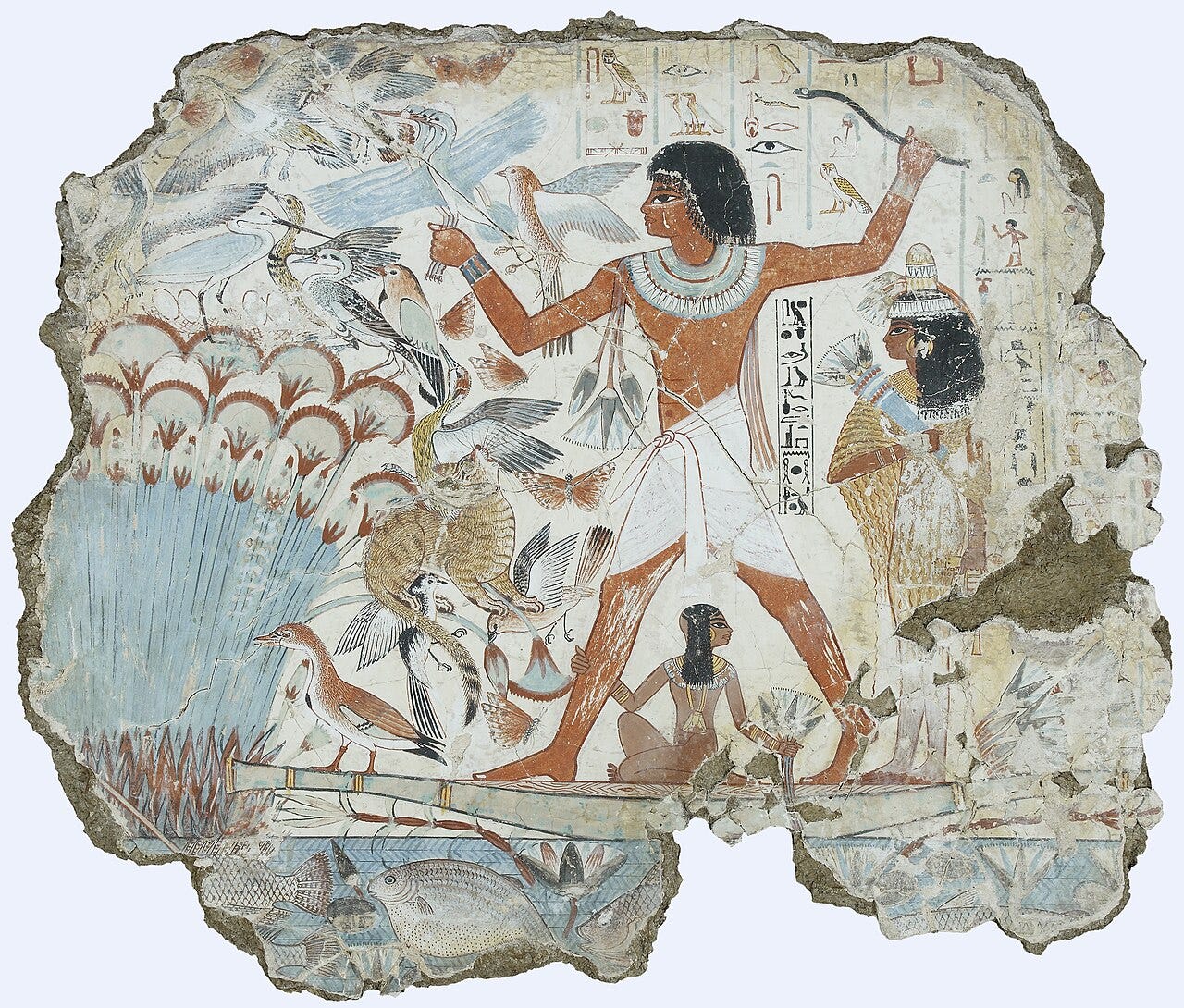
Egyptian painters drew a grid over the wall before the figures: eighteen rows from soles to hairline, each body part assigned its squares. For three thousand years, proportions were not a choice but a rule.
That is why every pharaoh stands the same: the grid was the artist, and the artist was its clerk.
Polykleitos, the Doryphoros (c. 440 BC): the canon in marble
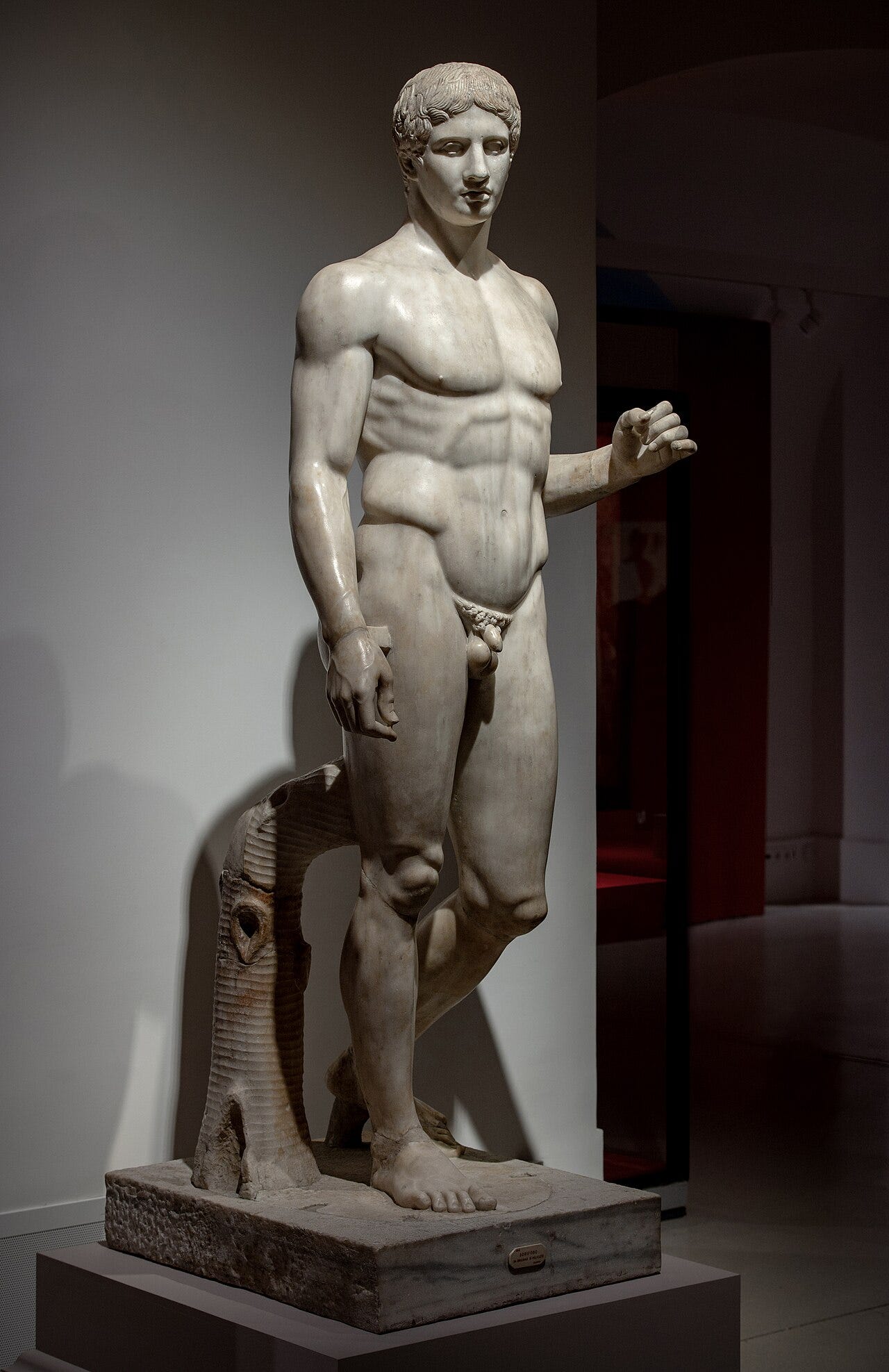
The Greek sculptor Polykleitos wrote a treatise on ideal human proportion and cast a bronze spear-bearer to prove it. Both were called the Canon: the book of rules, and the body that obeyed them.
The treatise is lost, and so is his bronze. The rules survive only in Roman marble copies like this one, which scholars have been measuring ever since, trying to read the book back out of the marble.
Leonardo, Vitruvian Man (c. 1490): the body as geometry
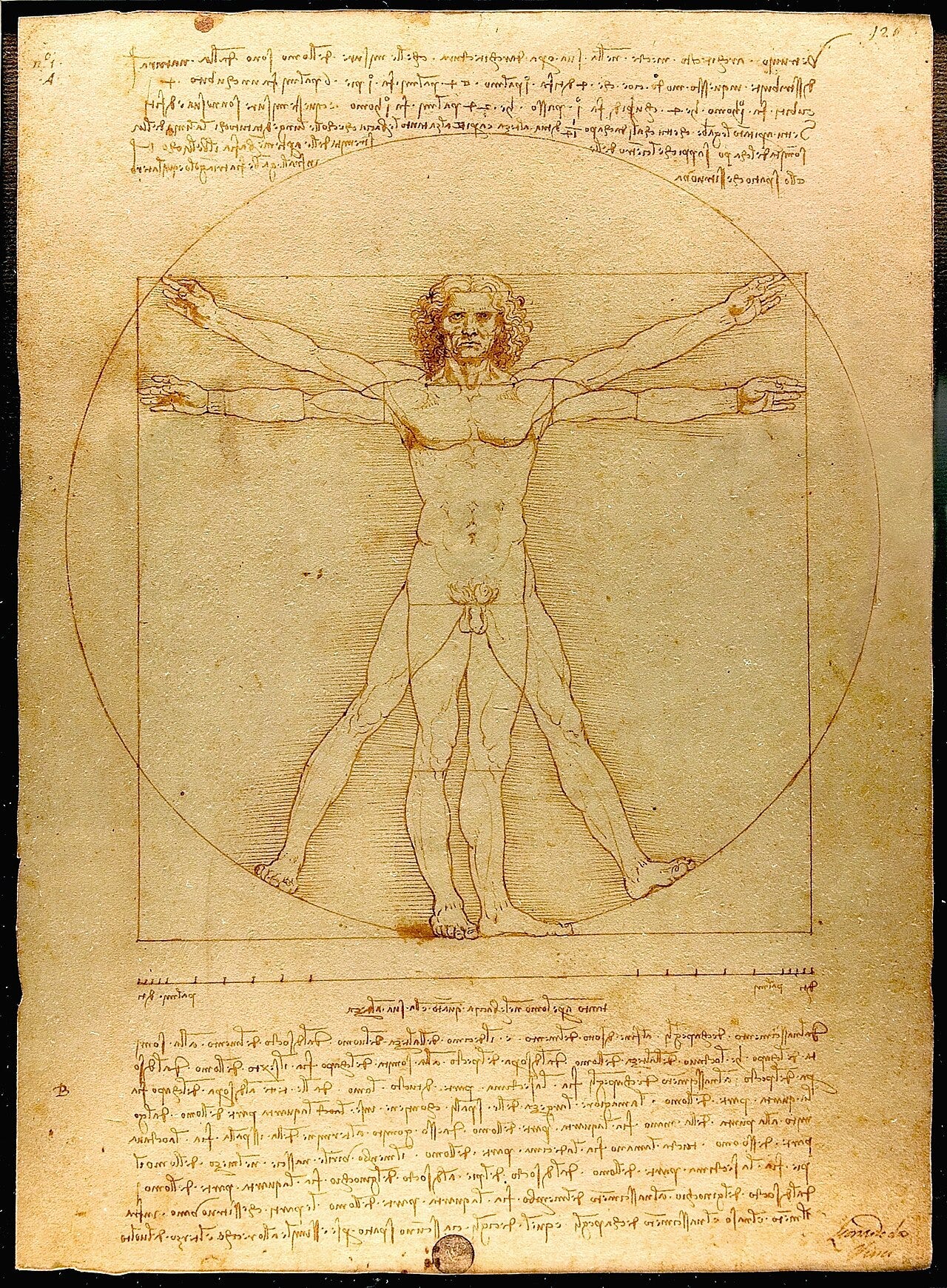
Arms out, the man fits a square; legs spread, a circle. The navel sits at the circle's center, and every limb answers a ratio from the Roman architect Vitruvius. Leonardo drew the claim that man is the measure of all things, and made it look like proof.
Learn art the fun way


The golden ratio, honestly
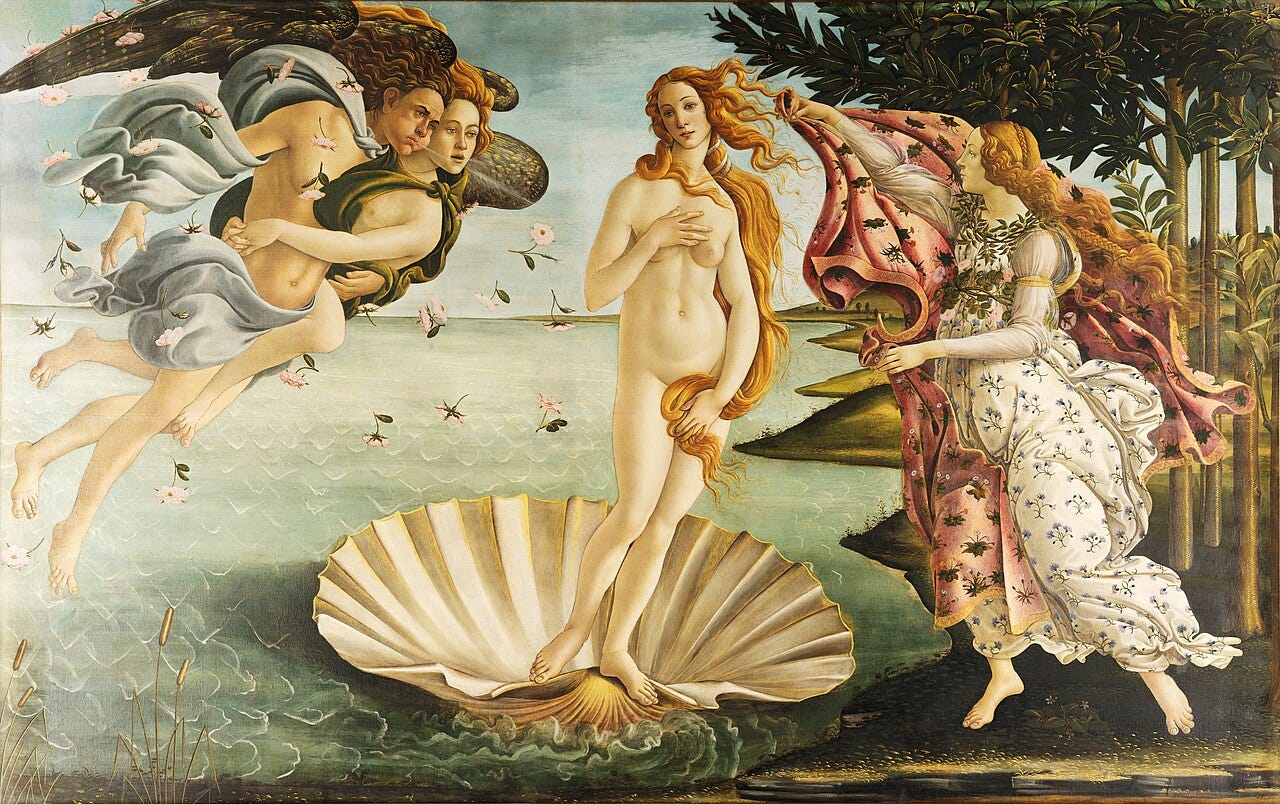
The number is real: 1.618, the ratio the Greeks found in pentagons and the regular solids. The legend is not. No document shows Botticelli or Leonardo laying golden rectangles over the Birth of Venus or the Last Supper; those diagrams are modern inventions, drawn after the fact and stretched to fit.
The true link is humbler: in 1509 the mathematician Luca Pacioli published De divina proportione, a book about the ratio, and Leonardo drew its polyhedra illustrations. He illustrated the math; he did not paint by it.
Dürer, Adam and Eve (1504): proportion as obsession
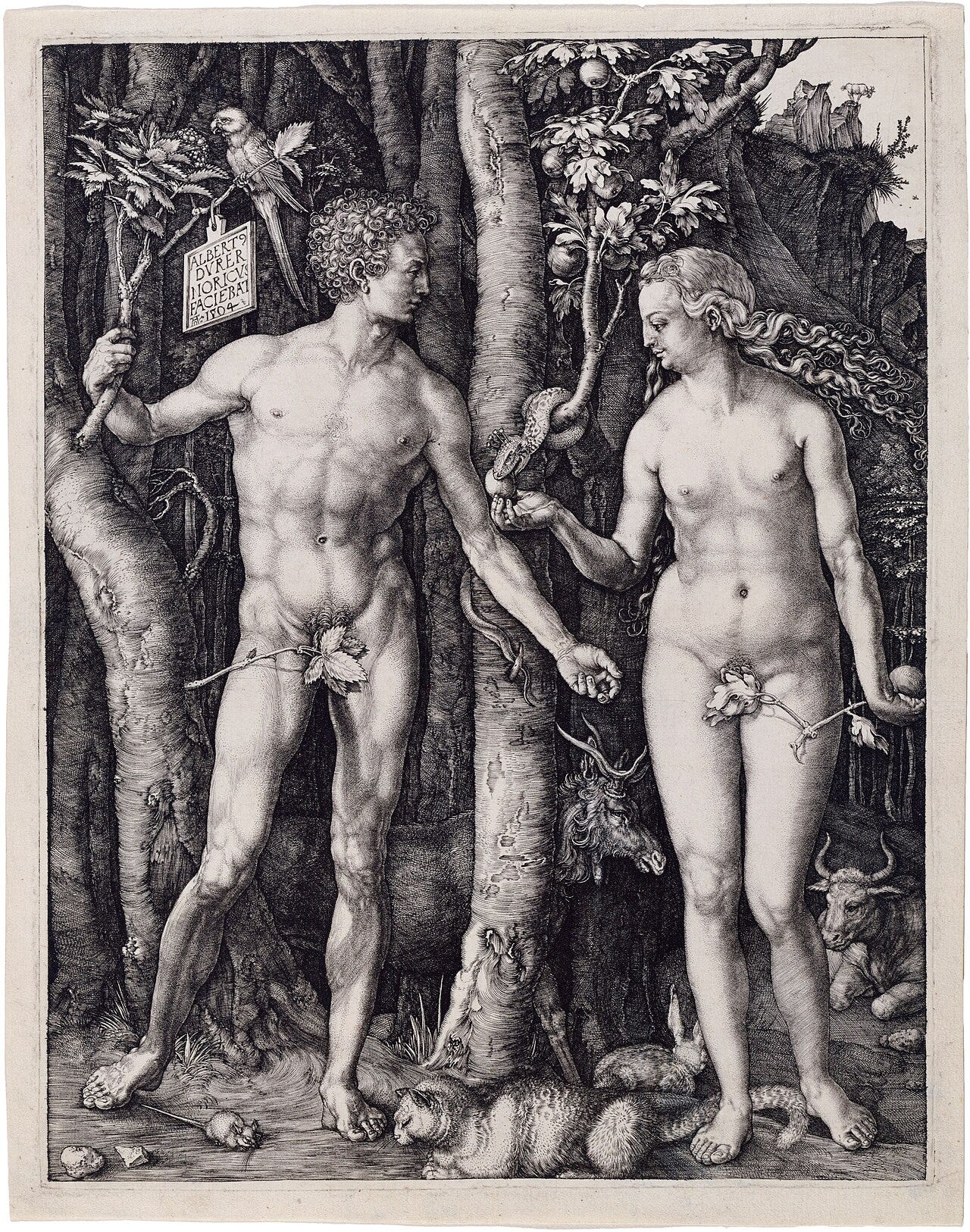
The two bodies are constructed with compass and ruler, ideal ratios engraved line by line. Dürer spent decades measuring real people for his Four Books on Human Proportion, printed months after his death in 1528.
He measured so many bodies that he concluded there was no single ideal, and offered dozens of body types instead. The great codifier ended up a relativist.
Michelangelo, the Sistine ceiling (1508-1512): heroic exaggeration
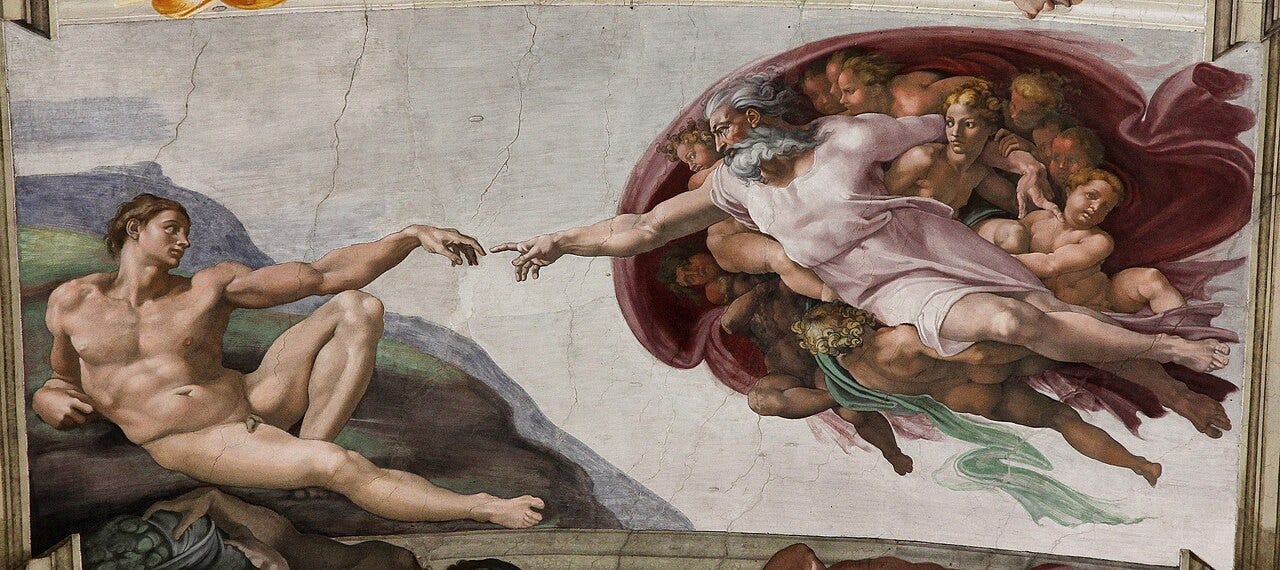
The torsos are too broad, the limbs too heavy, the necks too thick for any real anatomy, and nobody has ever wanted them corrected. Michelangelo inflated proportion for force, and his contemporaries coined a word for the effect: terribilità.
Parmigianino, Madonna with the Long Neck (c. 1535-1540): elegance over anatomy
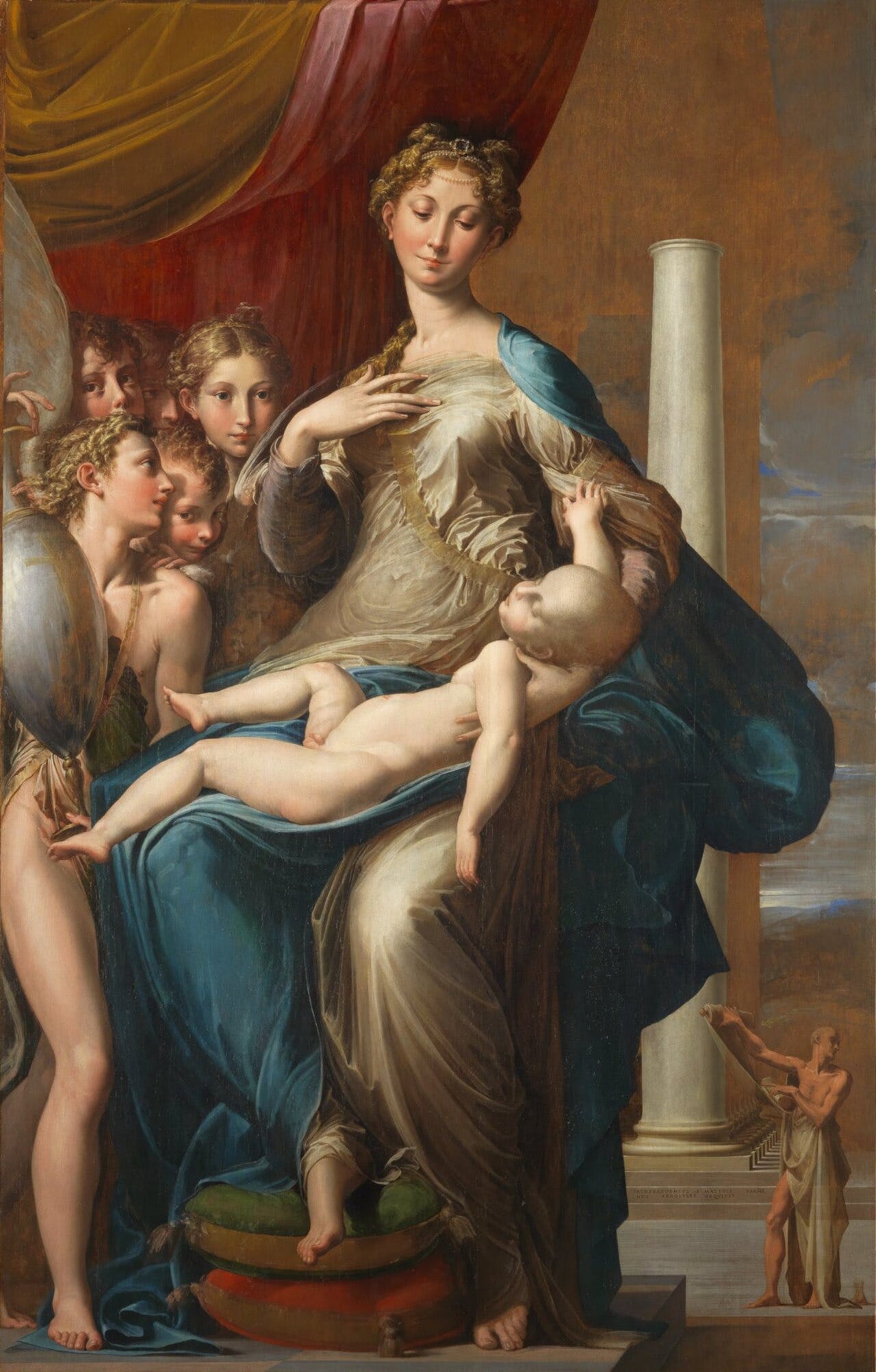
The Virgin's neck is a swan's, her fingers spill like water, and the Child stretches across her lap far too long for any infant. Parmigianino bent every proportion toward elegance, the signature move of Mannerism.
He never finished it: a lone column stands behind her without a capital, and the painter died at 37, deep, Vasari says, in alchemy experiments.
El Greco, the stretched saints (1577-1600): proportion as spirit
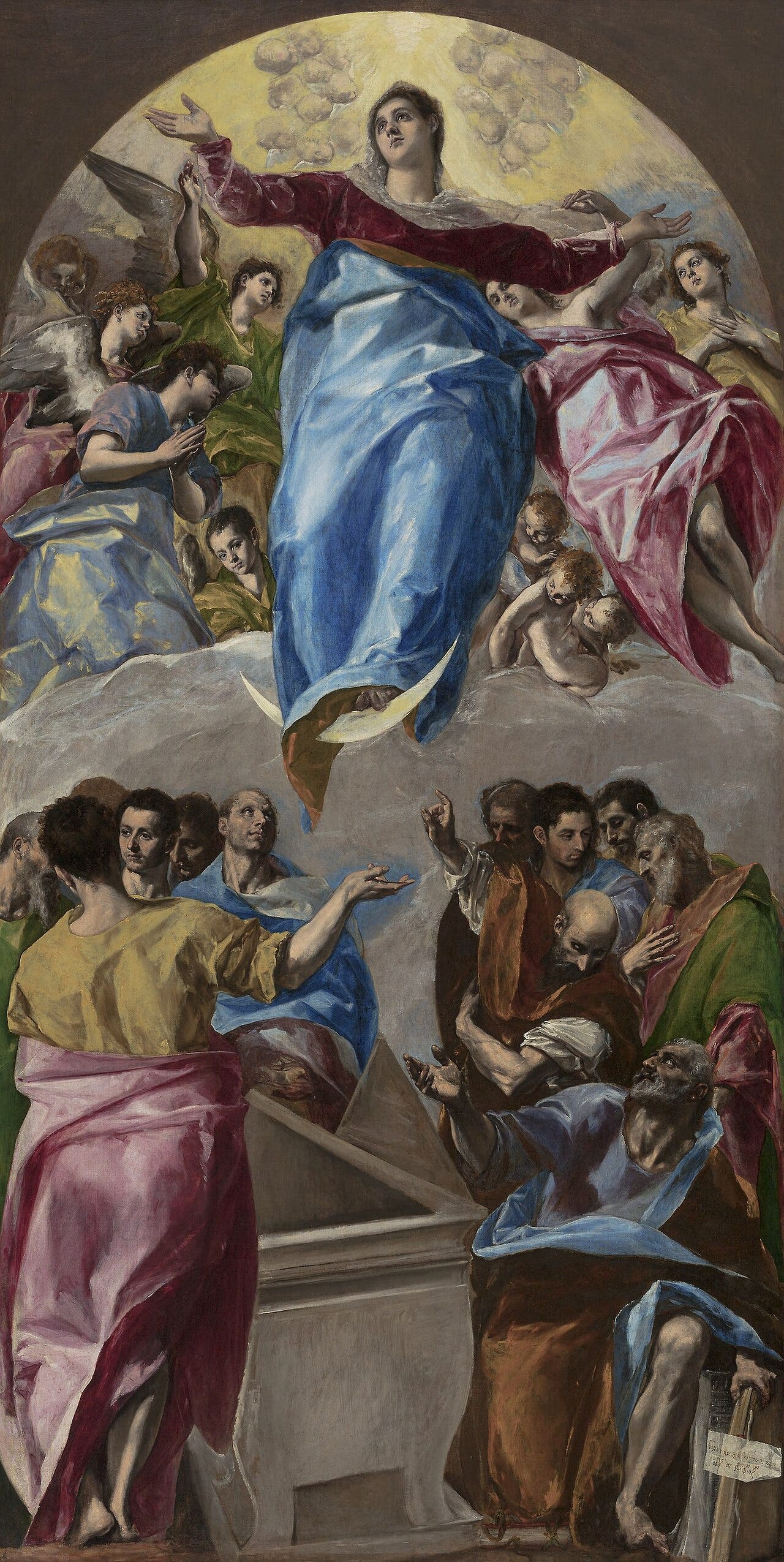
His figures pull upward like candle flames, bodies at ten or eleven head-lengths where nature gives seven and a half. El Greco stretched proportion to make flesh look halfway to heaven.
Ophthalmologists once claimed astigmatism explained it. Art historians point out the obvious: his drawings prove he could render normal bodies perfectly, and stretched them only when the subject was sacred.
Ingres, La Grande Odalisque (1814): the deliberate impossible
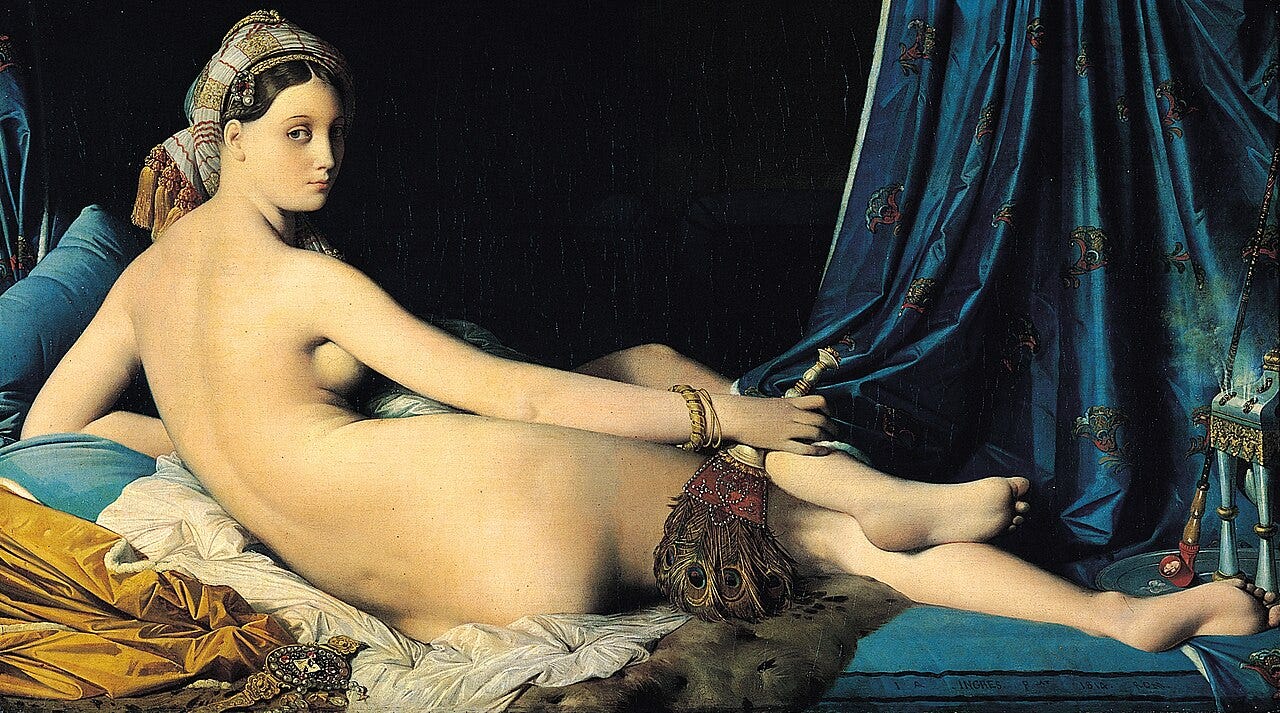
Critics in 1819 counted three vertebrae too many in that long, cool back. Modern researchers who measured the figure concluded the distortion is closer to five. Ingres knew exactly what he was doing: the extra length turns a body into a curve.
Modigliani, the long necks (1917-1919): proportion as signature
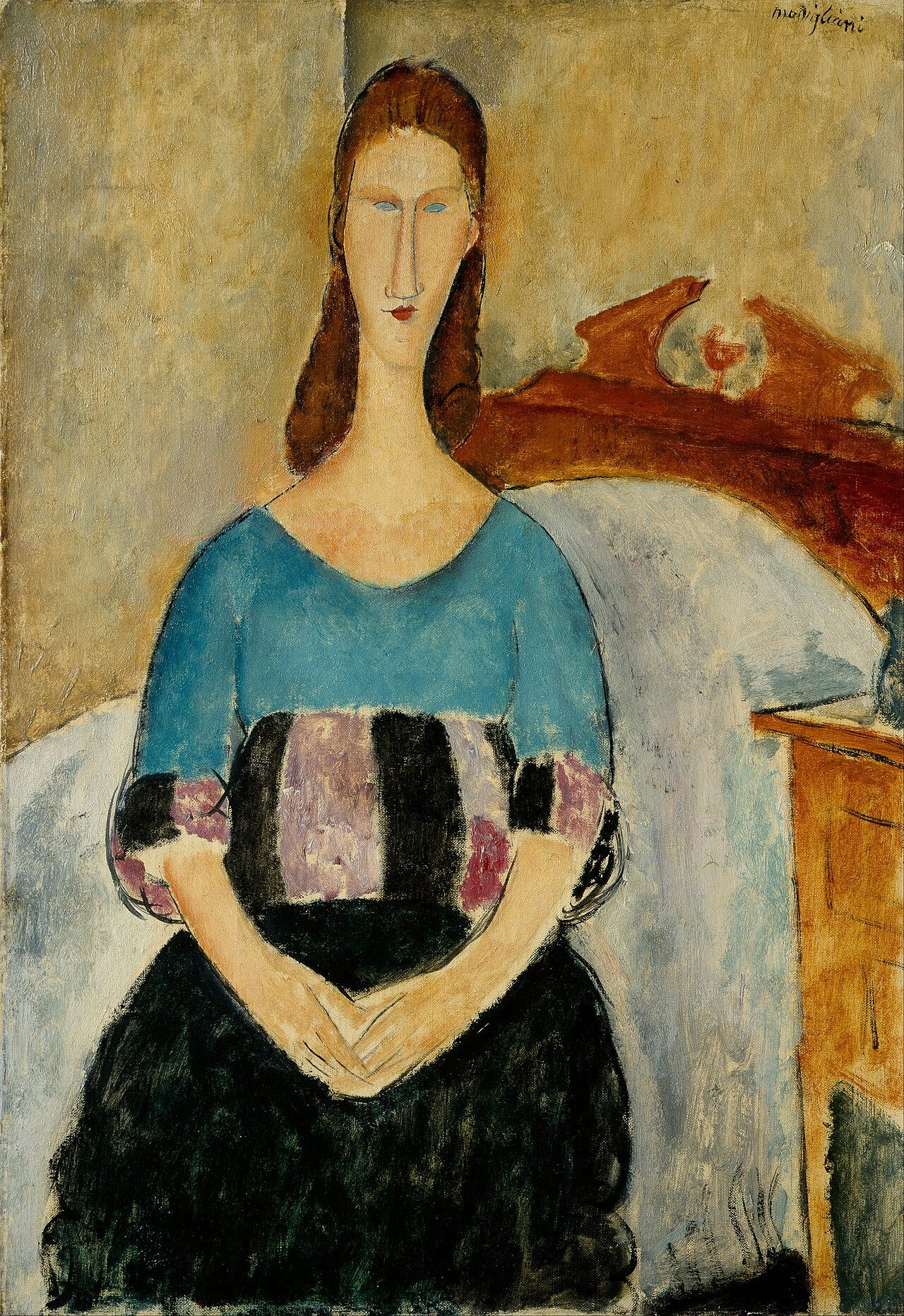
Almond faces, blank eyes, necks like columns: Modigliani stretched every sitter toward the same serene mask, borrowed from the African and Cycladic carvings he loved when he still dreamed of being a sculptor.
He reportedly told his companion Jeanne he would paint her eyes when he knew her soul. The blank almonds were a promise, not a shortcut.
Modigliani was not the last painter to turn proportion into a signature. Decades later in Colombia, Fernando Botero inflated every figure and object to the same rounded volume, whether the subject was a fruit bowl or a president.
You Might Also Like


Proportion is one of eleven principles that organize a composition. See how it connects to the rest in this guide to every element and principle of art. It connects closely to balance in art. It also shares ground with contrast in art.
Quick answers
What is proportion in art? The size relationships between parts of a work: head to body, figure to setting, element to whole. Ideal proportion aims for harmony; distorted proportion aims for effect.
What is the golden ratio in art? A ratio of about 1.618, mathematically real and genuinely studied in the Renaissance. Claims that famous paintings are secretly built on it are mostly modern overlays with no documentary support.
What is the human canon of proportions? A rule set measuring the body in head-lengths: about seven and a half heads for a realistic adult, eight or more for idealized heroes. The Egyptians used a grid; Polykleitos wrote the rules; Dürer complicated them.
Why do artists distort proportions? Because proportion carries feeling. Stretch a body and it turns spiritual, elegant, or unsettling; inflate it and it turns heroic. Distortion is not error, it is emphasis.
Where to see these works
The Nebamun paintings are in the British Museum, the best Doryphoros copy in the Naples Archaeological Museum, and Dürer's engraving in most major print rooms. The Sistine ceiling is in the Vatican.
The Madonna with the Long Neck hangs in the Uffizi, El Greco is best met in Toledo, at the Met, and at the Art Institute of Chicago, home of the Assumption above, La Grande Odalisque in the Louvre, and Modigliani's portraits are scattered from Paris to New York.
One last fact
The Vitruvian Man, the most famous proportion diagram ever drawn, is almost never on view. Ink on paper fades, so the Accademia in Venice keeps it in the dark, showing it only a few weeks every several years. The image everyone knows is a drawing almost nobody has seen.