
A rabbit in a painting is almost never just a rabbit. Depending on where it sits, it means chastity, lust, cowardice, resurrection or death, and the same animal can carry two opposite meanings inside a single frame.
What the hare is doing there
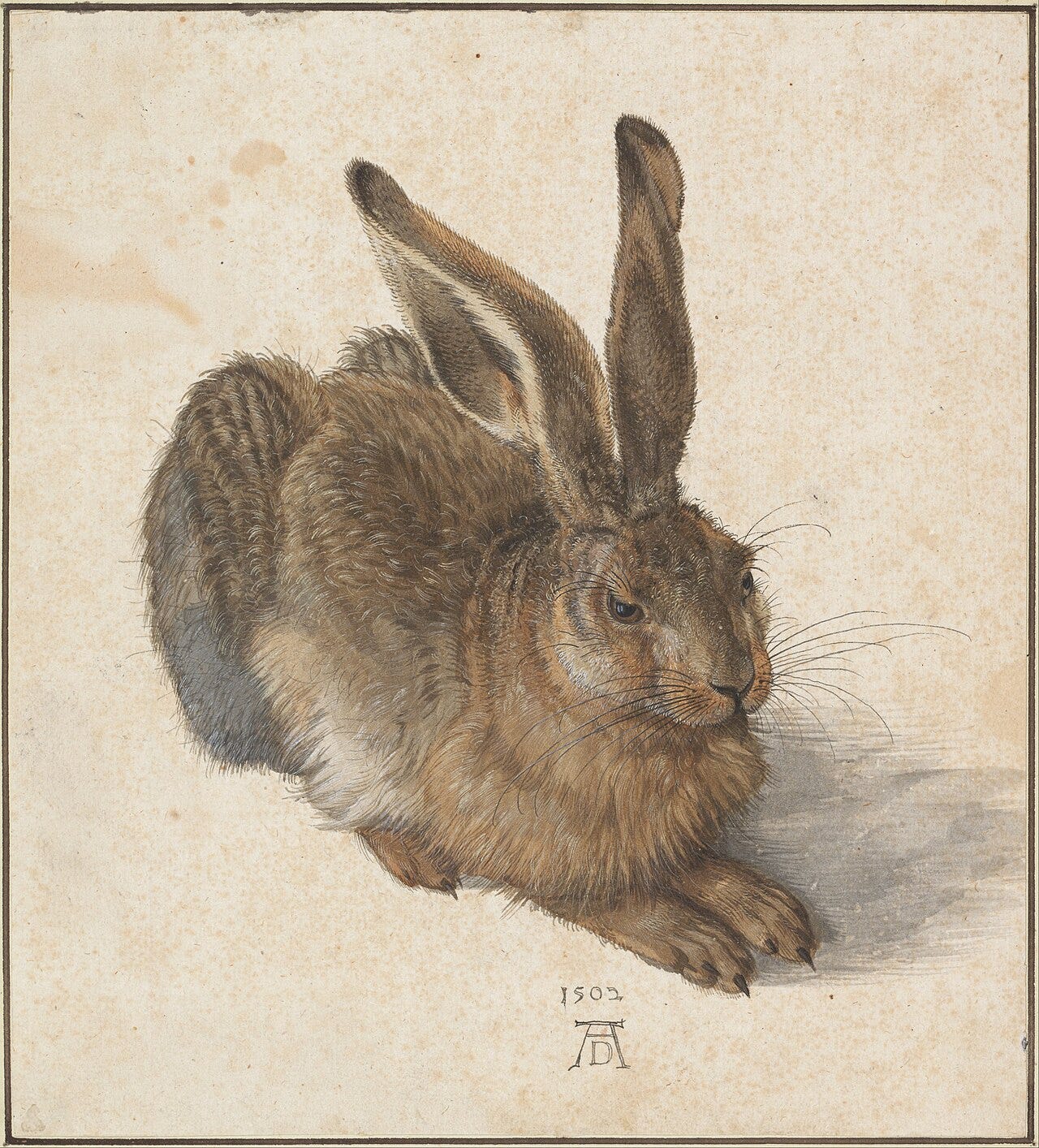
Durer’s watercolour hare of 1502 is one of the most reproduced animal studies ever made, and it is roughly the size of a sheet of paper.
A white rabbit at the feet of the Virgin means purity. A pair of rabbits in the corner of the same panel means the opposite.
Medieval manuscript margins are full of rabbits hunting and executing humans.
A dead hare in a still life is a status object: proof of a hunt, and proof of land.
One hare in a religious triptych sits directly under a scene of damnation.
Learn art the fun way
1 | Young Hare, Albrecht Durer (1502)
A watercolour and body colour study on paper, with every whisker separated and a tiny window reflected in the eye, which tells us the animal was in a room.
It is kept in the dark at the Albertina and shown rarely. More on him in Albrecht Durer, and on the medium in what is watercolor.
2 | The rabbits of the Garden of Earthly Delights, Hieronymus Bosch
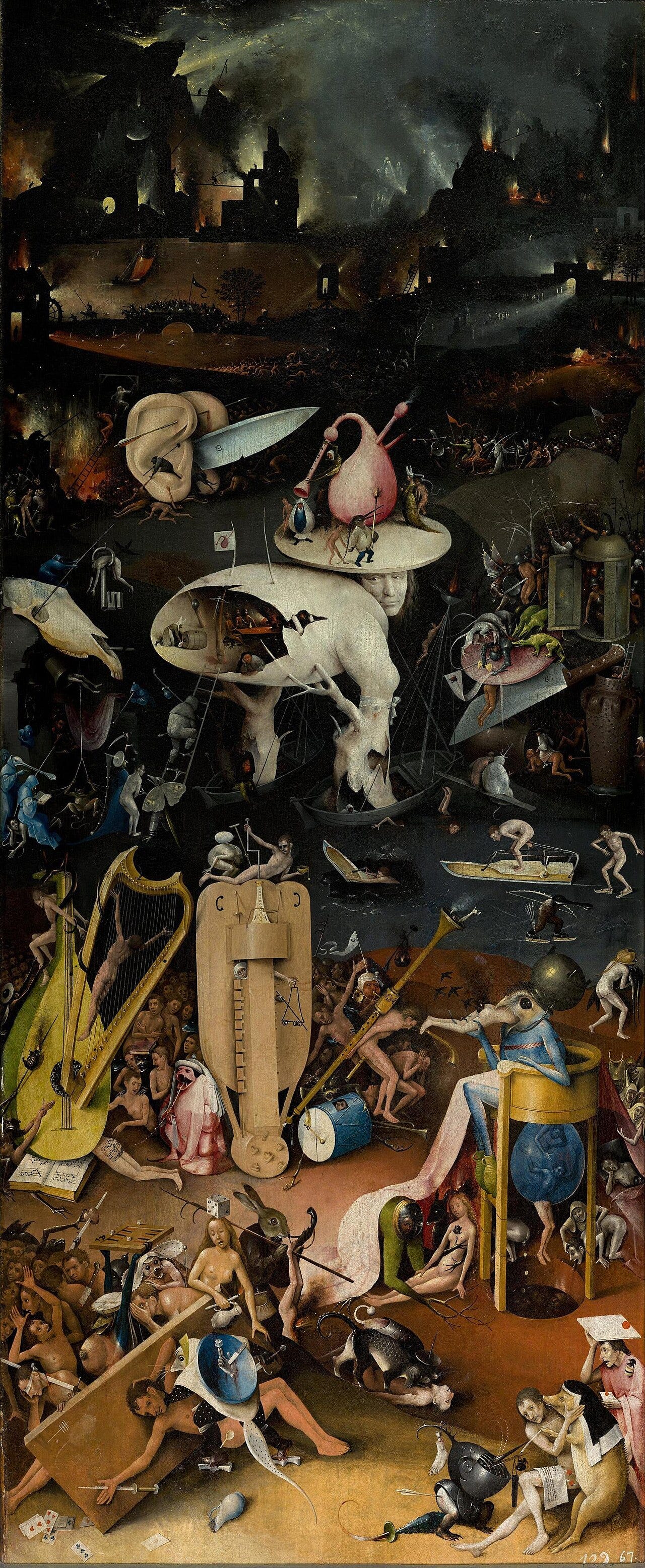
In the central panel rabbits are among the animals carrying people around, and in the right hand panel a hare carries a bleeding human strung on a pole, hunter and prey swapped.
More on him in Hieronymus Bosch, and on the format in what is a triptych.
3 | The Madonna of the Rabbit, Titian (around 1530)
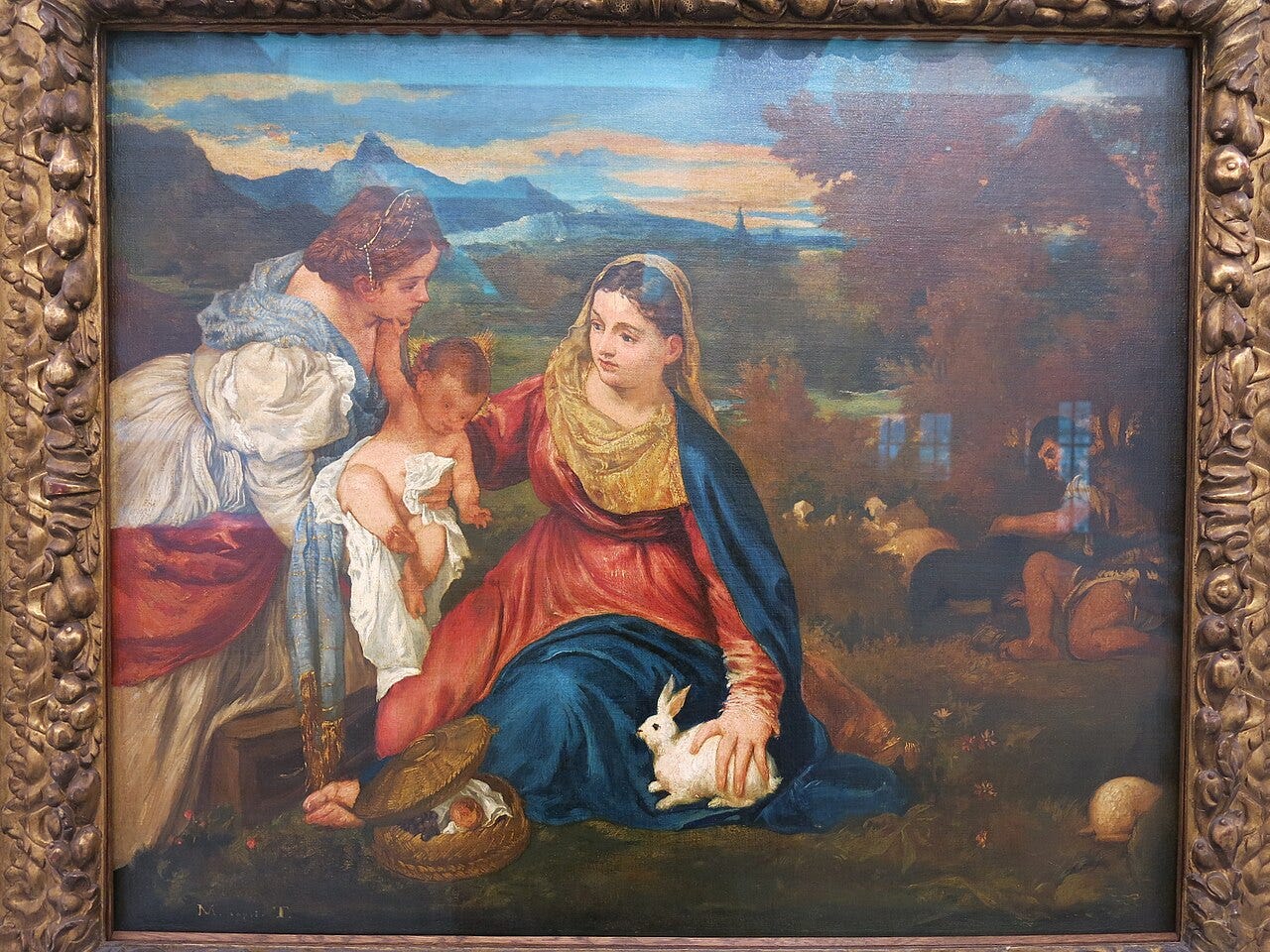
The Virgin holds a white rabbit down with her left hand. White is purity, and the animal held still is the appetite controlled.
It hangs in the Louvre. More on him in Titian.
It was painted around 1530 for Federico Gonzaga, Duke of Mantua, and reached the French royal collection under Louis XIV. The rabbit is white, held down, and placed at the exact centre of the lower half.
4 | The Arnolfini rabbits and the animal symbol trade
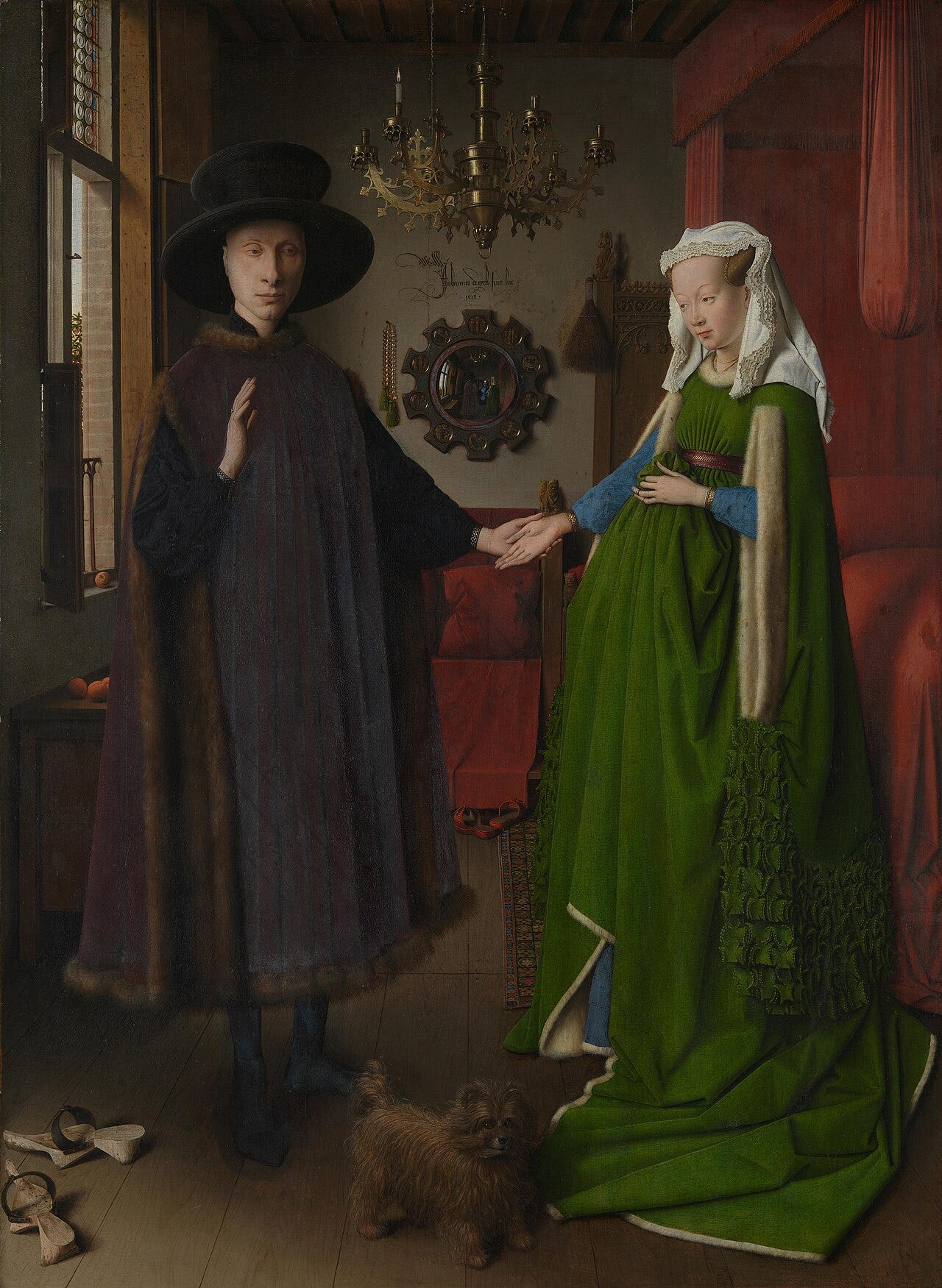
Van Eyck put a dog in the Arnolfini portrait, and painters of the same generation used rabbits the same way, as a compressed instruction to the viewer.
The system is set out in what is iconography. More on him in Jan van Eyck.
That panel is the densest set of hidden instructions in European painting. I take it apart in the Arnolfini Portrait, detail by detail.
5 | Killer rabbits in the margins
Fourteenth century manuscripts are full of rabbits with swords, beheading knights and dragging hunters to the gallows. The joke is the world turned upside down.
Scribes drew them in the margins where the rules of the main image did not apply.
The motif is common in French and Flemish books of hours of the fourteenth century. Scholars call it the world upside down, the same logic that puts a hare blowing a hunting horn or a snail chasing a knight.
6 | The dead hare in Dutch still life
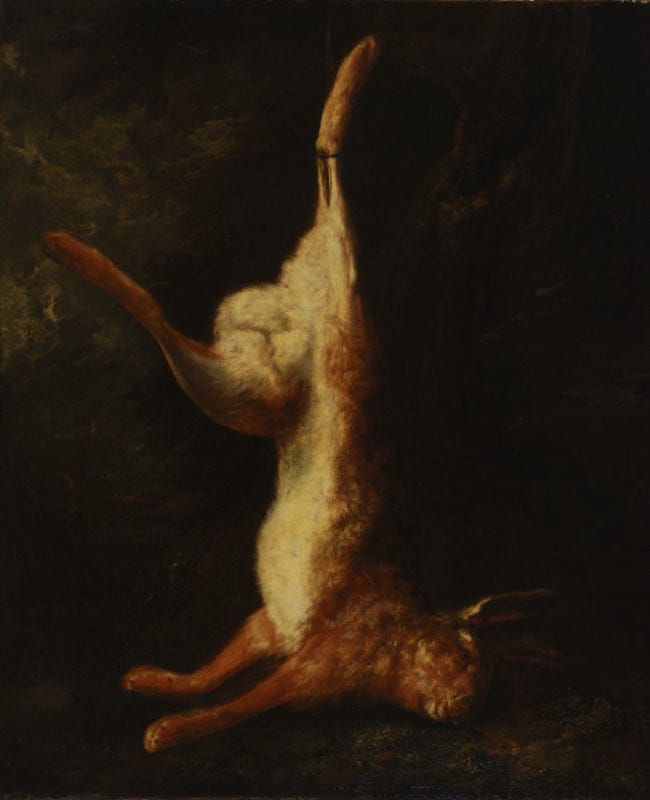
A hare hung by one leg beside grapes and a gun is a hunting piece, and hunting rights belonged to the nobility, so the picture is quietly about class.
More on the genre in what is still life painting.
The genre is called the jachtstuk, the hunting piece. Jan Weenix and Melchior d’Hondecoeter built careers on it, painting for owners of country estates where hunting rights were the point.
7 | Bruegel’s Hunters and the winter hare
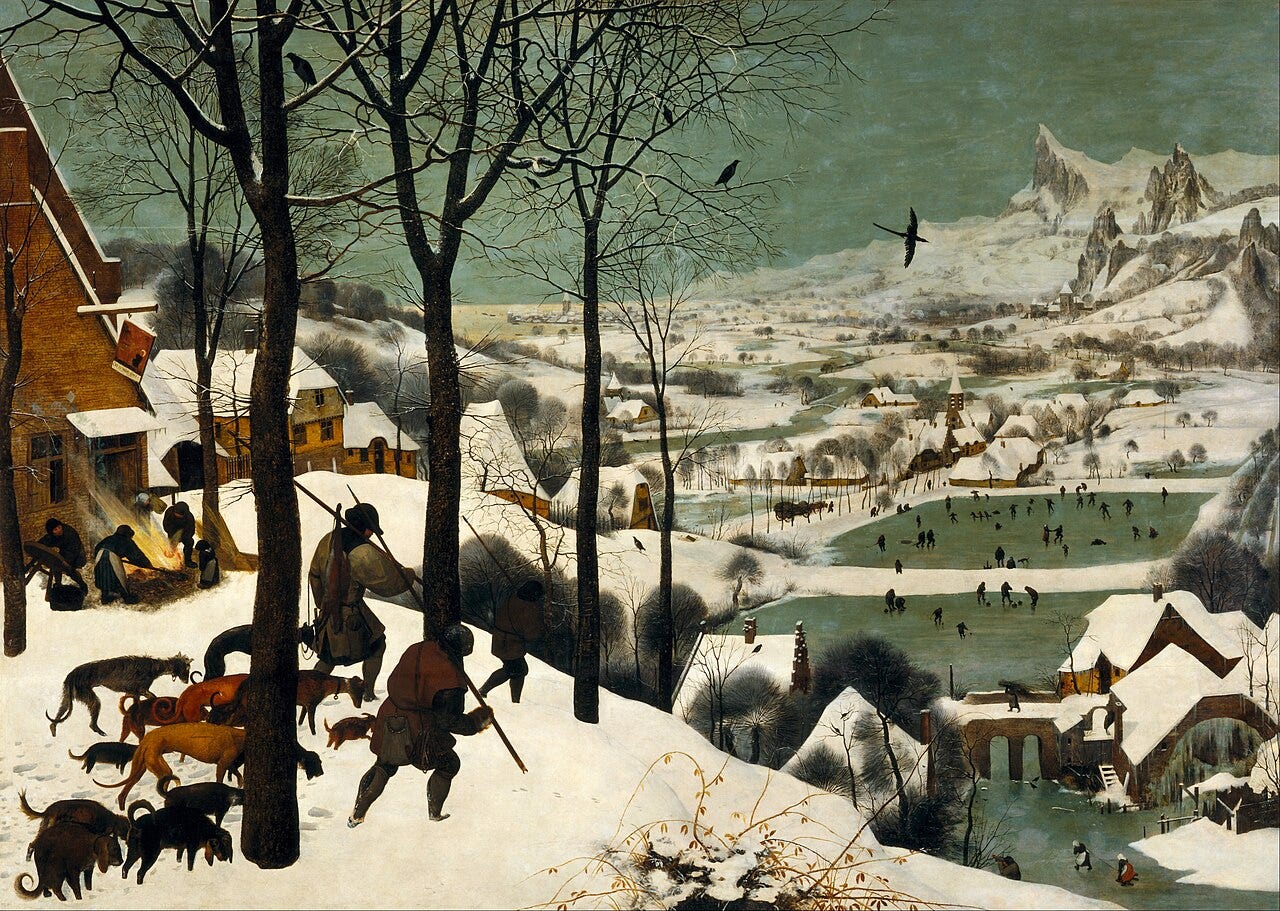
In Bruegel’s snow scenes the hunters return with almost nothing, and a single small animal on a pole says more about the winter than the whole white landscape does.
More on him in Pieter Bruegel the Elder.
The hunters carry one fox between three of them, and the dogs walk with their heads down. The panel is from the 1565 cycle of the seasons painted for Niclaes Jongelinck of Antwerp.
8 | The Easter hare
Ancient writers believed hares could conceive while already pregnant, which is close to true, and the church turned that into a symbol of virgin birth and resurrection.
That is why hares turn up on church carvings and in Nativity scenes.
The belief comes from Pliny and was repeated by medieval bestiaries, which is why the hare turns up carved on church misericords and roof bosses. The Easter bunny itself is a later German folk import.
9 | The three hares
A circle of three hares sharing three ears between them appears in caves in China, in Iranian metalwork, in synagogues and in Devon churches, across a thousand years.
Nobody has proved how the motif travelled, only that it did.
The oldest known examples are in the Mogao caves at Dunhuang, from the sixth or seventh century. In Devon alone there are around thirty church roof bosses with the motif, which is why it is sometimes called the Tinners’ Rabbits.
10 | Hares and melancholy in Northern art
The hare was thought to sleep with its eyes open, which made it a watchman animal and attached it to sleeplessness and brooding.
It is a small piece of the same symbol vocabulary as the skull and the hourglass.
11 | Rabbits as portrait props
Children were painted holding rabbits for two reasons at once: the animal was a real pet, and it read as innocence to any adult looking at the picture.
More on the genre in what is genre painting.
12 | Why the hare keeps coming back
It is one of the few animals that can be food, pest, pet, sacred sign and joke, sometimes on the same wall. Painters used it precisely because it refused to settle.
Read the placement, not the animal.
Hares on canvas, common questions
What does a rabbit symbolise in art? Usually fertility or lust, but a white rabbit held or controlled means purity, so the meaning depends on colour and placement.
How big is Durer’s Young Hare? Around 25 by 22 centimetres, close to a sheet of paper, made in watercolour and body colour in 1502.
Why are rabbits killing knights in manuscripts? It is a world upside down joke, drawn in margins where the rules of the sacred main image did not apply.
What is the three hares motif? Three hares in a circle sharing three ears, found from China to Devon across roughly a thousand years, with no proven origin.
Where is Young Hare today? The Albertina in Vienna for Durer, the Louvre for Titian, the Prado for Bosch.
Durer’s hare has a window reflected in its eye, with the frame bars visible. The most famous wild animal study in European art was painted from a rabbit sitting indoors.
Two collections worth an hour of your time: the Met and the Rijksmuseum.