
Repetition in art is the same image, motif, or gesture used again and again, and it is never neutral: repeat something enough and it turns into prayer, hypnosis, obsession, or product. Here are a dozen artists and traditions that repeated on purpose, the recent half in words only.
Repetition in 30 seconds
Repetition is the raw act. Organize it across a surface and it becomes pattern; give it direction and tempo and it becomes rhythm.
Repeating within one work builds texture and beat. Repeating across works builds a series, and series build meaning no single image can.
Sacred traditions repeated images to accumulate merit and devotion, centuries before galleries called it seriality.
Repetition numbs or sharpens. Say a word thirty times and it loses sense; show a face thirty times and you start seeing the mask.
The modern twist: repeating by hand proves devotion, repeating by machine questions it. Both make the point.
The Ravenna processions (6th century): repetition as litany
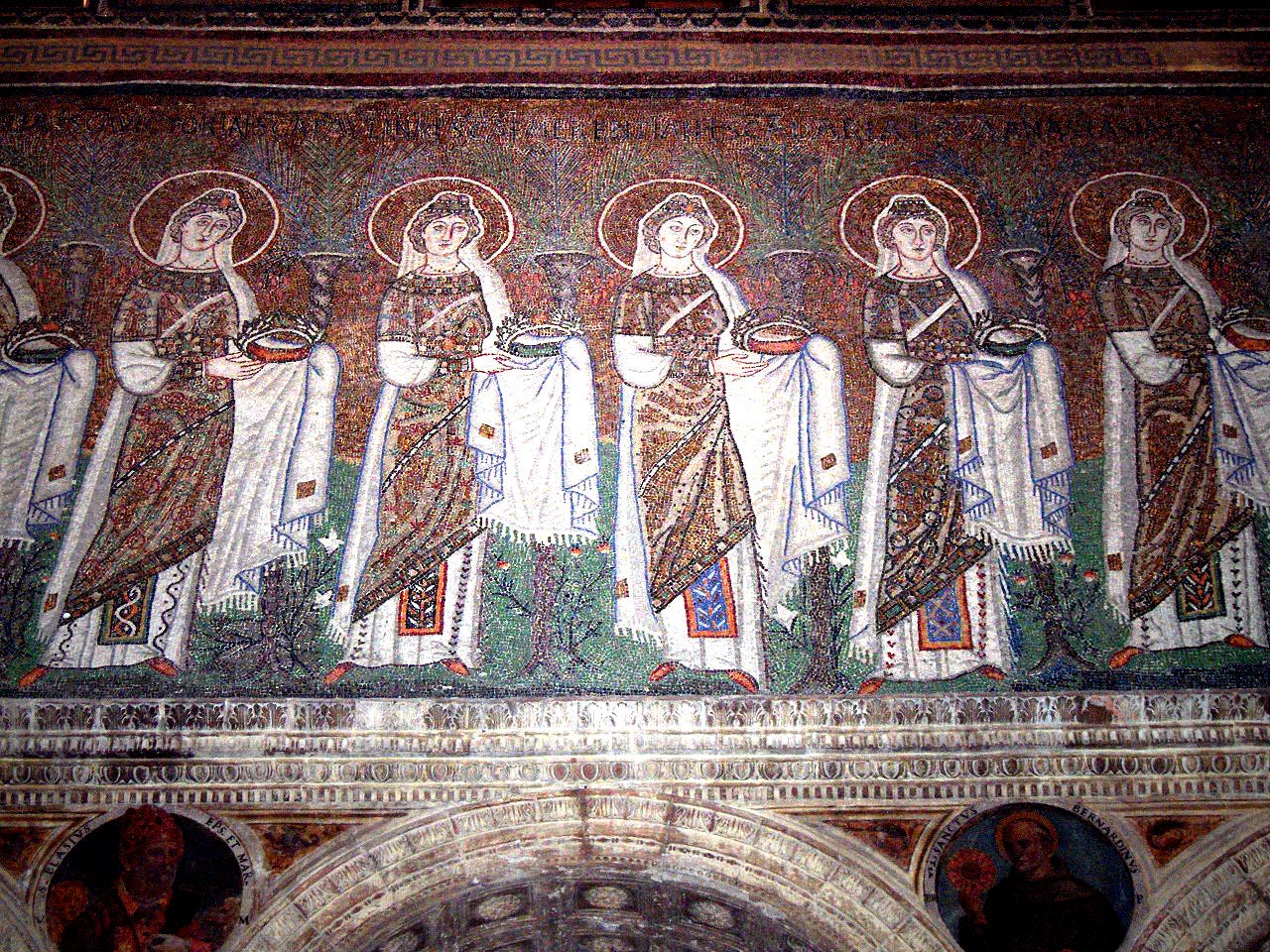
Twenty-two virgins, twenty-six martyrs, nearly identical, evenly stepped: the repetition works like chant, each figure another bead on the rosary of the nave.
Vary the saints too much and you would read them one by one. Repeat them, and you read a single unbroken prayer.
The Thousand Buddhas (Mogao caves, from the 4th century): repetition as merit
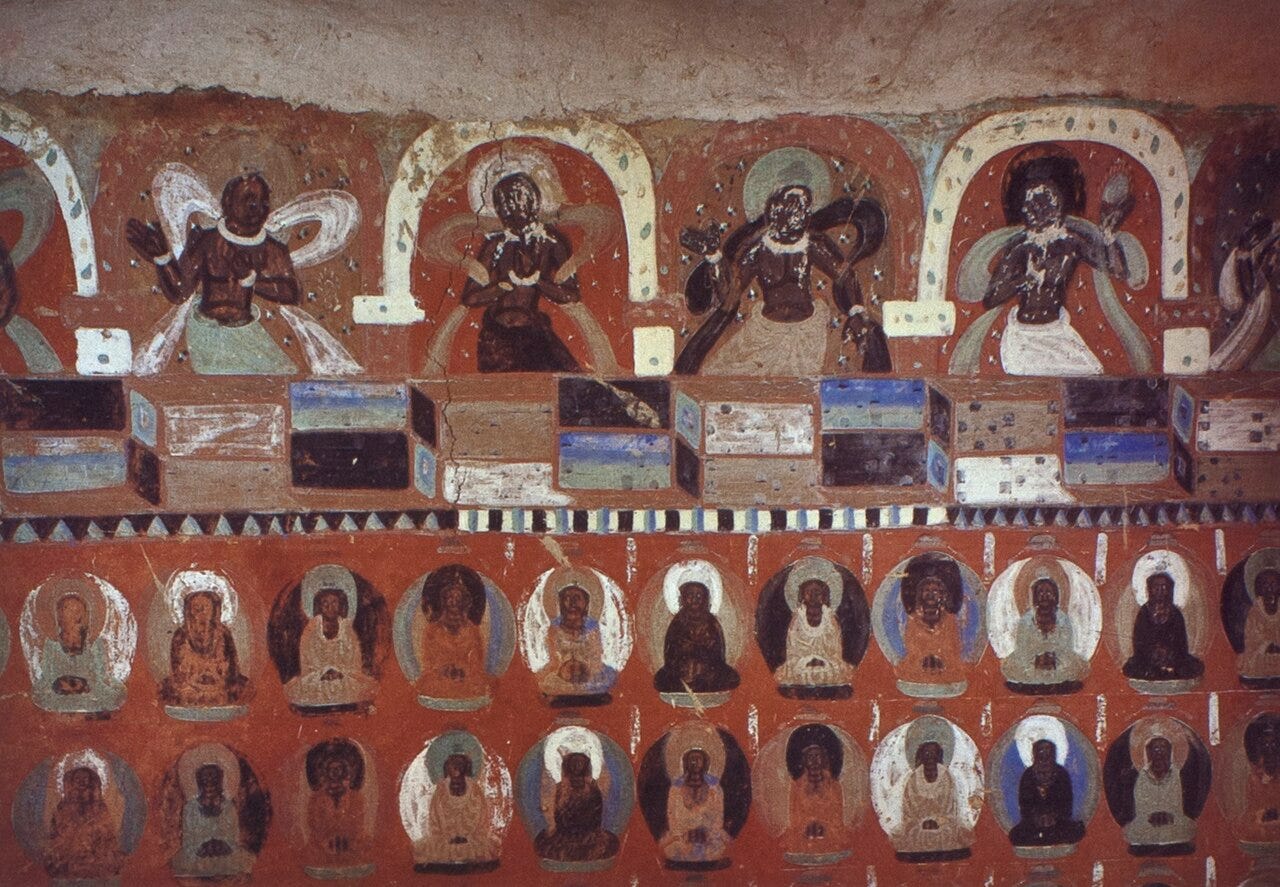
Whole cave walls around Dunhuang are gridded with small, near-identical seated Buddhas, hundreds per wall, painted with stencils and pounce bags. Each repeat earned merit for the donor who paid for it.
Repetition industrialized for devotion, a thousand years before anyone printed a poster.
Learn art the fun way


Monet, the Cathedrals and Haystacks (1890s): the series is the subject
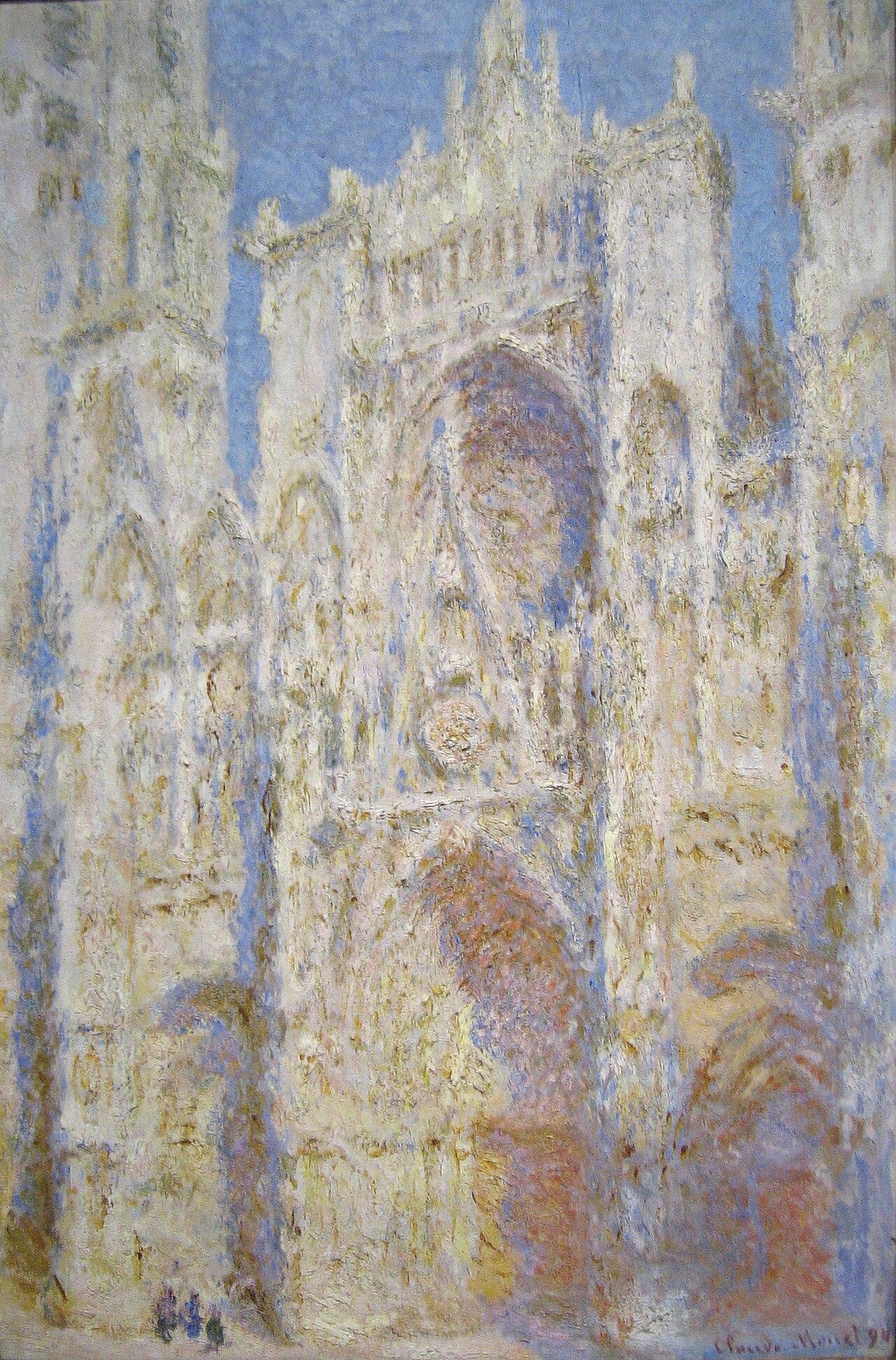
The same façade, the same stacks, painted dozens of times as the light moved: Monet repeated the motif so the differences would become visible. No single canvas is the artwork. The interval between them is.
He painted the Rouen Cathedral series mostly from a shop window facing the façade, and showed twenty together in 1895. His friend Clemenceau begged France to buy the set whole. It did not.
Hokusai, the Thirty-Six Views (c. 1830-1833): repetition builds a protagonist
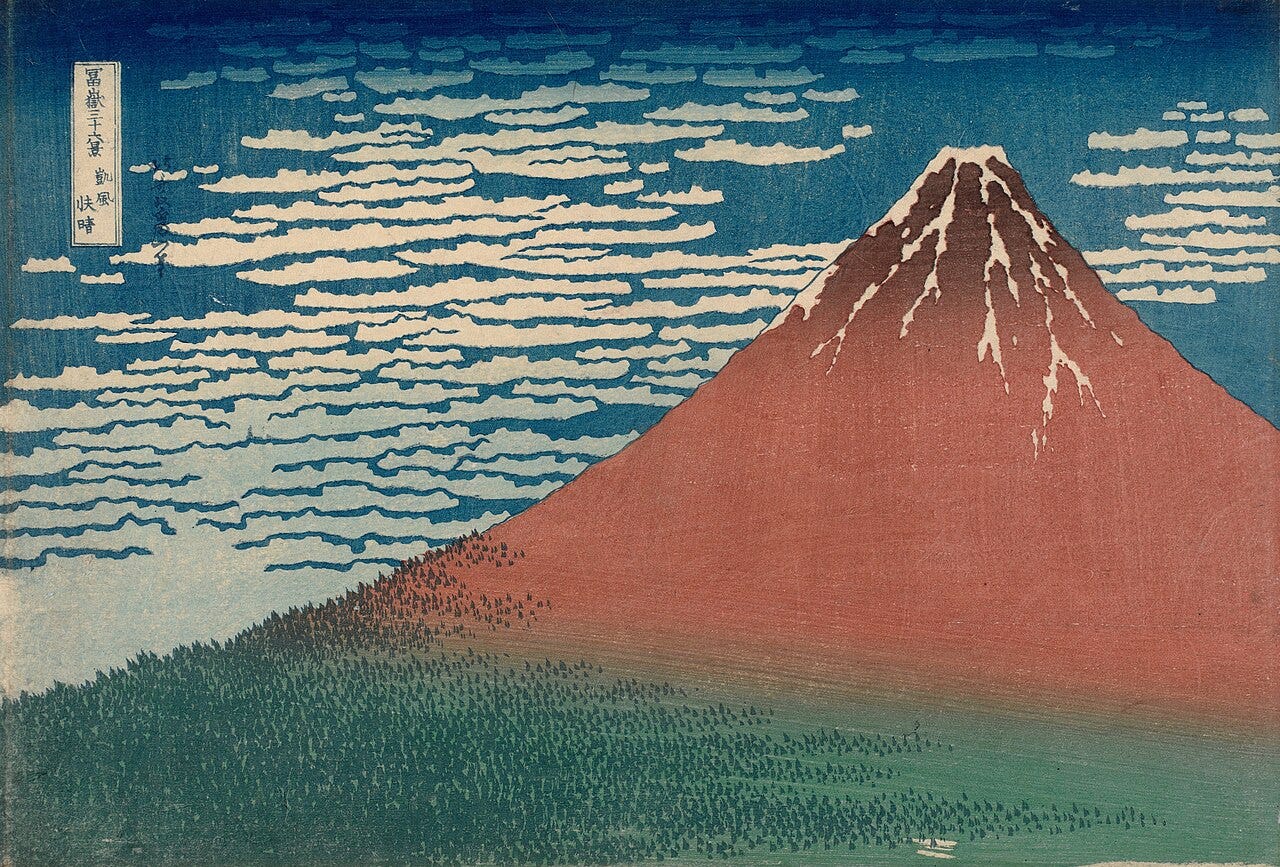
Print after print, Fuji returns: huge, tiny, red, framed by a wave or a barrel. By the end of the series the mountain has a personality. Hokusai repeated a landmark into a character.
He signed late works as the old man mad about painting, and hoped aloud to reach 110, when, he said, every dot and line would finally be alive.
Munch, The Scream, again and again (1893-1910): repetition as exorcism
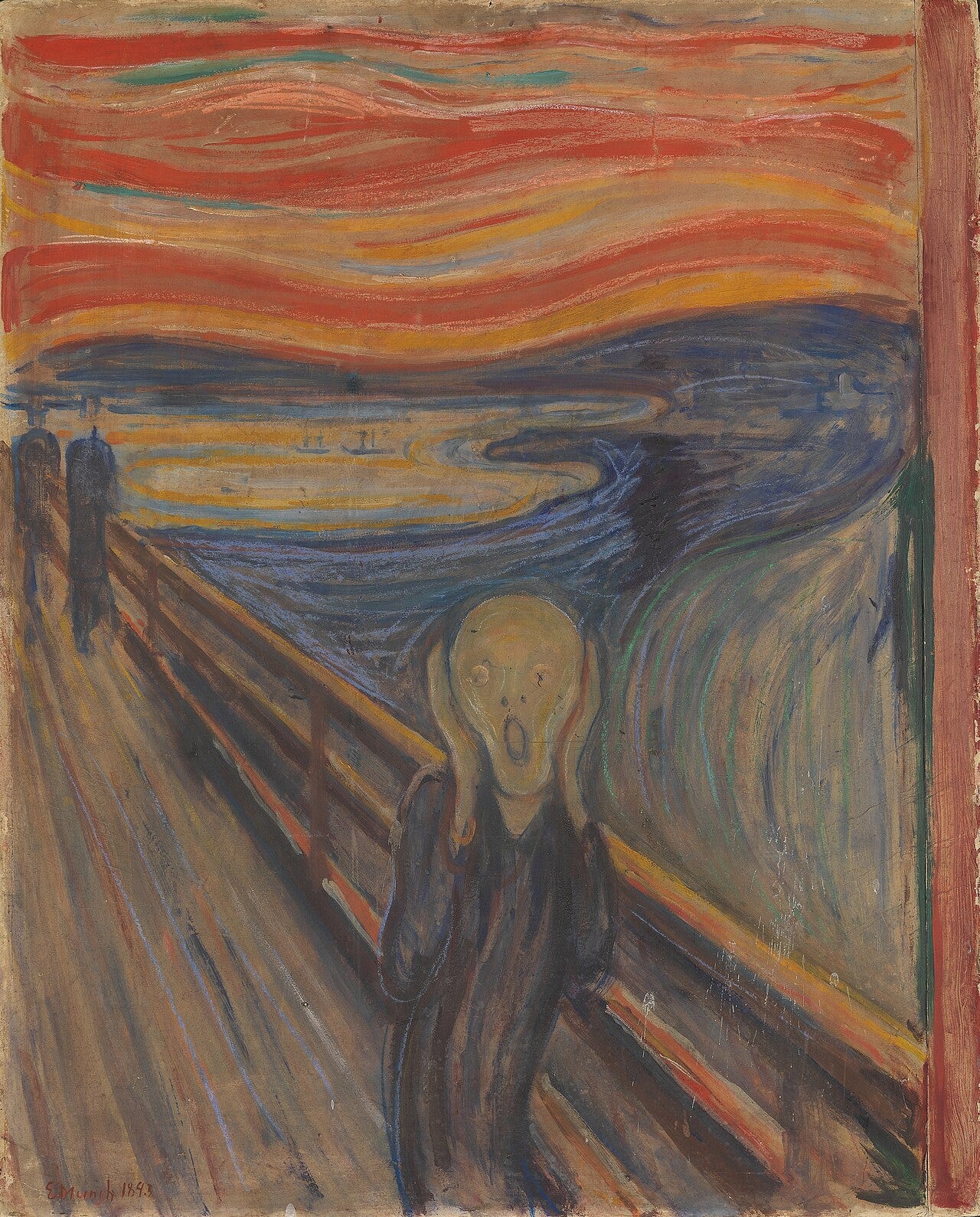
Two painted versions, two pastels, and a lithograph so the image could scream in print: Munch could not put the picture down. Some images are repeated because the maker cannot stop hearing them.
One of the pastels sold in 2012 for nearly 120 million dollars, then a record. Even the repeats of the repeat are priceless.
Repetition marked his whole career, and how Edvard Munch died is its own story.
Warhol: repetition as production line
Thirty-two soup cans, one per flavor Campbell’s then sold; Marilyn silkscreened until the face becomes wallpaper and the wallpaper becomes elegy. Warhol said he wanted to be a machine, and made repetition itself the subject. Rights are enforced in some countries, so words only.
The obsessives: Kusama and Riley
Yayoi Kusama has repeated dots since childhood hallucinations she describes as self-obliteration, covering rooms, pumpkins, and herself. Bridget Riley repeats stripes and curves until the eye itself starts to move. For both, repetition is not a technique but a condition.
The systems: Albers, Kawara, Martin
Josef Albers painted his Homage to the Square for a quarter century, hundreds of nested squares testing how colors change each other. On Kawara painted the day’s date, nearly three thousand times over five decades, destroying any canvas unfinished by midnight. Agnes Martin drew six-foot grids in pencil, faint as breath.
Repetition as experiment, as clock, as meditation. The same act, three different prayers.
You Might Also Like


Repetition is one of eleven principles that organize a composition. See how it connects to the rest in the complete elements and principles of art guide.
Quick answers
What is repetition in art? Using the same element, image, or gesture multiple times, within one work or across a series, to build meaning, rhythm, or intensity.
How is repetition different from pattern? Repetition is the act; pattern is one organized outcome. Repeat a motif to fill a surface and you get pattern; repeat a whole painting and you get a series.
Why do artists repeat images? To accumulate devotion, to study change against a constant, to mirror obsession, or to question mass production. The reason changes; the power of the repeat does not.
What is a famous example of repetition? Monet’s Haystacks and Cathedrals, Hokusai’s Thirty-Six Views, Munch’s multiple Screams, and Warhol’s soup cans, four centuries-spanning answers to the same instinct.
Where to see these works
The Ravenna mosaics line Sant’Apollinare Nuovo, and the Mogao caves survive near Dunhuang in western China, with murals also held in museums from London to Delhi.
Monet’s Cathedrals hang in Orsay, Washington, and beyond; the Haystacks are scattered worldwide. The Scream versions live in Oslo, between the Nasjonalmuseet and the Munch Museum.
One last fact
When one of Monet’s Haystacks sold for 110 million dollars in 2019, it was one of twenty-five closely related canvases. Repetition, the market agrees, does not dilute an image. It multiplies it.