
Rhythm in art is the repeated visual beat, a shape, a color, or a line, that sets the pace at which your eye travels through a painting, the same way a drumbeat sets the pace of a song. It is a pacing device, not a decoration.
Rhythm in art, mapped in four beats
One line definition: repeated visual elements that control the speed and direction your eye moves across a composition.
What it does: turns a static image into something your eye experiences over time, almost like reading.
Four basic types: regular, alternating, progressive, and flowing rhythm, each moving the eye at a different speed.
Not the same as pattern: pattern repeats without implying movement, rhythm repeats in a way that pulls your eye forward.
I used to think rhythm was just a fancy word critics used for repetition. It is not. Repetition on its own is pattern, wallpaper. Rhythm only exists once that repetition starts to imply a direction, a tempo, a next beat you expect before you even see it.
A brick wall has pattern. A row of dancers linking arms mid step has rhythm, because your eye keeps moving from one figure to the next, anticipating where the line goes.
How painters actually build it
Most painters build rhythm with one of three tools: repeated shapes, repeated color accents, or repeated directional lines. Once one of those repeats at least three times in a composition, most eyes start reading it as a beat rather than a coincidence.
The spacing matters as much as the repetition itself. Evenly spaced repeats read as calm and steady. Repeats that get closer together, or curve, or speed up toward one edge of the canvas, read as motion, urgency, or a build toward a climax.
Four named examples, and how each one paces your eye
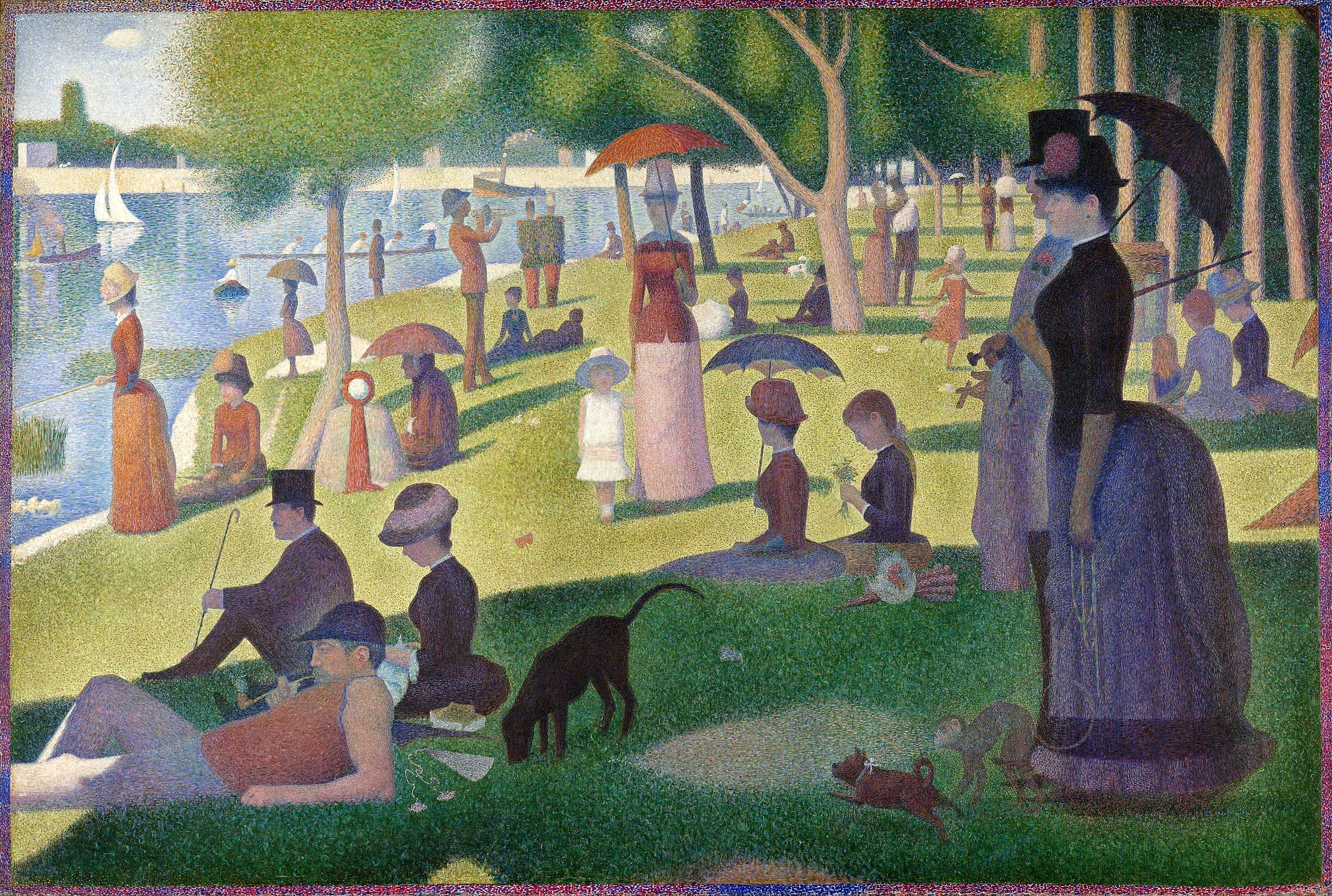
Georges Seurat built A Sunday on La Grande Jatte from thousands of tiny dabs of paint, but the real rhythm in the painting is not the dots, it is the row of upright figures standing at even intervals across the park, each one a slightly different silhouette playing the same visual note.
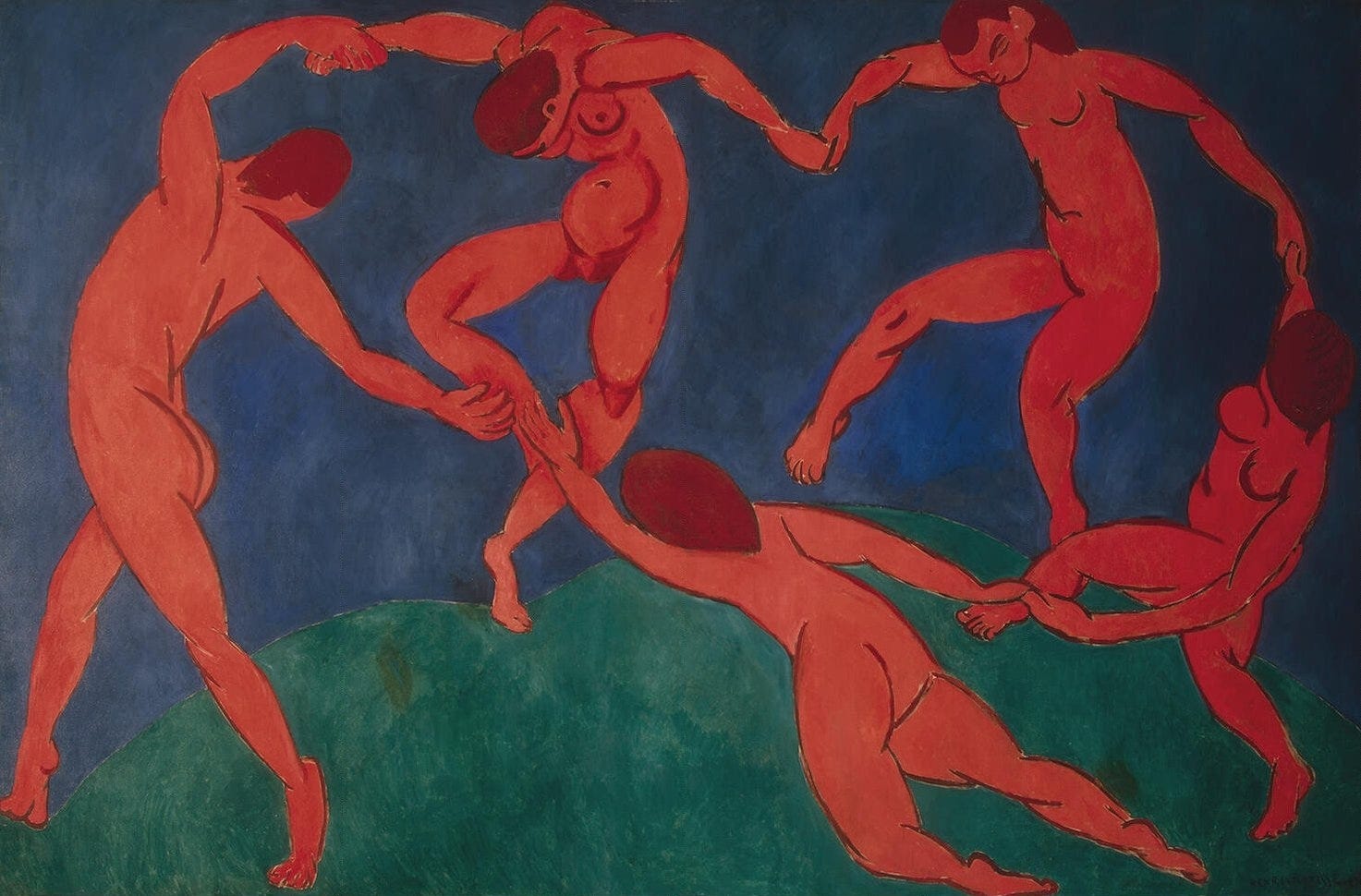
Matisse painted five nude figures holding hands in a closed circle, and the rhythm here is continuous rather than stepped, one unbroken loop of linked arms that keeps your eye circling the canvas instead of settling anywhere.
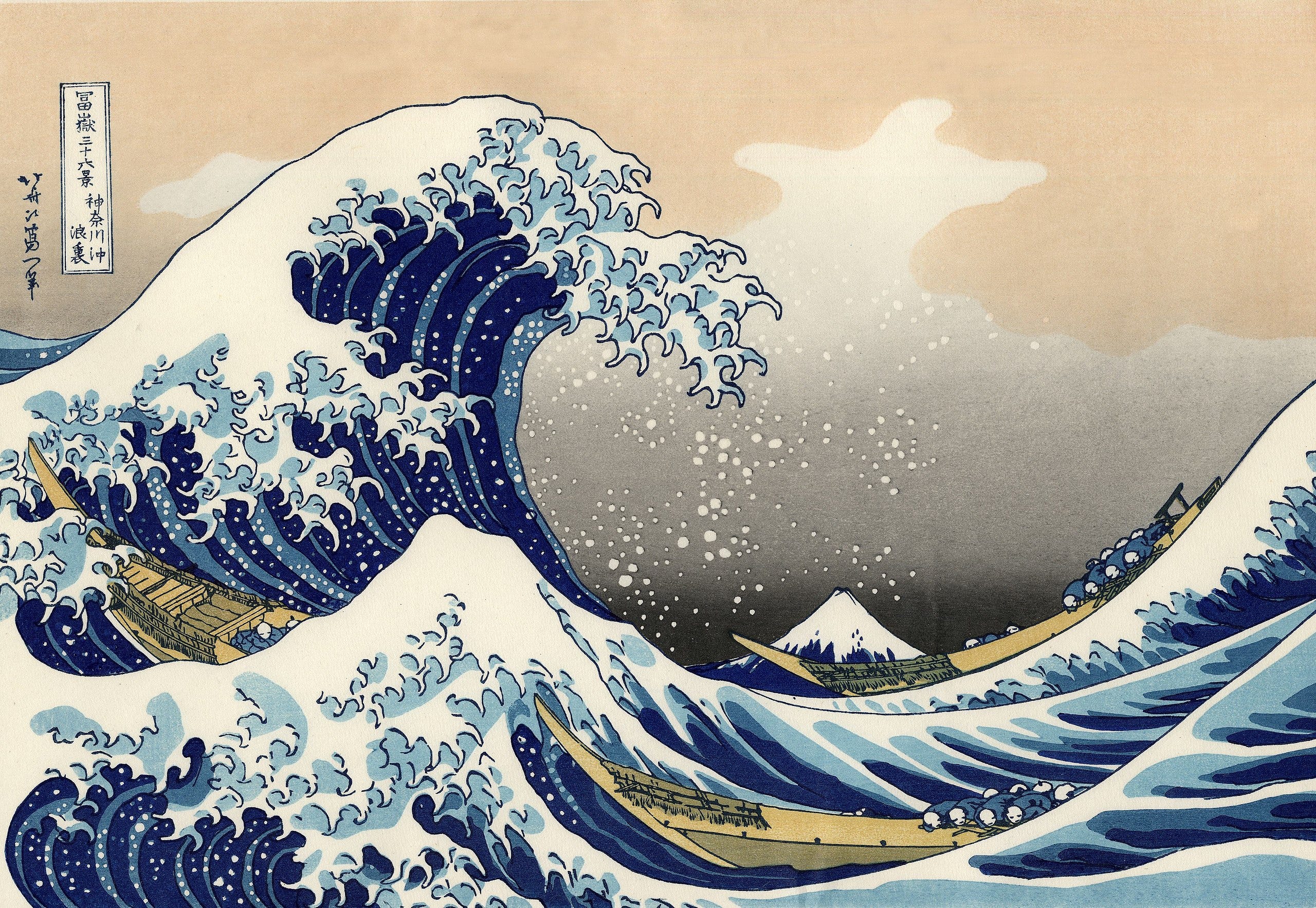
Katsushika Hokusai's The Great Wave off Kanagawa repeats the same claw shaped wave crest three times at shrinking scale, a progressive rhythm that speeds up as it recedes toward Mount Fuji in the background, mimicking how a real wave breaks apart into smaller ones.
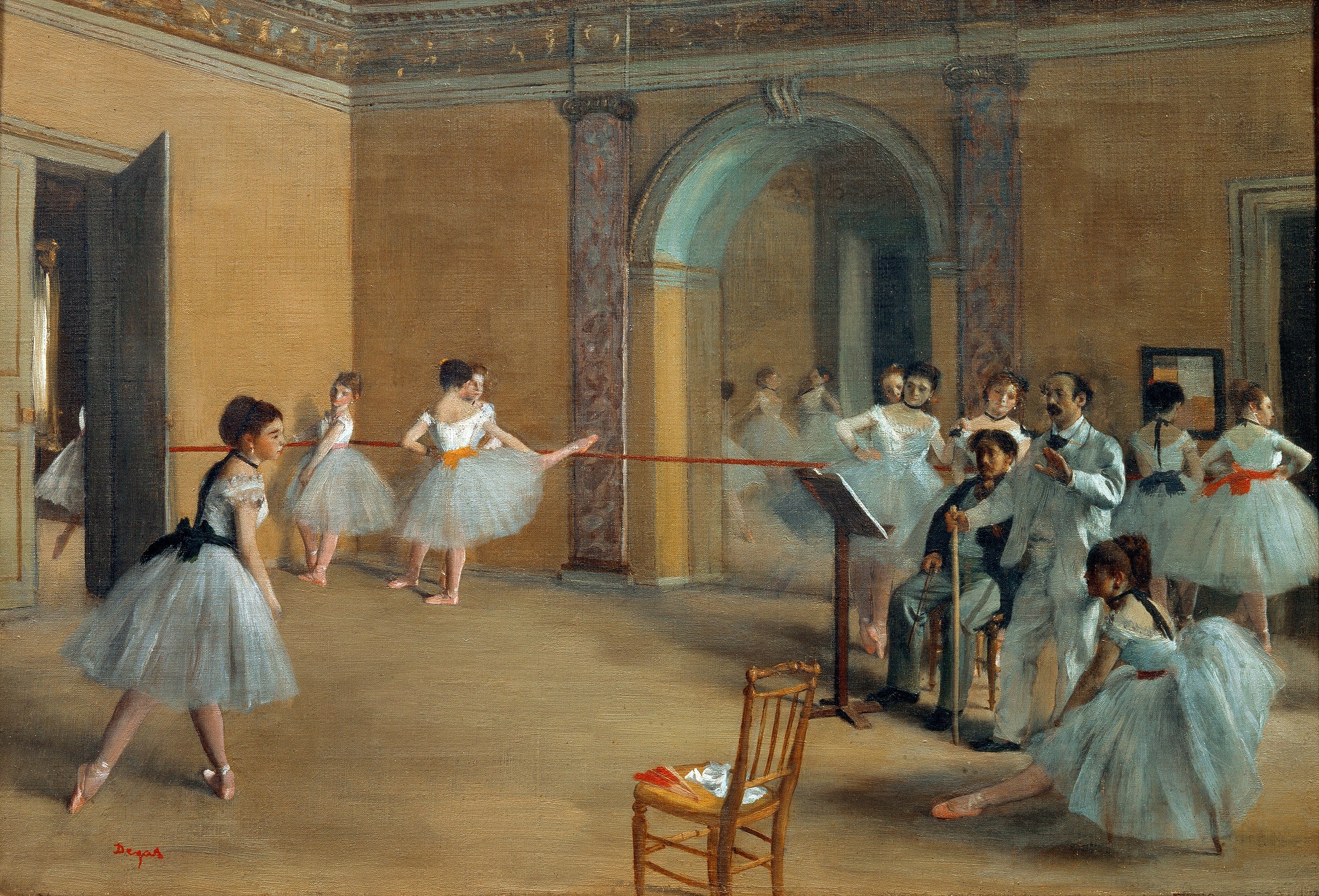
Edgar Degas painted the same repeated ballerina poses across The Dance Foyer at the Opera, legs bent at matching angles in a loose diagonal line, turning a crowded rehearsal room into something closer to sheet music than a snapshot.
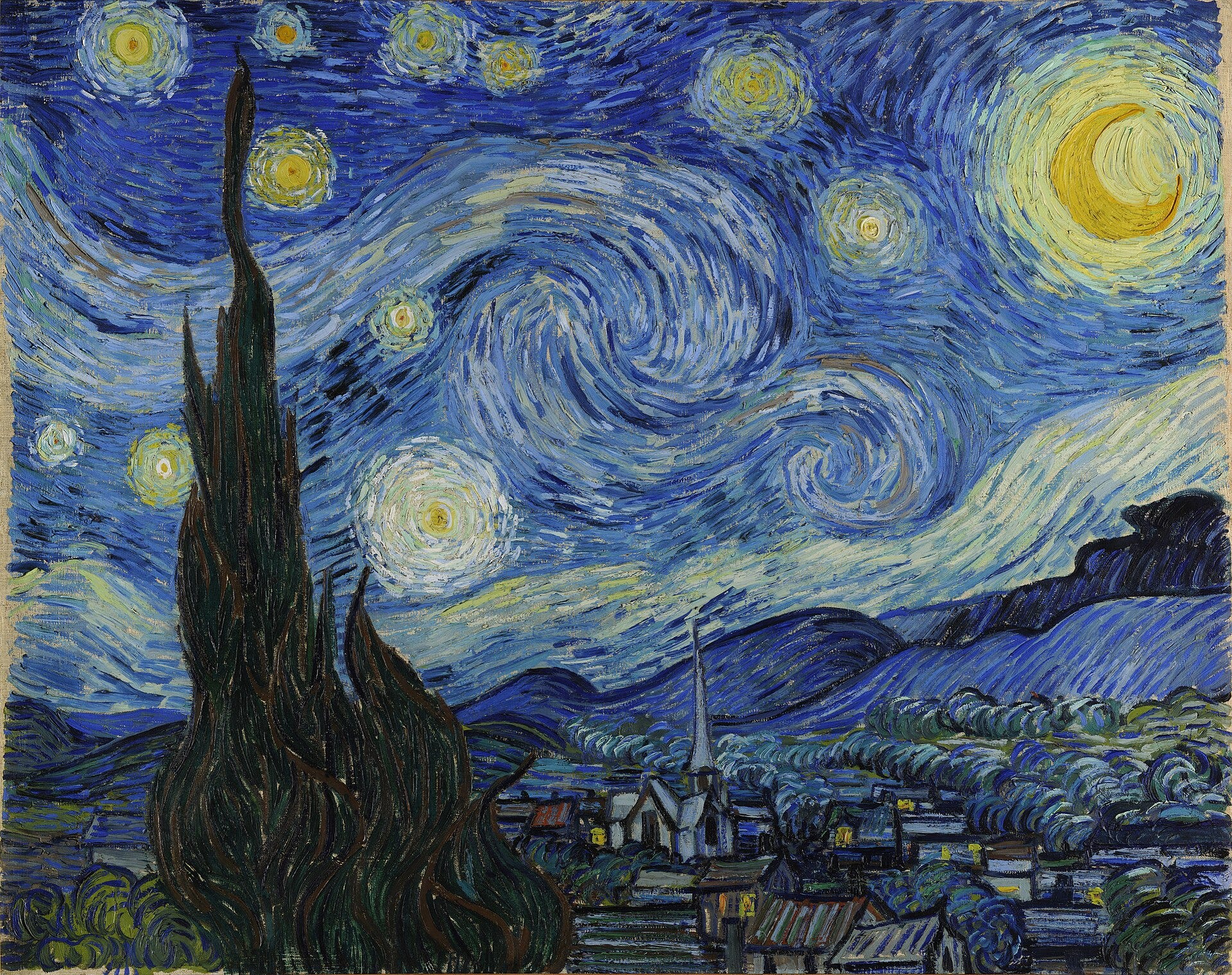
Vincent van Gogh took the opposite approach in The Starry Night, replacing repeated objects with repeated brushstrokes, curling loops of paint that repeat at almost the same width across the whole sky, creating a rhythm you feel in the paint surface itself rather than in any single shape.
Keep learning art the fun way
Three more stories on paintings built around a single repeated device, the same trick rhythm relies on.


The four types of visual rhythm, one at a time
Regular rhythm: identical shapes repeated at even intervals, the calmest and slowest reading speed.
Alternating rhythm: two elements swapping back and forth, which reads faster because your eye keeps comparing the two.
Progressive rhythm: a shape that grows, shrinks, or changes gradually each time it repeats, building a sense of motion or approach.
Flowing rhythm: curved, connected lines with no hard repeats at all, the loosest and most continuous reading speed.
Where to see it in person
The Art Institute of Chicago holds Seurat's La Grande Jatte, and the Museum of Modern Art in New York holds Van Gogh's The Starry Night, both large enough in person that the repeated rhythm is far easier to feel standing in front of the canvas than on a screen.
Standing close enough to lose the whole composition and only see three or four repeats at a time is usually when the rhythm clicks. From across a room it just reads as a picture. Up close, it reads as a beat.
More secrets to unlock


Rhythm in art, quick questions
What is rhythm in art in simple terms?
It is the repeated use of a shape, color, or line that sets a pace for your eye as it moves across a painting, similar to how a beat sets the pace of a song.
What is the difference between rhythm and pattern in art?
Pattern is repetition without implied movement, like tiles on a floor. Rhythm is repetition that pulls the eye in a direction, giving the composition a sense of tempo.
What are the main types of visual rhythm?
Regular, alternating, progressive, and flowing rhythm, ranging from calm and evenly spaced to fast, building, or continuously curved.
Which famous paintings use rhythm well?
Georges Seurat's A Sunday on La Grande Jatte, Henri Matisse's Dance, Katsushika Hokusai's The Great Wave off Kanagawa, and Edgar Degas's ballet scenes are frequently cited examples of deliberate visual rhythm.
Does rhythm only apply to painting?
No. The same idea applies to sculpture, architecture, and photography, anywhere repeated elements are spaced to create a visual tempo rather than pure decoration.
How can I train my eye to notice rhythm in a painting?
Look for any shape, color, or line that appears three or more times, then trace the order your eye naturally follows between those repeats. If it feels directional rather than random, that is rhythm.