
Richard Dadd (1817 to 1886) was an English painter, famous for tiny, crowded scenes of fairies, many of them taken from the plays of Shakespeare.
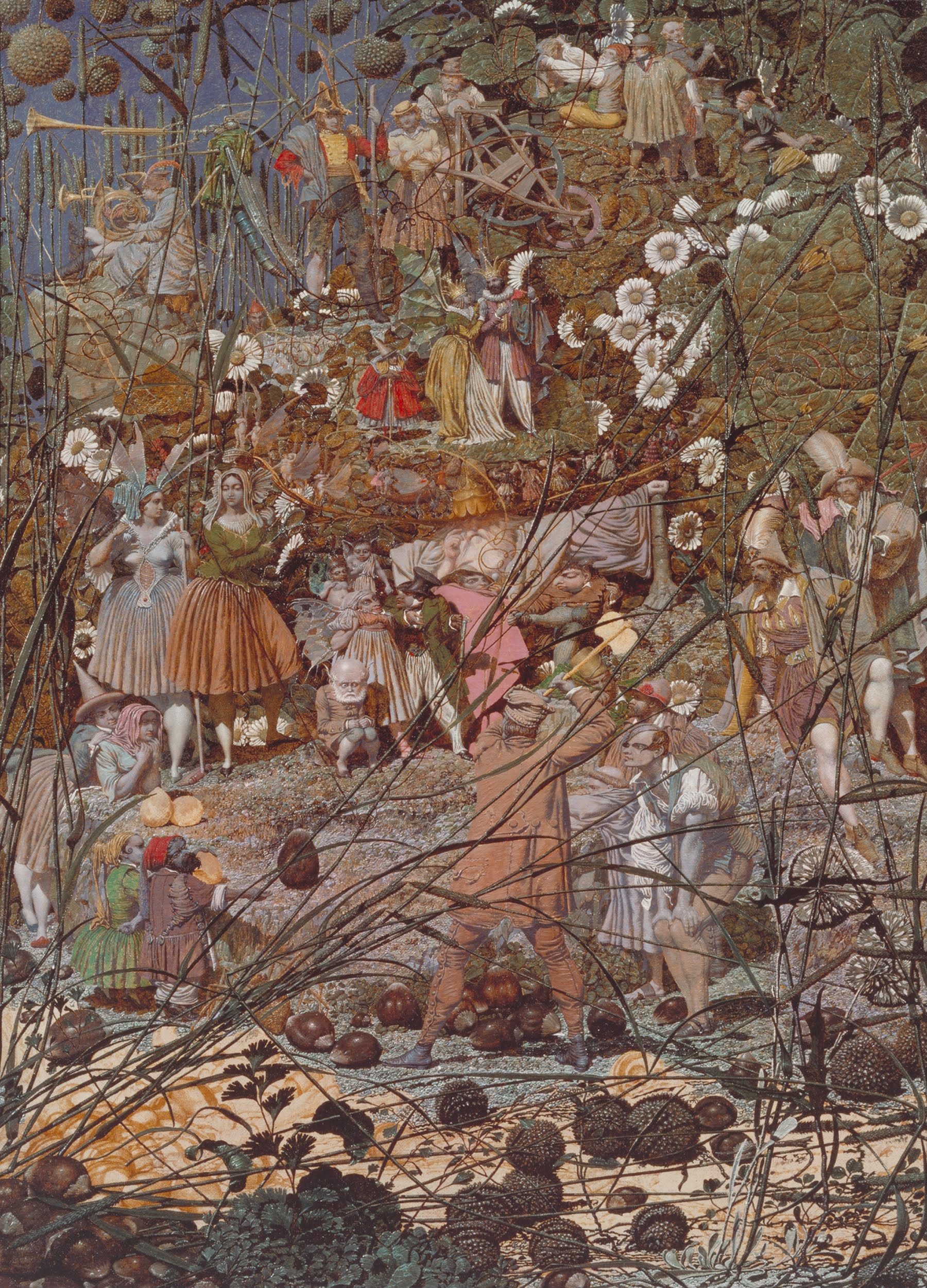
*Dadd's best-known picture, The Fairy Feller's Master-Stroke, hangs at Tate Britain in London. A "feller" is a woodcutter, and in the picture dozens of fairies hide in the grass, waiting for him to split a nut with a single blow.*
In 1843, during a severe mental illness, Richard Dadd killed his father. He spent the next forty-two years locked away in hospitals for the mentally ill, where he never stopped painting.
Cool Stories About Art is a newsletter to learn art the fun way.
Join 200,000+ readers and get:
10 new art stories / month
The entire archive of content (140+ articles)
Comment, ask questions, and chat with other readers
Richard Dadd was born in 1817 in Chatham, a town in Kent, southeast of London. His father, Robert Dadd, was a chemist, the British word for a pharmacist. Richard was the fourth of seven children, and his mother died when he was six.
In the mid-1830s, the family moved to London. In 1837, Richard entered the school of the Royal Academy, the official society of British artists. The school was free, and the Academy's yearly exhibition could launch a young painter's career.
Richard was the most diligent student of his year, and in 1840 he won a medal for drawing from a live model.
At the school, Richard made friends with William Powell Frith, who would become one of the most popular painters in England. With other students, they formed a sketching club, The Clique. Once a week, each member drew the same subject, often a scene from Shakespeare, and the group voted for the best sketch.
Shakespeare's plays are full of fairies, and Richard began to paint them. In 1841, at twenty-three, he showed his first fairy pictures, both taken from A Midsummer Night's Dream, Shakespeare's comedy about the king and queen of the fairies. The Royal Academy hung one of them in its yearly exhibition.
In 1842, a rich Welsh lawyer, Sir Thomas Phillips, hired Richard to draw the sights of a long journey that would take them as far as Egypt. Ten months later, Richard came home gravely ill.
How did a young painter of fairies, locked away for killing his father, become an artist Britain still celebrates?
In the rest of the story
What he believed had taken hold of him on the Nile.
What a doctor urged the family to do when he came home.
Who ordered his most famous picture, and why it was never finished.
How the fairy picture became a song by the rock band Queen.