
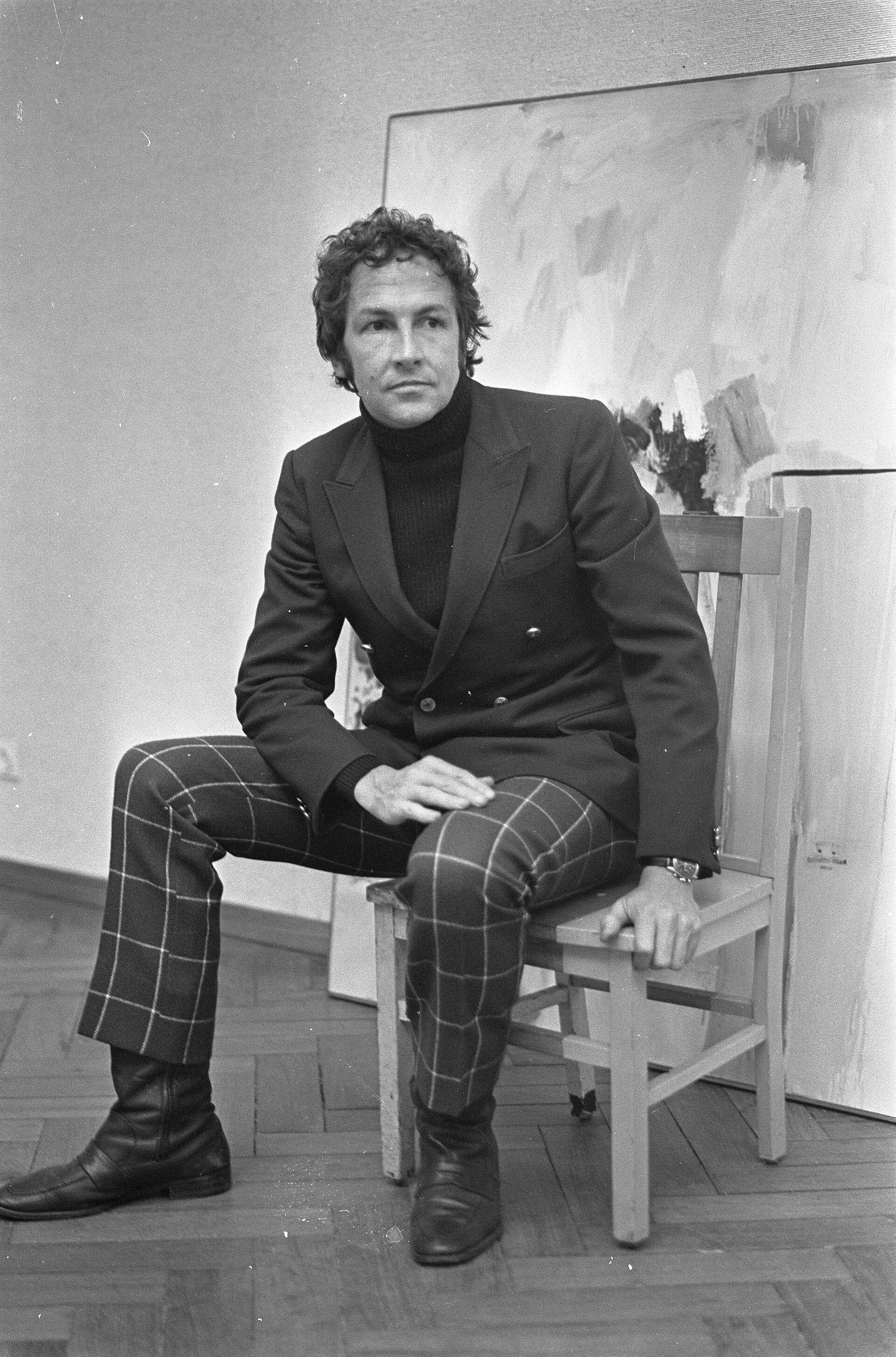
Robert Rauschenberg was an American artist, born in Port Arthur, Texas, in 1925, who died at his home on Captiva Island, Florida, in 2008. In the 1950s he invented the Combines, works that sit between painting and sculpture and that were built from a pillow and a quilt, a stuffed goat and a stuffed bald eagle.
He is remembered above all for erasing a drawing by Willem de Kooning, and in 1964 he became the first American to win the grand prize for painting at the Venice Biennale.
Rauschenberg kept asking what a painting could be made of, and he found his answers close at hand: in his own bed, in a dead man's junk heap, in another artist's drawing.
Cool Stories About Art is a newsletter to learn art the fun way.
Join 200,000+ readers and get:
10 new art stories / month
The entire archive of content (1,000+ articles)
Comment, ask questions, and chat with other readers
One of the most famous things Rauschenberg ever made is a sheet of paper that looks almost empty. In the fall of 1953 he asked Willem de Kooning for a drawing and told him why: he meant to erase it. De Kooning agreed, with what Rauschenberg remembered as some reluctance and consternation, and Rauschenberg then spent almost a month rubbing out the other man's marks.
The story is usually told with a flourish. De Kooning, it goes, deliberately picked a drawing he would miss, so that the job would be hard. In 1977 Rauschenberg told the critic Calvin Tomkins the opposite. De Kooning had looked through the first of several portfolios and turned it down. "No, I'd miss one of these too much," he said, and the flourish went out of the story.
There is a second surprise, and it is on the page itself. A nearly blank sheet proves nothing by itself. The words that turn it into a work of art, the ones that say whose drawing was erased and by whom, are not in Rauschenberg's hand. They were added two years later.
What You'll Discover
Who he defied at Black Mountain.
Whose hand wrote the label.
What a quilt kept saying.
Why the eagle was worth nothing.
Why the French called it betrayal.
Who paid for a world tour.