
A Roman statue was made so that people would know whose face they were looking at, and then it was put to use. Heads were moved onto other bodies, and conquerors carried statues home as loot. What survives keeps stories that took centuries to piece together, and one of them was worked out by a hairdresser in Baltimore.
Cool Stories About Art is a newsletter to learn art the fun way.
Join 200,000+ readers and get:
10 new art stories / month
The entire archive of content (140+ articles)
Comment, ask questions, and chat with other readers
What Rome Asked of Its Sculptors
Rome needed sculpture to do a job. Families kept portraits of their dead to show their rank, and emperors put their faces and their wars on arches, columns and city squares, so that people far from Rome knew who ruled them.
Romans also admired Greek statues and paid workshops to copy them in marble for villas and baths, which is why many Greek works survive only as Roman copies. Many statues, Greek or Roman, were painted.
The twelve here were made in the Roman world between about 100 BC and the 4th century AD, and only two are copies of Greek works. In almost every case, something has changed since a Roman saw it, or was misunderstood for centuries, and each entry follows how that came to light.
12. Fonseca Bust (about AD 100)
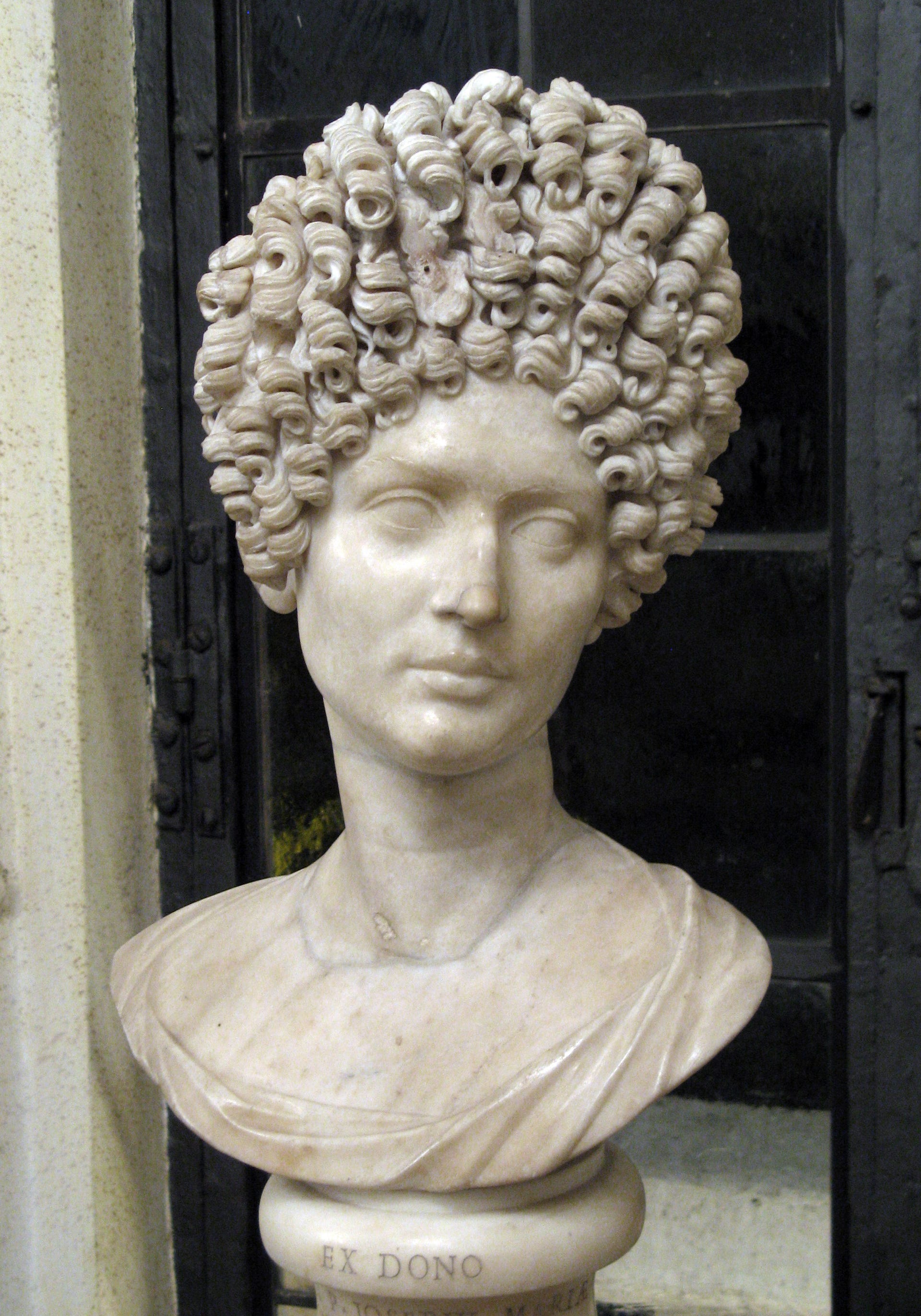
Above her forehead, this young woman wears a high crescent of curls, drilled so deep into the marble that each one throws its own shadow. At the back, her hair is gathered into a wide coil of tiny braids. Nobody knows who she was. The portrait, known as the Fonseca Bust, was carved around AD 100.
Roman writers mocked hair like this. The satirical poet Juvenal describes a woman whose head rises in tier upon tier, and for a long time scholars assumed that such styles needed a wig, or hairpieces mounted on a frame of wire.
Janet Stephens, a hairdresser in Baltimore, did not believe it. She had started by looking at Roman portraits in a museum in her own city, and working in her basement, she found that the styles held if they were sewn in place with a needle and thread. "It worked and I could make all of them," she told a reporter.
Her case also rested on a word. The Latin acus is usually translated as hairpin, but the Roman grammarian Festus shows that it could also mean a needle. Stephens set out her argument in the Journal of Roman Archaeology in 2008.
Of all the styles, the Fonseca gave her the most trouble, and she called it "a mullet from hell." She finally rebuilt it on a mannequin head, with a bone needle, wool thread, a wooden comb and a Roman type of curling iron. By her estimate, the back alone takes 50 to 75 centimeters of hair, braided, coiled and sewn.
At a Glance
Artist: Unknown Roman sculptor
Carved: Beginning of the 2nd century AD
Medium: Marble
Size: Height: 63 cm (25 in)
Where to see it: Capitoline Museums (Palazzo Nuovo, Hall of the Emperors), Rome
11. Bust of Commodus as Hercules (about AD 191 to 192)
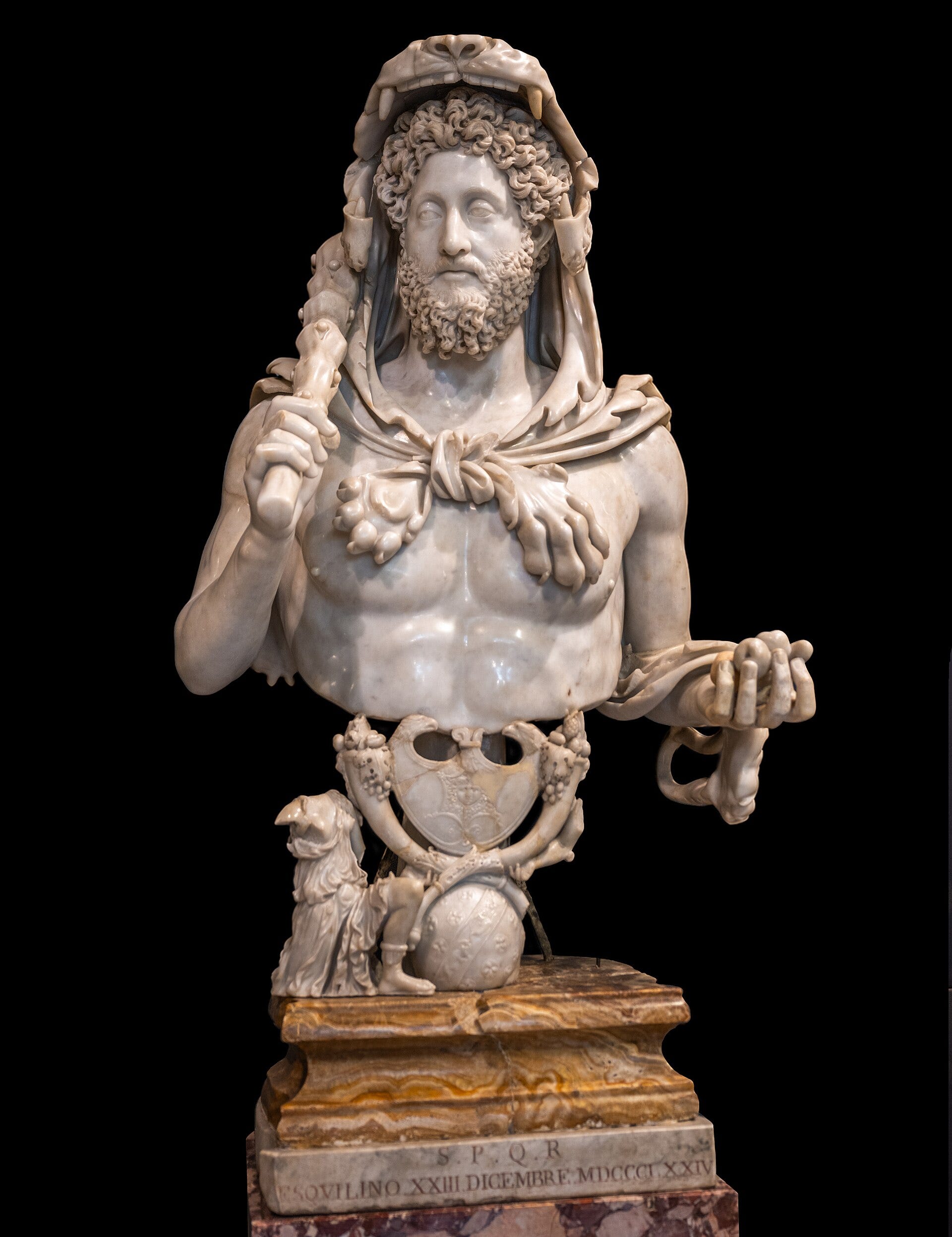
A bearded man wears the head of a lion as a hood. He holds a club in his right hand and three small apples in his left, and his bust rests on a globe marked with the signs of the zodiac. The polished marble was found in 1874 in an underground room on the Esquiline Hill in Rome, where someone had probably hidden it.