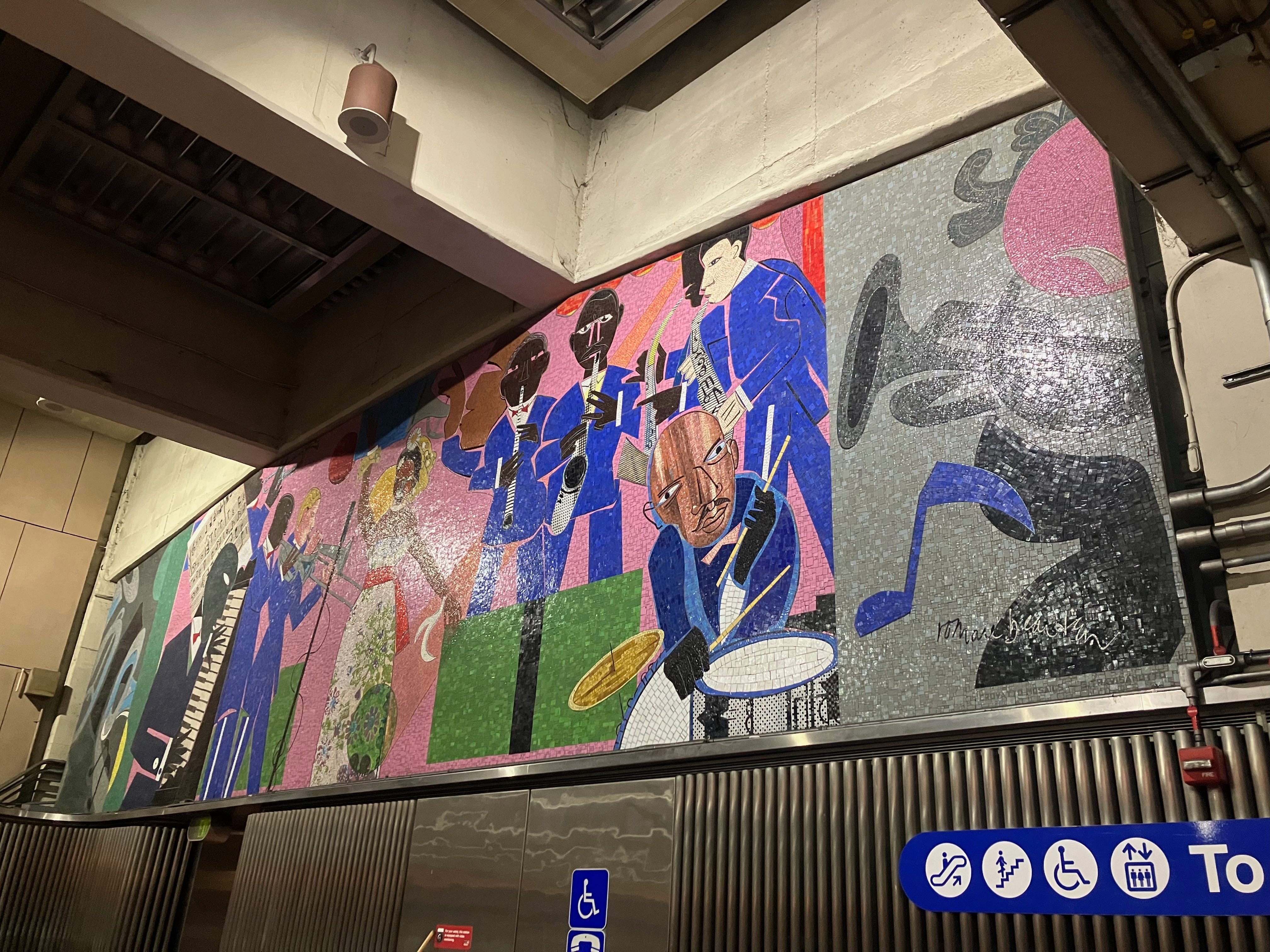
Romare Bearden: The Complete Story

Torn scraps of magazine, photograph and coloured paper, pieced together into a Harlem street, a jazz club, a Southern church. Romare Bearden built whole worlds out of fragments, and in doing so became one of the great chroniclers of Black American life.

Bearden, Arkansas
Bearden, Arkansas
Bearden, Arkansas
Bearden, Arkansas

He was an American artist best known for his collages, which assembled cut paper and photographs into vivid scenes of African American experience.


More than 100,000 readers, one great art story at a time. Join free.


The next three things to read

If this is the kind of art history you want more of:


The art of the fragment

Bearden made his name with collage, cutting and combining photographs, painted paper and printed scraps into layered, rhythmic compositions.

The pieced together surfaces echo the patchwork of memory and community, a modern form rooted in the everyday detail of genre painting.

Harlem and the South

His subjects came from the worlds he knew: Harlem where he lived, and the rural North Carolina and Pittsburgh of his childhood.

He showed families, workers, musicians and rituals, building a kind of history painting of ordinary Black life that the mainstream art world had ignored.

The sound of jazz

Music ran all through Bearden work. He loved jazz and blues, and his collages have the cut and rhythm of a jazz solo, with sudden shifts, repeats and improvisations.

He even co wrote a popular song, and the structure of music shaped how he layered his images, so that looking at them feels like listening.

The organiser

Bearden was more than a maker of pictures. He helped found groups to support Black artists and open doors that had been closed to them.

He wrote about art, mentored younger artists and worked to make sure the story of African American art was recorded and shown, not lost.

Questions readers ask about Romare Bearden

What is he known for?

Collages of African American life, especially Harlem and the rural South.

What materials did he use?

Cut photographs, painted paper and printed scraps.

How does jazz fit in?

Its rhythm and improvisation shaped how he built his images.

When did he die?

In 1988.

Why the fragments hold together

Bearden took the humblest material, torn paper, and used it to honour a community the art world overlooked, turning scraps into something monumental.

His collages now hang in the great American museums, and his work to support other Black artists shaped the field as much as the pictures did.


More than 100,000 readers, one great art story at a time. Join free.


Trained partly as a social worker, he spent years helping the poor of New York by day while making art at night, and that direct knowledge of people fed straight into his scenes.

Late in life he received the nation highest arts honour from the president, a recognition that the man who pieced together Black life from scraps had become a national treasure.

His collages were reproduced on magazine covers and in books, carrying images of Black life to a national audience that had rarely seen them treated as serious art.

He left behind a foundation that still supports emerging artists, so his work to open doors continues long after his death, and major retrospectives keep introducing his pieced together worlds to new viewers.

He worked for years writing songs and studying art history on the side, and his deep knowledge of African and European art fed the sophistication of his cut paper worlds.

His pieces now command high prices at auction, a remarkable turn for an artist who built his vision from the cheapest material on the table.

His pieced together scenes of jazz clubs and church gatherings remain some of the most recognisable images of mid century Black America.


Learn art the fun way. Free stories, straight to your inbox.